Home Blog Page 54

UN warns fuel shortages pushing Cuba toward humanitarian crisis

UN spokesman Stéphane Dujarric

Fuel shortages in Cuba have triggered a growing humanitarian crisis, with the country’s health system approaching a critical point, according to the United Nations.

Speaking on Tuesday, UN spokesman Stéphane Dujarric said the worsening situation is largely driven by the island’s inability to import fuel, creating a severe energy crisis.

“We remain deeply concerned about the deteriorating situation, driven by the inability to import fuel,” said Dujarric, chief spokesman for UN Secretary-General António Guterres. “This has triggered an energy crisis.”

Dujarric said the UN is engaging with member states, including the United States, to ensure humanitarian aid can reach the country without obstacles.

According to the UN Office for the Coordination of Humanitarian Affairs (OCHA), the energy shortage has severely affected hospitals across the country. Medical facilities are facing frequent power outages, shortages of essential medicines, and the inability to operate critical equipment, while services such as oncology care, dialysis, emergency treatment, infant and maternal care, and cold-chain systems for medicines have been heavily disrupted.

OCHA said the situation has also affected cancer treatment nationwide. About 16,000 cancer patients who require radiotherapy and more than 12,000 who depend on chemotherapy are unable to receive the treatment they need because of power outages and resource shortages. Ambulances are also struggling to obtain fuel, delaying emergency responses.

The crisis has extended beyond the healthcare sector. Nearly one million people depend on water delivered by tanker trucks, which require fuel to operate. Meanwhile, more than 80 percent of Cuba’s water-pumping infrastructure relies on electricity, leading to widespread and prolonged service disruptions.

Food supply chains have also been hit hard. OCHA said the shortage of fuel is disrupting production, storage, and distribution systems, with failing cold-chain infrastructure and transportation interruptions reducing the availability of basic food items across the country.

Humanitarian organizations are attempting to respond, but OCHA noted that the lack of fuel is hampering relief efforts, with food and water trucks unable to operate fully and dozens of aid containers currently waiting at ports.

Last month, the U.S. administration announced it would allow some oil shipments into Cuba, but the fuel can only be sold to the private sector rather than the government. Washington had previously banned oil shipments from Venezuela destined for Cuba, a move that has worsened the island’s energy shortage.

HRW: More than 1,200 killed in Haiti drone strikes by security forces and contractors

haiti police

Drone strikes carried out by Haitian security forces with the assistance of private contractors have killed at least 1,243 people and injured 738 others in Haiti, according to a new report by Human Rights Watch (HRW).

The rights group said the attacks have been conducted since March 2025 in anti-gang operations in and around Port-au-Prince, the country’s capital, where armed groups control roughly 90 percent of the city.

According to HRW, Haitian authorities, with support from Vectus Global, a United States-licensed private military firm, have deployed quadcopter drones strapped with explosives to target suspected gang members, often in densely populated neighborhoods.

The report examined strikes carried out between March 1, 2025, and January 21 in Haiti’s West Department, where Port-au-Prince is located. HRW said at least 17 children and 43 adults not believed to be members of criminal groups were killed during that period.

“Haitian authorities should urgently rein in the security forces and private contractors working for them before more children die,” said Juanita Goebertus, Americas director at Human Rights Watch.

The nonprofit organization said the number of drone attacks in Port-au-Prince has “significantly increased” in recent months. Fifty-seven attacks were reported between November and late January, nearly double the 29 recorded between August and October.

HRW researchers analyzed seven videos posted on social media or shared directly with the group that appeared to show quadcopter drones in action. Four of the videos were geolocated to Port-au-Prince.

“The videos show the repeated use of drones equipped with explosives to attack vehicles and people, some of them armed, but none who appear to be engaged in violent acts or pose any imminent threat to life,” the group said.

The report also noted there was no evidence that criminal groups were widely using drones.

One of the attacks highlighted by HRW occurred on September 20 in the Simon Pele neighborhood, an impoverished community controlled by a gang of the same name.

The strike reportedly killed nine people, including three children, and injured at least eight others as the gang’s leader prepared to distribute gifts to children in the area.

HRW quoted a resident who said the explosion tore off both feet of a baby during the blast.

Among those killed was a six-year-old girl. Her mother told the organization: “In the spaces where the gangs are, there are innocent people, people who raise their children, who follow normal paths.”

According to HRW, families of those killed said the gang controlling the area organized and controlled access to their funerals.

Last month, the United Nations Integrated Office in Haiti said it had no indications that the deaths and injuries linked to the strikes were being investigated.

The United Nations High Commissioner for Human Rights had earlier warned in October that the drone strikes appeared disproportionate and were likely unlawful.

Barbados, Trinidad explore tourism and aviation cooperation

The Caribbean Observes World Tourism Day

Barbados and Trinidad and Tobago are exploring the possibility of signing a memorandum of understanding (MOU) on tourism and culture as both countries look to strengthen cooperation and advance mutual interests.

The potential agreement emerged from talks held in Barbados last weekend between Barbados Tourism Minister Ian Gooding-Edghill and Trinidad and Tobago’s Minister of Civil Aviation and Transport Eli Zakour.

According to a government statement, the ministers discussed several issues affecting the region’s travel sector, including regional air connectivity, enhanced training for air traffic controllers, and the high cost of intra-regional travel.

During the discussions, the officials also reviewed the state of the tourism industry in both countries and agreed on the need to strengthen relations. Gooding-Edghill highlighted the potential benefits of deeper collaboration, particularly in sustaining Barbados’ tourism sector.

He noted that the island’s tourism sustainability had resulted in a “wave of investment,” in some instances by Trinidadian investors, including ongoing hotel developments across the south, west and north of Barbados. Projects cited include Hotel Indigo, the Hyatt, the Pierhead Project, Royalton Vessence, Pendry Hotel, Blue Monkey Hotel and Beach Club.

Gooding-Edghill said that a MOU between the two countries should be pursued to “see how best we can advance our interests on both sides”.

The statement said the ministers also held a lengthy discussion on enhanced training for air traffic controllers (ATCs). Gooding-Edghill indicated that Barbados currently faces a training deficit in this area and expressed a desire for ATCs to receive training in Trinidad.

“We would like to advance that as a matter of urgency. We are in discussions with the Ministry of Finance as to the funding for it…and we need to move on this urgently. It is also an opportunity for us to not only train persons but also continue that excellent working relationship that Barbados has always had with the Civil Aviation Training Centre in Trinidad,” he added.

Zakour proposed a MOU specifically focused on training, with details to be finalized shortly in consultation with the Director General of the Trinidad and Tobago Civil Aviation Authority, Carey Price.

Price said that air traffic controller shortages were not unique to Barbados and that Trinidad and Tobago was prepared to assist.

“They were happy to do anything that we can to accommodate Barbados’ needs for capacity building,” he said.

The two ministers also discussed recruitment of ATCs, ongoing efforts to boost airlift in Trinidad through the signing of air services agreements, the global shortage of pilots, the high cost of intra-regional travel, and the need to generate greater interest among young people in aviation careers.

Beginner’s guide: How to trade crypto on an Australian platform

Heard your friends talking about Bitcoin? Seen crypto in the news and wondered what it’s all about? You’re not alone. Taking the first step into the world of cryptocurrency can feel exciting and a little intimidating. But here’s the good news: it’s easier than you think.

This guide is for someone just starting in cryptocurrency trading. There are five simple steps to walk you through the entire process of how to trade crypto in Australia without complicated terms. Along the way, we will look at how to choose a beginner-friendly trading platform such as Swyftx. By the end, you will understand how to fund your account and purchase your first unit of cryptocurrency.

Step 1: Choose a Beginner-Friendly Australian Exchange

Your exchange is your home base for every deposit, trade, and withdrawal, so you want one that feels safe and straightforward from day one. Look for a platform that is registered with AUSTRAC and clear about its security practices. Local support, AUD deposit options, and transparent fees help you stay in control as you learn. When this foundation is solid, you can focus on your strategy instead of second-guessing your platform.

Here are a few simple checks that make a beginner-friendly Australian exchange stand out:

  • AUSTRAC registered,so you know it meets local regulatory requirements and standards.
  • Simple, clean interfacethat makes balances, prices, and order buttons easy to understand at a glance.
  • Demo modeso you can practise with virtual funds and get comfortable before you risk real money.

Step 2: Create and Verify Your Account

Step 2 starts with a simple signup flow that feels similar to creating any secure financial account. You type in your name, email address, and a secure password, and then you confirm your email. Then you choose Australia as your country of residency and fill out some basic information. After you save your profile, the exchange will ask you to confirm your identification so you can have full access.

KYC: A Quick ID Check, Nothing Scary

KYC stands for “Know Your Customer,” and it is a standard requirement for Australian crypto platforms. Digital ID verification lets you verify your identity using your own information. You send a clean driver’s license or passport photo, and sometimes a selfie. The site is legitimate, and your account is protected against fraud.

Security checks are done in the background to make verification quick and straightforward. Many users receive approval within minutes during business hours, without any paperwork or branch visits. Once your account is verified, you gain higher deposit limits and full trading features. With this step completed, your profile is ready to receive AUD deposits and place your first trade.

Step 3: Deposit Australian Dollars (AUD) to Get Started

Funding your account is where your plans turn into real buying power. Using AUD keeps things straightforward, since you avoid extra conversion steps. Pick a deposit method that matches how you already bank in Australia, so the process feels familiar. Once your funds land in your account, you are ready to place your first crypto order.

Most Australian exchanges support a range of local payment options that you already know and use:

  • Bank transfer through PayID or Osko from your regular banking app
  • Standard transfer using BSB and account number for larger deposits
  • Debit card payments when you want funds available in a few taps
  • Cash deposits at supported retail partners on some platforms

Why Local Funding Methods Help

Sticking with local payment methods makes your first deposit easier to track and understand. You see AUD leaving your bank and arriving in your exchange account with clear references on both sides. Local rails can bring quicker clearance times and lower fees compared with international transfers. With this step sorted, you can focus on learning how to buy and sell crypto instead of worrying about how your money moves.

Step 4: Make Your First Trade — From AUD to Crypto!

If you are learning how to trade crypto, this is the step where your deposited AUD turns into your first crypto purchase. You start by opening the trading screen and checking your available AUD balance. You can check the current prices and basic charts for each trading pair from here. Take a deep breath, double-check the figures, and go at your own speed.

Many new traders chose well-known currencies with a lot of liquidity for their first deal. Bitcoin (BTC) and Ethereum (ETH) are two of the most common coins to start with on Australian platforms. You might also look at greater caps that meet your risk tolerance and learning objectives. Make your initial deal modest so you can pay more attention to the procedure than the stake.

On the platform, you simply:

  • Open the Trade or Buy screen from your dashboard
  • Pick a pair, such as BTC/AUD or ETH/AUD, from the list of markets
  • Enter the amount of AUD you want to spend and choose a market or limit order
  • Review the summary, check fees and total crypto received, then click Confirm

Market orders fill straight away at the best price available at that moment. Limit orders let you set your preferred price and wait for the market to reach it. On a platform like Swyftx, both options are laid out clearly, so the choice is simple. Once the order is filled, your new crypto balance appears next to your remaining AUD.

Step 5: Secure Your New Account

Once your first trade is done, the next step is locking down your new account. Security matters because your crypto and personal details now sit behind a login. Treat this account with the same care as your online banking. A few smart habits here can protect years of future investing.

Turn on 2FA straight away

Two-factor authentication (2FA) is the finest account security method. It requires you to log in using Google Authenticator or a text message every time you turn it on. The 2FA code prevents unauthorized access even if they know your password. Turn on 2FA in your security settings after creating your account.

Strong password health is the next level of security and is easy to maintain. Passwords should be long, unique, and not used elsewhere. Create and save complex logins using a trusted password manager. 2FA makes the accounts safer.

Conclusion

Australia is a great place to start using cryptocurrency exchanges and take part in the decentralised economy. Choose a trustworthy exchange, validate your account, add AUD, make a small first transaction, and get into the habit of keeping your account secure. Going at your own pace through this process might help you establish a solid regimen. Selecting a platform like Swyftx that has local support, allows AUD deposits, and offers simple trading tools will improve your initial experience and boost your confidence as you expand your portfolio.


Broward Schools Board approves plan to cut 3,000 jobs over 3 years

Dr. Howard Hepburn, Superintendent of Broward County Schools

Broward County Public Schools Superintendent Howard Hepburn is set to oversee cuts of up to 1,000 jobs annually for the next three years after the School Board approved a plan Tuesday to address budget shortfalls tied to declining student enrollment.

The board voted 6-3 in favor of School Board member Jeff Holness’ request to develop a multi-year staffing alignment plan. Officials said the measure, which is not expected to affect teachers, could save about $250 million annually. Holness is the only Jamaican-American member on the board, which represents a county home to thousands of Caribbean families.

“Whenever we have decline in the number of students, we automatically reduce the number of teachers,” Holness told the board. “The problem is we have not done the same with non-teaching staff over the past 10 to 15 years. … We are heavily overstaffed. Our school district is currently facing significant financial challenges due to years of not intentionally aligning staffing levels with declining student enrollment.”

The district has lost nearly 39,000 students over the past decade, but staffing numbers have only dropped from 21,835 to 20,847. Board member Allen Zeman said the district should have reduced staff more aggressively to match enrollment declines.

“You either stop talking about paying people well or you start doing things so we have money to do that. It’s just that simple,” Zeman said. “I want to pay teachers more.”

Under the approved plan, Hepburn must bring back a three-year staffing reduction proposal in June, which would reduce 3,000 positions over three consecutive years. Holness said the cuts would primarily target non-instructional staff, preserving teacher positions.

Superintendent Hepburn had already announced a plan to cut about 1,000 jobs this year, prompting some board members to question the need for a multi-year directive. Lori Alhadeff, who opposed the motion along with Nora Rupert and Chairwoman Sarah Leonardi, emphasized the need for flexibility.

“He’s doing the job, so let him do the job. Don’t dictate year one, year two, year three,” Alhadeff said. “He needs that flexibility not to have his back against the wall to a plan that was set today on March 10th, 2026. Things are going to change.”

Rupert added that she would prefer a plan tied to dollar savings rather than a fixed number of jobs. “You can cut 1,000 people who are making $20,000 a year or you could cut 1,000 people making $100,000 plus a year,” she said.

Holness added that while the district performs well academically, financial sustainability remains critical. “We must be resolute in taking action to put our District on a more stable financial path, where we can properly compensate our teachers and staff and efficiently meet the needs of our students,” he said.

Broward County Public Schools expects to lose another 9,000 students this coming school year. The board has been exploring other cost-saving measures, including closing under-enrolled schools, cutting coverage for weight-loss drugs for teachers, and job reductions through layoffs and attrition.

Five sentenced in $3.5 million credit card fraud and money laundering scheme

Four Jamaicans arrested in Alabama for alleged involvement in lottery scam

Five individuals have received federal prison sentences for orchestrating a large-scale credit card fraud and money laundering operation that siphoned over $3.5 million.

Willan Pupo, 38, received 132 months; Joel Castillo, 39, 58 months; William Castillo, 42, 55 months; Miriam Pupo, 36, 37 months; and Jessica Forpomes, 40, 36 months. Each had previously pleaded guilty to money laundering charges.

“This was a coordinated fraud ring that generated more than $3.5 million in fake charges by manipulating point-of-sale systems, stolen credit cards, and shell companies,” said U.S. Attorney Jason A. Reding Quiñones of the Southern District of Florida. “Large-scale fraud like this undermines confidence in our financial markets. Those who build criminal enterprises around deception and stolen data will face serious federal prison time.”

Court records show that from February 2023 through June 2024, the defendants used legitimate businesses and shell companies to obtain point-of-sale (POS) devices, which allowed them to process unauthorized credit and debit card transactions. They carried out fraud in several ways:

Using credit cards of associates to make fake purchases and later dispute charges for refunds.

Purchasing stolen credit card numbers via the dark web and encrypted messaging apps, including Telegram.

Using mail-stolen credit cards for additional fraudulent transactions.

The defendants quickly withdrew or transferred funds from bank accounts to avoid detection, leaving banks and merchant processors to absorb the losses.

To amplify their scheme, William Castillo, Willan Pupo, and Joel Castillo accessed a database containing personal identifying information, including names, social security numbers, and addresses, to activate stolen credit cards and accelerate fraudulent activity.

As part of restitution efforts, Joel and William Castillo have paid over $800,000 to date. Additionally, Willan Pupo and Joel Castillo admitted to fraudulently obtaining Economic Injury Disaster Loans (EIDL) through shell companies, collecting more than $650,000.

The investigation was led by the U.S. Secret Service, Miami Field Office, and the U.S. Treasury Inspector General for Tax Administration, Cybercrimes Investigations Division.

Broward unveils TransitFORWARD 2040 vision to revolutionize county mobility

Broward County is gearing up for a major shift in public transit as District 7 Commissioner Alexandra P. Davis and Broward County Transit (BCT) CEO/General Manager Coree Cuff Lonergan present TransitFORWARD 2040, a 15-year vision plan aimed at reshaping the county’s mobility landscape.

The unveiling takes place this evening, Tuesday, March 10, from 5:30 to 7 PM at the Alexandra P. Davis Multi-Service Complex, 6700 Miramar Parkway, Miramar. The presentation will detail a multiphase roadmap designed to make Broward County more connected, accessible, and rider-focused.

TransitFORWARD 2040 outlines near-, mid-, and long-term improvements to the county’s transit system, including efforts to reduce wait times, extend service hours, and introduce innovative “microtransit” zones. These zones are designed to provide on-demand, localized shuttle services that link neighborhoods with major transit hubs.

“Our goal is to ensure that every resident, regardless of where they live in the County, has a reliable and affordable way to traverse throughout the County,” Commissioner Davis said. “TransitFORWARD 2040 is not just a list of changes; it is a commitment to mobility. By investing in this vision, we are building a transit system for a more connected Broward.”

BCT officials will also demonstrate how the plan aligns with Broward County’s broader growth strategy, focusing on high-frequency corridors and upgraded amenities, including smart bus shelters and real-time tracking systems.

“TransitFORWARD 2040 represents a paradigm shift in how we move people,” said Lonergan. “We are moving away from a traditional ‘one-size-fits-all’ bus system toward a dynamic, multi-modal network. By implementing microtransit and increasing our service frequency, we are making the bus a first-choice option for commuters rather than a last resort.”

With TransitFORWARD 2040, Broward County aims to create a transit system that better serves residents, businesses, and visitors, shaping a future of enhanced mobility and connectivity.

Tamarac Commissioner Morey Wright launches first-ever Fitness Verzuz

Tamarac Fitness Verzuz

Commissioner Morey Wright is taking the city’s fitness scene to a new level with the launch of the Tamarac Fitness Verzuz, a high-energy outdoor bootcamp battle designed to bring the community together through movement. The event marks the first of its kind in Tamarac, following the success of community fitness initiatives like Tamarac Sweat Fest and Feel the Rhythm.

The Fitness Verzuz will pit two local fitness powerhouses, RyFitness and Pay Me In Sweat, against each other in a friendly, head-to-head bootcamp challenge. Participants will enjoy a dynamic, full-body workout suitable for all fitness levels, from beginners to advanced enthusiasts.

Adding to the excitement, DJs She-J Hercules and DJ Fergie will provide a live soundtrack, keeping the energy high from warm-up through cool-down.

“Over the past few months, the community has shown incredible enthusiasm for events like Move with the Mayor, Fitzone, K.I.N.D: Ride for Miles, Sweat Fest, and Feel the Rhythm,” Commissioner Wright said. “The Fitness Verzuz is the next evolution. It’s not just a workout; it’s a high-energy experience that promotes health, wellness, and community unity.”

Event Details:

  • Who: Beginners to advanced fitness enthusiasts, ages 16+ (minors must be accompanied by a parent/guardian)

  • What to Bring: Athletic wear, sneakers, water, towel, and an optional yoga mat

  • Where: Tamarac Village, 9141 W. Commercial Blvd., Tamarac, FL 33351

  • Cost: Free, but registration is required

Early registration is encouraged as spots are limited. Participants can reserve their place online and watch an event video to get a preview of the action.

How important is an Alberta NUANS report when incorporating a business?

Are you looking to learn about an Alberta NUANS report and why it matters when incorporating a business? Most entrepreneurs fear selecting a name for a business that might be rejected later at the expense of time and finances. That uncertainty often slows progress before incorporation even begins. 

The positive aspect here is that obtaining the Alberta NUANS Report provides a practical way to minimize this risk earlier. Understanding how business name searches work and why registries rely on them can help you avoid the usual pitfalls. An Alberta NUANS report compares your proposed name against existing corporate and trademark records, helping identify conflicts, prevent confusion, and save valuable time during registration.  

This article discusses what an Alberta NUANS report is and why it is important when incorporating a business. By the end, you will have a clear, confident path forward and be aware of the steps that are useful in securing your business name from the first day. 

The Role Of An Alberta NUANS Report  

The Alberta NUANS Report plays a key role in determining whether a proposed business name is legally acceptable. The report conducts a comparison of a selected name with actual corporate and trademark databases in all parts of Canada to establish possible conflicts. 

With this comparison, the search will focus on names that are either identical or confusingly similar. This is done so that the new businesses do not actually copy the names or trademarks, which have already been established. 

The Alberta Registry uses NUANS Searches as a means to avoid confusion and potential conflict saving the already established and potential trademarked business. Registries may not verify the uniqueness of a name without an Alberta NUANS report, and therefore, the report is essential for a smooth and comfortable incorporation. Canada Incorporation Agency can guide you through the entire process and deliver your Alberta NUANS Report instantly, ensuring a hassle-free start. 

Legal Requirement In Alberta 

In Alberta, it takes a valid NUANS report to incorporate a named corporation. This report is used by the Alberta registries to ensure that a proposed business name meets the provincial and federal rules concerning naming. However, this is not the case with numbered corporations that are automatically assigned a name and will not undergo the name approval process.

For entrepreneurs seeking strong brand recognition from the start, a named corporation is often the preferred choice. In that case, it becomes obligatory to make an Alberta NUANS report. The report assists in making sure that the name chosen is unique and does not conflict with the external registered trademarks or businesses.

The Government of Alberta business registry guidelines identify the Alberta NUANS report to be recent, usually issued within 90 days, to indicate the availability of the name. This period contributes to the equity, uniformity, and precision of all business registrations.

Trademark Conflict Protection

In addition to provincial regulations, federally registered trademarks are also checked by the Alberts NUANS system. It is an added step in review, as this will minimize chances of legal battles where the business name may infringe on a trademark that has already been registered.

Trademark disputes can be costly and may lead to expensive rebranding, litigation fees, and damage to brand reputation. Even though an Alberta NUANS report does not mean that the trademark will be approved, it will give prior insight into possible clashes. Early detection of these problems will enable the business owners to change their name before making a commitment to incorporation.

By reviewing trademark overlaps in advance, entrepreneurs can make informed decisions before investing in logos, websites, or marketing materials.

Brand Credibility Impact

An exclusive and functioning name of the business contributes to credibility at first glance. Customers, associates, and shareholders tend to identify originality with professionalism and reliability. Once a name gets through the Alberta NUANS report review, it is an indication that the business has taken the right legal procedures before getting into the market.

This early validation helps boost confidence among stakeholders. This is because a trusted name eliminates suspicion of genuineness and indicates that the company is ready to work within the confines of the regulations. Such confidence may be particularly helpful at the initial discussion with investors or lenders.

In contrast, a rejected or challenged name can damage first impressions and slow progress. Delays during the incorporation process can impact the launch times, branding, and access to funds. Using the Albert NUANS report as an early screening tool supports smoother operations and stronger long-term brand positioning.

Time and Cost Savings

Even though an Alberta NUANS report comes with an initial cost, it can save entrepreneurs many dollars in the long run. Identifying name conflicts early helps prevent expensive re-filings, branding changes, or legal consultations after incorporation. The immediate visibility enables the proprietors of a business to develop their choice of a name to perfection before investing.

An approved NUANS report also accelerates the approval of the registry. With fewer issues to resolve, incorporation moves forward without unnecessary delays or corrections. That efficiency can make a meaningful difference during early business stages.

Entrepreneurs will be able to concentrate on operations, staffing, and expansion rather than paperwork by minimizing administrative delays. Startup efficiency consistently shows that early planning lowers administrative overhead and improves long-term execution.

Canada Incorporation Agency can help you throughout the entire process and deliver the Alberta NUANS Report instantly, making it easier to secure your business name without delays.

Named Vs Numbered Corporations

The distinction between named corporations and numbered corporations helps to understand the importance of the Alberta NUANS report. A numbered corporation receives a numeric legal name, such as “1234567 Alberta Ltd.” This option does not require a NUANS search, making incorporation faster and more straightforward.

Numbered corporation names are simple to get, but branding potential is limited. They lack the purpose of the business and are hardly communicated in marketing or customer-facing materials.

Many entrepreneurs choose a named corporation to build brand recognition and trust. A unique name stands behind promotion, consumer memory, and sustained expansion. The Alberta NUANS report would be necessary in this situation.

Choosing the right corporate structure based on business goals helps avoid complications and ensures a smoother registration process.

Conclusion

An Alberta NUANS report is not just a mere formality requirement for incorporation. It acts as a business intelligence application, which helps to stay compliant with the law, secure the brand name, and facilitate business registration. By early checks of name availability, businesses can lessen the chances of confusion with other already existing businesses and trademarks and save time and needless revisions.

The Alberta NUANS report gives clarity and assurance whether the aim is to establish an iconic brand or achieve unhindered passages through Alberta registries. It also enables business owners to operate without fear.

The main lesson learned is simple enough that the time to invest in correct verification is before incorporating. Securing a NUANS report early safeguards your business name and sets the stage for long-term success. Canada Incorporation Agency can assist you in obtaining an Alberta NUANS Report quickly and affordably, helping you protect your business identity from day one.


Canadian fugitive extradited from Jamaica to face murder charges

sentenced to over 18 years in US prison

A Canadian fugitive wanted for second-degree murder has been extradited from Jamaica to Canada, the Jamaica Constabulary Force (JCF) confirmed.

The woman, identified as 43-year-old Debbie Sue Jones, was wanted by Toronto Police in connection with the September 30, 2024, shooting death of a 42-year-old man in Toronto. Jones reportedly fled to Jamaica to evade prosecution.

She was apprehended on Monday, January 19, 2026, by operatives from the Jamaica Fugitive Apprehension Team (JFAT) within the Specialized Investigation Branch (SIB). Jones subsequently waived her rights to an extradition hearing and was officially handed over to Canadian law enforcement at Norman Manley International Airport on Friday, March 6.

Superintendent of Police Oral Henry, of the SIB, emphasized that Jamaica will not serve as a refuge for fugitives. “Our island will not be a sanctuary for those seeking to evade prosecution in other countries. Our investigators will continue to pursue alleged offenders with all available resources and are committed to maintaining the integrity of our borders, with the support of our international partners,” he said.

Toronto Police confirmed that Jones was formally charged with second-degree murder and was scheduled to appear at the Toronto Regional Bail Centre on Saturday, March 7.

The investigation continues into a second suspect, 37-year-old Ricardo Manuel Bailey, who remains wanted for the same homicide and is believed to have also fled to Jamaica. The killing has been recorded as the 66th homicide in Toronto for 2024.

Trinidad PM Persad-Bissessar describes meeting with US Southern Command as ‘fruitful’

Trinidad and Tobago Prime Minister Kamla Persad-Bissessar described her meeting Monday with top officials at the United States Southern Command (SOUTHCOM) as “productive and fruitful,” highlighting the countries’ ongoing partnership in national and regional security and the fight against narco-trafficking.

In a statement posted on X, Persad-Bissessar said the Trinidad and Tobago delegation attended the meeting “based on an invitation from the United States government, given our strong support, determined action, and dynamic partnership to eliminate the illegal drug trade.”

The Prime Minister noted that discussions with U.S. officials—including General Francis L. Donovan, Commander of SOUTHCOM; Lieutenant General Pettus, Deputy Commander; and Ambassador Stephanie Syptak-Ramnath, Foreign Policy Advisor—focused on strengthening cooperation to ensure “a safer and more secure Trinidad and Tobago at every level.”

Persad-Bissessar expressed satisfaction that General Donovan acknowledged Trinidad and Tobago’s leadership in the region, noting that the country’s efforts have significantly impacted the fight against the illegal drug trade. “Based on this, I reinforced my support for the continued and expanded partnerships to fight narco-trafficking, as my main goal is to ensure a total eradication of this plague that has brought grave destruction to Trinidad and Tobago,” she said.

The Prime Minister emphasized that her “greatest priority was to ensure the protection of my citizens,” calling for expanded partnerships and technical cooperation in areas including cybersecurity, forensics, and ballistics to enhance the country’s ability to combat criminal elements.

“I am heartened not only by SOUTHCOM’s commitment to broadening the scope of work to ensure a safer region but also by the fact that several specific projects were identified for implementation to support Trinidad and Tobago’s security,” Persad-Bissessar wrote, adding that she extended an invitation to General Donovan to visit the country.

She concluded that the meeting was “part of my unwavering fight to ensure all the tools possible are available to my government to crush the criminal elements which threaten our citizens.”

How LED therapy supports skin health

Many people look for ways to achieve healthy skin. This is a very gentle approach, and LED therapy has become widely known for its soothing effects. By targeting specific wavelengths of light, this technique provides excellent assistance when treating different skin problems. Understanding its advantages can help individuals decide what to include in their skin care regimen.

What is LED Therapy

LED therapy, or light-emitting diode therapy, is a non-invasive device that delivers low-level light energy to the skin. This process does not produce heat, unlike ultraviolet light. Each color addresses different skin problems. The treatments are typically red, blue, or near-infrared light. It is a safe and non-intrusive approach. By using clinical-grade LED therapy, individuals experience clearer, healthier skin with long-term benefits.

How Does LED Therapy Work

The deeper layer of the skin is reached by light energy. This energy is absorbed by cells, motivating them to perform better. Crimson light can lower inflammation and promote the production of collagen. Blue light targets the bacteria that cause breakouts. Near-infrared options help relieve inflammation and pain for recovery.

Benefits for Different Skin Types

LED therapy is versatile for the skin. Sensitive skin usually tolerates this procedure quite well, as no heat or literally invasive and aggressive agents are applied. Blue light can also be beneficial for people with oily or acne-prone skin, as it targets the bacteria that may be responsible for breakouts. You can even choose red or near-infrared light if you have dry or more mature skin because that type of light can help the skin retain moisture and firmness.

Addressing Common Skin Concerns

Others have issues with fine lines, breakouts, or a lack of even tone. Worth Knowing: Red light helps support collagen, which makes lines appear smoother. Blue light usually helps minimize the number of pimples. Near-infrared treatments can help relieve redness or discomfort after cosmetic procedures or from wind and sunburn.

Safe and Painless Approach

LED devices typically feel mild to nonexistent sensations during sessions. During treatment, most individuals simply feel a mild warmth. It requires no recovery period following use. The an enticing attribute is the command that integrates the venture without needing to modify day-to-day operations. It has an excellent safety profile with almost no side effects.

Supporting Consistent Skincare Routines

Regular use can enhance results. So many people find out that incorporating LED therapy with other lighter-touch skin care techniques is a great way to maintain lasting, healthy skin over time. Some like to maintain the treatment in the office, and others use home devices. The best results are often more about consistency than intensity.

How Often Should Eld Therapy Be Used

How often you do this is solely dependent on your needs and the capabilities of the device. There may be one or two professional sessions weekly. Additionally, you can use the devices at home more frequently, albeit usually at lower strengths. Start quietly, and as your skin adjusts, determine whether the ideal routine is effective. Advice from a qualified professional can also go a long way in ensuring safe and effective results.

Potential Precautions and Considerations

Generally safe except for some conditions, and it’s best to check with a healthcare provider first before beginning. Depending on the sensitivity of your eyes during your sessions, you may need to wear glasses. Those who are pregnant or regularly use prescription drugs that cause photosensitivity should consult their doctor before beginning therapy.

Using LED in Conjunction With Other Things

Daily rituals of care complement this method very nicely. Gentler cleansers and moisturizers can complement light treatments. Refraining from using harsh exfoliants or peels right before a session is a beneficial idea to avoid any irritation. Only reinforcement of results from healthy habits, such as protecting from the sun and drinking more water, is necessary.

How a Session Would Look

Session times typically span from ten to twenty minutes. You will either sit or lie comfortably as the device administers a specific light. You don’t need to use any oils, lotions, or serums during treatment. Results may show slowly, with the maximum existing becoming visible only after many sessions.

Conclusion

LED therapy is a gentle, science-supported approach to nurturing your skin. The overall flexibility of the product, comfort while using it, and safety make it the perfect product to add to the modern skincare routine. By framing this practice in a certain way, people can make decisions that fit their needs and support long-term skin health.

Jamaica-Cuba Eye Care Programme to continue, says Minister Tufton

The Jamaica-Cuba Eye Care Programme will continue its operations despite the conclusion of the technical cooperation agreement between the Government of Jamaica and the Government of Cuba, Health and Wellness Minister Dr. the Hon. Christopher Tufton confirmed during a hybrid press briefing on Monday (March 9).

Dr. Tufton said the Ministry of Health and Wellness understands and fully appreciates the benefits of the programme, which operates at St. Joseph’s Hospital and is supported by 18 Cuban healthcare workers. “We know many Jamaicans have benefited from this, and it has been driven primarily by this agreement involving the Cuban workers. The intention is not to discontinue the programme. The intention is to work with the existing team up to the point when they may discontinue or continue, depending on where the discussions lead and beyond that, to find alternative ways to continue the work, because it’s a very critical programme,” he explained.

The Health Minister noted that the Cuban team will continue procedures until March 20, with services limited to surgery and post-operative care. “What this means is that surgical procedures for patients who are already scheduled and follow-up care for patients who have already undergone eye surgery and retina-related post-operative treatment and monitoring… those procedures will take place,” Dr. Tufton said. Approximately 140 patients are scheduled to undergo surgery.

Dr. Tufton urged patients who have benefited from the surgeries to attend their scheduled follow-up appointments to ensure proper recovery and continued care.

“In the meantime, we are working on alternative arrangements to ensure the continuity of the screening programme through a combination of our internal capacity, as well as through some outsourcing arrangements, and we’ve got the Cabinet’s agreement on that… in the sense that it has a budgetary implication, meaning engaging the private sector,” he added.

The clarification comes after last week’s confirmation from the Ministry of Foreign Affairs and Foreign Trade that the Government of Jamaica will discontinue the current arrangement for the deployment of Cuban medical professionals in the public health sector, following the expiration of the last technical cooperation agreement in February 2023 and a failure to agree on new terms with Havana.

The Ministry’s statement emphasized that the decision to discontinue the broader deployment does not affect the Jamaica-Cuba Eye Care Programme, which remains a critical initiative supporting surgical and post-operative eye care for Jamaicans.

University of Guyana launches search for new vice-chancellor

University of Guyana Front

The University of Guyana has launched a search for a new Vice-Chancellor and Principal as the current Vice-Chancellor’s seven-year term comes to an end. The decision, announced by the University Council on 16 February 2026, aims to ensure a transparent, merit-based selection process that identifies leadership capable of guiding the university through a period of national transformation.

The public advertisement for the position was released on 9 March 2026. The Council is seeking a candidate with a distinguished academic record, typically at the rank of full Professor or equivalent, along with significant senior executive experience in higher education or comparable institutions. Applicants should demonstrate strategic leadership, expertise in financial management and institutional administration, and the ability to drive organisational transformation.

“The University of Guyana, as the nation’s premier public university, must play an even more central role in producing highly qualified graduates, expanding postgraduate education, strengthening research, and contributing independent expertise, innovation and practical knowledge to national and regional development,” said Sir Ronald Sanders, Chancellor and Chairman of the University Council.

The Council is looking for a Vice-Chancellor committed to academic freedom, shared governance, institutional accountability, and high standards of integrity. Candidates should also have a proven ability to build partnerships, mobilise resources, inspire high-performing teams, and modernise academic programmes to meet emerging workforce and industry demands.

“The objective is clear: to secure leadership equal to the scale of Guyana’s transformation and to the University’s indispensable role in shaping the country’s future,” Sanders said.

Full application details, including terms of appointment and submission deadlines, are outlined in the public advertisement.

Florida woman arrested after shots fired at Rihanna’s home

A 35-year-old Florida woman was arrested Sunday on suspicion of attempted murder after shots were fired at the Los Angeles residence of Bajan singer Rihanna and hip-hop star A$AP Rocky, police said.

The Los Angeles Police Department identified the suspect as Ivanna Ortiz. Authorities said she was taken into custody following a traffic stop about three miles from the couple’s Beverly Crest home in the west San Fernando Valley community of Sherman Oaks. Ortiz remains in custody on a $10 million bond.

The shooting occurred at around 1:30 p.m., with Ortiz reportedly firing seven to nine rounds from an AR-15-style rifle at the property, which Rihanna shares with A$AP Rocky and their three children. No injuries were reported, and all family members were inside the home at the time, the LAPD confirmed.

Video from the scene showed bullet holes in the front gate, and investigators were seen examining an Airstream trailer parked on the driveway. Police have not released details on a possible motive.

Authorities said Ortiz was the sole occupant of the vehicle and that she has a criminal history in Florida, including arrests in 2023 for domestic violence battery and violation of a domestic injunction in Orange County. Social media posts from Ortiz, including one on February 23, referenced Rihanna.

Police continue to investigate the incident.

UK officials to visit St Lucia amid visa requirement implementation

St. Lucia Prime Minister

St Lucia Prime Minister Philip J Pierre announced Monday that officials from the United Kingdom are scheduled to visit the country this week to consult with stakeholders and travel experts following London’s decision to introduce a visa requirement for St Lucian travellers.

Pierre said at a news conference that the UK delegation will meet with travel agencies and visa specialists on Tuesday and Wednesday to ensure “legitimate travel to the UK” continues smoothly.

Last week, the UK Home Office announced that St Lucian nationals would now require a transit visa when passing through the UK to other destinations. The measure takes effect immediately, although a six-week transition period will allow travellers holding an Electronic Travel Authorisation (ETA) booked before the policy change to enter the UK visa-free until April 16, 2026.

Pierre said he personally received a letter from Mike Tapp, the UK Minister for Migration and Citizenship, which cited “a substantial increase in St Lucian nationals presenting as visitors, but subsequently claiming asylum” as the main reason for the new requirement. The letter emphasized that the change was necessary to safeguard the integrity of the UK immigration system.

The UK acknowledged St Lucia’s ongoing reforms in security, justice systems, and border management, particularly concerning the Citizenship by Investment (CBI) programme. Pierre noted that the letter highlighted “risks of individuals who purchase St Lucian citizenship travelling to the UK to claim asylum,” while also affirming that legitimate travel continues.

Pierre urged St Lucians to comply with visa regulations, avoid overstaying in the UK or the US, and take advantage of the six-week transition period if they already hold an ETA. He also clarified that the changes do not affect diplomats or government officials travelling on official business.

“The principal reason, as stated in the letter, is a substantial increase in St Lucian nationals presenting as visitors but subsequently claiming asylum,” Pierre said. “Now, the numbers may sound small compared to what’s happening in the world, but we have no control over UK or US government policy. Our job is to take control of what we can.”

The Prime Minister reaffirmed that St Lucia will continue constructive engagement with the UK to protect the interests of its citizens while ensuring compliance with the new travel requirements.

Cuba ends medical brigade programme in Guyana after nearly 5 decades

Cuban medical missions
Cuban medical brigade

The Guyana government said Monday that Cuba has withdrawn its long-standing medical brigade programme from Guyana, ending an arrangement that had lasted for more than 48 years.

Health Minister Frank Anthony said the decision to terminate the programme was taken by Havana in February 2026 while talks between the two countries were ongoing.

“We have been engaging the Cuban authorities and they chose to terminate or withdraw the Cuban doctors who were here,” Anthony said in an interview with the online publication News Source.

The minister said that following the decision, the Guyanese government opted to hire Cuban medical personnel directly to continue supporting the country’s public health system.

“Cuban doctors, nurses and technicians, if they want to come to Guyana, they can come to Guyana and once they are properly qualified and certified by our medical authorities here — medical council, nursing council and so forth — once they meet those requirements, then we will be able to offer them a job,” Anthony said.

He added that several Cuban medical professionals have already accepted employment under the new arrangement, including some who were previously part of the brigade and chose to remain in the country.

However, Anthony said he was unable to provide the exact number of Cuban medical personnel currently employed directly by the government.

The health minister also dismissed concerns that the withdrawal of the brigade would negatively affect Guyana’s healthcare services. He said the government has been expanding local training programmes for nurses and other healthcare professionals as part of a broader effort to strengthen the health system.

“As you know, we have been expanding our healthcare system and we have also started to expand training,” Anthony said.

He noted that the government launched a registered nursing programme three years ago and expects to graduate nearly 800 nurses by June this year.

Anthony’s comments come days after a small group of citizens wrote to President Irfaan Ali urging the government to reverse the decision and restore the Cuban Medical Brigade.

The development has also fueled speculation that Guyana may have ended the programme under pressure from the United States, which has increased criticism of Cuba’s overseas medical missions.

Washington has alleged that the programme, which has provided medical personnel to several Caribbean and developing countries, relies on coercive labour practices. U.S. officials have claimed that Cuban medical workers face withheld wages, confiscated passports, restrictions on movement and pressure from authorities while serving abroad.

The United States has also argued that the programme allows the Cuban government to profit from the work of its medical professionals by retaining a significant portion of their earnings.

In 2025, Washington threatened to restrict or revoke visas for some officials in African, Caribbean and Brazilian countries it said were linked to the Cuban medical programme.

Guyana and Cuba have maintained close diplomatic ties for decades. In 2021, more than 60 Cuban doctors travelled to Guyana to assist with the treatment of patients during the height of the COVID-19 pandemic.

Cuba has also played a key role in training Guyanese doctors and other healthcare professionals over the years.

Former UN official urges Caribbean to intensify push for reparatory justice

The former chair of the United Nations Permanent Forum on People of African Descent, June Soomer, is urging Caribbean governments to intensify their push for reparatory justice, arguing that sustainable development in the region cannot occur without confronting the legacies of slavery and colonialism.

Soomer made the call while speaking at the launch of the Second International Decade for People of African Descent at the University of The Bahamas over the weekend. The event included a symposium on Haitian restitution and reparatory justice.

“Reparatory justice is not a recent movement,” Soomer said. “It started on the African coast when we were enslaved and put into dungeons before we were shipped across and trafficked to the Americas.”

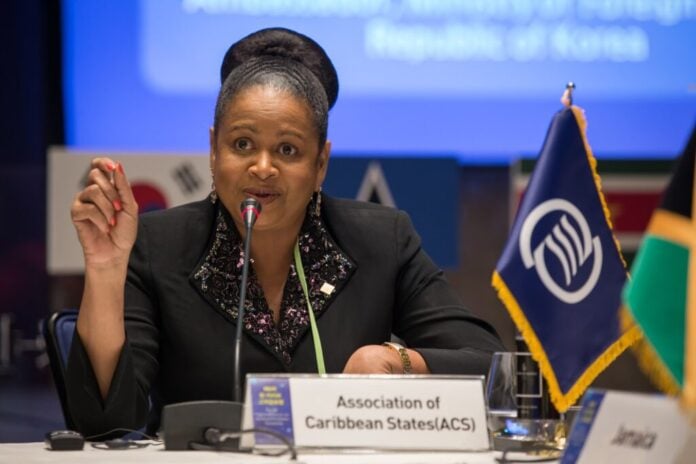
The St. Lucian-born diplomat, who previously served as secretary general of the Association of Caribbean States, said the Caribbean has played a leading role in advancing the global reparations movement.

She noted that the regional push gained renewed momentum in 2013 when leaders of the Caribbean Community agreed to pursue reparatory justice for Indigenous peoples and people of African descent.

Soomer said the CARICOM Reparations Commission first acknowledged the genocide of Indigenous peoples before addressing crimes committed against Africans who were enslaved and transported to the Americas.

“It is important that we never forget what the Indigenous people went through first,” she said. “Genocide and ethnic cleansing have made them invisible in plain sight.”

She also stressed the importance of reframing how slavery is discussed historically.

“We were not slaves. We were human beings who were enslaved,” Soomer said. “We were not born slaves. We were human beings. We were lawyers, doctors, teachers.”

Rejecting the notion that Africans passively accepted enslavement, Soomer said resistance occurred both on the African continent and throughout the colonial era.

“Not only did we resist in Africa, we fought many colonial wars so that we would not be shipped across,” she said, adding that the second UN decade must move beyond symbolic recognition to focus on structural reforms, including education changes and legal reviews in Caribbean countries.

Soomer also urged governments to expand the reparations conversation to include environmental injustice, climate change and technological bias, arguing that Caribbean communities remain disproportionately vulnerable to environmental damage despite contributing little to global emissions.

“All of the greenhouse gases are now coming back and affecting us,” she said. “It is a double reparations we want because they left us to live on marginalised lands — on the slopes of mountains, on river banks, or in places where the sea can come and wipe out a whole island.”

She pointed to the devastation caused by Hurricane Dorian, which struck The Bahamas in 2019 as a Category 5 storm, as an example of the region’s vulnerability to climate impacts.

Soomer also called for Caribbean countries to review laws and constitutions inherited from colonial rule.

“We cannot continue to depend on colonial legislation that does not represent us,” she said. “We have to call for a review of all of our constitutions and legislation that not only continues to dehumanise us within the criminal justice system as a group, but continues to discriminate against us as women of African descent.”

She noted that the legal structure of slavery placed particular burdens on enslaved women, as the status of children born into slavery was determined through the mother.

“We think that when we talk about labour we are only talking about work in the field,” Soomer said. “We are also talking about labour and the forced impregnation of women of African descent. Capitalism was built on the wounds of Black women.”

Soomer also called for recognition of collective rights, arguing that the history of slavery and colonialism affected entire communities.

“We were collectively stolen. We were collectively criminalised. We were collectively beaten. And now we do not have collective rights,” she said. “Independence did not mean decolonisation.”

She also urged stronger collaboration between governments and civil society groups involved in the reparations movement, warning that without wider public participation the issue could lose momentum.

“We will be running globally with reparatory justice at a governmental level and we will not find our people running behind us because they do not know what we are running behind,” she said. “We must break the back of systemic racism.”

Jamaica secures over 160,000 air seats from UK and Europe for summer

tourism

Jamaica is set to benefit from more than 160,000 airline seats from the United Kingdom and Continental Europe this summer, reflecting growing confidence among international carriers in the island’s appeal as a long-haul destination.

Tourism officials say the expanded airlift will help support increased visitor arrivals from key European markets between May and October 2026.

From the UK, airlines will provide 136,640 seats for Summer 2026, up from 125,658 seats in Summer 2025. Services will be operated by British Airways, TUI Airways and Virgin Atlantic.

British Airways will operate four weekly flights from London Gatwick Airport to Kingston and four weekly flights from London Heathrow Airport to Montego Bay.

TUI will serve Montego Bay with three weekly flights from London Gatwick, along with two weekly services each from Manchester Airport and Birmingham Airport.

Among the three carriers, TUI will provide the largest share of seats at 63,480, followed by British Airways with 41,168 and Virgin Atlantic with 31,992.

Meanwhile, Continental Europe will contribute 33,991 seats, representing a 45.9 percent increase compared with the 23,290 seats available in Summer 2025.

Five airlines will operate 105 direct flights into Sangster International Airport between May and October 2026, connecting Jamaica with four European gateways — Amsterdam, Frankfurt, Milan Malpensa Airport and Lisbon.

TUI fly Netherlands will anchor the programme with 26 Tuesday departures from Amsterdam. Condor will operate two weekly flights from Frankfurt, providing more than 11,000 seats and making Germany the largest Continental European source market.

Italian carrier Neos will contribute 8,175 seats across 25 departures from Milan Malpensa, while World2Fly will operate a weekly Wednesday service from Lisbon, with 18 flights offering 6,336 seats.

Edmund Bartlett said the expanded airlift signals strong support from international carriers.

“This level of airlift from the UK and Continental Europe is a powerful statement about Jamaica’s standing as a premier long-haul destination,” Bartlett said. “It is the result of years of deliberate relationship-building with airline partners, investment in our airports, and the relentless promotion of Jamaica as an experience unlike any other.”

Donovan White, director of tourism at the Jamaica Tourist Board, said the tourism body worked closely with airlines to align flight schedules with growing demand from European travellers seeking cultural and experiential travel.

“We are encouraged by the commitment our airline partners are making to Jamaica this summer,” White said. “It reflects a deep belief in Jamaica as a destination that delivers. We look forward to welcoming European visitors to the island in record numbers.”

Sprint firepower and rising stars lead Jamaica’s 28-member World Indoor team

Brianna Lyston

Jamaica’s next generation of track and field stars will take center stage later this month after the Jamaica Athletics Administrative Association (JAAA) unveiled a 28-member squad (including reserves) for the 2026 World Athletics Indoor Championships, set for March 20-22 in Toruń, Poland.

Among the most intriguing names on the roster is former World Under-20 200-meter champion Brianna Lyston, whose return to international competition adds an exciting dimension to Jamaica’s sprint line-up. Lyston’s inclusion underscores the administration’s faith in a young core of athletes who have dominated youth sprinting over the past several years and are now transitioning to the senior stage.

Lyston back in the spotlight

Lyston’s journey back to the national team has been closely watched.

After delivering a standout collegiate season at Louisiana State University, she was forced to sidestep Jamaica’s Olympic Trials in 2024 because of a minor injury. She also did not contest last year’s World Championships Trials, leaving fans eager to see her return to top-level competition.

Now fully fit, the former junior star will contest the women’s 60 meters in Toruń. She will line up alongside experienced sprinter Jonielle Smith, while Tina Clayton has been named as the reserve for the event.

Smith enters the championships in strong form. Her season’s best of 7.04 seconds ranks joint sixth in the world this year, narrowly ahead of Lyston, who clocked 7.07 seconds at the Tyson Invitational at the Randal Tyson Indoor Center in Fayetteville, Arizona, last month.

Jamaican sprinters among world leaders

Jamaica’s men’s 60 metres squad arrives in Poland with significant global credentials.

Kishane Thompson, Bryan Levell, and Ackeem Blake will spearhead the country’s charge in the explosive event, with Kadrian Goldson serving as reserve.

Both Thompson and Levell currently sit among the fastest men in the world this season. Thompson holds the fourth-fastest time globally with a blistering 6.46 seconds, while Levell is fifth at 6.47 seconds.

Blake, meanwhile, has also stamped his authority on the event this year, ranking joint eighth worldwide with a season’s best of 6.48 seconds.

Hurdles talent emerging

Jamaica will also feature a compelling mix of experience and emerging talent in the sprint hurdles.

Veteran campaigner Megan Simmonds will represent the country in the women’s 60-meter hurdles alongside rising standout Oneka Wilson, who has earned her first call-up to a senior Jamaican team.

Wilson, a Clemson University athlete, has built an impressive résumé during her collegiate career. She enters the championships as the reigning four-time Atlantic Coast Conference Indoor champion in the 60m hurdles, reinforcing her reputation as one of Jamaica’s most promising young hurdlers.

On the men’s side, Demario Prince and Jerome Campbell will contest the 60m hurdles, with Vashaun Vascianna named as reserve.

Middle-distance momentum

National indoor record holder Navasky Anderson will lead Jamaica’s hopes in the men’s 800 meters after producing a breakthrough performance earlier this season.

Anderson ran a personal best of 1:44.75 minutes last month, a mark that propelled him to 11th in the world rankings and confirmed his growing stature in the event.

He will be joined by Rivaldo Marshall, the second-fastest Jamaican over the distance this season, with a personal best of 1:45.62 minutes.

In the women’s 800 metres, Natoya Goule-Toppin and Kelly-Ann Beckford will carry the national colors.

Relay shake-up alters women’s plans

Relay preparations underwent a late adjustment.

The JAAA had originally assembled six-athlete pools for both the men’s and women’s 4×400-metre relays. However, the women’s relay team was eventually withdrawn after what the administration described as the “late withdrawal of some athletes.”

The initial women’s relay pool was expected to feature Nickisha Pryce, Shana-Kaye Anderson, Leah Anderson, Kelly-Ann Beckford, Natoya Goule-Toppin, and rising high school talent Shanoya Douglas.

The men’s relay squad remains intact, with Delano Kennedy, Reheem Hayles, Kimar Farquharson, Tyrice Taylor, Rivaldo Marshall, and Demar Francis selected to represent Jamaica.

Farquharson and Francis are the only returning members from the Jamaican quartet that captured silver at last year’s World Indoor Championships.

Field event medal hopes

Jamaica’s medal ambitions will also extend to the field events.

Lamara Distin will contest the women’s high jump, while Nia Robinson has been selected for the women’s long jump.

In the men’s long jump, Carey McLeod and Tajay Gayle will represent the island, while Jordan Scott will compete in the men’s triple jump.

Shantae Foreman rounds out the field contingent as Jamaica’s representative in the women’s triple jump.

Jamaica enters the championships with confidence after claiming four medals at the 2025 World Indoor Championships, two silver and two bronze.

Jamaica’s 28-member team (including reserves)

Men
60m — Ackeem Blake, Kishane Thompson, Bryan Levell, Kadrian Goldson (reserve)
60m hurdles — Demario Prince, Jerome Campbell, Vashaun Vascianna (reserve)
400m — Delano Kennedy, Reheem Hayles
800m — Navasky Anderson, Rivaldo Marshall
4x400m relay — Delano Kennedy, Reheem Hayles, Kimar Farquharson, Tyrice Taylor, Rivaldo Marshall, Demar Francis
Long Jump — Carey McLeod, Tajay Gayle
Triple Jump — Jordan Scott

Women
60m — Jonielle Smith, Brianna Lyston, Tina Clayton (reserve)
60m hurdles — Megan Simmonds, Oneka Wilson
400m — Nickisha Pryce
800m — Natoya Goule-Toppin, Kelly Ann Beckford
High Jump — Lamara Distin
Long Jump — Nia Robinson
Triple Jump — Shantae Foreman




Performance matters, but Daren Sammy needs allies, says Sir Clive Lloyd

daren sammy

Cricket legend Clive Lloyd has urged administrators to strengthen the support system around West Indies head coach Daren Sammy, warning that the responsibility of guiding the regional side across all formats cannot rest on one man alone.

Speaking in a recent interview on i95.5 FM, the iconic former captain said Cricket West Indies should ensure Sammy receives assistance from experienced cricket minds across the Caribbean.

While Lloyd acknowledged the team’s respectable showing at the ICC Men’s T20 World Cup, where the West Indies advanced to the Super Eights before being eliminated, he stressed that long-term success will require a broader support structure.

“It’s a performance-related situation”

Lloyd, now 81, said the ultimate decision on Sammy’s future rests with the governing body, emphasizing that results will always determine a coach’s tenure.

“It’s entirely up to the board. It’s a performance-related situation; you get performance-related pay, and it’s the same thing with your standing as a coach. Is he doing a good job, is he not doing a good job? The board has got to make that decision,” Lloyd said.

Sammy was appointed as the West Indies’ all-format head coach in April last year, placing him at the center of the region’s rebuilding efforts across Test, One-Day International, and T20 cricket.

A collective effort needed

Despite recognizing the progress made during the T20 World Cup campaign, Lloyd argued that the demands of modern international cricket require a collaborative approach.

He believes the Caribbean possesses a deep reservoir of former players and knowledgeable cricket figures who could support Sammy in shaping the team’s future.

“I still would like to see him getting help from other people; have a selection of people there, guys who understand the game, because he alone will take all the stick if they don’t do well,” Sir Clive explained.

Balancing expectations across the Caribbean

Lloyd also pointed to the unique challenges of managing a regional team that represents numerous Caribbean nations.

With supporters spread across multiple territories, expectations and scrutiny often intensify when results fall short.

“We have 14 islands, so we have to please a lot of people, so I think he needs help…because if you’re not doing well, then it’s obvious people will want to put the blame on somebody.”

For Lloyd, the message is clear: while Sammy remains at the forefront of the West Indies’ cricketing revival, the burden of rebuilding the team must be shared.


Government welcomes J$3m investment for new Jamaican CPL and WCPL teams

Jamaica Talawahs
Jamaica Tallawahs. (Photo by Randy Brooks - CPL T20/Getty Images)

Jamaican cricket is poised for a significant revival after a new ownership group pledged more than US$3 million to launch professional franchises in both the men’s and women’s regional Twenty20 leagues.

Minister of Sport Olivia Grange announced that United States-based Kingsmen Sports Enterprise will finance the creation of Jamaica-based teams in the Caribbean Premier League (CPL) and the Women’s Caribbean Premier League (WCPL).

The company, owned by Pakistan-born businessman Fawad Sarwar, has committed annual investments totaling more than US$3 million to operate the two franchises.

Funding breakdown: Men’s and women’s teams

According to Grange, the investment structure will see the majority of the funding directed toward the men’s professional team competing in the CPL.

Kingsmen has pledged approximately US$2.75 million annually to manage and operate the men’s franchise, while allocating US$500,000 each year to establish and run a professional women’s team in the WCPL.

The announcement came during a session of Parliament’s Standing Finance Committee, which was reviewing the government’s 2026-27 Estimates of Expenditure ahead of the national budget debate.

Sabina Park set for long-awaited CPL return

The investment arrives alongside another major development for local cricket fans: the return of CPL matches to Sabina Park for the first time in six years.

Grange confirmed that four CPL matches will be staged at the historic Kingston venue this season, marking Jamaica’s first opportunity to host games in the tournament since 2019.

“With the return of the Jamaica-based franchise, four matches are scheduled to be played at the iconic Sabina Park, marking the return of CPL matches to Jamaica for the first time since 2019,” Grange said.

CPL waives hosting fees after hurricane impact

In a gesture of support to the island, tournament organizers have agreed to waive Jamaica’s usual hosting fees this year.

Grange explained that the decision was made in light of the damage caused by Hurricane Melissa, which affected several sectors of the country.

“CPL will waive the fee this year, which is normally a part of the host agreement, in consideration of Hurricane Melissa and its impact on the country. Therefore, Jamaica’s input will be primarily value in kind,” the minister said.

Youth development and infrastructure on the agenda

Beyond professional competition, the investment is expected to strengthen the foundation of cricket development across Jamaica.

Grange noted that Kingsmen Sports Enterprise has committed to supporting grassroots cricket initiatives aimed at nurturing young talent throughout the island.

The government and corporate partners will collaborate with the ownership group to finalize the structure of these programmes and ensure they produce tangible benefits for local communities.

Vision to make Jamaica a T20 cricket hub

The ownership group’s ambitions extend beyond simply operating two franchises.

Kingsmen has also pledged to invest in sporting infrastructure designed to elevate Jamaica’s standing in global T20 cricket. The long-term goal is to position the island as a premier destination for elite Twenty20 competitions while boosting international exposure for Jamaican cricket.

With new investment, returning CPL matches, and renewed attention on youth development, the latest announcement signals a potential turning point for Jamaica’s presence in the region’s most lucrative cricket league.


Jason Holder earns lone West Indies spot in T20 World Cup team of the tournament

jason holder west indies

All-rounder Jason Holder has emerged as the lone representative from the West Indies in the International Cricket Council Team of the Tournament for the 2026 ICC Men’s T20 World Cup.

The experienced Barbadian earned the recognition after producing a series of influential performances throughout the competition, showcasing his value as both a wicket-taking bowler and a dependable lower-order batter.

The tournament concluded on Sunday in Dubai, where India national cricket team secured their second consecutive T20 World Cup title with a commanding 96-run victory over New Zealand national cricket team in the final.

A consistent all-round presence

Holder’s selection reflects his steady contributions across the seven matches he played during the tournament.

The 34-year-old captured 10 wickets at an economy rate of 8.87, with his standout bowling performance coming against Nepal national cricket team in the preliminary round, where he produced figures of 4-27.

With the bat, Holder also proved valuable in pressure situations, scoring 141 runs at an average of 35.25 while often batting in the lower middle order.

Record partnership lights up the tournament

Among Holder’s highlights was a remarkable counterattack during a dramatic clash with South Africa national cricket team.

Holder blasted 49 from just 31 deliveries while sharing a record eighth-wicket stand of 89 runs with Romario Shepherd, the highest partnership for the eighth wicket in the history of the Men’s T20 World Cup.

The partnership stood out as one of the tournament’s most memorable moments, illustrating Holder’s ability to influence games even in difficult circumstances.

Markram leads star-studded line-up

The ICC’s Team of the Tournament features players from several leading cricket nations, including four representatives from tournament champions India.

South African skipper Aiden Markram was named captain of the side, reflecting his leadership and performances throughout the competition.

Holder’s inclusion ensures the West Indies remain represented among the tournament’s standout performers despite their absence from the latter stages.

ICC T20 World Cup team of the tournament

Aiden Markram (captain), Sanju Samson, Sahibzada Farhan, Ishan Kishan, Hardik Pandya, Will Jacks, Jason Holder, Jasprit Bumrah, Lungi Ngidi, Adil Rashid, Blessing Muzarabani.

12th man: Shadley Van Schalkwyk.


Douglas leads wave of personal bests at thrilling three-day Carifta Trials

Carifta Trials
Photo: Jamaica Gleaner

Jamaica’s next generation of track and field stars delivered a spectacular showcase of speed, resilience, and record-breaking ambition during the three-day Carifta Trials at the National Stadium, which ended on Sunday.

From world-leading sprint performances to a cascade of personal-best marks across multiple events, the competition offered a powerful preview of the athletes expected to represent the island at next month’s CARIFTA Games.

At the center of the action stood sprint sensation Shanoya Douglas, whose breathtaking double crowned a weekend of standout performances from the nation’s most promising young talents.

Douglas sets the standard with world-leading sprint double

Douglas left no doubt about her dominance in the girls’ Under-20 sprints.

The 18-year-old Holland High standout blazed to victory in the 200 meters on Sunday’s final day, stopping the clock at a sensational 22.58 seconds, the fastest time recorded by an Under-18 athlete anywhere in the world this year.

Her performance not only secured the sprint double at the trials but also lowered her personal best and placed her among the top four fastest senior women globally this season.

Natrece East of Wolmer’s Girls’ School finished a distant second in 23.48 seconds to secure her Carifta Games berth, while Kimberly Wright of Immaculate Conception claimed third in 24.24 seconds.

Douglas had already ignited the meet on the opening day, storming to victory in the 100 meters with a personal-best 11.06 seconds.

The electrifying double continues a remarkable season for the young sprinter. Already this year she has broken the Jamaican national junior indoor record in the 300 meters with 36.98 seconds and posted a 400-meter personal best of 52.60 seconds.

Douglas entered the trials with an impressive résumé as well. She captured both the Under-20 girls’ 100m and 200m titles at last year’s CARIFTA Games in Trinidad and Tobago and also earned bronze in the 200m at the World Athletics U20 Championships in 2024.

Personal bests light up the track

Beyond Douglas’ brilliance, the final day was defined by a wave of personal-best performances across the sprint events.

In the boys’ Under-20 200 meters, Sanjay Seymore rebounded from a runner-up finish in the 100 meters to claim victory in 20.95 seconds. Deaqoun Maragh of Camperdown High followed in 21.06 seconds, with Elijah Smikle of Jamaica College taking third in 21.16 seconds.

The boys’ Under-17 200 meters produced another trio of personal-best marks as Mario Ross of Wolmer’s Boys’ captured the title in 21.18 seconds. Tyler Morgan of Jamaica College finished second in 21.35 seconds, while Calabar’s Javane Clayton was third in 21.54 seconds.

Drama unfolded in the girls’ Under-17 200 meters after 100m champion Rihanna Scott was disqualified for a false start. St Mary High’s Sjayon Smith capitalized, surging past Edwin Allen’s Daniela Clarke near the finish to win in 24.32 seconds. Clarke settled for second in 24.42 seconds, and Kerion Jarrett of Maggotty High took third in 25.20 seconds.

Hurdles finals deliver thrilling battles

The hurdles events also produced a series of gripping finishes.

Alyssa Carry of St Jago High captured the girls’ Under-17 400-meter hurdles title in 59.89 seconds, continuing her upward trajectory after winning bronze in the event at last year’s CARIFTA Games. Imani Lowe of Immaculate Conception finished second in 1:01.47 minutes, while Sha-Jay Davis of Alpha Academy secured third in 1:01.72 minutes.

The Under-20 girls’ final delivered one of the closest races of the championships. Maria Crossfield of Edwin Allen edged Hydel High’s Nastassia Fletcher in a nail-biting duel, winning in 58.71 seconds to Fletcher’s 58.73 seconds. Shaneca Harris of Port Antonio High placed third with a personal-best 59.09 seconds.

In the boys’ Under-17 event, Jamaica College’s Oneil Lawrence ran a personal best 52.46 seconds to claim victory ahead of Hydel’s Kavian Minott (52.85) and St Jago’s Raneil Burke (53.02).

Hydel High’s Robert Miller successfully defended his dominance in the boys’ Under-20 400-meter hurdles, winning in 50.53 seconds. Kingston College’s Jahvannie Tyrell was second in 51.50 seconds, with Jamaica College’s Rojay Black third in 52.49 seconds.

Rising middle-distance stars make their mark

Middle-distance events also delivered breakthrough performances.

Edwin Allen’s Aneika Lowe captured the girls’ Under-17 800 meters in 2:13.67 minutes, while teammate Kevongaye Fowler dominated the Under-20 final with a personal-best 2:07.04 minutes. Queen’s School athlete Keyah Anderson finished second in 2:10.39 minutes.

History was made in the boys’ Under-17 800 meters when Markland Williams of Denbigh High produced a massive personal best of 1:55.03 minutes, delivering the school’s first-ever victory at the Carifta Trials. Luke Plummer of Sydney Pagon High followed in 1:57.05 minutes.

Sprint hurdlers showcase elite speed

Sprint hurdle finals added another layer of excitement to the meet.

Edwin Allen’s Tashana Godfrey dominated the girls’ Under-17 100-meter hurdles in 13.00 seconds, ahead of Alpha Academy’s Macaelo Gordon (13.47).

The Under-20 girls’ race produced a Wolmer’s Girls’ School one-two finish, with Tiana Marshall winning in a personal-best 12.97 seconds, followed by teammate Ackelia Bell in 13.21 seconds.

In the boys’ Under-17 110-meter hurdles, Wolmer’s Boys’ athlete Mark Daniel Allen clocked a personal-best 13.57 seconds to secure the title ahead of Kingston College’s Brandon Bennett (13.67).

St Jago High completed a commanding performance in the boys’ Under-20 final, claiming the top two spots as Romario Jibbidon triumphed in 13.37 seconds ahead of teammate Marquies Page (13.60).

Jamaica’s future on full display

By the end of the three-day competition, one theme was unmistakable: Jamaica’s pipeline of young athletic talent remains remarkably strong.

From Douglas’ world-leading sprint performance to a flood of personal bests and historic breakthroughs, the Carifta Trials offered a vivid glimpse of the athletes preparing to carry the nation’s proud track and field tradition onto the regional stage.


India make history with record T20 World Cup triumph over New Zealand

West Indies

India’s cricketing narrative reached an unprecedented pinnacle on Sunday as the hosts delivered a masterclass of power, precision, and dominance to capture the 2026 ICC Men’s T20 World Cup in front of over 100,000 roaring fans at the Narendra Modi Stadium.

The victory was historic on multiple fronts: India became the first team to successfully defend a T20 World Cup title, the first to win on home soil, and the first to claim a third T20 World Cup crown, all in a performance that left New Zealand reeling.

From vulnerability to vengeance

The backdrop to India’s triumph was a sobering defeat at the hands of South Africa in the Super 8 stage last month, which exposed weaknesses and stirred memories of the 2023 ICC Men’s ODI World Cup Final, also played at Ahmedabad.

On Sunday, the script initially mirrored that familiar scenario: New Zealand won the toss and sent India in to bat. But from that point, India’s response was a complete rewrite of the narrative.

India’s top order set the tone with an unrelenting display of power-hitting. Opening with Abhishek Sharma, whose tournament form had been questioned, and Sanju Samson, India surged to 92 without loss in the powerplay. Sharma raced to a 17-ball fifty, setting a record for the fastest half-century in a T20 World Cup final.

Samson complemented the assault with his third consecutive half-century, and when Ishan Kishan joined the fray, India’s scoreboard momentum proved unstoppable. Kishan contributed 54, while Samson smacked Rachin Ravindra for three successive sixes, keeping the run rate sky-high.

Brief Kiwi resurgence but India never relent

New Zealand’s Jimmy Neesham briefly stemmed the tide with a dramatic over, claiming three wickets, including Samson, Kishan, and captain Suryakumar Yadav, but Shivam Dube ensured the innings closed with a flourish. The all-rounder smashed an unbeaten 26 off eight balls, including three fours and two sixes in the final over, propelling India to a daunting 255 for 5, the highest total ever in a T20 World Cup final.

Chasing 256, New Zealand struggled under scoreboard pressure. Early wickets of key threats Finn Allen (9) and Glenn Phillips (5) left the visitors reeling. Despite valiant efforts from Tim Seifert (52) and Mitchell Santner (43), the chase never gained traction.

India’s bowlers delivered a clinical performance. Jasprit Bumrah led the attack with 4-15, while Axar Patel added 3-27, systematically dismantling the Kiwi batting order. New Zealand were bowled out for 159 in 19 overs, resulting in a 96-run victory, the largest margin ever in a T20 World Cup final.

Sunday’s final was more than a win; it was a celebration of Indian cricket’s resilience and strategic brilliance. Records tumbled, milestones were achieved, and a previously vulnerable team rewrote its history in a manner befitting a historic home crowd.

From Sharma’s record-breaking blitz to Samson’s consistency and Bumrah’s lethal bowling, India’s third T20 World Cup title now stands as one of the most dominant performances in cricketing history.