Home Blog Page 52

Jamaica’s Opposition proposes digital nomad program targeting foreign remote workers

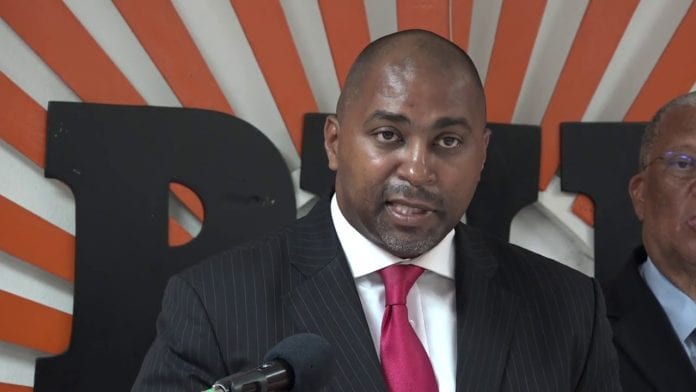
Jamaica’s Opposition is proposing a digital nomad program designed to attract remote workers to the island as part of a wider $10-billion revenue plan intended to avoid new taxes on Jamaicans still recovering from the effects of Hurricane Melissa.

Opposition Spokesman on Finance Julian Robinson said the proposal could generate billions in revenue while stimulating economic activity, positioning it as an alternative to the government’s $18-billion tax package.

Robinson, speaking Thursday during his contribution to the National Budget Debate in the House of Representatives of Jamaica, said the digital nomad initiative would allow remote workers, freelancers and entrepreneurs employed by companies overseas to live and work in Jamaica under a special permit.

“Every year, four million tourists visit Jamaica. We have the brand, we have the climate, we have the culture, and we also have the connectivity infrastructure that those remote workers are looking for,” Robinson said. “What we do not have as yet is a structured program that allows them to stay longer, to work from here and spend their money right here in Jamaica.”

Under the proposal, applicants would pay a US$2,000 fee for a 12-month permit. Robinson estimated that attracting about 5,000 digital nomads in the first year could generate roughly $1.5 billion in fees alone.

However, he said the larger economic benefit would come from spending by those visitors during their stay.

“The real story is when they come here, when they stay here — the restaurants, the Airbnbs, the hotels, the villas, the concerts, the food that they spend. That is the impact,” he said.

Robinson noted that similar programs have already been introduced across the Caribbean, citing Barbados as an early adopter. He said Barbados reported that each digital nomad spends about US$55,000 during their stay.

While he projected a more conservative estimate for Jamaica, Robinson said an average six-month stay with spending of about US$25,000 could translate into roughly US$125 million — or approximately $19.5 billion Jamaican dollars — in broader economic activity.

“Barbados did it immediately after COVID and took first-mover advantage,” Robinson said. “But we do have many advantages which other countries in the region don’t have.”

The digital nomad initiative forms part of Robinson’s broader $10-billion revenue plan, which also includes implementing an electronic invoicing system through Tax Administration Jamaica.

According to Robinson, the system would automatically capture sales transactions at the point of sale, reducing underreporting and improving tax compliance without imposing new taxes. He estimated the measure could generate approximately $8.6 billion in additional revenue.

Together, the two initiatives could generate about $10 billion in revenue during the first year, Robinson said, while easing the financial burden on Jamaicans still recovering from the impact of Hurricane Melissa.
UNDP chief reaffirms support for Jamaica’s hurricane recovery

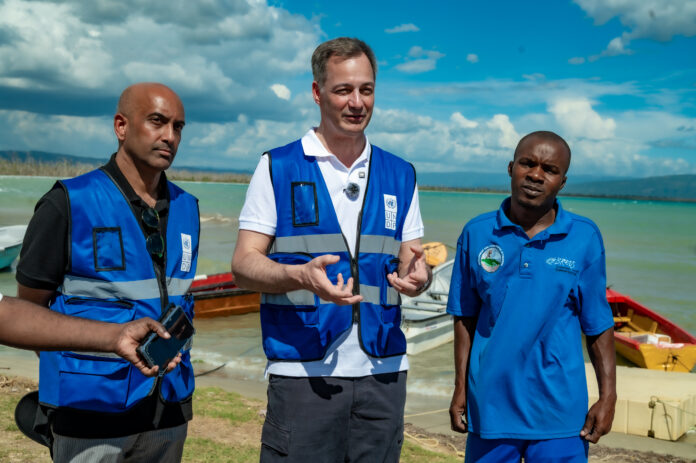
United Nations Development Programme (UNDP) Administrator Alexander De Croo has reaffirmed the agency’s support for Jamaica’s hurricane recovery and reconstruction efforts, while urging stronger partnerships with the private sector to advance the country’s broader development goals.

De Croo made the remarks during a two-day visit to Jamaica, his first official mission since assuming office in December 2025. He said the UNDP remains committed to supporting the country’s rebuilding efforts following the impact of Hurricane Melissa.

“Visiting Jamaica as the country continues its recovery from Hurricane Melissa, one thing is clear: the resilience is already here, in communities, in people, in the will to rebuild,” De Croo said. “The destruction is still visible, but so is the determination. UNDP stands in full solidarity with that spirit. Our teams are on the ground working alongside national and community partners to stabilize lives and to build the institutional foundations that will matter when the next storm comes.”

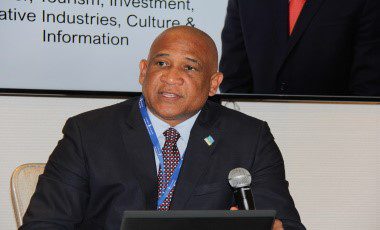
During his visit, De Croo addressed a private sector and sustainable finance roundtable alongside Aubyn Hill, Jamaica’s minister of industry, investment and commerce, as well as business leaders and members of the diplomatic community. He said development partnerships work best when governments create an environment that encourages private investment.

“You definitely need an environment in which the private sector feels at ease to invest,” he said, noting that while global public investments have fallen by one-third in the past two years, private capital has been increasing and access to advanced technologies is expanding.

He also stressed the importance of building an entrepreneurial middle class, saying that enabling small businesses to access capital and operate within a stable legal and tax environment can help drive economic growth.

De Croo, who also serves as managing director of the United Nations Capital Development Fund (UNCDF), highlighted the use of guarantee schemes that reduce lending risks for financial institutions and expand access to financing for small and medium-sized enterprises lacking collateral.

“Our view is that development happens by the population of a country, by the leadership of a country, together with the private sector of the country,” he said.

While in Jamaica, De Croo also visited the Galleon Beach fishing village in St. Elizabeth, where he toured a UNDP-supported solar energy centre and met with fishers and community leaders. He said off-grid renewable energy solutions can help coastal communities strengthen energy security while reducing post-harvest losses and protecting incomes.

The UNDP chief also held a courtesy call with Prime Minister Andrew Holness and Foreign Affairs and Foreign Trade Minister Kamina Johnson-Smith, reaffirming the agency’s commitment to supporting Jamaica’s resilient recovery and strengthening institutional capacity.

Current UNDP support to Jamaica includes loss and damage assessments, national recovery planning, community water access initiatives, solar energy installations, support for small businesses recovering from the hurricane, small home and roof repairs, and the restoration of coastal, forest and watershed ecosystems.

De Croo also held discussions with Chief Justice Brian Sykes and Justice Minister Delroy Chuck on ongoing cooperation to expand access to justice, strengthen restorative justice initiatives and digitize court records.

In separate talks with Water, Environment and Climate Change Minister Matthew Samuda, discussions focused on Jamaica’s access to the new global Loss and Damage Fund, as well as efforts to restore water systems and strengthen climate, energy and biodiversity projects.

Dr. Kishan Khoday, UNDP resident representative in Jamaica, described the visit as both historic and timely.

“The UNDP Administrator’s inaugural mission to Jamaica was a historic and timely visit that strengthened UNDP’s partnerships around Vision 2030 priorities like inequality, citizen security, justice, climate action and ecosystem resilience, and Jamaica’s national recovery priorities,” Khoday said.

De Croo departed Jamaica on March 6 after concluding the visit.

The former Belgian prime minister assumed the role of UNDP administrator on Dec. 2, 2025, and was sworn in on Feb. 3, 2026. As head of the agency, he leads more than 20,000 staff across 170 countries and territories and oversees the implementation of UNDP’s 2026–2029 strategic plan, which prioritizes expanding sustainable finance solutions for small island developing states through public-private partnerships.

Shenseea drops ‘Talk To Me Nuh’ featuring Vybz Kartel, produced by Rvssian

Shenseea

Dancehall star Shenseea has released a new single titled “Talk To Me Nuh,” teaming up with dancehall icon Vybz Kartel and renowned producer Rvssian.

The collaboration brings together three major forces in Caribbean music and marks another reunion between Shenseea and Kartel, one of the most influential figures in the dancehall genre.

Shenseea has often acknowledged Kartel’s impact on her musical journey through her sound and past collaborations.

Producer Rvssian also plays a central role in the release. Over the years, the Jamaican hitmaker has crafted records for artists across multiple genres, blending Caribbean rhythms with global pop and hip-hop influences.

That signature approach shapes “Talk To Me Nuh,” which remains rooted in dancehall while offering a sound accessible to international audiences.

The track is accompanied by a music video directed by Shane Creative and filmed in Nigeria and Miami. The visual highlights a blend of cultures, dance performances from Street Giants, vibrant fashion and energetic choreography.

The release also builds on a recent musical connection between Shenseea and Kartel. Last month, Shenseea appeared on Kartel’s single “Panic,” sparking speculation among fans that additional collaborations could follow. “Talk To Me Nuh” appears to deliver on that anticipation.

The new single arrives during a busy start to 2026 for Shenseea. In January, she released the solo track “Time For Me.” The following month, she featured on the “Morocco” remix alongside Joshua Baraka and producer Axon.

Shenseea has also earned a nomination at the inaugural Snappy Awards in the Top Music Creators category.

The Snappys, created by Snapchat, recognize digital creators who demonstrate originality, cultural influence and strong engagement with their online communities.

With new projects expected in the coming months, “Talk To Me Nuh” is likely to remain a prominent release heading into the summer.

UWI Mona mourns death of Deputy Principal Dr Tomlin Paul

Tomlin Paul,

The regional and international academic community is mourning the passing of Tomlin Paul, a respected physician, medical educator and academic leader who served as Deputy Principal of University of the West Indies’s UWI Mona Campus.

Dr Paul’s career spanned more than three decades of service to the health profession, education, public health and institutional development.

Vice-Chancellor Hilary Beckles reflected on his passing, saying the university had been strengthened by his leadership and character.

“Our university was greatly enriched by the presence of this remarkable man. Humane, collegial, and decent to the core, Dr Paul was a pillar of the principle-driven institution we all hold most dear. During troubling days when dark clouds threatened, he called upon us to see the bright light of hope. We are all beneficiaries of his enlightenment.”

Pro-Vice Chancellor and Principal of the Mona Campus, Densil A. Williams, also paid tribute to his colleague and deputy.

“It is with profound sadness and a deep sense of loss that I eulogise my colleague and dependable deputy principal, Dr Tomlin Paul. Dr Paul was no ordinary member of the UWI family. He was a giant among us as he championed student success, a portfolio that was close to his heart. Deputy Principal for student success was not only a vocation but also a devotion he had. It was Tomlin’s life’s desire to ensure that all students who entered our beloved campus were able to succeed at whatever their hearts desired. He was painstakingly thorough as he built out the student success portfolio at the Mona Campus to ensure that we not only delivered a world-class teaching and learning experience to our students but also ensured the future competitiveness of the UWI brand in the higher educational marketplace.”

Professor Williams continued, “Tomlin was a team player who would go above and beyond the call of duty to ensure that the UWI brand is protected and the Mona Campus not only survives but prospers at all its endeavours. I will miss his wise counsel, especially during times of turbulence. He was always a voice of reason, a calm spirit to cool any tension in any room and an intellectual tour de force who helped to position thought leadership as a major plank of the Mona Campus’s leadership during this period of administrative oversight. Walk good, Tomlin. You have played a fine innings, and now I am sure you can go into the pavilion with great certainty that the legacy you left will last a lifetime and the world will be better for it.”

Dr Paul began his academic journey at the Mona Campus in 1990 as a lecturer and went on to hold several leadership roles in medical education. He served as Senior Lecturer in Community Health, Director of the Bachelor of Medicine, Bachelor of Surgery (MBBS) Programme, Deputy Dean and later Dean of the Faculty of Medical Sciences from 2017 to 2021.

During his tenure as dean, he championed academic excellence, student engagement and institutional innovation. Under his leadership, the Faculty of Medical Sciences received the ASPIRE-to-Excellence Award in Medical Education for Social Accountability from the Association for Medical Education in Europe, recognising the faculty’s leadership in aligning medical education with the needs of society.

His office was also honoured with the Vice-Chancellor’s Award for Excellence 2020/2021, reflecting his commitment to quality, collaboration and academic achievement.

Alongside his leadership at UWI Mona, Dr Paul contributed internationally at the University of Global Health Equity in Rwanda, where he served as Chair of the Educational Development and Quality Centre and Dean of Research, Innovation and Quality. In that role, he helped strengthen international partnerships and support innovation in health professions education.

Dr Paul was also recognised internationally for his contributions to medicine and education. He received the Five-Star Doctor Award from the World Organization of National Colleges, Academies and Academic Associations of General Practitioners/Family Physicians for exemplifying the qualities of an outstanding physician.

A strong advocate for social accountability in medical education, Dr Paul served on a working group that developed the Institutional Self-Assessment Social Accountability Tool, now used by medical schools worldwide to improve responsiveness to community health needs. He was also a member of the International Social Accountability and Accreditation Think Tank, contributing to global discussions on accreditation and quality standards in medical education.

Throughout his career, Dr Paul combined scholarship with service. He authored and co-authored more than 50 publications, including the book Detailing Doctors, and contributed several book chapters and research citations. His work focused on improving quality in health professions education and advancing socially accountable health systems.

He also worked as a consultant and collaborator with regional educational institutions, quality assurance bodies and the Pan American Health Organization.

In recognition of his contributions to medical education, Dr Paul was named a Fellow of the Academy of Medical Educators and was also a member of the International Higher Education Teaching and Learning Association.

Dr Paul assumed the role of deputy principal at the Mona Campus on Aug. 1, 2023. In that role, he led initiatives focused on student success and academic achievement, including efforts through the Academic Support Unit.

Colleagues, students and collaborators remembered him not only for his scholarship and leadership but also for his humility, mentorship and commitment to strengthening institutions and nurturing individuals.

Dr Paul’s passing represents a significant loss to the academic, medical and public health communities. His legacy will endure through the institutions he helped shape, the international networks he strengthened and the many students and professionals he mentored throughout his career.

Antigua and Barbuda to raise minimum wage to EC$13 per hour over three years

minimum wage

The Cabinet of Antigua and Barbuda has accepted a recommendation to increase the national minimum wage from EC$9 to EC$13 (approximately USD$4.80) per hour, with the adjustment to be introduced gradually over a three-year period to balance higher earnings for workers with the needs of businesses.

The proposal was presented to Cabinet by the National Minimum Wage Advisory Committee, which reviewed the adequacy of the current wage level and examined economic conditions and the rising cost of living.

Director General of Communications in the Office of the Prime Minister, Maurice Merchant, said the committee recommended the increase “in order to better reflect current economic considerations and conditions and the rising cost of living.”

Cabinet accepted the recommendation but agreed that the adjustment should be phased in over three years to allow employers time to adapt while still ensuring workers see a steady increase in wages.

“So Cabinet has agreed that the adjustments should be implemented in phases, and that will be over a three-year period,” Merchant said. “Allow businesses and employers adequate time to adjust while ensuring that workers benefit from a steady and meaningful improvement in wages.”

Officials said the exact structure of the increases has not yet been finalized. Cabinet has asked the advisory committee to conduct further consultations with stakeholders and experts before returning with a proposed timeline for the incremental adjustments.

The consultations will consider how the wage should progress from the current $9 hourly rate to the final $13 level.

“Cabinet awaits the recommendation of the committee in that regard,” Merchant said, noting that the government wants the increase to provide “maximum benefit” to workers while minimizing disruption to businesses and the wider economy.

According to data cited during the briefing, about 7,264 workers currently earning between $9 and $12 per hour are expected to be directly affected by the change within a national workforce of more than 45,000 people.

Merchant said the phased approach is intended to prevent potential job losses in sectors that may struggle to absorb the increase immediately.

“To increase from $9 to $13 at one fell swoop may result in retrenchment,” he said, adding that the government believes the gradual implementation will help protect jobs while raising incomes.

Officials said the policy reflects the government’s commitment to improving living standards while maintaining a stable economic environment.

Guyana rejects Venezuela’s protest over offshore seismic survey

Guyana Essequibo region

Guyana on Thursday said Venezuela has no legal authority over waters off the Essequibo Region, arguing that the land boundary between the two countries was settled in 1899 and that nothing prevents the South American nation from conducting a 3D seismic survey of a 25,000-square-kilometre offshore area or attracting investors there.

“The Ministry wishes to remind the Government of the Bolivarian Republic of Venezuela that the Government of Guyana has the authority to grant permission for any activities within the maritime areas appurtenant to the coastal territory of Guyana, as defined by the Arbitral Award of 1899, which established the frontier between British Guiana and Venezuela,” the foreign ministry said.

Guyana said the boundary between the two states was definitively settled more than a century ago by the 1899 Arbitral Award, which Venezuela accepted and benefited from at the time, providing legal certainty for both countries.

That award, Guyana said, brought finality to the territorial boundary and enabled both states to exercise the full rights and advantages arising from their respective territories and maritime projections.

“It is therefore particularly incongruous that Venezuela, having historically benefited from the stability and legal clarity afforded by that settlement, now seeks to challenge Guyana’s sovereign right to utilise and develop the resources contained within the territory and maritime areas that lawfully appertain to Guyana,” the government said.

On that basis, Guyana said it “respectfully rejects” Venezuela’s protest and also dismissed the claim that any portion of its maritime space or continental shelf belongs to the Bolivarian Republic of Venezuela.

The Guyanese government described Venezuela’s statement as “unfounded, inaccurate, and entirely inconsistent” with established principles of international law, including the assertion that the maritime boundary between the two countries had yet to be legally settled.

Georgetown maintained that it enjoys sovereignty up to 12 nautical miles in its territorial sea and sovereign rights beyond that distance in its exclusive economic zone (EEZ) and continental shelf.

According to the government, the maritime areas where the seismic survey will take place “lie unequivocally” within Guyana’s EEZ and continental shelf.

“These rights include the exclusive authority to explore, exploit, conserve and manage natural resources within its maritime jurisdiction. As such, Guyana’s decision to facilitate the acquisition of high-resolution seismic data through a 3D multi-client seismic survey represents a legitimate and lawful exercise of its rights and is entirely consistent with international law and established state practice,” the foreign ministry added.

The government said the seismic acquisition initiative is part of Guyana’s broader national strategy to improve scientific understanding of its offshore petroleum basin, enhance transparency in resource management, and increase the attractiveness of Guyana’s offshore acreage to responsible international investors.

Officials explained that the program will use advanced geophysical techniques to generate high-resolution subsurface imagery to support exploration planning and strengthen long-term governance of the country’s offshore energy sector.

Guyana also rejected Venezuela’s characterization that the activities are taking place in “undelimited maritime areas.”

“Such claims constitute a deliberate misrepresentation of both the geographic and legal realities governing Guyana’s maritime jurisdiction,” the government said.

Guyana added that it has consistently exercised peaceful administration and jurisdiction over its maritime spaces, including the licensing and regulation of offshore exploration activities, in line with international law and with due regard to the rights of other states.

The government also pointed to the Geneva Agreement of 1966, which governs the resolution of the dispute stemming from Venezuela’s claim — first made in 1962 — that the 1899 Arbitral Award is null and void.

According to Georgetown, the agreement does not prevent Guyana from pursuing economic development activities within its territory or adjacent maritime areas.

Responding to Venezuela’s warning that it would not recognize any concession, license or activity related to natural resource exploration in “undelimited maritime areas” granted unilaterally by Guyana, the government said international law does not allow one state to invalidate the lawful sovereign decisions of another within its territory or maritime zones.

Guyana said Venezuela’s statements amount to an attempt to interfere with its sovereign right to pursue economic development and manage natural resources for the benefit of its people.

“The Ministry therefore calls upon the Government of the Bolivarian Republic of Venezuela to refrain from issuing inflammatory and misleading statements that seek to undermine Guyana’s sovereign rights or discourage legitimate economic activity within Guyana’s maritime domain,” the statement said.

The area where the 3D seismic study will be conducted includes 11 blocks from Guyana’s 2022 licensing round located south of the Stabroek Block and extending to the Guyana-Suriname border.

The agreement also allows for the reprocessing and integration of existing seismic survey datasets across the three survey lots, the government said.

Burna Boy to headline newly added opening night at Reggae Land 2026

The organisers of Reggae Land have announced an expansion of the 2026 staging after the event sold out in record time, adding a third day to the festival for the first time in its history.

The newly announced Friday, July 31 show will be headlined by global Afrofusion star Burna Boy, who will make his debut appearance at the festival. The additional date comes after tickets for the main weekend — Saturday, Aug. 1, and Sunday, Aug. 2 — sold out at unprecedented speed.

The three-day event will take place at the Milton Keynes National Bowl, where thousands of fans are expected to gather for one of the UK’s largest celebrations of reggae and Caribbean culture.

Burna Boy’s booking marks a major moment for the festival. Widely regarded as one of Africa’s most influential music exports, the Grammy-winning artiste has spent the past decade dominating global charts with his signature fusion of Afrobeats, dancehall and hip-hop.

Festivalgoers can expect to hear some of his biggest hits, including Last Last, Ye and City Boys, as he opens the weekend with a high-energy performance that organisers say will set the tone for what is shaping up to be the festival’s biggest year yet.

More than 120 artistes have already been confirmed across seven stages, reflecting the event’s rapid growth and increasing cultural significance in the UK festival circuit.

The lineup includes several major Caribbean acts, among them dancehall artist Vybz Kartel, international star Shenseea and Grammy-winning reggae veteran Shaggy.

Fans will also see performances from dancehall legend Beenie Man, reggae band Morgan Heritage, singer Tarrus Riley, as well as popular dancehall acts Kranium and Konshens.

Veteran reggae singer Barrington Levy is also among the artists slated to perform.

Since its launch, Reggae Land has grown into a defining platform for Caribbean music in the United Kingdom, bringing together genres ranging from roots reggae and dancehall to dub, jungle and carnival-inspired sounds. Organisers say the decision to add an opening night reflects overwhelming fan demand and the festival’s continued evolution.

Shenseea scores nomination at inaugural Snappy Awards

Shenseea

Dancehall star Shenseea continues to dominate as one of Jamaica’s most influential global entertainers, earning a nomination at the inaugural Snappy Awards in the coveted Top Music Creators category.

The Snappys, created by social media platform Snapchat, celebrate digital creators who demonstrate originality, cultural influence and meaningful engagement with their online communities. Shenseea’s nomination underscores her growing impact not only as a chart-topping dancehall artiste but also as a powerful voice in the digital space.

The “Blessed” hitmaker has built a formidable social media presence that spans millions of followers worldwide. On Instagram, she has an audience of more than 9.5 million followers, while her reach extends to 7.2 million followers on TikTok and approximately 676,300 subscribers on Snapchat. Through a blend of music promotion, lifestyle content and behind-the-scenes glimpses into her career, the Jamaican entertainer has mastered the art of social media storytelling — a key factor behind her Snappy nomination.

Shenseea’s digital dominance has gone hand in hand with continued musical momentum. Her recent collaboration “Panic” with dancehall artist Vybz Kartel generated significant buzz upon release, debuting at No. 1 on the U.S. reggae iTunes chart within an hour of its release. The single has also been gaining traction across streaming platforms and trending on YouTube in multiple countries.

The track arrives amid strong streaming performance across Shenseea’s catalogue. Her music has accumulated hundreds of millions of streams across platforms, with several songs surpassing major milestones and her overall catalogue nearing 800 million credited Spotify streams.

Her Snappy Awards nomination places her among a diverse international lineup that includes chart-topping singer Alex Warren, Grammy-winning R&B star Leon Thomas, singer-songwriter ENISA, and rapper JT.

The inaugural ceremony will take place on March 31 and will be hosted by comedian and Snap Star Matt Friend.

For Shenseea, with an ever-expanding fan base, viral moments online and a steady stream of new music, the entertainer continues to demonstrate why she remains one of Jamaica’s most dynamic exports in today’s music landscape.

The ultimate guide to mastering crypto futures for long-term growth

Crypto futures can seem like a complex world reserved for the elite. Many people see high leverage and feel a sense of fear. It is a tool for growth when used with a clear plan. Mastering this market takes time and patience. You do not need a degree in finance to succeed here. Small steps lead to big results over the years. This guide looks at how to navigate these waters safely. You can build a strong future by following simple rules and staying disciplined.

Master the Core Mechanics

Futures contracts allow you to bet on the price of an asset without owning it. You can profit if the price goes up or if the price goes down. This flexibility is what makes the market so attractive to long-term players. Most contracts in this space never expire. You can hold a position for as long as you can cover the costs. Understanding how these fees work is the first step to staying profitable.

Leverage lets you trade with more money than you have in your account. It can turn a 5% price move into a 50% gain. It can also lead to quick losses if you are not careful. Use low leverage when you are just starting out. 2x or 3x is plenty for someone learning the ropes. You want to stay in the game long enough to see your strategy work.

Strategy and Asset Movement

New traders often start with spot markets before moving to more advanced tools. Many find that P2P crypto trading on ZOOMEX serves as a bridge, but futures contracts provide the leverage needed for faster scaling. This transition requires a deep understanding of market trends. You should study how price cycles work before putting large amounts of money at risk. Start with small amounts to test your theories. Learning from small mistakes prevents big losses later.

Long-term growth is about survival. You cannot grow if you lose your entire trading balance in one week. Successful traders focus on the charts for hours every day. They look for patterns that repeat over months and years. History often repeats itself in the world of digital assets. Recognizing these trends gives you a massive advantage over the crowd.

Navigating the Regulatory Shift

The world of digital finance is changing fast as new rules come into play. A global report from a professional services network mentions that 2026 is a big year for new rules. It notes that systems for stablecoins and disclosures are now fully operational for many traders. This means the market is becoming more stable for long-term growth. New players can feel safer knowing there is more oversight than in previous years.

Greater transparency helps everyone make better choices. You can see where the money is flowing more clearly. This shift from policy design to actual use is a positive sign for the industry. It reduces the risk of sudden crashes caused by bad actors. Professional traders prefer markets that have clear boundaries and rules. It allows them to plan for the next 5 or 10 years without fear.

Smart Portfolio Management

Scaling a portfolio requires a mix of different techniques. You should never put all your funds into a single trade. Spread your risk across several assets to protect your balance. This keeps your mind clear and helps you make rational choices.

  • Use stop-loss orders on every single trade.
  • Only risk 1% to 2% of your total balance at a time.
  • Keep a portion of your funds in stable assets.
  • Review your performance every single week.
  • Set a daily goal and stop trading once you hit it.

This approach keeps your emotions in check. You will not panic when the market takes a sudden dip. Having a plan allows you to stay calm during high volatility. You must be the boss of your own money. Do not let the market dictate how you feel or act.

Secure Your On-Chain Activities

Security is a top priority for anyone holding digital assets. Government financial agencies remind users that transactions on the blockchain are final. They explain that once a transfer is verified, it cannot be reversed by anyone. This fact makes it crucial to double-check every address you use. One small typo can result in the loss of all your funds.

Make sure you use two-factor authentication on all your accounts. Never share your private keys with anyone, no matter who they claim to be. Scammers are always looking for easy targets in the crypto space. If an offer sounds too good to be true, it likely is. Protecting your wealth is just as important as growing it through trades. Stay alert and keep your security habits sharp.


The path to growth in the crypto world is open to anyone willing to learn. You have the tools and the data at your fingertips. Take things slow and focus on the process rather than the money. The profits will follow once you master the skills. Stay curious and keep your eyes on the long-term horizon. Your future self will thank you for the work you do today. The market is waiting for those who are ready to take it seriously.


Miami Beach ramps up safety and traffic measures for Spring Break 2026

Miami Beach spring break
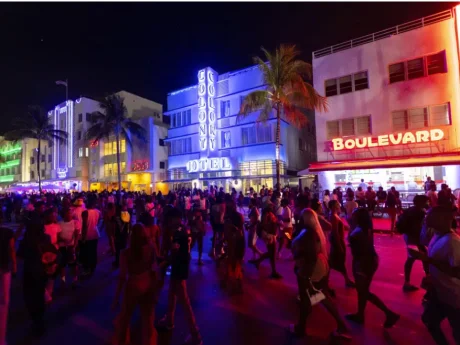
Crowds walk up and down Ocean Drive during spring break on Saturday, March 18, 2023, in Miami Beach, Florida. Miami Beach officials imposed a curfew beginning Sunday night, March 19, after two fatal shootings and rowdy, chaotic crowds that police have had difficulty controlling. (D.A. Varela/Miami Herald via AP)

Visitors and residents should expect heightened safety, traffic, and parking measures as Miami Beach prepares for Spring Break 2026. The city has designated March as a high-impact period, with peak crowds expected March 12-15 and March 19-22.

The Miami Beach Police Department (MBPD) will implement License Plate Reader (LPR) operations on the eastbound lanes of the MacArthur and Julia Tuttle causeways from 10 p.m. to late night on March 13-15 and March 20-22, with setup beginning at 9 p.m. LPR enforcement along the 5th Street corridor was conducted March 6-8. MBPD said the readers have historically helped identify violent offenders and recover stolen vehicles and firearms. DUI enforcement will also be conducted on March 13-14 and March 20-21.

Traffic on Ocean Drive will be restricted, allowing vehicles access only from 15th Street with a sole exit at 5th Street during peak periods. Businesses renting motorized vehicles including golf carts, low-speed vehicles, autocycles, motorized scooters, mopeds, and bicycles with small engines will be suspended March 12-15 and March 19-22.

Parking rates in the Art Deco District will increase: garages between 5th and 16th streets on Washington Avenue to Ocean Drive will charge flat fees of $40-$100 per day, with a $40 rate expected March 12-15. Street parking and surface lots will be $20 per hour, with a $100 daily max; residents can still pay $1 per hour. Nonresident towing in the district will cost $548 plus administrative fees.

Beach entrances along Ocean Drive at 5th, 7th, 8th, 10th, 12th, and 14th streets will have security checkpoints. Prohibited items include coolers, glass containers, inflatable devices, tents, tables, and amplified music without a permit. Alcohol and smoking remain banned on city beaches. Package liquor stores must adhere to an 8 p.m. closing time.

Traffic plans are in place from 6 p.m. Thursday through Sunday to manage congestion in neighborhoods including South of Fifth, West Avenue, and Flamingo Park. Access will be limited to specific streets to improve mobility for residents and patrons. MBPD may also designate special event zones for temporary gatherings of 50 or more attendees, with authority to double traffic fines, enforce occupancy limits, and impound vehicles if needed.

To offset parking costs, free shuttles will run 24 hours from Thursday at 5 a.m. through Monday at 5 a.m. at several municipal garages, with increased frequency from 3 p.m. to 2 a.m. Peak service is every 10-15 minutes, off-peak every 20-30 minutes.

Staffing will be significantly increased across Miami Beach Police, Fire Rescue, Ocean Rescue, Code Compliance, Park Rangers, Parking, and Sanitation. MBPD will be supported by the Florida Department of Law Enforcement, Florida Highway Patrol, and Miami-Dade Sheriff’s Office. Fire Inspectors will conduct nightly inspections of nightclubs and other venues.

Goodwill Ambassadors in pink “Take Care of Our City” T-shirts will assist visitors throughout the Art Deco District, while the free Miami Beach trolley service will operate on an enhanced schedule March 11-14, 18-21, and 25-28 from 8 a.m. to 1 a.m., including additional vehicles on the South Beach loops and Collins Express Trolley.

These measures are part of a broader effort to ensure public safety, order, and a positive experience for visitors while discouraging disorderly behavior during the busy spring season.

Florida Senate passes bill requiring citizenship verification for voters

Posters asking voters to maintain proper social distancing hang from a poll worker's desk as a voter signs on Election Day at Madison Square Garden, Tuesday, Nov. 3, 2020, in New York. (AP Photo/Mary Altaffer)

The Florida Senate on Thursday passed H.B. 991, a so-called “election integrity” bill that requires election officials to verify the citizenship of all registered voters in the state. The measure passed in a 27-12 party-line vote, with Republicans supporting the legislation and Democrats opposing it.

Under the bill, election officials may require documents such as passports or birth certificates to confirm citizenship. The legislation also limits the types of identification voters can present at the polls. Driver’s licenses, state ID cards, military IDs, and concealed carry permits would still be accepted, but student IDs and retirement center IDs would no longer qualify.

Sponsors of the bill made a concession to critics by delaying its effective date. Instead of taking effect on July 1, just weeks before the Aug. 18 primary and months ahead of the Nov. 3 general election, the provisions will not apply until after the 2026 midterm election.

The bill calls for the state voter registration database to be matched with the Florida Department of Highway Safety and Motor Vehicles driver’s license database, which has already verified citizenship for compliance with federal REAL ID requirements. Opponents said more than 800,000 Floridians with driver’s licenses or state IDs that are not REAL ID compliant could be flagged and required to provide proof of citizenship to remain registered.

Democrats also raised concerns that people who change their registrations — including many women who change names after marriage or divorce — would have to prove citizenship. They argued that removing student IDs and retirement IDs could disenfranchise college students and older residents who no longer drive, potentially preventing them from voting.


Trinidadian man charged for murder of Guyanese wife in New York

Rupchand Simboo, the suspect in the murder and dismemberment of his wife, Salisha Ali (inset), is pictured in police custody leaving the NYPD's 116th Precinct stationhouse in Queens on Wednesday, March 11, 2026. (Theodore Parisienne / New York Daily News)

A 75-year-old Trinidadian man has been arrested and charged in the killing of his wife, Salisha Ali, after her dismembered body was found in multiple locations across Queens. The suspect, Rupchand Simboo, was taken into custody Wednesday following a medical examiner’s finding that a sharp instrument had been used to kill Ali.

Ali, 34, was last seen alive on July 13, 2025, during a FaceTime call with relatives. Simboo reported her missing later that day, though police now believe she had already been killed. Her family, who did not hear from her for weeks, filed a missing person report in August. The couple met in Trinidad and Tobago in 2023, married in 2024, and Ali relocated to New York from Guyana that same year.

In September 2025, sanitation workers discovered Ali’s partially skeletonized torso in a garbage bag near 149th Avenue and Brookville Boulevard on the edge of Idlewild Park, close to JFK Airport. The torso lacked head, arms, and legs. Police said the body had been methodically dismembered: a knife was used for soft tissue and a saw for bone. The victim was identified through unique tattoos, including three names and a flower. NYPD Chief of Detectives Joseph Kenny said the torso “didn’t have any wounds or injuries,” complicating determination of the precise cause of death.

Additional remains, including Ali’s head, were discovered last weekend in the Jamaica Bay Wildlife Refuge. Authorities said the methodical dismemberment and removal of body parts suggested deliberate concealment.

Relatives told the news site Documented that Ali worked in a Queens restaurant and was training to become a home health aide. She spoke daily with her mother and three daughters in Guyana. Her sudden silence and missed daily calls prompted growing concern among family members.

Simboo has been charged with murder, obstructing government administration, and concealment of a human corpse. His arraignment in Queens Criminal Court was pending Wednesday. Police have long questioned his account of Ali’s disappearance, though the motive remains unclear.

“We were shocked when we got the news. It is very horrific. This is something you would hear about in movies,” a relative told the Trinidad Express. “You never thought it would happen to our family.”

US man fined EC$1,000 for cannabis possession at VC Bird Airport

Antigua tourism

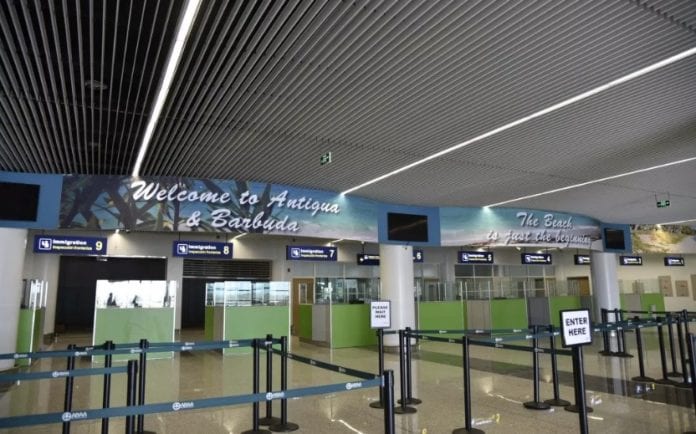
A United States national has been fined EC$1,000 after pleading guilty to possession of cannabis following his arrest at V.C. Bird International Airport last weekend.

The man, Fady Aziz Saloum, 34, was stopped on March 7 after arriving on a United Airlines flight from Pennsylvania. Authorities said a drug-detection dog alerted officers to a black suitcase belonging to him during a joint operation involving the Narcotics Department, the K-9 Unit and the Customs Enforcement Unit.

A search of the luggage uncovered 23 pre-rolled cannabis joints and a bag containing a total of 56 grams of cannabis. Saloum was taken to Police Headquarters and charged with possession and importation of the drug.

He later appeared before Chief Magistrate Ngaio Emanuel. Prosecutors accepted his guilty plea to possession and withdrew the charge of importation, to which he had pleaded not guilty.

In sentencing, the magistrate said the quantity of cannabis placed the offence in a lower category and noted there were no aggravating factors. The court also considered mitigating factors, including Saloum’s cooperation with police, his previous good character, and the fact that he holds a medical cannabis card in the United States for anxiety and back pain. However, the court noted that such a card has no legal standing in Antigua and Barbuda.

Saloum was ordered to pay the EC$1,000 fine within 30 days or face 30 days in prison. The cannabis was also confiscated. The magistrate also warned travellers to familiarize themselves with the laws of countries they plan to visit.

Barbados to install new radar system at Grantley Adams Airport

Grantley Adams Airport

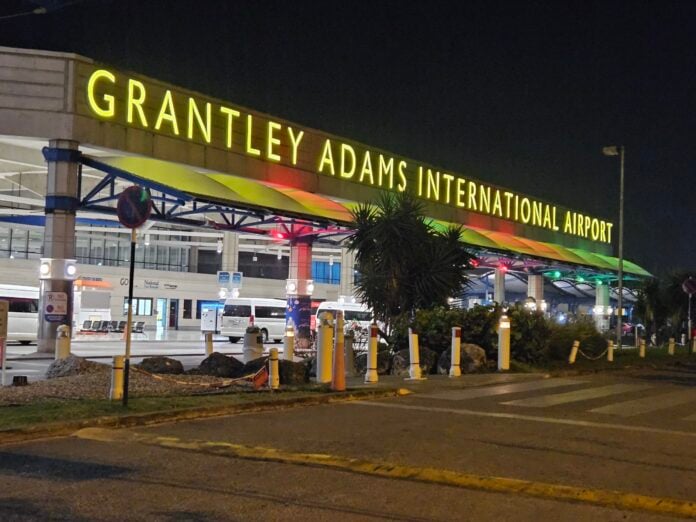
The Government of Barbados plans to install new radar and airspace management technology at Grantley Adams International Airport to help air traffic controllers manage the growing number of aircraft entering the country’s airspace.

Minister of Tourism and International Transport Ian Gooding-Edghill said the upgrade, announced during debate on the Appropriation Bill 2026 in the Barbados House of Assembly, will improve both safety and efficiency as the island experiences record airlift.

A key component of the project is a new monopulse secondary surveillance radar system valued at about $7.2 million. The equipment forms part of a broader $17 million aviation technology programme supported by the CAF Development Bank.

Chief Executive Officer of the airport, Hadley Bourne, said the radar system will allow controllers to better track aircraft and manage spacing between planes, particularly during busy periods when congestion occurs in the airspace before aircraft even land.

The planned upgrade comes days after operations at the airport were disrupted when air traffic controllers staged a sickout that temporarily closed Barbados’ airspace for about seven and a half hours.

The shutdown caused flight cancellations, delays and diversions. Some services operated by American Airlines were affected, while a JetBlue flight from New York returned to John F. Kennedy International Airport and an Air Canada service turned back to Canada before the airspace reopened later that day.

Gooding-Edghill said the airport, built about 40 years ago, was not designed to handle the current volume of traffic. The facility recently recorded 2.4 million passengers passing through its terminals — the highest number in its history.

The surge has created pressure on airport infrastructure, particularly during peak travel periods when multiple aircraft may be waiting for parking positions on the apron.

To address the growing demand, the government is planning the first phase of a $120 million expansion of the airport to increase capacity and improve services.

Officials say investments are also being made in equipment to improve aircraft handling and passenger processing as traffic continues to grow.

According to Lemuel Padmore, the chief executive officer of Caribbean Aircraft Handling, peak arrival times between 2 p.m. and 4 p.m. can see about 15 aircraft arriving, moving nearly 3,000 passengers and approximately 4,500 bags through the airport during that period.

Jamaica well positioned to handle oil price shocks, says minister

Fayval Williams Jamaica

Jamaica’s Minister of Finance and the Public Service Fayval Williams says Jamaica is well positioned to manage fluctuations in global oil prices linked to the ongoing conflict in the Middle East.

Speaking during Wednesday’s (March 11) post-Cabinet press briefing at Jamaica House, Williams highlighted the country’s Net International Reserves (NIR), which currently stand at US$6.8 billion, as a key buffer against sudden increases in oil prices.

“The good news is, we are positioned well in terms of our foreign exchange, if we have to buy oil at a higher price,” she said.

Williams noted that Jamaica remains fully dependent on imported fuel for sectors including transportation, electricity generation and manufacturing, making the maintenance of strong reserves critical to protecting the economy from external shocks.

“I tried to explain in Parliament yesterday (Tuesday, March 10), just the significance of us having robust Net International Reserves. It’s a buffer. It’s to ensure that we have foreign exchange to deal with any eventuality that happens,” she added.

Her comments come as global oil prices experience sharp swings amid escalating tensions in the Middle East.

Locally, motorists have already seen increases at the pump following last week’s price adjustment by state refinery Petrojam.

Diesel and gasoline each increased by $4.50, bringing the prices per litre to $166.75 and $161.82, respectively.

Jamaican couple and daughter killed in New Jersey murder-suicide

A family with Jamaican roots was at the centre of a tragic murder-suicide in the United States after a man fatally shot his Jamaican wife and her parents inside their New Jersey home before taking his own life, authorities say.

The victims have been identified as 38-year-old Deonna Stewart and her parents, Allan Russell, 61, and Michelle Russell, 60. Investigators say the shooter, 37-year-old Vaughn Stewart — Deonna’s husband and the father of their three children — died from a self-inflicted gunshot wound.

According to Ocean County Prosecutor Bradley D. Billhimer, officers from the Berkeley Township Police Department responded to a report of shots fired at a residence on Fairwood Drive at about 5:00 a.m. on March 10. Responding officers reportedly saw a man entering the residence and soon after heard additional gunfire inside the home.

Members of the Ocean County Regional SWAT Team later entered the residence, where they found Allan and Michelle Russell, the homeowners, dead from apparent gunshot wounds. Three minor children who were inside the house at the time were not physically harmed.

Authorities said officers subsequently discovered Vaughn Stewart inside the home suffering from what appeared to be a self-inflicted gunshot wound to the head. He was transported to Community Medical Center in Toms River, where he was later pronounced dead.

As investigators expanded the search of the surrounding area, officers located multiple shell casings outside the residence and discovered Deonna Stewart’s body about 50 yards away along Fairwood Drive.

Investigators believe Vaughn Stewart entered the home and shot his in-laws before chasing Deonna Stewart down the street and fatally shooting her. He then returned to the residence, where he turned the gun on himself.

Prosecutors said the couple shared three children — an infant, a three-year-old and a five-year-old — and had been living separately at the time of the incident. Deonna Stewart had been residing in the home with her parents and the children.

Authorities said the children are currently in the care of the Department of Child Protection and Permanency.

Neighbours described Allan and Michelle Russell as “the most amazing people,” noting that the Jamaican-born couple worked in the medical field.

Police have not yet disclosed a possible motive as investigations continue.

Jamaica Carnival drives J$165.7 billion economic impact in 2025

Jamaica Carnival

Carnival continues to prove its value as a major driver of Jamaica’s tourism economy, with the 2025 celebrations generating an estimated $7.7 billion in direct spending and contributing a total economic impact of $165.7 billion, according to Jamaica’s Minister of Tourism Edmund Bartlett.

The 2025 figures represent a 48 per cent increase in revenue compared with the previous year. Bartlett shared the data during a media briefing at the Jamaica Pegasus hotel in New Kingston, highlighting the deep connection between entertainment and tourism on the island.

He noted that Carnival 2024, which marked a return to pre-pandemic visitor levels, produced $4.42 billion in direct spending and a total economic impact of $95.4 billion.

“Carnival in Jamaica is an economic engine…it is generating spending, supporting jobs, energising small businesses, strengthening supply chains, and creating demand for Kingston and Jamaica,” Bartlett said.

“Numbers like these do not whisper, they shout. They tell investors and partners that Carnival is not just cultural excitement but that it makes solid economic sense,” he added.

Bartlett reported that overseas visitors spent an average of US$5,320.89 per person in 2025, up from US$3,209 in 2024, resulting in total direct spending of US$23.6 million ($3.76 billion). Among first-time visitors, 78.7 per cent said they travelled specifically for Carnival, while the figure rose to 87.7 per cent among repeat visitors.

“That means that Carnival is not only simply entertainment, it is motivating travel, building loyalty, and giving people a real reason to choose Jamaica again and again,” Bartlett said. “Experience drives travel decisions, they deepen visitor spend and lengthen stays. Visitors travel for something they can feel, something they can participate in, and something they can carry home and talk about long after the trip ends,” added Bartlett.

The minister also noted Carnival’s role in the country’s broader tourism recovery following Hurricane Melissa in October 2025, highlighting that Jamaica has already reached approximately 75 per cent of projected visitor arrivals for the months after the storm.

“That means that come winter, and heading into 2027, we could have a full recovery of the sector,” he said. “There have been significant increases in tourist arrivals and we are seeing figures that surpass our initial projections. We’ve had to rewrite the narrative in terms of projected performance for the year and that’s because of how well we’ve recovered as a country,” declared Bartlett.

With pre-Carnival events starting April 8 and the main road march scheduled for April 12, Carnival 2026 is expected to once again transform Kingston into a hub of activity, driving demand for accommodation, transportation, food services, and creative talent.

Tuff Gong International Studios reopens in Kingston after upgrades

Tuff Gong International Studios has officially reopened its recording facility on Marcus Garvey Drive in Kingston following extensive upgrades aimed at modernizing the historic music production hub.

The relaunch took place on March 5 with an invite-only event attended by musicians, recording artists, media professionals, and political figures. Guests included Cedella Marley, CEO of Tuff Gong International; reggae singers Marcia Griffiths and Judy Mowatt; musicians Richie Stephens, Lukie D and Sangie Davis; keyboardist Robbie Lyn; percussionist Bongo Herman; bassist Donald Dennis of the Firehouse Crew; and political figures Mark Golding, leader of the Opposition People’s National Party, and Member of Parliament Anthony Hylton.

The upgraded facility features modern production suites, improved acoustics, and a redesigned lobby displaying photographs of Bob Marley, Rita Marley, and other local and international artists who have recorded at the studio. A new artist lounge offers seating and recreational amenities, including table tennis, table football, a pool table, and a pinball machine.

The property originally housed Federal Records, founded in 1957 by music entrepreneur Ken Khouri. Federal Records was among Jamaica’s first fully integrated music production facilities, providing recording, mastering, design, and vinyl pressing.

In 1981, Rita Marley purchased the building, fulfilling a promise made by her late husband, Bob Marley, who had been denied entry to the studio in the 1970s while visiting with musician Johnny Nash. According to Cedella Marley, the relaunch represents “another chapter in a love story” and honors her parents’ vision: “What began as a painful moment became the foundation for something much bigger. That space eventually became Tuff Gong International, a place where reggae music could be recorded, pressed, produced, and shared with the world directly from Jamaica.”

She added that her mother recognized the importance of building systems to preserve Jamaican music: “Legacy is not only about protecting songs. It’s about building the systems that allow the culture to survive and grow. She was building foundations. And because of that, reggae continues to have a home and a global platform rooted right here in Jamaica.”

Over the years, Tuff Gong has hosted regional and international artists including Gilberto Gil, Alpha Blondy, Youssou N’Dour, and Sinéad O’Connor. The reopening marks a new chapter for the studio as a creative hub for Jamaican music and international collaborations.

Seven foreign nationals arrested in Guyana illegal mining crackdown

Guyana GGMC denies plans to discharge cyanide and mercury in river

The government of Guyana says it is continuing its crackdown on illegal mining, with seven foreign nationals — including six Brazilians — arrested during the latest enforcement exercise.

In a statement, the Ministry of Natural Resources (Guyana) said a coordinated operation across the country’s mining districts, conducted by the Guyana Geology and Mines Commission (GGMC) and the Guyana Police Force (GPF), led to the discovery of two illegal mining sites along the Puruni River in Region Seven (Cuyuni-Mazaruni).

Authorities said six Brazilian nationals and one Venezuelan were found working illegally at the sites. Following the operation, the GGMC instituted several charges against the landowners.

The charges include operating without a licence or permit, operating without permission to mine, and employing workers without work permits or certificates of registration. The operators have also been charged with failing to produce a register of labourers and a register of poisonous substances.

According to the ministry, the foreign nationals were escorted to the Bartica Police Station for processing, while an excavator, dragger and other equipment used in the illegal operations were seized by the state.

“The ministry has taken the necessary steps to ensure all costs for environmental reclamation are covered by the unlicensed operators,” the ministry said.

Officials noted that the discovery of the two illegal mining operations is among several that have been dismantled in recent months following a directive from Irfaan Ali to strengthen compliance in the mining sector.

In January, the Guyanese president warned that gold miners who fail to declare their production will face immediate consequences, including deregistration, prosecution and possible expulsion, as the government intensifies its crackdown on illegal and non-compliant mining operations.

“All registered dredges with no declaration will be deregistered, and all foreign miners operating illegally in Guyana must be identified for prosecution and expulsion,” Ali said.

St. Lucia defends citizenship programme after UK visa decision

St. Lucia tourism
St. Lucia’s Tourism Minister, Dr. Ernest Hilaire

Ernest Hilaire, the minister responsible for Saint Lucia Citizenship by Investment Programme, has strongly defended the country’s investment citizenship programme, insisting that the United Kingdom’s recent decision to impose visa requirements on Saint Lucian nationals should not be interpreted as a condemnation of the initiative.

The statement comes amid new visa requirements for nationals of Saint Lucia traveling to or transiting through the United Kingdom. UK officials say the measure is intended to address an increase in asylum applications from Saint Lucian passport holders and to curb what they described as “back door entry” into the country.

Addressing Parliament on Tuesday morning, Hilaire said the statement from the UK Home Office has been widely misinterpreted, creating the impression that Saint Lucia’s citizenship by investment programme is responsible for a rise in asylum claims in the United Kingdom.

According to the minister, that conclusion is not supported by evidence.

“I say to this Honourable House that it is wrong to leave the impression that Saint Lucia’s CIP is responsible for this problem when, to date, the data needed to establish that claim has not been shared with us,” Hilaire stated.

The United Kingdom recently announced that Saint Lucian nationals will now require visas to enter the country, citing concerns about asylum applications and illegal work. However, Hilaire noted that UK authorities have not provided data distinguishing between natural-born Saint Lucians and individuals who obtained citizenship through the investment programme.

“We have asked repeatedly for the relevant information on any concern with the CIP,” he told Parliament. “If there are CIP citizens using Saint Lucian passports to claim asylum or work illegally in the United Kingdom, then share the data with us. Tell us how many. Tell us where they are originally from. Give us the information necessary to act.”

Hilaire stressed that Saint Lucia has consistently cooperated with international partners to safeguard the integrity of the programme.

He said the government has taken action in the past when credible concerns were raised, including barring certain nationalities from applying under the programme after potential risks were identified elsewhere in the region.

“That is what responsible government looks like,” Hilaire said. “It does not gossip. It does not speculate. It acts.”

The minister argued that without evidence identifying specific abuses, the government cannot take targeted action against individuals allegedly misusing Saint Lucian citizenship.

“No responsible government can fix a problem that is not properly placed before it,” he said.

Meanwhile, Philip J. Pierre confirmed Monday that there will be a six-week transition period before the new visa requirement fully takes effect. However, according to a release from the British High Commission, the measure took effect on March 6, 2026.

Speaking ahead of the weekly Cabinet meeting, the prime minister said individuals who had already made travel arrangements prior to the announcement will be allowed to travel to the United Kingdom visa-free during that six-week window.

Despite the new visa requirement, Hilaire reaffirmed the government’s commitment to strengthening the citizenship programme and maintaining cooperation with international partners.

Where did all the green go? Kingston’s vanishing public spaces

Kingston is running out of places where people can simply exist.

Where grassy lots, shade trees, and open spaces once provided breathing room in Jamaica’s capital, concrete now dominates. Parking lots, commercial complexes, and gated developments have steadily replaced the natural spaces that once absorbed rainwater, cooled the city, and offered residents somewhere to sit, gather, and unwind.

Today, Kingston faces a stark reality: there are fewer and fewer places where families, students, and young people can spend time outdoors without paying for it.

According to data from the World Bank, public open spaces occupy only 1.8 percent of Kingston’s total urban area — far below the 15 to 20 percent recommended for a functional and sustainable city. Even when including all undeveloped and accessible spaces, such as streets, the total rises to just 11.3 percent, compared with the 45 to 50 percent typically recommended.

In simple terms, Kingston has become a city of hard surfaces.

That shift is felt most clearly when it rains. Spaces that once absorbed runoff have been paved over in the name of development. Water now rushes across parking lots and roadways, overwhelming drains and flooding streets that were never designed to handle that volume.

The loss of green space has consequences beyond drainage and infrastructure. It is also quietly reshaping daily life in the capital.

In many cities, public parks function as democratic spaces — places where students study, children play, and families gather without spending money. In Kingston, those spaces are few and far between.

For many residents, the options are limited to a handful of parks, often with their own barriers.

Marcus Brown, a father of two young children, says even a simple trip to Emancipation Park can be stressful.

“First challenge was parking,” he said. “We drove around for almost half an hour trying to find somewhere safe to leave the car.”

Eventually, he found a spot. But once inside the park, he says the experience didn’t feel ideal for a young family.

“There were vendors everywhere and several people who clearly seemed mentally unwell moving through the space,” Brown said. “When you have two small children, you want somewhere calm and safe. A park should be the easiest place to take your family — definitely not somewhere you feel uneasy.”

The family stayed briefly before deciding to leave.

For others, even green spaces that appear open can come with restrictions.

University student Simone Richards recalls planning a small picnic with friends on the lawns at Devon House.

“We just wanted to sit outside, talk, and have a little picnic,” she said. “Nothing big. Just a blanket and some snacks.”

But as evening approached, security guards told the group they could no longer sit on the grass and would have to leave unless they were customers of businesses on the property.

“It felt like we were basically being chased out,” Richards said. “We were told that unless we were patrons of the shops, we couldn’t stay.”

The message, she said, was clear.

“Where are young people supposed to go if we just want to sit outside and talk without spending money?”

The Mental Health Factor

The disappearance of green space is not just an aesthetic problem — it poses a public health one.

Psychologist Dr. Alisha Grant says access to natural environments plays a critical role in emotional well-being.

“Green spaces provide a psychological reset,” she explained. “Exposure to trees, grass, and open landscapes has been shown to reduce stress, improve mood, and support overall mental health.”

Without those environments, urban residents can experience higher levels of fatigue, anxiety, and burnout.

“In cities dominated by concrete and noise, people have fewer opportunities to decompress,” Grant said. “Something as simple as sitting under a tree or walking through a park can have measurable benefits for mental wellbeing.”

Environmental Impact

The environmental consequences are also mounting.

Rapid development has replaced permeable landscapes with asphalt and concrete, increasing heat and worsening flood risks. Urban expansion has also contributed to the loss of vital ecosystems in Kingston Harbour, including approximately 318 hectares of mangrove forests and extensive seagrass beds.

Urban planners have warned that Kingston is beginning to resemble what some describe as a “scorched earth” style of development, where natural space is treated as expendable.

There have been attempts to address public well-being in the city.

The Ministry of Health, for example, has promoted the installation of “wellness benches” designed to encourage moments of rest and reflection.

However, a bench placed on a stretch of concrete does little to replace the restorative benefits of actual green space.

If wellness is the goal, the priority should be planting trees, protecting open land, and creating parks that people can access freely.

At its core, the issue raises a simple but profound question: who is the city for?

If every comfortable outdoor space requires a purchase, a membership, or an entrance fee, then public life becomes increasingly privatized.

Cities around the world increasingly recognize parks as essential infrastructure — just as important as roads, drains, and electricity.

Kingston, however, is running dangerously short on them.

A capital city cannot be built only for cars, concrete, and commerce. It must also make room for its people. And right now, Kingston is running out of room to breathe.

Trinidad and Tobago launches online arrival and departure card platform

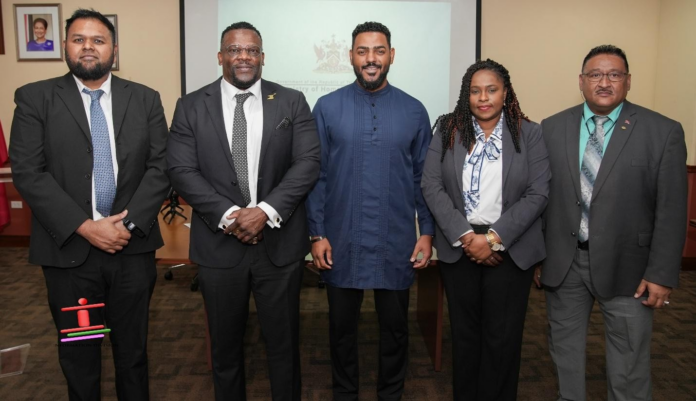
ermanent Secretary, Ministry of Homeland Security, Dr. Wilson Henderson Jr.; Minister of Homeland Security, the Honourable Roger Alexander, M.P.; Minister of Public Administration and Artificial Intelligence, Senator the Honourable Dominic Alexander Smith; Deputy Chief Immigration Officer, Ms. Alicia Youksee; and Comptroller, Customs and Excise Division, Mr. Riad Juman, at the launch of the Online Arrival and Departure Card Platform, on Wednesday 11 March, 2026.

Trinidad and Tobago has launched a new Online Arrival and Departure Card platform aimed at making the border-crossing process faster and more efficient for citizens and visitors.

The platform was officially introduced on Wednesday, March 11, 2026, by the Ministry of Homeland Security (Trinidad and Tobago) during a launch event at the International Waterfront Complex on Wrightson Road in Port of Spain.

The system will be fully implemented on March 17, 2026, at which point the paper-based arrival and departure card will be discontinued. Travelers will be able to access the platform beginning March 14 through the government’s travel portal.

Under the new system, passengers arriving in or departing from Trinidad and Tobago will be able to complete the form online and upload the biodata page of their passport up to 72 hours before travel. After submitting the form, travelers will receive a digital receipt with a QR code that must be presented to immigration officials upon arrival or departure.

The platform will require travelers to create an online account to complete their arrival and departure card and upload the biodata page of their passport. The system will also be accessible in multiple languages.

All passengers traveling to or from Trinidad and Tobago by air or sea will be required to submit the online form.

Speaking at the launch, Roger Alexander, Minister of Homeland Security, described the initiative as marking a “new day” for the country and a step toward aligning its border processes with modern international travel standards.

“This digital platform will make the border-crossing process faster, more efficient and more secure for travellers entering and leaving Trinidad and Tobago. The Ministry of Homeland Security continues to work closely with the Immigration Division, the Customs and Excise Division, regional partners, airlines and maritime stakeholders to ensure the smooth rollout of this important initiative,” the minister said.

Alexander added that the system will continue to evolve over time and encouraged members of the public to provide feedback to help strengthen the platform.

Also addressing the launch was Dominic Alexander Smith, Minister of Public Administration and Artificial Intelligence, who praised the agencies involved for completing the platform in record time after establishing a joint committee to oversee its development.

Smith noted that several challenges had to be addressed, including amendments to the Immigration Act, to facilitate the implementation of the system.

“Over a long period of time there was an opportunity to have this done to alleviate the difficulties experienced by citizens, and it was not done,” Smith said.

Officials said systems will also be in place at airports in Trinidad and Tobago and through airlines to assist travelers who may encounter difficulty using the platform.

The Ministry of Homeland Security is encouraging all travelers to familiarize themselves with the new system ahead of the March 17 implementation date.

ICC cancels Doha meetings as West Asia conflict disrupts global cricket agenda

ICC

The International Cricket Council (ICC) has scrapped plans to stage its upcoming board and committee meetings in Doha after intensifying military tensions across West Asia disrupted travel and raised security concerns.

The governing body confirmed that the in-person meetings scheduled for March 25-27 in Qatar can no longer proceed as planned, citing widespread flight disruptions and restricted access to regional airspace.

With travel routes into Doha severely limited, the ICC has opted to move essential discussions to a virtual format rather than postpone the decision-making process altogether.

A spokesperson explained that although the physical gatherings are off the calendar, the organization intends to maintain momentum on its key agenda items.

Critical cricket business continues online

Several important conversations, particularly those involving the ICC’s finance committee, are expected to take place through online meetings in the coming weeks.

The ICC is still hopeful that directors and committee leaders could reconvene in person sometime in April, though that possibility hinges on the reopening of regional airspace and the restoration of safe travel routes for international delegates.

The cancellation also postpones what would have been the ICC’s first official round of meetings in Qatar, a symbolic gesture recognizing the country’s rapid growth in the sport.

Cricket participation in Qatar has surged dramatically, with officials reporting a remarkable 447 percent increase in recent years, making the Gulf nation an emerging hub for the game.

Major strategic issues await decisions

The abandoned Doha summit was set to feature a packed agenda focused on the commercial and competitive future of international cricket.

Among the most significant topics was the next cycle of global broadcasting rights, as the ICC’s current media agreement with JioStar is scheduled to expire in 2027.

Board members were also expected to begin shaping the next Future Tours Programme (FTP), cricket’s global scheduling framework that governs international series for a four-year cycle.

Another priority was mapping the qualification pathway for cricket’s return to the Olympic stage at the Los Angeles 2028 Games, a milestone that could significantly expand the sport’s global footprint.

Although formal working groups linked to the FTP discussions have been paused following the meeting’s cancellation, early dialogue between member boards has already begun.

Sources indicate that several national cricket bodies have started informal conversations with counterparts as they explore potential scheduling arrangements for the next four-year calendar.

Senior leadership still engaged

The Doha gathering was expected to bring together a broad cross-section of the sport’s leadership, including ICC board directors, chief executives from member boards, committee members, and senior administrators.

While the geopolitical situation has forced a change in format, the ICC is determined to ensure that the business of global cricket continues uninterrupted, even if the conversations now unfold across computer screens instead of conference tables.


CWI abandons ICC charter plan after 9-day travel ordeal in India

Cricket West Indies

KOLKATA, India — After nine anxious days stranded overseas, the West Indies cricket contingent has begun its journey home, not aboard the long-awaited charter flight arranged by the sport’s global governing body, but on commercial flights secured by its own administrators.

Cricket West Indies confirmed on Tuesday that it had abandoned plans to wait for an International Cricket Council-coordinated charter flight, opting instead to arrange alternative travel for players and staff who had remained in India following their tournament commitments.

The decision brought an end to a protracted and increasingly uncomfortable travel limbo for the Caribbean side.

Charter plan unravels

The charter flight had originally been organized by the ICC to transport both the West Indies and South Africa national cricket team squads home after participating in ICC events in India.

However, the plan became mired in repeated delays linked to global geopolitical tensions and evolving aviation regulations, leaving players and support staff waiting far longer than anticipated.

CWI said the continued uncertainty ultimately forced its hand.

“The ongoing uncertainty surrounding the ICC-organised charter made the situation increasingly distressing,” the governing body said in a statement.

Patience wears thin

Under normal tournament arrangements, logistics such as travel and accommodation fall under the ICC’s responsibility, a point CWI highlighted in its explanation of the situation.

“As is customary for both men’s and women’s ICC World Cups, all travel and accommodation arrangements for participating teams are coordinated and managed by the ICC,” the statement noted.

But with nine days having passed since the West Indies squad completed its competitive duties in India, the prolonged wait became untenable.

“In the interest of the well-being and safety of its players and support staff, Cricket West Indies advised the ICC that it was no longer prudent to continue waiting.”

Commercial routes finally open

Once the decision was made, efforts accelerated to move the squad out of India.

Working alongside the ICC, players, and other partners, CWI sought available commercial routes to facilitate the team’s return to the Caribbean and other destinations.

Some members of the touring party had already begun departing by Tuesday, while the remaining contingent was scheduled to leave India over the following two days.

Relief after a difficult stretch

The nine-day delay had sparked concern among supporters and stakeholders across the Caribbean cricket community.

CWI acknowledged that concern in its statement, expressing appreciation for the patience and support shown during the unexpected ordeal.

With the final travel arrangements now in place, the governing body said the priority remains ensuring the safe and timely return of every member of the West Indies delegation.