Home Blog Page 37

Broward Meat & Fish marks over a decade of empowering young women through scholarships

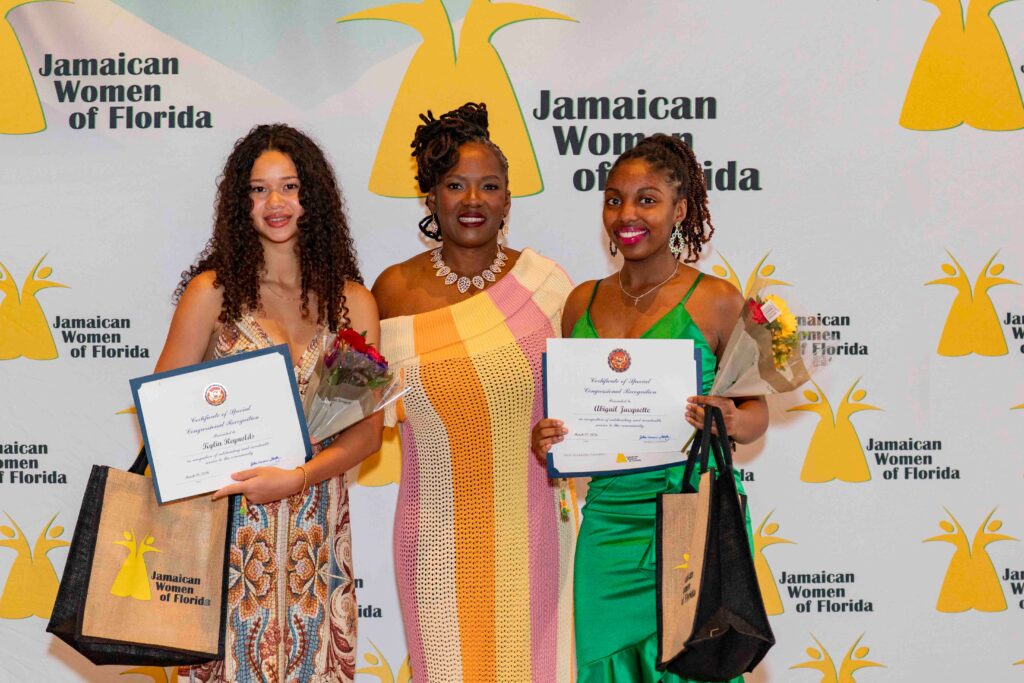
Kylin Reynolds (L) and Abigail Jacquette (R). Photo credits: Natasha Wright

There is something deeply meaningful about watching a community come together to invest in the dreams of its young people. For more than a decade, Broward Meat & Fish has done just that—quietly and consistently supporting the Jamaican Women of Florida Scholarship Program (JWOF) and, in the process, helping to shape the futures of countless young women.

Through this enduring partnership, doors have been opened for students to pursue higher education across the country, stepping into fields as diverse as science, medicine, law, education, and the arts. Each scholarship tells a story—not just of academic achievement, but of resilience, hope, and the power of being seen and supported.

This year, that story continues with two remarkable young women: Abigail Jacquette and Kylin Reynolds. Each was awarded a $5,000 scholarship, bringing Broward Meat & Fish’s total contribution to $70,000 over the years. Their achievements were celebrated at the JWOF Scholarship Luncheon on March 28 at the Diplomat Beach Resort in Fort Lauderdale, where family, supporters, and members gathered to honor their journeys.

Abigail Jacquette, a senior at Coral Reef Senior High School in Miami, is preparing to attend the University of South Florida this fall. She plans to major in Health Sciences with a concentration in Healthcare Administration on the pre-medical track. Already, Abigail has demonstrated remarkable dedication—earning her Associate of Arts degree from Miami Dade College through dual enrollment, a milestone that speaks to both her discipline and quiet determination.

Kylin Reynolds, a senior at North Broward Preparatory School and an International Baccalaureate Diploma candidate, is guided by both passion and purpose. She is currently deciding between attending the University of Florida and Emory University this fall. Kylin plans to major in Environmental Science with a minor in Marine Ecology, reflecting her deep commitment to sustainability and the natural world. With a love for both environmental studies and dance, she envisions a future where science and the arts intersect—using creativity to inspire awareness and meaningful change.

L-R: Kylin Reynolds, Mchellle Williamson, outgoing JWOF president, and Abigail Jacquette. Photo credits: Natasha Wright

In a message that felt as personal as it was inspiring, Broward Meat & Fish owners Denise Lujo and Ruben Lujo shared their pride:

“Your achievement is a testament to your hard work, determination, and the bright promise you carry into the future. This scholarship is more than financial support—it is a recognition of your potential and a celebration of the goals you are pursuing. We believe in your journey and are inspired by your ambition.”

They also offered a simple but powerful reminder—one that resonates far beyond this moment—that while education opens doors, it is passion that gives life meaning and heritage that grounds us in who we are.

For the Jamaican Women of Florida, this partnership is more than a sponsorship—it is a relationship built on shared values and a genuine commitment to community. Their gratitude runs deep, recognizing that Broward Meat & Fish has not only contributed financially but has also stood beside them year after year, helping to nurture dreams and expand possibilities for young women.

Perhaps that is what makes this story so special. It is not just about scholarships or ceremonies, but about belief—showing young women that their dreams matter, that their voices are important, and that they are not walking their journeys alone.

Chicago event to raise funds for Jamaica following Hurricane Melissa

The Midwest Jamaica Corps (MIJAC) is set to host a major fundraising event in Chicago aimed at supporting hurricane relief efforts in Jamaica.

The event, titled “Hurricane Melissa – One Love for Jamaica,” will take place on May 16, 2026, from 7:00 p.m. to midnight at Visions Odeum Events. Organizers say the evening will bring together community leaders, supporters, and members of the Caribbean diaspora to raise funds for recovery efforts and community initiatives benefiting those impacted by Hurricane Melissa.

Founded in 2013, MIJAC is a registered 501(c)(3) nonprofit organization focused on community service, cultural engagement, and international support initiatives, particularly those benefiting Jamaica and the wider Caribbean.

The evening’s keynote speaker will be Lester Barclay, who is expected to address the importance of international collaboration and diaspora support in rebuilding communities affected by natural disasters.

During the event, MIJAC will also recognize several distinguished leaders for their service and contributions to community development. The 2026 honorees include:

  • Danny K. Davis, U.S. Congressman for Illinois’ 7th Congressional District
  • Pam Morris Walton
  • Quinton E. Primo III, Chairman and Chief Executive Officer of Capri Capital Partners

Organizers say attendees can expect a Caribbean-inspired atmosphere featuring music by DJ Selector Matches, authentic Jamaican cuisine, a domino lounge, and a cash bar. The dress code for the evening is Caribbean Chic – Semi Formal.

Tickets are priced at $50 through March 31, $60 after April 1, and $75 at the door, with limited availability. The event is open to adults 21 and older.

MIJAC officials are also inviting corporate sponsors, vendors, and community organizations to participate in the fundraiser, which they describe as an opportunity to celebrate Jamaican culture while supporting relief and rebuilding efforts.

For more information, interested participants can contact the Midwest Jamaica Corps at 312-366-0457 or via email at info@mijac.org.

Bob Marley dreadlock expected to fetch up to £25,000 at UK auction

A rare dreadlock from reggae legend Bob Marley is expected to sell for up to £25,000 when it goes under the hammer next month, offering collectors a unique piece of music history.

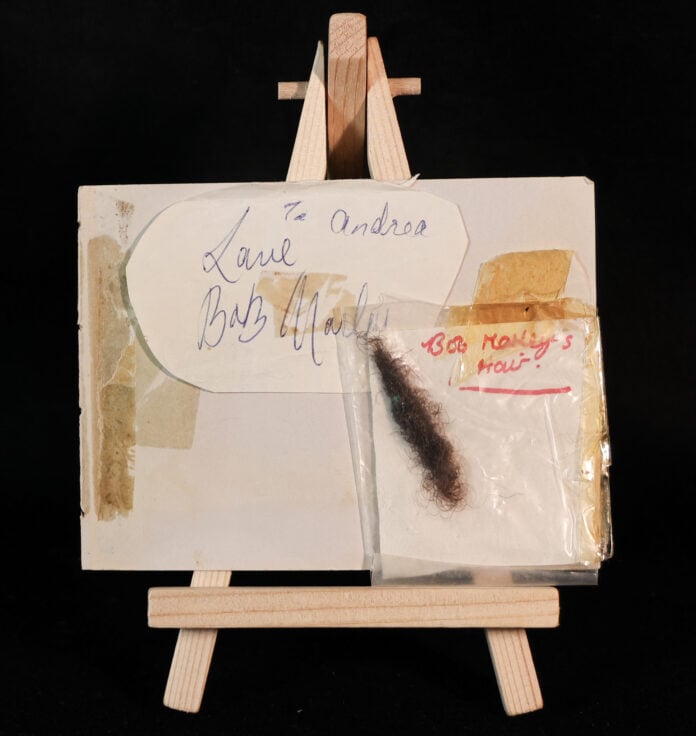
The 1.5-inch lock of hair — taken during a 1978 appearance on Top of the Pops — will be auctioned by JC Auctions on April 9. It is believed to be the first authenticated piece of Marley’s hair to be offered publicly since 2003.

According to auction officials, the hair was obtained when a teenage fan approached Marley following a performance at BBC Television Centre in June 1978. Marley and Bob Marley and the Wailers had just performed their single Satisfy My Soul.

The fan recalled that Marley appeared amused when she asked to take a piece of his dreadlock.

“After Bob Marley had finished singing, myself and a friend went up onto the platform where he was performing. He was chuckling away and I asked if I could take off a piece of his hair,” she said in a statement. “He just kept nodding and chuckling… so I twisted a piece of his dreadlock off. And he of course gave me his autograph as well.”

The autograph — valued at approximately £4,000 — is included with the dreadlock as part of the auction lot.

Paul Fraser of JC Auctions said interest in Marley memorabilia remains strong, noting the scarcity of authentic items linked to the reggae icon.

“Demand is strong for Bob Marley memorabilia. He died so young, there just isn’t much around,” Fraser said. “Marley ignited global awareness of Rastafarianism and dreadlocks, and brought the religious significance of the hairstyle to the world’s attention. This lock is the physical embodiment of that legacy.”

The dreadlock is among more than 50 rare historical items featured in “The Memorabilia Auction,” which runs online until April 9.

JC Auctions is the auction arm of Paul Fraser Collectibles, which specializes in authenticated rare manuscripts, autographs, watches, stamps, coins, and other historical memorabilia.

Marley, widely regarded as one of the most influential figures in reggae music, continues to attract global interest decades after his death in 1981, with collectors increasingly seeking personal items connected to the Jamaican music icon.

At least 70 killed, thousands displaced in Haiti gang massacre

haiti police

At least 70 people were killed and more than 30 were injured in a brutal gang attack in Haiti’s Artibonite region, according to a human rights organization, significantly higher than earlier official estimates.

Initial reports from police indicated that 16 people had been killed and 10 injured, while civil protection authorities later revised the figures to 17 dead and 19 wounded. However, the Collective Defending Human Rights group said the violence was far more severe, describing the incident as a “massacre” and estimating that nearly 6,000 residents were forced to flee their homes.

The attack took place around 3 a.m. Sunday in the Jean-Denis area, where armed members of the Gran Grif gang launched an assault, according to local civil protection officials.

The Artibonite department, one of Haiti’s most important agricultural regions, has experienced some of the country’s worst violence as gang activity continues to spread beyond the capital, Port-au-Prince.

Human rights organizations sharply criticized authorities, saying the lack of a rapid security response demonstrated a failure to protect residents.

“The lack of a security response and the abandonment of Artibonite to armed groups demonstrate a complete abdication of responsibility by the authorities,” Defenseurs Plus said in a joint statement with the Collective to Save the Artibonite.

Authorities reported that about 50 homes were burned during the attack. Haiti’s National Police said they deployed three armored vehicles to the area, but their progress was slowed after gang members dug holes in the roads. By the time police arrived, several houses had already been burned and the attackers were fleeing.

The injured were transported to local hospitals while the dead were taken to two morgues. Police said they have launched an ongoing operation to track down the gang members responsible.

An audio message circulating on social media, attributed to Gran Grif leader Luckson Elan, suggested the attack may have been carried out in retaliation for assaults on the gang’s base in Savien by a rival armed group.

The violence follows recent United Nations reports indicating that more than 2,000 people were already displaced by similar gang raids in nearby Verrettes, which also forced residents of Petite-Rivière to flee.

Speaking at a press briefing on Monday, a spokesperson for UN Secretary-General Antonio Guterres condemned the attack and noted that reported death toll estimates ranged widely, from 10 to 80 victims.

“This attack underscores the gravity of the security situation faced by the Haitian population,” the spokesperson said, calling for a full investigation.

Gang violence in Haiti has intensified dramatically in recent years. According to a recent UN report, close to 20,000 people have been killed since 2021, while more than one million have been displaced and food insecurity has worsened across the country.

Gran Grif and Viv Ansanm — a coalition grouping hundreds of gangs in the capital — have been designated terrorist organizations by the United States. The groups have been accused of mass killings, gang rapes, arson, theft, and trafficking of weapons, drugs, and other illicit goods.

Earlier this month, the United States announced a reward of up to $3 million for information on the financial operations of the Gran Grif and Viv Ansanm groups.

Haitian security forces, backed by a UN-supported international mission and a US private military contractor, have increased operations against gangs that control much of Port-au-Prince. However, authorities have yet to capture any major gang leaders, as violence continues to spread into previously less-affected regions like Artibonite.

A big win story travels fast in WhatsApp groups, the losses rarely do

In the Caribbean WhatsApp groups, news of a gambling win spreads almost instantly. One person’s lucky outcome becomes the group’s headline, drawing in comments, emojis, and a burst of energy.

Yet when it comes to losses, even big ones, the silence is striking. These stories rarely get the same airtime, fading quickly or staying unspoken.

This isn’t just about chance. It’s a pattern shaped by how people connect, share, and protect themselves within trusted circles online. Some moments become group legends, while others vanish quietly, leaving only private reflection.

Why winning stories catch fire, but losses fade quietly

Inside Caribbean WhatsApp groups, word of a big win spreads almost instantly. Someone will share their result, and before you know it, the whole group is buzzing about it.

These stories aren’t just announcements; they’re invitations for everyone to join in the excitement. A win gets people talking, teasing, and sometimes even making plans for what they’d do with that kind of luck.

It’s common for members to share victories in the heat of the moment, sometimes while a game is still unfolding. That thrill can be hard to keep to yourself.

When someone describes a major win, it often signals knowledge, experience, or just pure fortune. Others jump in with congratulations, and the group feels more connected.

But when it comes to losses, the energy shifts. People rarely post about losing streaks or tough breaks. If mentioned at all, these stories are brief and often brushed aside.

There’s little appetite for public sympathy, and most prefer not to draw attention to disappointment. Instead, losses are quietly absorbed, left unshared to avoid embarrassment or unwanted advice.

The pattern extends beyond just stories. It even influences which betting companies people trust, as excitement and group momentum shape where bets are placed.

Ultimately, this selective sharing creates a space where joy and celebration are amplified, while setbacks remain in the shadows—felt, but rarely spoken aloud.

The psychology behind what gets shared

This pattern in WhatsApp groups isn’t just about group culture—it’s shaped by psychology too.

People naturally want to share their gambling wins because those moments feel good and boost their standing among friends.

Wins are something to celebrate, to show off, and even to use as proof of skill or luck.

According to research, loss aversion plays a big role: people feel losses more deeply than wins, but talking about a loss doesn’t offer the same reward or recognition.

The thrill from sharing a win feeds a cycle where positive stories get repeated, and the person sharing feels a surge of approval from the group.

Losses, on the other hand, are internalized—often becoming private disappointments rather than public stories.

This has been highlighted in work on social sharing, where group dynamics encourage the spread of wins but leave setbacks largely unspoken.

Many group members simply avoid discussing their losses, choosing instead to let those moments pass quietly without acknowledgment.

The Psychology of gambling wins helps explain why this happens, showing how people gravitate toward stories that bring approval and avoid those that might invite pity or awkwardness.

In the end, it’s the stories of triumph that travel fastest, while the rest fade quietly into the background.

Near-misses and the incentive to keep playing

While stories of big wins spread fast, tales of near-misses—those moments when gamblers almost win—take on a quieter life in Caribbean WhatsApp groups.

Someone might share a dramatic close call, but it usually doesn’t trigger the same excitement or group celebration as a clear victory.

Still, these near-miss moments aren’t meaningless. They tend to spark a different kind of energy by creating a sense of anticipation and hope that a win is just around the corner.

This pattern is rooted in what’s known as the Near-miss effect, which shows that almost winning actually motivates many people to keep playing, even more so than a straightforward loss.

In WhatsApp chats, a near-miss might prompt a handful of encouraging replies or a bit of group banter, but the story fades quickly without turning into viral news.

Over time, these near-miss stories quietly add fuel to ongoing betting and conversations, nudging individuals to try again without leaving a strong mark on the group’s collective memory.

Research suggests this subtle reinforcement keeps the cycle of betting alive, even if hardly anyone remembers the details a week later.

When losses are shared—and what happens next

Sometimes, a loss does make its way into the group chat, breaking the usual pattern of silence around setbacks.

These messages rarely trigger a wave of excitement or banter like a big win does.

Instead, the tone shifts—replies tend to be practical or muted, with members offering advice or cautioning against risky bets.

It’s common for someone to mention strategies like bankroll management or bring up reminders to play within limits.

In a few cases, the group conversation pivots toward responsibility, using the moment to talk openly about gambling habits and personal limits.

References to resources such as Dominio del bankroll might appear, turning a loss into a chance for learning rather than shame.

While these discussions don’t always last, they can leave a quiet impression—prompting others in the chat to reflect on their own play or reconsider their next bet.

How selective sharing shapes community viewpoints

These moments of quiet reflection rarely last long, especially when the group’s main feed quickly returns to celebrating the latest win.

The regular rhythm of congratulating winners and glossing over losses shapes how group members see gambling as a whole.

When success stories are repeated and losses are quietly left out, it’s easy for a group to overestimate how often people win.

This selective sharing can gradually build a kind of shared optimism, making betting look more rewarding and less risky than it really is.

As members see more wins on their screens, confidence in betting grows—sometimes leading to bolder risks or a sense that luck is just around the corner.

It’s a feedback loop: excitement and risk-taking are amplified as only the positive outcomes get airtime, while sober reminders fade into the background.

Occasionally, someone might introduce a different perspective by referencing a more objective source, like a Comparación de casinos thread.

These data-driven discussions can challenge the group’s rosy outlook, showing how actual odds and outcomes compare to the stories being shared.

What stays private, and what the group remembers

Even with lively group chats, plenty of stories never get told. The silence around certain losses or disappointments shapes what the group remembers about gambling.

Big wins are talked about and celebrated, building a sense of excitement and shared luck. Losses, on the other hand, often stay private—sometimes out of embarrassment, sometimes just to keep the group mood high.

This selective memory helps define the group’s attitude toward betting. Over time, Caribbean WhatsApp groups become places where fortunes are remembered and setbacks quietly fade, leaving an impression that reflects more hope than reality.


Miami-Dade Supervisor of Elections schedules accuracy testing ahead of Surfside run-off election

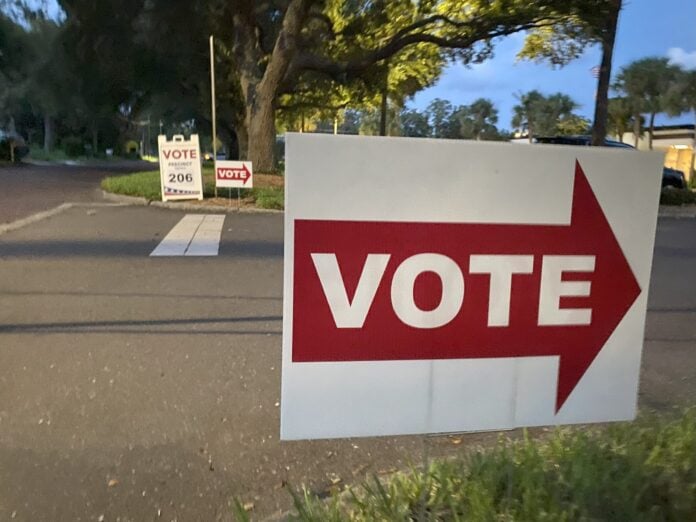
The Miami-Dade County Office of the Supervisor of Elections has announced the date for Logic and Accuracy (L&A) testing of voting equipment for the upcoming Surfside Run-Off Election, scheduled for Tuesday, April 7, 2026.

The official L&A test will take place on Tuesday, March 31, 2026, at 9:00 a.m., at the Miami-Dade County Supervisor of Elections Headquarters.

Logic and Accuracy testing is a standard, mandatory procedure conducted prior to every election to ensure that all voting equipment and tabulation systems are functioning properly. This critical process confirms that every piece of equipment is operating accurately and reliably, providing voters with confidence in the integrity of the election.

During the testing, election personnel will conduct a comprehensive review of all voting systems used to record and tabulate ballots. Test ballots, based on a predetermined set of results, will be cast to verify that the equipment correctly captures and reports every vote. Results are carefully compared against expected outcomes to ensure both accuracy and proper system performance.

Former Mayor Shlomo Danzinger and Vice Mayor Tina Paul are facing off in the runoff mayoral election.

“Ensuring that every voting system is fully operational and performing with precision is fundamental to the work we do,” said Miami-Dade County Supervisor of Elections Alina Garcia. “Through Logic and Accuracy testing, we take an important step in confirming that our equipment is ready and that voters can cast their ballots with confidence.”

City of Lauderhill announces annual free chlorination from April 3–12

City of Lauderhill
City of Lauderhill

In accordance with recommendations from the Florida Department of Environmental Protection, the City of Lauderhill Water Division will conduct its yearly Preventative Maintenance Procedure by switching the water system’s disinfection process from chloramination to free chlorination. This process will take place from Friday, April 3, 2026, at 12:00 a.m. through Sunday, April 12, 2026, at 12:00 a.m.

The Free Chlorination Procedure is a standard annual practice designed to improve the disinfection levels of the City’s water distribution system. Residents should be assured that water quality will continue to meet all federal, state, and local standards for clean water and will remain safe for drinking, cooking, bathing, and other household purposes.

During this period, residents may notice a slight change in taste, odor, or color of their tap water. These changes are normal and do not indicate any health risk. If temporary discoloration occurs, residents are advised to run water from faucets until it is clear.

Residents who rely on kidney dialysis or have other medical conditions should consult their healthcare provider to determine if any adjustments to treatment are necessary during the procedure. Additionally, individuals who use City water for aquariums or fish tanks should adjust chlorine treatment levels accordingly.

As part of the maintenance, residents may also see water running from fire hydrants in neighborhoods. This is a normal aspect of the procedure and is part of the system flushing process.

Public Works and Environment officials emphasize that this process is not a ban or disruption to water service but a carefully managed annual maintenance procedure aimed at ensuring water safety and system reliability.

Residents are encouraged to contact the Water Treatment Plant at (954) 730-2972 for further information or any questions about the Free Chlorination Procedure. The City of Lauderhill thanks its residents for their patience and cooperation as the Water Division conducts this essential maintenance to safeguard public health and the community’s water system.

How to handle unexpected calls about unclaimed funds

Did you get a call or text saying you’re eligible to claim thousands of dollars in unclaimed property? Don’t get excited just yet — it could be a scammer trying to steal your money or personal information. Here’s how to protect yourself and still check if any government agency actually owes you money, stocks, or other assets.

Spot the red flags

Scammers often use official-sounding names for fake government agencies and may mention a specific amount of money you’re supposedly entitled to. If the message pressures you to act quickly, claims a “special extension,” asks for personal information, or demands an upfront “processing” fee, it’s a scam.

Remember: the government will never call or text to ask you to pay to search for unclaimed funds, and they won’t pressure you to respond immediately. Scammers rely on fear of missing out to trick people into acting before thinking.

What to do instead

  1. Don’t click links in unexpected texts or emails. Legitimate unclaimed property programs won’t send unsolicited alerts.
  2. Check official sources first. Every state has a free process to search for unclaimed funds. Start at unclaimed.org/search to find your state’s unclaimed property office.
  3. Report scams. If you encounter a phishing attempt, report it to the FTC at ReportFraud.ftc.gov. Then, let friends and family know so they can stay safe too.

By staying alert and using official channels, you can safely find out if any unclaimed assets are really yours — without giving scammers a chance.

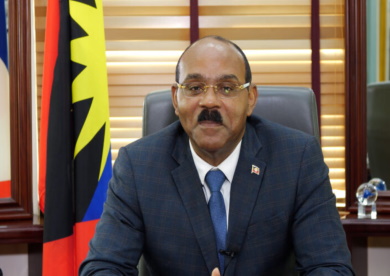
US Court rules in favor of Antigua PM in Alfa Nero legal dispute

Antigua and Barbuda to host investment conference in March 2025
Prime Minister Gaston Browne

The United States Court of Appeals has ruled in favor of Antigua and Barbuda Prime Minister Gaston Browne and other Antiguan and Barbudan individuals and entities in a financial disclosure case brought by Russian citizen Yulia Guryeva Motlokhov.

Motlokhov had claimed ownership of the Alfa Nero and challenged the Antigua and Barbuda Government’s 2024 sale of the vessel. The Appeals Court affirmed the District Court’s order, rejecting her request for discovery and quashing subpoenas served on the Clearing House and US Federal Reserve. All documents obtained under these subpoenas must now be destroyed, with proof submitted to the court.

Attorneys for Prime Minister Browne are exploring recovering some of the legal costs incurred during the appellate process. While Motlokhov could attempt to take the case to the US Supreme Court, legal experts say this is unlikely, as there is no automatic right of appeal.

The ruling is being hailed as another major legal victory for Prime Minister Browne, who has maintained that the government’s sale of the vessel was fully transparent.

In a related legal move, Browne has filed a US$10 million defamation lawsuit against US attorney Martin De Luca and his law firm Boies Schiller over statements made during the disclosure case. While the firm has been served, efforts are ongoing to locate De Luca to serve him with the claim.

CARICOM humanitarian aid to Cuba ‘fully on the way’

Cuba proposes CARICOM join climate change projects

St. Kitts and Nevis Prime Minister Terrance Drew, chairman of the 15-member Caribbean Community, announced Monday that the regional mechanism to deliver humanitarian assistance to Cuba is “fully on the way.”

Speaking at a news conference, Prime Minister Drew confirmed that updates on the initiative would continue, noting that the process is progressing on schedule following commitments made at CARICOM’s 50th summit in February.

“CARICOM will update. They updated last week, and they will update this week. But the mechanism is fully, fully on the way to extend that humanitarian help to our brothers and sisters in Cuba,” he said.

The initiative comes in response to repeated and extensive blackouts in Cuba, as well as ongoing economic pressure from the United States, including decades-long trade and economic sanctions aimed at encouraging Havana to adopt a pro-Western capitalist system.

The Guyana-based CARICOM Secretariat previously announced that regional governments were preparing aid shipments to Cuba, with support from . Mexico has identified suppliers capable of delivering essential items to departure ports and is providing free shipment to Cuba.

Prime Minister Drew said St. Kitts and Nevis has pledged US$500,000 toward the regional effort, with the first US$100,000 already delivered to the CARICOM Secretariat. He noted that the aid includes critical items such as baby food, while other contributions from regional countries are being coordinated.

“That meeting was at the end of February. This is at the end of March. We are well within the time frame, and we have already established the pathway, or route, or mechanism for delivering that humanitarian aid to Cuba with the help of the Mexican government. And so, that has started,” Prime Minister Drew said.

He emphasized the need for proactive diplomacy and innovation to secure opportunities for the Caribbean region. “Nobody is going to bring the opportunity to you or to us and rest it on our lap. We have to be innovative. We have to be proactive. We have to establish relationships that would allow us to meet our objective, and that is why we are so aggressive in our diplomatic outreach,” he added.

CARICOM’s humanitarian aid initiative signals the region’s commitment to providing relief and solidarity to Cuba amid ongoing energy shortages and economic challenges, with updates expected in the coming weeks.

Bermuda tables legislation to phase out harmful single-use plastics

Bermuda Government to phase out single-use plastics

The Government of Bermuda has tabled new legislation aimed at creating a legal framework to gradually transition away from the most harmful single-use plastics through consultation, science, and a phased approach.

Jache Adams told legislators that Bermudians have long voiced concern about the growing threat of plastic pollution and the need to safeguard the island’s environment.

Adams said the proposed Single‑Use Plastics Act 2026 is not designed to ban all plastic items immediately, but instead establishes a legislative structure to regulate single-use plastics in a sustainable and measured manner.

“It empowers the Government to add items to a schedule only after consultation, only after listening to stakeholders and only after determining that alternatives are viable for both our environment and our economy,” Adams said.

He stressed that the government is not rushing into blanket bans, noting that businesses, environmental organisations, students, seniors, and other stakeholders will be consulted before restrictions are introduced.

“Instead, this Bill lays the foundation on which we will build a careful, well-managed transition that works for the entire country,” he added.

Adams also addressed concerns about immediate bans, clarifying that the legislation does not impose an island-wide prohibition on all single-use plastics.

“What we are setting in place is a gradual, phased programme, one that ensures businesses and consumers have time to adjust, the Government has time to inform and the country has time to shift behaviour responsibly,” he said.

He noted that plastic straws could be among the first items considered for restriction, but only after public consultation and the establishment of reasonable timelines.

“Our goal is not disruption, our goal is progress,” Adams stated, emphasising that Bermuda’s environment is critical not only for its natural beauty but also for its economy and cultural identity.

“Our marine ecosystem is the foundation of our tourism industry, our fishing sector and the health of our people. Yet around the world, and yes, even here at home, plastic pollution threatens that foundation,” he said.

Adams warned that plastic waste breaks down into microplastics that are increasingly being found in water, sand, marine life, and even human bodies, describing the issue as grounded in established scientific evidence.

He cited environmental organisations including Keep Bermuda Beautiful and Beyond Plastics Bermuda, which have long raised concerns about plastic pollution.

According to Adams, Keep Bermuda Beautiful’s clean-up data has shown a growing presence of plastic fragments on beaches, often from single-use convenience items. Beyond Plastics Bermuda has also called for action to preserve the island’s environmental health for future generations.

“Environmental protection should not be a partisan endeavour. It is a shared responsibility,” Adams said. “If we cannot unite around protecting the waters that sustain us, then what can we unite around?”

He added that the next phase of the process will include a comprehensive consultation period, with written submissions, stakeholder meetings, and evaluation of practical alternatives.

“We will invite written submissions, host stakeholder meetings and explore the availability of practical alternatives. Just as important, we will work to ensure that environmentally friendly replacements are accessible and affordable,” Adams said.

The proposed legislation marks what the government describes as a significant step toward reducing plastic pollution while ensuring a responsible and inclusive transition for Bermuda’s businesses and residents.

Jamaica positions Marcus Garvey at heart of hemispheric dialogue on African descent

Jamaica’s first National Hero, Marcus Mosiah Garvey, remains a defining philosophical voice in the hemisphere’s ongoing struggle for racial equity and self-determination, according to Antony Anderson, Jamaica’s Ambassador to the United States and Permanent Representative to the Organization of American States.

Ambassador Anderson made the remarks during a reflection on Garvey’s life and work, held on March 23 at OAS headquarters in Washington, D.C.. The event formed part of the Ninth Inter‑American Week for People of African Descent, observed from March 23 to 27 under the theme “Equality that Inspires, Freedom that Transpires, and a Hemisphere that Leads.”

The programme took place in the Gallery of Heroes and Heroines, located above the Marcus Garvey Hall of Culture, and brought together diplomats, civil society leaders, and OAS officials to reaffirm their commitment to advancing dignity and rights for people of African descent across the Americas.

Ambassador Anderson drew a direct connection between the observance’s theme and the life of Garvey, who was born on August 17, 1887, in St. Ann.

“This theme resonates deeply with the enduring struggles, aspirations, and achievements of people of African descent throughout our hemisphere. It also reflects the ideals and life’s work of one of the greatest sons of the Caribbean and the Americas,” Anderson said.

He highlighted Garvey’s role as founder and first President-General of the Universal Negro Improvement Association and African Communities League, widely regarded as the largest mass movement of people of African descent in modern history. Anderson noted that Garveyism — grounded in self-reliance, racial pride, economic empowerment, and unity across the African diaspora — influenced civil rights movements and anti-colonial thought throughout the Caribbean and Africa.

The ambassador also underscored the historic ties between Garvey’s legacy and the OAS headquarters. In August 1980, more than 700 people gathered at the building for the unveiling of a bust of Garvey in what was then known as the Hall of Heroes. The space was later renamed the Gallery of Heroes and Heroines, while the Marcus Garvey Hall of Culture was inaugurated in 2008.

“Jamaica expresses deep appreciation to the Organization of American States for these important and meaningful tributes, which ensure that Marcus Garvey’s vision and legacy continue to inspire generations throughout the hemisphere,” Anderson said.

He further linked Garvey’s philosophy to the global influence of reggae legend Bob Marley, noting that Marley carried Garvey’s message of self-determination to worldwide audiences. Anderson cited Marley’s famous call to emancipate minds from mental slavery as a reflection of Garveyite philosophy.

Ambassador Anderson reaffirmed Jamaica’s commitment to building societies rooted in equality, justice, dignity, and opportunity across the hemisphere.

“Let us carry its spirit forward, so that the ideals Marcus Garvey lived and fought for — dignity, self-determination, unity, and justice — are not confined to history but are built into the future,” he urged.

Also addressing the gathering was Laura Gil, who spoke of her personal appreciation for Garvey’s work and emphasised its continued relevance to the hemisphere and the OAS.

The programme featured a poetic recitation by Ian Edwards, who delivered Garvey’s poems “Freedom’s Noble Cause” and “Man to Man,” and an interpretive tribute by Claire Nelson, highlighting the importance of preserving Garvey’s teachings for future generations.

Among those in attendance was a group of students visiting from Washington University, further reflecting the event’s educational and hemispheric reach.

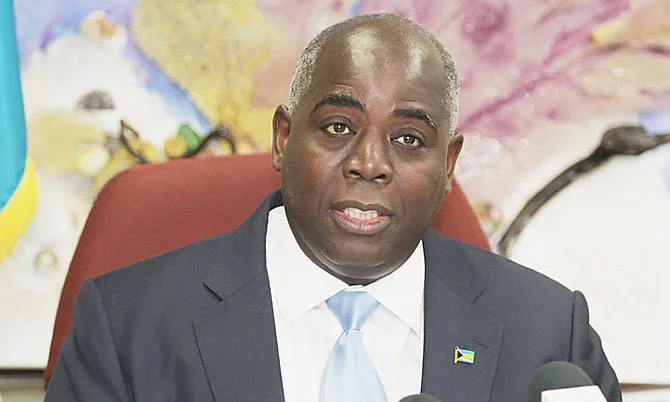
Bahamas PM Davis urges ‘gate-opening culture’ to empower young Bahamians

Climate change leaves the Bahamas with huge debt, country seeks help
Bahamas Prime Minister Philip Davis.

Prime Minister Philip Davis is calling for a shift in national culture, urging Bahamians to become “gate openers” and create more opportunities for younger generations to succeed.

Addressing the 242 Influencers and Creative Conference, Davis said too many older Bahamians have held back younger ones due to fear, insecurity, and discomfort with new leadership emerging.

Describing himself as a “gate opener,” Davis reflected on his own journey from humble beginnings.

“If someone had told me, as a barefoot boy from Cat Island, that one day I would serve as Prime Minister of the Commonwealth of The Bahamas, I would have struggled to believe it,” Davis said.

He noted that he never attended university abroad and instead learned law through apprenticeship and articling, adding that his rise to the country’s highest office would have seemed unlikely earlier in his life.

“The Bahamas has lived too long with a gatekeeping culture,” Davis said, adding that access to opportunities has often been treated “like private property,” leaving many talented Bahamians waiting outside spaces they had already earned the right to enter.

He argued that mentorship should not be used as control and that experience should not translate into ownership of opportunities.

“A country cannot grow that way. A people cannot move forward that way,” Davis said. “Age should bring wisdom, guidance, and a sense of making room… It must never become a wall in the path of the next generation.”

Davis said “gate openers” are needed across multiple sectors, including politics, business, media, law, education, churches, and the civil service.

He also highlighted the government’s investment in the Upskill Bahamas programme, which he said is designed to prepare Bahamians for a changing economy. According to the prime minister, more than 12,000 Bahamians have already signed up for the free, government-funded training courses.

“We invest. We open the gate. We give you the tools. Then we ask you to step through and make the most of the chance before you,” Davis said.

The prime minister said he has also been encouraged by graduates of the programme who are now pursuing entrepreneurship, noting that access — not ability — has often been the missing ingredient.

Davis added that the conference is also aimed at connecting Bahamian creators with global technology companies, including OpenAI, Meta, TikTok, and X, to discuss opportunities for Caribbean creators and address barriers to monetisation.

He said the government also plans to direct agencies and ministries to work with Bahamian influencers and creators to help deliver public education campaigns, allocating budgets specifically for local talent.

“When the government wants to reach people, the government should use Bahamian talent,” Davis said, adding that the country is entering “an era of Bahamian possibility.”

Davis, who is expected to announce a date for general elections soon, urged young Bahamians to meet the government halfway.

“Bring your discipline. Bring your talent. Bring your work ethic. Bring your ideas. Bring your hunger,” he said.

St. Kitts and Nevis offers to lead push for direct Africa-Caribbean air link

St. Kitts -Nevis Government to pay second CBI dividend in June
The Honorable Terrance Drew, Prime Minister of Saint Kitts and Nevis.

Prime Minister Terrance Drew has announced that Saint Kitts and Nevis is prepared to lead efforts to establish direct air connectivity between Africa and the Caribbean, using innovative financing mechanisms to make the long-discussed link a reality.
Speaking during closing remarks at the Afri‑Caribbean Investment Summit in Abuja on March 28, 2026, Drew underscored the urgency of removing longstanding travel barriers that continue to hinder trade, investment, and collaboration between the two regions.

Challenging existing travel routes, Drew questioned why travelers must often transit through North America or Europe to move between Africa and the Caribbean.

“Why is it we have to go north to come south?” he asked, highlighting both inefficiencies and the inconvenience faced by travelers. He also pointed to the practicality of direct routes, noting that flight times between Saint Kitts and Africa are comparable to those between Saint Kitts and England.

Drawing on the federation’s aviation development experience, Drew said Saint Kitts and Nevis has historically used Minimum Revenue Guarantee (MRG) arrangements to attract international airlines and stimulate new routes. Under such agreements, governments help offset potential losses for airlines during the early stages of a new service.

“When we are starting flights, we have something called an MRG… an MRG is set up so that the airline is guaranteed that it would not lose money,” Drew explained. “If it requires an MRG, I am putting a stake in the ground that Saint Kitts and Nevis would move first to have it done.”

The prime minister said improved connectivity between Africa and the Caribbean could unlock major opportunities across tourism, trade, investment, and cultural exchange, while also strengthening people-to-people ties rooted in shared history and heritage.

Drew concluded by urging governments, investors, and private-sector stakeholders to collaborate in making direct Africa-Caribbean air travel a near-term reality, positioning Saint Kitts and Nevis as a potential leader in advancing regional connectivity.

Former Suriname President Chandrikapersad ‘Chan’ Santokhi dies at 67

Suriname President-Chandrikapersad-Santokhi reshuffle cabinet
President-Chandrikapersad-Santokhi

Former President of Suriname, Chandrikapersad “Chan” Santokhi, has died at the age of 67 following a medical emergency at his home on March 30.

According to initial reports, an ambulance was called to Santokhi’s residence earlier in the day. He was subsequently transported to hospital, where he was pronounced dead. A cause of death was not immediately disclosed.

Suriname’s President Jennifer Simons paid tribute to Santokhi in a statement shared on social media, acknowledging his decades of public service.

“His many years of service in various public offices will be remembered,” Simons said.

Santokhi, who served as Suriname’s ninth president, was born on February 3, 1959, in Lelydorp, in what is now the Wanica district. He grew up in a rural community as the youngest of nine children in an Indo-Surinamese Hindu family. His father worked at the Paramaribo harbor, while his mother was a shop assistant in Lelydorp.

Santokhi rose to the presidency following the May 2020 general elections, when his Progressive Reform Party (VHP) emerged as the largest political party. He formally announced his candidacy on May 30, 2020, and was later nominated by the party and a governing coalition.

On July 13, 2020, Santokhi was elected president by acclamation in an uncontested election after no other candidates were nominated. He was inaugurated three days later, on July 16, at Onafhankelijkheidsplein in Paramaribo, during a ceremony held without public attendance due to the COVID-19 pandemic.

His inauguration reflected Suriname’s multicultural religious traditions. Santokhi took the oath of office while reciting Hindu Sanskrit shlokas and mantras, and the ceremony also included blessings from Christian religious leaders.

During his presidency, Santokhi sought to strengthen diplomatic ties, including a notable visit to the Netherlands in September 2021. The trip marked the first visit by a Surinamese president since 2008, following a period of strained relations between the two countries. Dutch Prime Minister Mark Rutte described the renewed engagement as “historic.”

In his personal life, Santokhi married his longtime partner, lawyer Mellisa Seenacherry, on July 19, 2020, in a private ceremony shortly after taking office. He is survived by Seenacherry and two adult children — a daughter and a son — from a previous marriage.

Santokhi’s death marks the passing of a significant political figure in Suriname’s modern history, whose tenure came during a period of economic recovery efforts and renewed diplomatic engagement for the South American nation.

Former CARICOM official questions re-appointment of Carla Barnett

joseph cox caricom

Former assistant secretary general (ASG) of the Caribbean Community (CARICOM), Joseph Cox, is raising concerns regarding the re-appointment of Dr Carla Barnett as secretary general of the 15-member regional integration grouping.

“Can Dr Carla Barnett effectively serve another five-year term in the face of open objection, procedural concerns, and underlying divergence among member states, because in CARICOM, and indeed in small-state regionalism more broadly, authority is not imposed,” said Cox, who resigned as ASG for economic integration, innovation and development in August 2024.

“It is conferred through consensus, reinforced through process, and sustained through trust. Remove those pillars, and the position may remain legally intact. But operationally it becomes far more difficult to hold.

“And that is the real issue now confronting the community. These are not procedural questions. They are questions of institutional direction and institutional credibility,” Cox said during his weekly Caribbean Business Review (CBR) podcast on Sunday.

Questions Over Majority Support

Last week, CARICOM chairman and Dr Terrance Drew, prime minister of Saint Kitts and Nevis, said in a brief statement that Barnett had attained the “required majority” from regional leaders regarding her re-appointment at last month’s CARICOM summit held in Basseterre.

However, Trinidad and Tobago has insisted it was not invited to the deliberations that led to Barnett’s re-appointment. Port of Spain also indicated that Antigua and Barbuda and The Bahamas were absent.

“I emphatically put on the record … that Trinidad and Tobago was not invited by email, telephone or in person to that meeting where that particular decision was made,” Trinidad and Tobago’s CARICOM and foreign affairs minister, Sean Sobers, told Parliament last Friday.

Prime Minister Kamla Persad‑Bissessar, who left the Basseterre summit prior to the retreat of regional leaders on Nevis, has since threatened to withdraw funding for CARICOM.

Concerns Over Participation and Legitimacy

Cox, who served at the Guyana-based CARICOM Secretariat for nine years, said that while the re-appointment appeared to be a routine decision ensuring administrative continuity, the reality was more complex.

“Trinidad and Tobago has formally objected to the re-appointment, not on the basis of personality, but on the basis of process, arguing that it was excluded from deliberations and that the matter was neither placed on the formal agenda nor recorded in the official communiqué,” he said.

Cox added that statements indicating Trinidad and Tobago, along with The Bahamas and Antigua and Barbuda, were not allowed to participate in the retreat effectively left “multiple member states outside of a decision of significant institutional importance”.

He further noted that Haiti and Montserrat were also not represented at the leaders’ retreat at the highest level.

“This is not just about participation, it’s about proportionality and influence,” Cox said, noting that Trinidad and Tobago accounts for approximately 22 per cent of CARICOM’s budget, with The Bahamas and Haiti also considered meaningful contributors.

“When countries of that scale are excluded, the issue immediately shifts from administration to institutional legitimacy,” he added.

Consensus Versus Majority

Cox also pointed to what he described as a departure from CARICOM’s traditional decision-making process.

Drew framed the decision as securing the “required majority,” but Cox said that language departs from a longstanding tradition where senior appointments are typically resolved through consensus rather than voting.

“Consensus is not ceremonial. It is what binds small states into a functioning community,” said Cox, a Jamaica-born economist.

He also noted that there had been varying levels of comfort among member states regarding the performance and direction of the CARICOM Secretariat, making broad consultation critical.

Procedural Questions Raised

Cox questioned why there was no reference to the decision in the official communiqué, whether the matter was formally tabled, and why it was not recorded in plenary if discussed during retreat.

He also asked why, if the decision was taken on February 26, it was only publicly communicated on March 25.

Cox referenced Article 24 of the Revised Treaty of Chaguaramas, which states that the secretary general is appointed by the Conference on the recommendation of the Community Council, with re-appointment also made by the Conference.

However, he noted that the treaty is silent on the procedure for re-appointment and does not explicitly prescribe a voting method.

“Was there a recommendation of the Community Council in this case? And if so, how was it arrived at? Because if there was, how were key member states unaware? If not, the issue becomes one of compliance,” Cox said.

He also referenced Article 28 of the treaty, which provides that decisions of the Conference are to be taken by affirmative vote, with validity possible where three-quarters support a decision in cases of abstentions.

“Where that condition is in question, the issue is no longer simply voting, it is whether the process leading to the vote was complete,” Cox added.

Barnett Responds

Last Friday, Barnett deflected concerns about her re-appointment, referring questions to the CARICOM chairman.

“No, no, sir. You don’t need to ask me, you need to ask the chairman. I don’t participate in those discussions. Those discussions are held among the leaders,” Barnett told Guyana-based Demerara Waves Online News.

“I don’t have any concerns,” added Barnett, an economist who became the eighth CARICOM secretary general on August 15, 2021, by unanimous appointment of regional leaders.

She remained silent when asked whether she believes she should step down.

Shaggy’s ‘Hey Sexy Lady’ certified silver in UK

Shaggy. Photo credit: Sam Johnston /UBS Arena

More than two decades after its release, Shaggy’s hit single Hey Sexy Lady has earned new recognition in the United Kingdom.

The song, from Shaggy’s 2002 gold-certified album Lucky Day, was certified silver in the United Kingdom on Friday, March 27, for sales and streaming equivalents exceeding 200,000 units.

Hey Sexy Lady, which features Brian and Tony Gold, was one of three singles released from Lucky Day, alongside Strength of a Woman and Get My Party On, the latter featuring R&B legend Chaka Khan.

Issued as the album’s lead single, Hey Sexy Lady did not make a major impact on the main United States charts. However, the track performed strongly in Europe and other international markets.

Recorded at Big Yard Studio’s Long Island, New York headquarters, the song has previously earned platinum certification in Australia and Canada, as well as gold certification in Belgium.

On international charts, the track reached No. 5 in France, No. 10 in Germany and the United Kingdom, No. 3 in the Netherlands and Portugal, No. 7 in Italy, No. 4 in Australia, No. 6 in Belgium, and No. 4 in Canada.

In contrast, the song stalled in the United States, peaking at No. 97 on Billboard R&B/Hip-Hop Songs chart and No. 33 on the Rhythmic Airplay chart. It also failed to chart on the Billboard Hot 100.

Hey Sexy Lady was written by Shaggy, Christopher Birch, Rickadoo George Ducent, Robert Livingston, Brian Gold, and Tony Gold, and produced by Birch. The track utilizes the Sexy Lady Explosion riddim with additional beats.

Released on September 3, 2002, via MCA Records, the single was serviced to CHR/Pop, CHR/Rhythmic, and urban contemporary radio formats as the lead single from Shaggy’s sixth studio album.

Despite limited success in the United States, the song became a top 10 hit in Australia and multiple European countries. By August 2014, Hey Sexy Lady ranked as the 110th best-selling single of the 21st century in France, with 287,000 units sold.

The new UK silver certification adds to the track’s continued global success and highlights the enduring international appeal of Shaggy’s catalog.

Naomi Cowan wins 2026 JUNO Award for Reggae Recording of the Year

Naomi Cowan

Jamaican singer Naomi Cowan has won the 2026 Reggae Recording of the Year at the Juno Awards for her 12-track debut album Welcome to Paradise.

The award was presented Saturday night at the 50th staging of the awards, held in Hamilton, Ontario, Canada, at the TD Coliseum.

Other nominees in the category included Deh Ya by Kirk Diamond; Dagga Riddim Cypher by Jojo, You Made That, Yung 2Ruff, Erin B, Topman Meeko, One Don and Enzooo; Ready For You by Exco Levi and Kheilstone; and More Reggae (Funk it Up) by Samora and Ammoye.

In accepting the award, Cowan thanked several individuals, including Toddla T, producer of the album, as well as her parents, reggae veterans Tommy Cowan and Carlene Davis, and her management team.

“It has been the honour of my life to be a reggae artiste. Reggae is a genre that has healed thousands of people around the world and has transcended many boundaries. So, this award is for the genre of reggae music. To my mom and dad, thank you so much for choosing each other over and over, for unconditionally loving me, because you inspired this album. To God, my ultimate creative director, thank you,” Cowan said.

She added, “I also have to thank the Government of Canada, my producing partners, my team, Rob, Jeff, Nate the Great and everyone who played a part. Big up Jamaica.”

Cowan’s win marks the 10th time a female artist has captured the Reggae Recording of the Year category, which was formerly known as Best Reggae/Calypso Recording and Best Reggae Recording.

Born into Jamaican musical royalty, Cowan is the daughter of reggae icons Tommy Cowan and Carlene Davis. She also portrayed Marcia Griffiths in the film Bob Marley: One Love.

The win represents a major milestone for Cowan, whose debut album Welcome to Paradise now joins a distinguished list of JUNO-winning reggae recordings, further highlighting Jamaica’s continued global influence in reggae music.

Miami Mayor Eileen Higgins highlights progress in first 100 days in office

Eileen Higgins Miami

Eileen Higgins marked her first 100 days as Mayor of the City of Miami on Monday, highlighting early actions aimed at making city government more efficient, improving service delivery, and advancing key infrastructure and housing initiatives.

“Over these first 100 days, we have set a new standard: show up, do the work, and deliver results you can see,” Higgins said. “None of this happens without the City employees who keep Miami running, and the support of my colleagues on the City Commission. I am proud we have stepped up with urgency, brought new ideas to the table, and found innovative ways to get to yes for residents and businesses. We have strengthened leadership at City Hall, reopened critical infrastructure Downtown, and made services like permitting faster and more predictable. There is more to do, but Miami can count on this: we will keep moving with urgency and keep delivering for residents.”

During her first 100 days, Higgins moved quickly to strengthen leadership and accountability at City Hall, including appointing James Reyes as City Manager to oversee day-to-day operations with what the administration described as urgency and clear performance standards.

The mayor also relocated her office to the Administration Building to work more closely with city employees, with the goal of improving coordination, communication, and follow-through across departments.

The Higgins administration also focused on streamlining city services, particularly the permitting process. New tools now allow homeowners to access same-day permits for small projects, while commercial property owners can apply for year-long permits for routine repairs, aimed at reducing delays and improving predictability.

Environmental initiatives were also part of the administration’s early actions. Higgins moved to phase out single-use plastics and Styrofoam at city facilities and events, a step aimed at reducing litter and protecting Biscayne Bay.

In addition, Higgins helped return the historic Tower Theater to Miami Dade College, preserving the cultural landmark for future generations.

Infrastructure improvements were also highlighted, with another section of Flagler Street reopening after years of delays. The reopening is expected to improve traffic flow and support small businesses, particularly as the city prepares for increased activity ahead of the upcoming FIFA World Cup.

Affordable housing has also been a priority, with Higgins pushing to accelerate new groundbreakings and openings, with the goal of turning affordability discussions into completed housing units for residents.

Throughout her first 100 days, Higgins said she has met with residents, commissioners, and city employees across departments to identify challenges, remove barriers, and improve service delivery across neighborhoods.

City officials said the administration plans to continue focusing on efficiency, infrastructure, housing, and environmental initiatives as Higgins moves into the next phase of her term.

Opinion: Jamaica’s education reform moves forward, but systemic gaps remain

Caribbean students
Photo: UNICEF Jamaica/2018/Talk Up Yout

Last week, the Education Transformation Oversight Committee (ETOC) in Jamaica reported that just over one-third of the 365 recommendations from the Jamaica Education Transformation Commission (JTEC) report were implemented.

The JTEC Report is more commonly known as the Patterson Report, named for eminent Jamaican sociologist, Professor Orlando Patterson, who led the review as the Commission’s Chairman. The Report was completed in late 2021, with ETOC set up in 2023 to monitor the implementation of its recommendations until 2031. With 37% of the recommendations completed, the process is on track to hit its 40% milestone by the end of March, in keeping with its initial timeline.

If the current rate of execution is maintained for the remaining life of the Committee, this could augur well for the radical transformation of Jamaica’s education system, whose long-standing gaps have been well known and debated for the better part of the last half-century. Jamaica has had no shortage of bodies reviewing its education system. The Patterson Report was preceded by the Dr. Rae Davis-chaired Task Force on Education in 2004. While both reviews share several recommendations, the difference critically this time around lies in the ability to execute and to do so consistently. Jamaica has had success on this front recently in other endeavours with ETOC’s economic equivalent, the Economic Programme Oversight Committee (EPOC), which has been hailed by financial multilaterals as a model worth emulating.

Despite the advances in implementation, however, the Patterson Report has yet to be debated in Jamaica’s Parliament by the country’s legislators. National public discourse on its content has also been limited.

Among the report’s key suggestions is redirecting a greater proportion of resources from tertiary to early childhood institutions, which remain relatively underfunded. This has been a chronic issue, and the reasoning is clear — the quality of intake of students at each successive level will only be as good as the output from the previous one. Starting at the base, therefore, makes sense.

This position has been advocated for a long time and has benefited from renewed attention with the push toward greater certification of early childhood institutions in recent years, though coverage remains far below full complement. The report also notes that Jamaica claims to have one of the highest rates of pre-primary enrollment in the world.

This suggests that Jamaicans intuitively understand the importance of education for their children, given frequent reminders that education is the path to upward social mobility and often the only avenue out of poverty.

However, the ability to sustain attendance weakens as students move through the system. Enrollment rates decline at each successive level, largely due to the cost of incidental expenses beyond tuition — including food, transportation, clothing, and school supplies.

Some families with multiple children must make difficult trade-offs, while others recognize that remaining in school may reduce opportunities to earn income for the household.

University enrollment declines

By the time students matriculate to university, enrollment drops sharply as many fall out of the system.

The situation has been exacerbated by the COVID-19 pandemic — a concern raised by Vice Chancellor of the University of the West Indies, Professor Sir Hilary Beckles, who has lamented that enrollment rates have yet to recover to pre-crisis levels.

The same trend may apply to other tertiary institutions, as the pandemic exposed severe inequalities in education. Many students simply did not return to school and remain unaccounted for. Similar challenges have emerged following the devastation caused by Hurricane Melissa, with learning losses expected to widen further.

Technical education gains importance

The Patterson Report also recommended greater emphasis on technical and vocational education — an area which still experiences an unfortunate stigma compared with a traditional grammar school education. As trends in employment shift globally, skilled tradespeople have seen their stock rise to the point where demand for their labour is outpaced by the rate at which it can be supplied. Now that technical and vocational skills can command a higher premium, this will be important for Jamaica and the rest of the Caribbean, which continues to struggle with a labour paradox highlighted by the most recent International Labour Organization (ILO) report for the region. It reiterated that despite declines in unemployment for most Caribbean countries, they still grapple with low-value-added jobs. More people are working, but the quality of employment is diminishing. As a result, thousands of people remain underemployed relative to their skills, qualifications, and time available for work.

Deep inequality at the secondary level

Beyond education’s intrinsic benefits — including shaping character, instilling values, and providing a foundation for nation-building — it also drives economic and social development.

The quality of social interactions is also determined by the quality of the education provided to the nation’s citizens. Challenges with accessing quality education remain, however. The Patterson Report quantified the depth and severity of the problem at the secondary level, which has been known anecdotally — of the 250 such schools, less than a fifth are deemed “traditional” or of sufficient quality to provide an acceptable level of education to function in the rest of society and beyond. The overwhelming majority are seen as undesirable. This leads to the annual bottleneck at the end of primary school examinations to get a coveted place at one of 40 prestigious schools, enrollment in which ultimately determines, to a significant extent, the student’s life trajectory, with the promise of better opportunities.

This dichotomy has been labelled as “apartheid” in nature in some quarters. Practically fixing the problem has not been given much prominence in education evaluations, however. Providing the most resources to the most deficient schools seems like the most obvious solution to equalise the disparity across the board. Some schools have shown progress, but most continue to languish near the bottom of educational rankings. Authorities in the past, by encouraging students to “grow where they are planted,” have unwittingly ignored that plants achieve the best results in gardens that are properly equipped with access to adequate sunlight, water, air, and minerals. Exceptional students should not be expected to raise the overall profile of an institution by their own performance in the absence of appropriate supporting structures to solve individually what has clearly been a systemic problem.

It is this fundamental issue that Jamaica’s education stakeholders must be committed to solving, lest we will have another assessment report by a different name at some point in the not-too-distant future.

Keenan Falconer is an economist with experience across Jamaica’s public and private sectors, as well as the multilateral financing space. Send feedback to keenanjfalconer20@gmail.com.

Forever Champs: The heartbeat of Jamaican track & field

champs jamaica college

Jamaican sports fans will tell you there are few athletics events in the world that can rival the ISSA Boys and Girls Championships, simply known as Champs, which is held annually in March at the National Stadium in Kingston, Jamaica. We love the Penn Relays. We love the World Championships and the Olympic Games that happen every four years. But to the diehard Boys & Girls High School Championship lover, none can rival our beloved Champs in terms of raw excitement and exceptional performances by the high school athletes who compete.

For generations, the National Stadium in Kingston has transformed into a cauldron of speed, pride, and raw ambition, where teenagers run not just for medals, but for legacy. From the days of Donald Quarrie (Camperdown High), Herb McKenley (Calabar), Merlene Ottey (Vere Technical), Jacqueline Pusey (St. Mary High), Wainworth “Rocking Head” Small (KC), Dennis “Jahman” Henry (KC), Balford Reid (KC), Yohan Blake (St. Jago High), Javon “Donkey Man” Francis (Calabar), Christopher “Chubby” Taylor (Calabar), Danny England (Calabar), Ackera Nugent (XLCR), the Clayton twins Tina & Tia (Edwin Allen), to the electrifying rise of Usain Bolt (William Knibb) and Shelly-Ann Fraser-Pryce (Wolmer’s Girls), Champs has been more than a meet—it is Jamaica’s unofficial factory of world beaters.

As passionate Champs fan John Rodney exclaimed, “It nuh normal… is like we have a track factory producing champion athletes every year.”

Westmoreland-born, Bronx, New York resident Esroy Bernard concurred, telling Caribbean National Weekly, “When visitors arrive at both international airports in Montego Bay and Kingston, they should be greeted by a big sign inside that says, ‘WELCOME TO JAMAICA, THE SPRINT FACTORY OF THE WORLD: HOME OF USAIN BOLT & SHELLY ANN PRYCE.’”

“We likkle but we tallawah,” said Beverley Nadeen Spence-Chin, referencing the tagline that reflects Jamaica’s small size but big heart, while Sandie Williams noted, “Jamaica sprint will never die… Absolutely awesome.”

Built on Vibes, Rivalry, and Raw Jamaican Energy

Long before VIP lounges and corporate boxes, the event thrived on students from rural and corporate area schools squeezing into bleachers, buses carrying supporters from rural parishes, and communities rallying behind their own. The rivalry between schools like Kingston College, Calabar High School, St. Jago High School, Vere Technical, Camperdown, XLCR, and Edwin Allen High School has created an atmosphere unmatched anywhere in youth sport.

That energy didn’t just entertain thousands of fans each year; more importantly, it forged greatness. Champs is one of the reasons Jamaican athletes consistently punch above their weight class globally. It’s why the pipeline from Champs to Olympic podiums remains unmatched. And now, the world is taking notice in a new way.

A Global Magnet: “Everybody A Forward A Yard”

Today, Champs is no longer just for Jamaican high school athletes. Droves of athletes are coming from across the Caribbean, and even African athletes are arriving to improve their craft. Athletes from across the region are enrolling in Jamaican high schools to access elite coaching systems. Institutions like GC Foster College of Physical Education and Sport, a gift from the Government of Cuba under the Michael Manley administration, continue to produce world-class coaches who refine raw talent into elite performers.

Deeper analysis indicates that Jamaica is no longer just dominating sprint events. The rise in field events like shot put, discus, long jump, and major strides in javelin signal a new era of all-around athletic excellence.

Sports enthusiast Robb Loague made a similar observation when he shared, “There’s a lot of athletes in Jamaica that attend GC Foster, UTECH, UWI, etc., on track scholarships and train with top coaches, but that next level is very intense and many fail. But those who really want it grind it out!”

“Can I get an amen?” one fan joked. But the sentiment is serious.

2026 – A New Generation Takes the Baton

The 2026 staging of Champs reminded everyone why the event still matters. New stars emerged like Class 1 champion Shanoya Douglas, who set a world-leading time and personal best of 10.98s to win the 100m, becoming only the fourth schoolgirl in history to break the 11-second barrier.

Other standouts emerged as well: Natrece East (Wolmer’s Girls) won gold in the Class 2 100m with a time of 11.21s; Kai Kelly (Jamaica College) impressed in the Boys Class 2 100m; while Kellyann Carr (Edwin Allen High), Shameika McLean (Foga Road High), Jason Pitter (Kingston College), Tiana Marshall (Wolmer’s Girls), and Marquies Page (St. Jago High) also delivered standout performances. Page broke the hurdles meet record in the preliminaries with 12.98s.

We are developing sprinters with blistering speed, relay teams executing near-perfect baton exchanges, and field athletes pushing boundaries. The depth of talent was undeniable at Champs this year. Across classes, athletes delivered times and distances that would be competitive on the global junior stage. More importantly, 2026 reinforced a truth Jamaicans have always known — our high school athletes are among the best in the world, bar none.

Yet, even in celebration, there is a growing conversation about what comes next.

The Challenge: From Champs Star to Global Icon

For all its success, one issue remains: transitioning high school brilliance into sustained senior dominance. Jamaica has produced legends from the 1952 Helsinki Olympics to Beijing and London, but the call now is for multiplication.

“With the multiplicity of high school star athletes, we need five times more Usain Bolt and Shelly-Ann,” the argument goes.

The talent exists. The system produces it annually. But bridging the gap — from teenage phenom to professional superstar — requires deeper investment in athlete management, sports science, and long-term development pathways.

Not a Death Sentence

Recent years, including observations around 2023 and beyond, have raised concerns about declining in-stadium attendance. Empty seats — once unthinkable — have started to appear. Some say COVID-19 in 2020 dealt a severe blow, and Hurricane Melissa last year was another punch to the gut.

The critique is sharp: Champs was built by students — not corporate clients.

Pricing out young fans risks eroding the culture. Empty stands weaken the atmosphere, the product, and the pipeline. This is not just optics — it’s identity. Because Champs without its crowd is still great… but it’s not magic.

The Way Forward: Grow the Legacy

If Champs is to remain the gold standard of youth athletics, the path forward must balance tradition with evolution:

  1. Put students first. Today’s student is tomorrow’s lifelong fan.
  2. Smart ticketing. Tiered pricing can preserve revenue while protecting the core audience.
  3. Strengthen the athlete pipeline. Expand support systems to transition Champs stars into global professionals — mentorship, sponsorship, and international exposure.
  4. Embrace global interest without losing Jamaican identity. Yes, athletes are coming from across the Caribbean and Africa — but Champs must remain rooted in Jamaican culture and community energy.

This Is More Than a Meet

Champs has survived generations, produced legends, and inspired millions. But like all great institutions, it must listen when the signs appear. Empty seats are not the end — they are a message.

And if that message is heard, understood, and acted upon, then the future is not just safe — it is explosive.

Because in Jamaica, greatness is not by chance — it’s tradition.

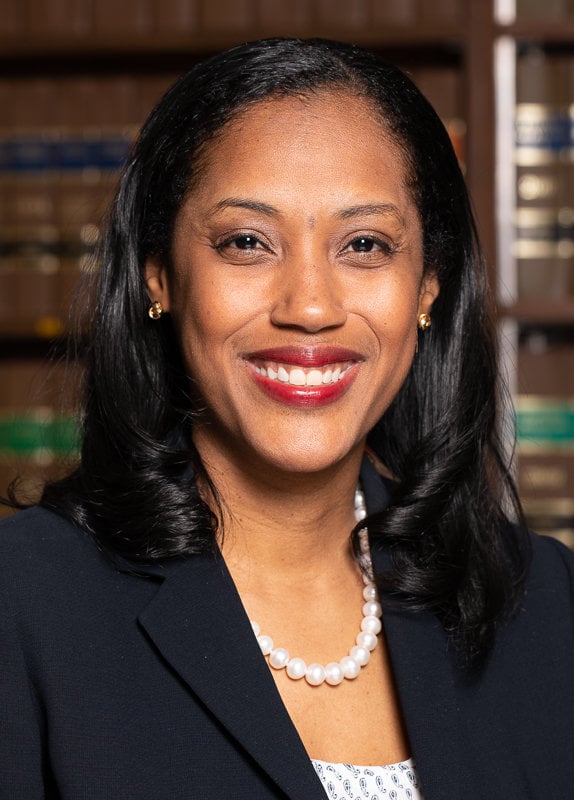
Jamaican-American Attorney Annika Ashton appointed next Broward County Attorney

Annika Ashton

The Broward County Commission has unanimously voted to appoint Jamaican-American attorney Annika Ashton as the next Broward County Attorney, marking a significant milestone for Caribbean representation in one of Florida’s largest counties.

The appointment, made on March 26, 2026, followed a motion by Mark Bogen, Mayor of Broward County, and Commissioner Lamar Fisher. Ashton will officially assume the role on September 10, 2026, after the retirement of current Broward County Attorney Andrew Meyers.

A native of Jamaica and Broward County, Ashton currently serves as Deputy County Attorney, where she leads the County Attorney’s Office of Finance, Real Property, and Housing practice group. In this role, she provides legal services related to the management of real property, structuring financial transactions for ongoing capital bond issuances and other financing arrangements, and supporting affordable housing programs.

She also serves as counsel to several county agencies, including the Office of Management and Budget, Finance and Administrative Services Department, the Real Property Section, and the Housing Finance Authority.

Before joining the County Attorney’s Office, Ashton served as a law clerk for Adalberto Jordan of the U.S. District Court for the Southern District of Florida and the U.S. Court of Appeals for the Eleventh Circuit. She later practiced in the Real Estate and Labor and Employment practice groups of international law firms in New York and Miami.

Ashton has also been active in professional legal organizations. She is a member of Class I of the Florida Bar Leadership Academy, a past president of the Caribbean Bar Association, and a former member of the Florida Bar Young Lawyers Division Board of Governors. She has also served on numerous Florida Bar committees.

A proud graduate of Boyd Anderson High School, Princeton University, and Columbia Law School, Ashton earned her Juris Doctor from Columbia Law School, where she served as editor-in-chief of the National Black Law Journal.

She is admitted to practice law in Florida and New York, as well as before the U.S. Court of Appeals for the Eleventh Circuit and the U.S. District Courts for the Southern, Middle, and Northern Districts of Florida.

Ashton currently resides in Coral Springs and will take on her new role later this year as one of the top legal officials in Broward County government.

Miami-Dade Tax Collector provides update on Haiti TPS extension

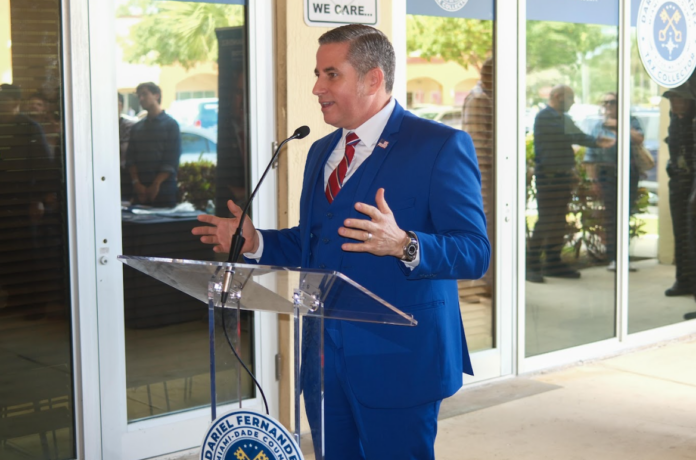
Miami-Dade Tax Collector Dariel Fernandez

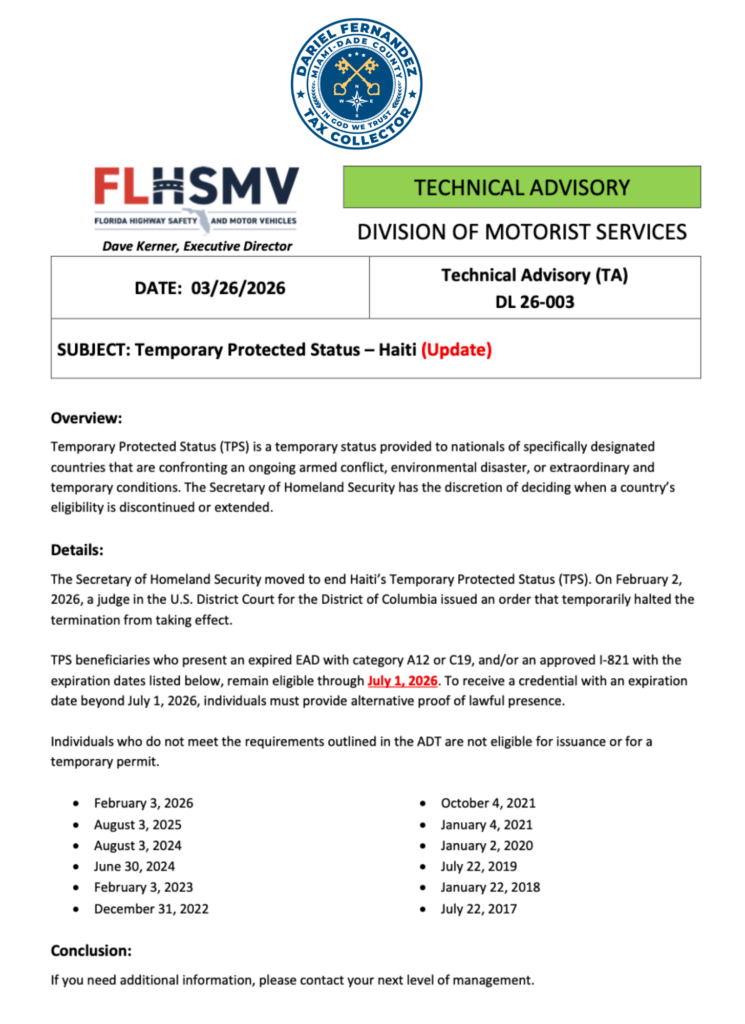
Miami-Dade County Tax Collector Dariel Fernandez issued a statement on March 26 regarding updated guidance from the Florida Highway Safety and Motor Vehicles (FLHSMV) concerning individuals with Haiti Temporary Protected Status (TPS).

According to Fernandez, legal presence for Haiti TPS holders has been extended through July 1, 2026, giving affected individuals additional time while federal legal proceedings continue over Haiti’s TPS designation. Residents with valid documentation confirming lawful presence may continue to receive services as required by law.

The Tax Collector’s Office advised residents to review Technical Advisory DL 26-003 and consult the U.S. Citizenship and Immigration Services for the latest federal guidance on TPS eligibility and documentation requirements.

TPS provides temporary legal status to nationals from designated countries experiencing ongoing armed conflict, environmental disaster, or other extraordinary conditions. The Secretary of Homeland Security has discretion to extend or terminate TPS for eligible countries.

The advisory follows a February 2, 2026, U.S. District Court ruling that temporarily halted the termination of Haiti’s TPS. Beneficiaries presenting an expired Employment Authorization Document (EAD) under category A12 or C19, or an approved I-821 form with specific expiration dates, remain eligible through July 1, 2026. Individuals seeking credentials with expiration dates beyond July 1 must provide alternative proof of lawful presence.

Fernandez said the Miami-Dade County Tax Collector’s Office will continue following FLHSMV and federal guidance, ensuring services are delivered in full compliance with state and federal regulations. Residents seeking additional information are encouraged to contact their office.

Man arrested for stealing election equipment in Palm Beach County

Palm Beach County

A Palm Beach County man was arrested Saturday for allegedly stealing election computer equipment, authorities said.

John Panicci faces charges of taking damaged computer equipment and electronic devices.

Detectives said the incident occurred on March 19 during a training session at the Palm Beach County Supervisor of Elections Office for volunteers preparing for the March 24 election. During the session, Panicci allegedly stole an encrypted access key from a voter registration terminal.

Authorities noted that the key was programmed for the training databases only. However, there were concerns that if someone were able to reverse engineer the encryption, it could potentially be used on an actual voter registration kiosk for malicious purposes.

Following the identification of Panicci as a suspect, investigators obtained an arrest and search warrant and took him into custody at his home. Detectives recovered the stolen items along with a large number of electronic and digital storage devices.

Panicci was booked into the Palm Beach County Jail and is scheduled to appear before a judge Sunday morning.

Antigua PM warns supporters against complacency ahead of election

Antigua PM

Prime Minister Gaston Browne is warning supporters of the ruling Antigua and Barbuda Labour Party (ABLP) against complacency as the country prepares for a general election expected as early as next month.

Although no official election date has been announced, Browne revealed that he has already written to Sir Rodney Williams advising him to dissolve Parliament, paving the way for the polls.

Speaking on his weekly radio programme, Browne cautioned party supporters against assuming victory, even as he pointed to favourable opinion polls.

“I want to make a point to some of our supporters. Yes, we have caught the UPP, let’s say divided and unprepared. It’s never good for a political party to be caught unprepared, much less divided.

“So there are two things going for us there. But at the same time, we ought not take them for granted. And the risk that we run is our comrades taking the position that we already won and there’s no need for them to get the (voter identification) card validated or to vote,” Browne said.

Meanwhile, one political party, the Democratic National Alliance (DNA), has already announced that it will not contest the upcoming elections.

“Following a meeting of the Management Committee of the Democratic National Alliance…it was unanimously decided that the party will not participate in the snap general elections advised by the Prime Minister, which are expected to be called within 90 days,” the party said in a statement.

The DNA, founded on April 18, 2017 and led by former legislator Joanne Massiah, thanked supporters, members and well-wishers for their support over the years.

In the last general election held on January 18, 2023, the ABLP won nine of the 17 seats, with the remaining seats going to the main opposition United Progressive Party (UPP) and one independent candidate.

Browne said supporters must ensure they are properly registered and prepared to vote, recalling that some party supporters failed to participate in the last election because they believed victory was assured.

“I think they felt that we had it in the bag. So I’m saying that to say that it is not won until it is won and that our people must be vigilant. They must be prepared,” he said.

Browne also cited new polling data showing the ABLP holding a significant lead over the opposition UPP.

According to the Prime Minister, the poll places the ABLP at 49 per cent support compared to 26 per cent for the UPP. He also claimed that his personal approval rating stands at 59 per cent, while Opposition Leader Jamale Pringle recorded 15 per cent.

“These polls demonstrate that they do not see Pringle as leadership material,” Browne said, adding that voters prefer “safe and secure hands” to manage the country amid global uncertainty.

He said there has been a 22-point swing away from the UPP, noting that the ABLP increased by 13 percentage points while the opposition declined by nine points.

Browne added that polling conducted by regional pollsters Peter Wickham of Barbados and Don Anderson of Jamaica produced similar findings, suggesting consistency across surveys.

The UPP has not publicly responded to Browne’s claims.