Home Blog Page 18

Louis discharged after frightening blow as officials abandon match over unsafe pitch

Jeremiah Louis

Jeremiah Louis has been discharged from hospital after medical scans returned clear results on Wednesday, though Leeward Islands medical staff will continue monitoring the all-rounder closely over the next 48 hours following a frightening head injury that overshadowed the West Indies Championship clash against Trinidad & Tobago in Antigua.

The alarming incident unfolded on the third morning at Sir Vivian Richards Stadium in North Sound when Louis, batting at No. 9 for the Leeward Islands, was struck on the helmet by a sharply rising delivery from Trinidad & Tobago fast bowler Jayden Seales. Moments later, officials abandoned the match because of what was deemed a dangerous playing surface.

Louis immediately collapsed after the ball exploded from a good length area and climbed violently toward his head. Clearly shaken, he slapped the pitch in frustration before regaining his feet and kicking his helmet toward square leg.

Medical personnel rushed onto the field to treat the seamer before he was stretchered off and transported to hospital by ambulance. After a prolonged delay and consultations involving ground staff and match referee Johnathan Blades, umpires Leslie Reifer and Zahid Bassarath informed captains Joshua Da Silva and Justin Greaves that play would not continue.

The match was officially recorded as a draw.

Mounting concerns over surface conditions

By the time the contest was halted, 27 wickets had fallen in just 147 overs across the three days of play, a troubling statistic in one of only 12 matches scheduled in the shortened regional first-class season.

Leeward Islands held a lead of 96 runs with three wickets remaining in their second innings when Louis was injured, but concern over the unpredictable bounce had been growing long before the incident.

Leeward Islands head coach Wilden Cornwall revealed that doubts about the pitch surfaced almost immediately after the match began.

“To me, it wasn’t given the preparation of a four-day wicket, hence we see so many players get damaged… The pitch has been misbehaving throughout the entire three days,” Cornwall said during Cricket West Indies’ live broadcast.

Cornwall added that he had “had my doubts” about the wicket from the opening morning and suggested it had been under-prepared for first-class cricket.

Trinidad & Tobago question timing of decision

Trinidad & Tobago head coach Rayad Emrit expressed frustration that officials waited until the third day to intervene despite increasingly erratic bounce throughout the match.

“To be blatantly honest, the bounce has been inconsistent throughout the two-and-a-half days,” Emrit said. “For me, if that’s the decision, they should have made it on day one.”

While debate continues over the condition of the pitch and the timing of the abandonment, immediate attention remains fixed on Louis’ recovery.

Team medical personnel are expected to conduct additional assessments before the Leeward Islands squad is finalized for their next match, which is scheduled to begin Sunday at the Antigua Recreation Ground.

 

Reggae Girlz draw Costa Rica in high-stakes battle for 2027 World Cup berth

Reggae Girlz

The Reggae Girlz now know the challenge standing between them and another trip to the biggest stage in women’s football.

Jamaica will square off against Costa Rica in the quarter-finals of the Concacaf Women’s Championship on November 27, with a coveted berth in the 2027 FIFA Women’s World Cup hanging in the balance.

The decisive showdown, scheduled for Texas Health Mansfield Stadium in Mansfield, Texas, was confirmed Tuesday following the official tournament draw, which paired fourth-seeded Jamaica with fifth-ranked Costa Rica in one of four knockout quarter-final matchups.

Victory would send the Reggae Girlz directly to the 2027 FIFA Women’s World Cup in Brazil and continue the program’s remarkable rise in international football.

High stakes across the championship bracket

The revamped Concacaf Women’s Championship will feature four quarter-final contests, with every winner earning automatic qualification to the World Cup.

Tournament favorites and top seeds the United States will face eighth-seeded El Salvador, while second-ranked Canada meet Panama. Third-seeded Mexico will take on Haiti in the remaining quarter-final encounter.

All four winners will advance to the semi-finals and, more importantly, secure places at the global tournament in Brazil.

For Jamaica, the stakes could become even greater.

Should the United States defeat El Salvador and the Reggae Girlz overcome Costa Rica, Jamaica would also clinch automatic qualification for the 2028 Olympic Games in Los Angeles.

Such an outcome would mark another historic milestone for a national team that has steadily elevated its profile on the international stage over the past decade.

Safety net still exists for quarter-final losers

Even if Jamaica falls short against Costa Rica, hopes of reaching the World Cup would remain alive.

The four losing quarter-finalists will move into two play-in matches that will determine Concacaf’s representatives in the FIFA Intercontinental Playoffs scheduled for February 2027.

That pathway would offer one final opportunity to fight for a place in Brazil.

The upcoming tournament represents another chance for the Reggae Girlz to reinforce their status as one of the region’s rising powers.

Jamaica captured bronze medals in both the 2018 and 2022 editions of the Concacaf Women’s Championship and is now pursuing a third consecutive appearance at the FIFA Women’s World Cup.

The Reggae Girlz first made history by qualifying for the global showpiece in 2019, becoming the first Caribbean nation to reach the FIFA Women’s World Cup. They followed that breakthrough by returning for the 2023 tournament, further cementing their reputation as one of the fastest-growing programs in women’s football.

Now, with another World Cup berth within touching distance, Jamaica faces a familiar challenge: rising to the occasion when everything is on the line.


Scorpions escape defeat as injured Campbell leads dramatic final-day resistance

Jamaica Scorpions

The Jamaica Scorpions spent the closing hours at Sabina Park fighting not for victory, but for survival.

Under mounting pressure from a fired-up Barbados Pride attack and with defeat looming deep into the final session, the hosts produced a stubborn resistance to secure a dramatic draw yesterday, finishing on 90 for four after being asked to survive more than 40 tense overs.

What had appeared destined to end as a routine stalemate suddenly turned into a gripping battle of endurance after Barbados declared at a commanding 626 for eight, leaving Jamaica trailing by 169 runs and exposed on a deteriorating surface.

When the Scorpions crashed to 28 for three, the match tilted sharply toward Barbados. But an injured John Campbell, limping visibly as he walked to the crease, refused to let his side collapse.

Alongside wicketkeeper Romaine Morris, the Jamaica captain dug in through fading light and rising tension to deny Barbados a remarkable late victory push.

Campbell battles through pain

Campbell, nursing a leg injury suffered while fielding earlier in the match, was unable to open the innings and instead arrived at number five with his team in crisis.

What followed was an innings defined more by resilience than flair.

Barely able to move freely, Campbell stood firm for 91 deliveries to finish unbeaten on 42, absorbing pressure from both seam and spin while guiding the Scorpions through the most dangerous phase of the contest.

At the opposite end, Morris delivered equally critical support. The wicketkeeper faced 62 deliveries for an unbeaten five, frustrating Barbados as the overs disappeared and daylight faded.

Barbados extended play by an additional 30 minutes in a desperate bid to force a breakthrough, but by 6:05 p.m. the final handshakes arrived, confirming Jamaica’s escape.

Barbados turns up the pressure

Earlier in the day, Barbados transformed a modest overnight advantage into complete dominance.

Resuming the fourth morning at 460 for five with a lead of just three runs after first-innings honors were secured, the visitors immediately accelerated the scoring pace.

Kyle Mayers and Leniko Boucher launched the assault.

The Pride surged past 500 in only 116 deliveries, with Mayers bringing up his half-century from 116 balls before unleashing a punishing counterattack.

Together, the pair added 104 runs for the sixth wicket and drained the energy from Jamaica’s bowling unit.

Mayers eventually departed for a blistering 84 that included six boundaries and five towering sixes before Odean Smith finally removed him.

Rain briefly interrupted play with Barbados on 542 for six, but the pause did little to slow the visitors once action resumed.

Boucher added 24, Shamar Springer hammered 36, and Johann Layne crashed an unbeaten 43 as the Pride piled up 626 for eight before declaring.

Peat Salmon led the Jamaica bowling effort with four wickets for 147 runs, while Smith collected two for 90.

Early collapse sparks panic

Jamaica’s chase for survival began badly and quickly deteriorated.

With Campbell unable to open, Kirk. the first-innings centurion, fell for a duck when Kyle Mayers induced a catch to Jomel Warrican at cover.

At tea, Jamaica were still relatively stable at 22 for one, but Barbados seized control immediately after the interval.

Johann Layne removed Javelle Glenn for 10 with a caught-and-bowled chance before striking again six runs later when Brad Barnes miscued a hook shot to Jair McAllister in the deep.

At 28 for three, panic swept through the home side.

Carlos Brown attempted to anchor the innings and battled through 55 deliveries for 13, but Jomel Warrican eventually forced an edge behind to leave Jamaica tottering at 46 for four.

That dismissal brought Campbell to the crease, injured, limping, but determined.

Coaches praise fighting spirit

After surviving the scare, Jamaica head coach Robert Haynes praised the character his side displayed under immense pressure.

“It was a very tough game, and we spoke about it being a tight game. I thought we should have gotten more runs in the first innings. Once they got that lead, we knew it was going to be a challenge facing their seamers and spinners on this last day, and captain John and Morris saw us through, and I am really pleased with the grit and fight shown.”

Despite failing to secure victory, Barbados captain Kraigg Brathwaite took encouragement from the intensity his side showed throughout the contest.

“We knew the task of getting Jamaica out was always going to be difficult, but our bowlers came out and showed real fight, and this just gives us belief heading into the third and final game.”

In the end, the Scorpions walked away battered and exhausted, but still standing.


Sir Curtly Ambrose hails Kevin Wickham as Barbados’ next batting star

Sir Curtly Ambrose honored with Doctorate from UWI Five Islands Campus
Curtly Ambrose former fast bowler of the West Indies during training at the Sydney Cricket Ground. Sydney, Australia, Saturday, January. 2nd, 2016. (Photo: Steve Christo) (Photo by Steve Christo/Corbis via Getty Images)

Praise does not come lightly from Sir Curtly Ambrose.

So when the legendary West Indies fast-bowling icon describes a young cricketer as “a wonderful talent,” people across the Caribbean cricket landscape tend to listen carefully.

This week, Sir Curtly reserved that distinction for Barbados Pride batter Kevin Wickham, whose extraordinary start to the 2026 West Indies Championship has rapidly transformed him from promising prospect into one of the competition’s biggest stories.

The 23-year-old left-hander has opened the season in breathtaking fashion, piling up three consecutive centuries against the Jamaica Scorpions in the ongoing regional first-class campaign.

Wickham’s record-breaking start

Wickham announced himself emphatically in the opening match of the series with a commanding 153 in the first innings before returning to produce an unbeaten 108 in the second.

The twin centuries placed him in elite Barbadian company.

By scoring hundreds in both innings of the same first-class match, Wickham joined only Ryan Hinds and current Barbados Pride captain Kraigg Brathwaite as Barbadians in the modern era to accomplish the feat.

Rather than slowing down, Wickham carried his form seamlessly into the second match of the series, hammering another century, 105 this time, on Tuesday to continue his remarkable run.

Sir Curtly reflects on early signs of greatness

Speaking on the Mason and Guest radio program on Tuesday, Sir Curtly revealed that he recognized Wickham’s potential years ago while working with the West Indies Under-19 setup.

The Antiguan great said he was convinced early that the young batter possessed the qualities needed to succeed at the highest level.

“I worked with him with the Under-19s a few years ago and I told Floyd Reifer that this guy has so much talent that if he gets an opportunity I believe he will go really far,” Sir Curtly said.

He added simply:

“He is a wonderful talent.”

A rising force in Caribbean cricket

Wickham’s surge has become one of the defining early narratives of the regional season, not only because of the volume of runs but also the authority with which they have been scored.

At just 23 years old, the Barbados batter is already demonstrating the temperament and consistency associated with far more experienced players, while his stroke play has helped energize the Barbados Pride batting lineup.

With three centuries already to his name and endorsements arriving from one of the most respected figures in West Indies cricket history, Wickham’s emergence is beginning to look less like a hot streak and more like the arrival of a major Caribbean batting force.


Kevin Wickham’s runs are more than numbers, they are a tribute to his father

Kevin Wickham

For Kevin Wickham, cricket is no longer only about runs, victories, or personal milestones.

Every innings has become something more intimate. Every boundary carries remembrance. Every moment at the crease is tied to the memory of his late father, Herbert.

More than two years after losing the man who shaped his love for the game, the Barbados Pride batter continues to channel grief into determination, using his performances as a living tribute to the father whose voice still echoes in his mind.

When Wickham walks onto the field now, he does so carrying more than a bat.

He carries legacy.

Pain that changed everything

The 23-year-old rising star recently etched his name into Caribbean cricket history by becoming just the third Barbadian this century to score centuries in both innings of a regional first-class match.

With those twin hundreds, Wickham joined an exclusive list alongside Kraigg Brathwaite and Ryan Hinds, an achievement that further confirmed his emergence as one of the region’s brightest batting talents.

But behind the milestone lies a story marked by loss and emotional struggle.

Reflecting on one of the most difficult periods of his young career, Wickham revealed how deeply his father’s death affected him.

“When my father passed, that was the toughest part for me,” Wickham said. “I was here in Jamaica when I got the news that he wasn’t doing too well and I left for home, and after returning to playing after the funeral, I wasn’t doing too well on the field because it was really tough.”

The emotional burden lingered long after he returned to cricket.

“The guys showed me a lot of support because it was more mental than physical, and having their support kept me above ground and helped me maintain high standards and be where I am supposed to be.”

A father’s voice still present

Though Herbert Wickham rarely attended matches in person, his connection to his son’s cricket career never wavered.

Kevin remembers a father who followed every innings closely, often through radio broadcasts, and always had detailed feedback waiting when he returned home.

“I think about my dad all the time because he was very supportive,” Wickham said. “He never really watched the games by coming to the grounds, but he would always listen to the radio, a more old-schooled way.”

Those conversations became part of his cricket education.

“Every time I came home, he could tell me how much I scored, what I should and shouldn’t have done. To this day I miss him because I miss having those conversations, and when I’m not doing too well, I try to think back to his advice.”

Turning emotion into dominance

That emotional drive has fueled some of the finest innings of Wickham’s career.

Against the Jamaica Scorpions, he unleashed a devastating display of batting in the first innings, hammering 153 with six boundaries and 12 towering sixes before returning to craft an unbeaten 108 in the second innings.

Both knocks arrived under pressure, with Barbados Pride needing stability after difficult starts.

“The first innings century was very special to me because that is now my highest first-class score,” Wickham explained. “I came at the stage where the team was in a bit of trouble, so my aim was to stay at the crease for as long as possible and get a good total for the team.”

The approach remained unchanged in the second innings.

“The second one I found myself in a similar position where the team was in a bit of trouble, but the mindset was the same, get the team in a good position.”

Learning to survive the demands of senior cricket

Wickham’s rise has not been without challenges.

After emerging as one of the Caribbean’s most promising young batters with a century against Zimbabwe during the 2022 ICC Under-19 World Cup, expectations quickly intensified as he transitioned into senior cricket.

The adjustment, he admitted, tested him mentally.

“This phase has been different, a lot tougher in terms of expectations after coming out of Under-19 cricket because I had a few low scores, but coach always told me just to stick to my plans and when the runs are coming stay in decent touch as long as possible because in cricket a player will have more failures than success.”

Still, Wickham entered the series with a clear target in mind.

“I set myself a personal goal of scoring three hundreds in this bilateral series and putting the team in good positions and I’ve scored two so far, and with a start like that I’m looking to better it as the games goes on.”

A career rising, a legacy preserved

Already armed with five first-class centuries and an average above 40 after just 22 matches, Wickham’s career trajectory continues to rise sharply.

Yet even as accolades grow and expectations mount, his motivation remains deeply personal.

Beyond the applause, beyond the scorecards and headlines, Kevin Wickham continues to bat for the man who first believed in him, a father whose presence he still feels with every innings he plays.

As fate would have it, rather than slowing down, Wickham carried his form seamlessly into the second match of the series, hammering another century, 105 this time, on Tuesday to continue his remarkable run.

That’s three centuries in as many innings.


‘100% illegal’: Jamaican hotelier slams fence blocking Seven Mile Beach access for residents

A routine early morning run along Negril’s famed Seven Mile Beach has sparked renewed debate over public access to Jamaica’s coastline, after hotel operator Winthrope “Thrope” Wellington encountered a barbed-wire fence blocking passage along the shore.

Speaking in a widely circulated social media video, Wellington described the discovery as “disturbing” and emblematic of a growing concern among residents and stakeholders in Negril.

“Normally when I’m running on the beach… you can traverse Long Bay anywhere without any impediment,” Wellington said. “Nobody can tell you that you can’t move freely along this beach.”

But on this particular morning, his run was abruptly halted.

“As I came to this point, I realized that there is a barbed-wire fence that is stopping me from continuing my run… I found it completely ridiculous because this is 100% illegal,” he stated.

According to Wellington, the obstruction appeared to stretch “from the side of the road all the way down to the beach,” leaving “not enough space” for pedestrians to pass. He attributed the installation to “the proprietor of this new scuba business,” questioning both the authority and intent behind the action.

“I’m not sure who gave them the authority or where the audacity to do something like that came from… This is a public beach. Nobody owns it. Nobody can stop anybody from going to and from,” he emphasized.

The Urban Development Corporation (UDC) has since acted swiftly, removing the unauthorized barbed-wire fence that was blocking public access to Long Bay Beach in Negril.

In a statement, the UDC confirmed that the illegal fence—running from the road to the sea—was dismantled to preserve the beach as a public asset for both citizens and visitors.

Wellington’s frustration was particularly notable given his own position as a beachfront hotel operator.

“This is also coming from somebody who owns a hotel on this beach. I have no right to do so, nor would I ever want to,” he said. “This beach has always been, and will always be, a public beach.”

Legal Reality vs. Public Perception

While Wellington asserts the blockage is “100% illegal,” Jamaica’s legal framework presents a more complex picture.

Under the Beach Control Act, the shoreline—specifically the foreshore between the high- and low-water marks—is considered public. However, the Act does not guarantee unrestricted access across private land to reach or move along beaches.

The legislation, first enacted during the colonial era and later amended, requires permits for the use of coastal areas and has often been criticized for prioritizing private development over traditional community access. As a result, situations like the one described by Wellington often fall into a legal grey area—where physical obstruction of movement may be challenged socially or politically, even if access rights are not clearly defined in law.

Still, Wellington argues the issue goes beyond legality.

“When I see something like this, my mind clicks and says, this is how it starts,” he warned.

He also pointed to the economic implications of restricted movement.

“Because it’s a public beach, it also cuts off commerce and business. Hotels down here, guests who are staying there can’t visit businesses down there… and vice versa,” he explained.

A Regional Comparison

In Caribbean destinations such as The Bahamas and the Cayman Islands, beaches are generally public up to the high-water mark, with access more explicitly protected.

Critics argue that Jamaica’s legal structure is outdated and has contributed to a gradual “locking out” of locals from sections of the coastline, particularly in tourism-heavy areas like Negril.

Wellington’s comments have reignited public debate over who truly has the right to access Jamaica’s beaches—and how those rights should be protected.

Former Trinidad PM Rowley slams government crime strategy

Keith Rowley

Former prime minister of Trinidad and Tobago Dr. Keith Rowley has sharply criticised the current administration’s approach to national security, describing its crime strategy as a “rolling state of emergency” driven by what he called “public manipulations.”

In comments shared on social media, Rowley argued that those now in office had previously dismissed his government’s attempts to frame violent crime as a public health issue. He accused unnamed officials of contributing little to governance beyond division and bias, and said leadership had become an “entitlement” used to shield corrupt behaviour.

“This then becomes the country, as hope shrivels and faith in the future is lost,” he said, warning that national morale and quality of life deteriorate when trust in leadership erodes.

The remarks come against the backdrop of recent crime statistics released by Prime Minister Kamla Persad-Bissessar, which her administration has highlighted as evidence of improving public safety.

According to government figures, serious reported crimes fell by 30 per cent in 2026 compared to the same period in 2025, dropping from 3,413 to 2,397 cases. Violent crime reportedly declined by 32 per cent, with the North Eastern Division recording a 55 per cent reduction.

The Prime Minister has maintained that citizens are experiencing improved security conditions under her government’s leadership. However, the narrative has faced renewed scrutiny following a recent quadruple homicide on Lady Young Road, which included the killing of a young girl, occurring shortly after the data was released.

Bahamas Opposition moves to remove former leader Hubert Minnis

BAHAMAS Hubert Minnis

The main opposition in The Bahamas, Free National Movement (FNM), says it will move to formally remove former Prime Minister Dr. Hubert Minnis as a member of the party following his decision to contest the Killarney seat as an independent candidate in the upcoming general election.

FNM chairman Dr. Duane Sands confirmed that the process to expel Minnis will be initiated but said it will not be handled immediately, insisting the party is focused on broader campaign priorities.

“There’s a process and that process will take place when it takes place, but we have far more important things than to worry about Dr. Minnis,” Sands said. “Dr. Minnis is going to be defeated in Killarney and we have no interest in giving him any oxygen because this is all attention-seeking behaviour.”

Minnis, who led the FNM to a landslide victory in 2017 before the party’s defeat in 2021, formally entered the Killarney race last week as an independent candidate. He will face the FNM’s Michela Barnett-Ellis, the Progressive Liberal Party’s Robyn Lynes, and the Coalition of Independents’ Dr. Veronica McIver.

Under a constitutional amendment ratified by the party in February 2022, any member who runs against an official FNM candidate is deemed to have resigned, paving the way for Minnis’ removal.

Dr. Sands said the formal steps would eventually follow, but emphasized that the party would not be distracted during the campaign period.

He also noted that while Minnis’ membership status may change, his place in the party’s history remains intact.

“The historical reality of Dr. Hubert Minnis as the prime minister and leader of the Free National Movement doesn’t change,” Sands said. “We don’t tend to rewrite history.”

Minnis, however, has pushed back strongly since breaking with the party, accusing its leadership of launching personal attacks against him and his wife and limiting his participation in party activities.

At his campaign launch earlier this month, he defended his decision to run independently, citing a long-standing connection to the constituency.

“I have had a bond with Killarney for more than 20 years, even though the FNM abandoned me, I never abandoned Killarney,” he said. “I would not abandon the great and loyal people of this wonderful constituency.”

University of Guyana receives 27 applications in global search for new Vice-Chancellor

sir-ronald-sanders-caricom

The Chancellor of the University of Guyana, Sir Ronald Sanders, has announced that the University Council has received 27 applications for the post of Vice-Chancellor and Principal, following an international recruitment process aimed at attracting a transformational academic leader.

The applications were submitted through an extensive global search conducted by a Council-appointed committee, which closed on April 18, 2026. The committee will now review the submissions and begin shortlisting candidates for the next phase of the selection process.

The current Vice-Chancellor is expected to complete a seven-year tenure in July 2026, prompting the search for new leadership at a time of significant national and institutional change.

Sir Ronald said the selection process is being guided by established procedures previously used in appointing the current Vice-Chancellor, with an emphasis on fairness, continuity, and good governance.

He noted that the university is operating in a period of rapid national transformation, as Guyana experiences strong economic growth driven by developments in energy, infrastructure, diversification, and expanding international engagement. These shifts, he said, are reshaping workforce demands and national priorities.

Against this backdrop, Sir Ronald stressed that the university is expected to play a central role in building advanced human capital, strengthening research output, and contributing expertise to both national and regional development.

He said the Council is seeking a leader capable of positioning the institution as a centre of academic excellence, innovation, and regional influence in a changing economy.

The Chancellor also confirmed that the process will remain transparent, with updates to be shared publicly, including the announcement of shortlisted candidates and details of public lectures that will form part of the evaluation process.

US backs new UN-backed force as Haiti pushes for security breakthrough and elections

Haiti's new PM Alix Didier Fils-Aimé names 18-member Cabinet
Haiti’s Prime Minister, Alix Didier Fils-Aimé

The United States has reiterated its support for Haiti’s fight against escalating gang violence, welcoming the deployment of a new UN-authorised multinational mission aimed at restoring security and stabilising the country ahead of planned elections.

The Gang Suppression Force (GSF), a 5,550-member contingent approved by the United Nations Security Council, will operate alongside Haitian authorities under a 12-month mandate. Its mission is to dismantle armed groups, secure critical infrastructure, and improve humanitarian access in communities heavily affected by violence and displacement.

US Secretary of State Marco Rubio underscored Washington’s backing during talks with Haitian Prime Minister Alix Fils-Aimé, who is visiting the United States as part of a series of high-level diplomatic meetings focused on Haiti’s security and political transition.

US officials said Rubio welcomed early progress toward deploying the force and stressed the importance of timely implementation of its mandate. He also highlighted that improvements in security are essential to creating conditions for credible and inclusive elections.

Rubio further reaffirmed US support for a multi-year extension of the HOPE/HELP trade preference programmes, which are viewed as part of broader stabilisation efforts for the Caribbean nation.

Fils-Aimé also met with members of the US Congress, including Mario Díaz-Balart, vice chairman of the House Appropriations Committee, where discussions focused on restoring state authority, improving security conditions, and preparing for elections.

During those talks, Haitian officials emphasized that lasting security is a prerequisite for any democratic transition, while US lawmakers reiterated interest in supporting Haiti’s stability and institutional recovery.

The Haitian leader also held discussions with Senate Democratic Leader Chuck Schumer, where he raised concerns about the status of Temporary Protected Status (TPS) for Haitians living in the United States. The meeting formed part of broader diplomatic efforts to maintain protections for the Haitian diaspora amid ongoing instability at home.

Jamaica plans major shift in firearms law to ease penalties for fake guns

Horace Chang Jamaica
Minister of National Security, Dr. Horace Chang.

Jamaica’s strict firearms regime is set for a significant rethink, with the government moving to soften penalties for imitation or replica guns under legislation that has drawn sustained criticism for treating fake weapons the same as real firearms.

National Security Minister Dr. Horace Chang says amendments to the Firearms (Prohibition, Restriction and Regulation) Act, 2022 will be tabled this year, opening the door for more discretion in sentencing—especially in cases involving children or the use of replica weapons in artistic, educational, or performance settings.

Under the existing law, possession of an imitation firearm carries the same mandatory 15-year prison sentence as a real firearm. The legislation defines imitation firearms broadly, covering any object that resembles a gun, regardless of whether it is capable of firing.

However, Chang acknowledged that the government now intends to adjust the framework to allow for more proportionate sentencing, particularly in cases involving children or where replicas are used for artistic, educational, or theatrical purposes. He said the proposed amendment would shift imitation firearms into a different category within the law to allow for reduced penalties.

He noted that while the legislation was introduced during a period of heightened concern about violent crime, circumstances and stakeholder feedback have since prompted a reassessment. The minister said the changes are not expected to represent a major overhaul, but rather targeted refinements.

The Firearms Act was originally described by the government as a decisive shift in tackling illegal guns, introducing strict mandatory sentencing as part of a broader crime-fighting strategy. It has since been complemented by enhanced anti-gang operations, intelligence-led policing, and expanded investigative powers for agencies such as the Major Organised Crime and Anti-Corruption Agency (MOCA).

Authorities have also relied on short-term interventions such as States of Public Emergency and medium-term initiatives like Zones of Special Operations to disrupt criminal networks and restore order in high-violence communities.

As part of its wider legislative agenda for fiscal year 2026/2027, the Ministry of National Security and Peace is also prioritizing amendments to several other laws, including the Aliens Act and the Immigration Restriction (Commonwealth Citizens) Act. New policy frameworks are also expected, including proposals related to trafficking in persons, crime prevention through social transformation, and national visa policy.

Chang indicated that additional refinements to the corrections framework are also planned, with updated policy guidance expected to inform upcoming amendments to the Corrections Act.

The planned revision of the firearms law comes as policymakers continue to balance strict enforcement measures with concerns about proportionality in sentencing, particularly in cases involving non-lethal imitation weapons.

Pompano Beach to celebrate Haitian Heritage Month with culture series

This Haitian Heritage Month (May), the Pompano Beach Cultural Affairs Department is inviting the community to experience a vibrant celebration of Haitian culture through art, movement, and storytelling, anchored by the exhibition Lakou La Croix at the Ali Cultural Arts Center.

Running from May 8 through June 13, 2026, Lakou La Croix is a deeply personal solo exhibition by Haitian-born, South Florida–based artist Louiveste La Croix. Through mixed-media works, the exhibition explores themes of childhood memory, displacement, and communal identity rooted in his upbringing in Saint Louis du Nord, Haiti, and his migration journey to the United States.

At the core of the exhibition is the Haitian concept of lakou, a traditional communal living structure symbolizing shared responsibility, resilience, and belonging. For La Croix, lakou becomes both lived experience and metaphor—an interconnected web of homes, memories, and identities shaped during a prolonged immigration process. Each artwork is presented as a “doorway,” inviting viewers into an evolving narrative of home, spirituality, culture, and self.

The celebration opens with a reception on Friday, May 8, from 6–8 p.m. at the Ali Cultural Arts Center, where visitors can meet the artist, engage with the work, and take part in an evening of cultural reflection and community dialogue.

La Croix, who studied Fine Art at Broward College, has exhibited internationally, including in Brooklyn, Miami’s Wynwood Arts District, Los Angeles, and Fort Lauderdale. His work blends gestural figures, abstract color, and multimedia techniques, often drawing on spiritual symbolism and natural elements. He describes his practice as rooted in authenticity, creative risk-taking, and the pursuit of new forms of expression.

Continuing the festivities, Haitian culture will come alive through movement with Konpa Pompano! on Saturday, May 9, from 7–9:30 p.m. at The Hive Black Box Theater. The interactive dance workshop will be led by instructor Caleb Exantus and focuses on Konpa, one of Haiti’s most popular musical and dance traditions.

Open to all skill levels, the session will guide participants through foundational steps while celebrating the rhythm, energy, and communal spirit of Haitian culture.

Together, Lakou La Croix and Konpa Pompano! form a complementary cultural experience—one offering reflective engagement through visual art, and the other delivering an embodied celebration through dance—creating a multidimensional tribute to Haitian Heritage Month in Pompano Beach.

Event details:

Lakou La Croix Exhibition
May 8 – June 13, 2026
Opening Reception: May 8, 6–8 p.m.
Location: Ali Cultural Arts Center
Admission: Free (registration required)

Konpa Pompano! Dance Workshop
May 9, 7:00–9:30 p.m.
Location: The Hive Black Box Theater
Admission: $10
Tickets here: https://www.pompanobeacharts.org/events/konpa-in-pompano

WHO certifies The Bahamas for eliminating mother-to-child transmission of HIV

breastfeeding of newborn babies

The World Health Organization (WHO), alongside the Pan American Health Organization (PAHO), has congratulated The Bahamas Ministry of Health and Wellness for achieving certification for eliminating mother-to-child transmission of HIV, marking a major public health milestone for the Caribbean.

The announcement places The Bahamas among a select group of countries recognized for eliminating vertical transmission of HIV, a significant achievement in global HIV prevention efforts.

“I congratulate The Bahamas on this outstanding achievement, which solidifies years of political commitment and the dedication of health workers,” said Dr. Tedros Adhanom Ghebreyesus, WHO Director-General. “By ensuring that children are born free of HIV, we are securing a healthier, brighter future for the next generation.”

Dr. Jarbas Barbosa, Director of PAHO and WHO Regional Director for the Americas, said the milestone reflects sustained leadership and investment in health systems.

“This achievement reflects sustained political commitment and strong national leadership, alongside the dedication and compassion of the health workforce,” he said. “As we look ahead, this milestone is not only a moment of national pride but also an opportunity to build on this success and further advance efforts to end HIV and other communicable diseases as public health threats across the Caribbean and the Americas.”

Strengthening maternal and child health systems

Health officials credited The Bahamas’ success to a comprehensive, integrated healthcare approach that prioritizes universal antenatal care, early testing, and treatment.

The country offers antenatal services to all pregnant women regardless of nationality or legal status, supported by a coordinated laboratory network and a structured testing protocol that screens women at their first visit and again in the third trimester.

Prevention of mother-to-child transmission services are fully integrated into maternal and child health programming and linked with national infectious disease services. This includes expanded HIV prevention tools such as pre-exposure prophylaxis (PrEP), alongside free antiretroviral treatment, STI care, and family planning services.

“For years, The Bahamas has been working very hard to address HIV/AIDS,” said Dr. Michael Darville, Minister of Health and Wellness. “Our nurses, doctors, and public health teams across our archipelago have all played a critical role in achieving this milestone.”

Regional leadership in HIV elimination

With this certification, The Bahamas joins a small but growing group of countries in the Region of the Americas that have eliminated mother-to-child transmission of HIV, alongside pioneers such as Cuba and Brazil.

Global health agencies noted that more than half of all countries and territories that have achieved elimination are located in the Americas, highlighting the region’s leadership in HIV prevention.

UNICEF’s global associate director for HIV/AIDS, Anurita Bains, said the achievement underscores the region’s continued progress.

“Latin America and the Caribbean have long been a beacon of progress in this global effort,” she said. “This is a legacy of leadership that continues to inspire the world.”

UNAIDS Executive Director Winnie Byanyima also praised the milestone, calling it proof that elimination is achievable with sustained investment in primary healthcare.

“When women can test early in pregnancy, start treatment quickly, and stay in care, every child has a better chance of being born free of HIV and other STIs,” she said.

Meeting global elimination targets

To receive WHO certification, countries must meet strict criteria, including reducing transmission rates to below 2 percent, maintaining fewer than five pediatric infections per 1,000 live births, and achieving at least 95 percent coverage for antenatal care, testing, and treatment among pregnant women.

The Bahamas’ success forms part of the broader EMTCT Plus Initiative, which also targets the elimination of syphilis, hepatitis B, and congenital Chagas disease. The initiative is part of PAHO’s wider regional elimination strategy aimed at eradicating more than 30 communicable diseases and related conditions in the Americas by 2030.

Two Broward seniors recognized among nation’s top academic scholars

More Than 125 Colleges, Universities, Technical Schools and Military Branches participating in Broward County College Fair

The National Merit Scholarship Corporation (NMSC) has announced the first group of winners in the 71st annual National Merit Scholarship Program, with two standout students from Broward County Public Schools (BCPS) earning corporate-sponsored awards.

Alyssa Rapps, a senior at Marjory Stoneman Douglas High School, and Ziyue Xu, a senior at Cypress Bay High School, were both selected as recipients of the National Merit Motorola Solutions Scholarship.

The two scholars were chosen from among finalists in the prestigious National Merit Scholarship competition who met the specific criteria set by their scholarship sponsor. Each year, approximately 115 corporations, company foundations, and other business organizations fund these awards, supporting students who are children of employees, residents of communities they serve, or those pursuing fields aligned with the sponsors’ priorities.

Most corporate-sponsored scholarships are renewable for up to four years of undergraduate study, with annual stipends ranging from $1,000 to $10,000. Some awards are one-time grants valued between $2,500 and $10,000. Recipients may use their scholarships at any regionally accredited college or university in the United States.

Since its inception, the National Merit Scholarship Program has received more than $892 million in funding from corporate sponsors across nearly every sector of American industry, helping to support the academic development of high-achieving students nationwide.

Additional announcements from NMSC are expected in the coming months, including recipients of $2,500 National Merit Scholarships on May 13, 2026, and winners of college-sponsored Merit Scholarship awards on June 3 and July 13, 2026.

Trinidad and Tobago takes center stage in UK cinemas with ‘Crossroads’ film series

A new screening series spotlighting contemporary Caribbean storytelling is set to bring Trinidad and Tobago into focus across independent cinemas in South East England this spring.

Titled Crossroads, the program will run from May 8 to June 18, 2026, featuring a curated selection of films—including five UK premieres—across four venues: BEAM in Hertford, Depot in Lewes, Electric Palace in Hastings, and Towner Cinema in Eastbourne.

Presented by SAVANT Media, a Hastings-based organization whose director also leads the Trinidad and Tobago Film Festival (TTFF), the series is designed to introduce UK audiences to one of the most underrepresented regions in global cinema. Drawing on standout titles from recent editions of TTFF, Crossroads showcases work that is both formally inventive and deeply rooted in Caribbean lived experiences.

At the heart of the program are five films offering a layered portrait of Trinidad and Tobago—its landscapes, communities, folklore, and culture.

Leading the lineup is Queen of Soca (2024), directed by Kevin Adams, which makes its UK premiere. The feature follows Olivia, a young singer from Port of Spain who uses her talent to rise above poverty. When one of her tracks goes viral, she earns a shot at the country’s biggest soca competition. Blending humor, music, and drama, the film explores ambition, identity, and the transformative power of culture.

Also premiering is Possible Landscapes (2025), a 105-minute documentary by Kannan Arunasalam. Spanning sugarcane fields, fishing communities, and fragile coral reefs, the film examines the environmental and social legacies of colonialism and development in the Caribbean. Created in collaboration with academics Tao DuFour and Natalie Melas, it merges documentary storytelling with scholarly insight.

Charlotteville Tails (2025), directed by Elspeth Duncan, shifts the focus to a fishing village in Tobago, where three children—Emily, Kaija, and Zakii—set out to help stray dogs. Their efforts highlight themes of care, community, and human-animal relationships.

The program also includes two short films that reflect the creative range of Trinidad and Tobago’s filmmakers. Smile (2022), a two-minute stop-motion piece by Nigel Williams, uses light and shadow to explore emotional concealment. Meanwhile, Evangeline (2024), directed by Peter De Souza-Samanek, brings Trinidadian folklore to life through wire-bending artistry, following a figurine navigating a forest inhabited by the mythical Douen.

Together, the films span fiction, documentary, and animation, offering audiences a multifaceted view of Caribbean storytelling.

Select screenings will feature post-film discussions led by Tola Dabiri of Electric Piers, along with Q&A sessions moderated by BEAM cinema programmer Patrice Robinson. A family-friendly segment, Big Stories for Little Ones, will present Caribbean short films for children during the half-term holiday.

“At TTFF, we are committed to building the visibility of the film canon of our region, whether here at home or internationally, and Crossroads is part of how we deliver that,” said Mariel Brown, director of the Trinidad and Tobago Film Festival.

Robinson described the initiative as a significant cultural moment for UK audiences. “BEAM is incredibly proud to launch the first edition of Crossroads, a co-produced series with the Trinidad and Tobago Film Festival showcasing the Caribbean in all its forms,” she said. “This exciting debut invites audiences to explore bold and rich storytelling from across the region.”

Organizers say Crossroads is intended to become an annual platform for Caribbean cinema in the UK, fostering long-term connections between filmmakers, venues, and audiences.

Full program details and ticket information are available on the participating venues’ websites.

David Gibbons appointed CEO of PwC Caribbean Network

The network of PricewaterhouseCoopers (PwC) firms operating across the Caribbean has named David Gibbons as its next chief executive officer, effective July 1, 2026.

Gibbons will succeed Frazer Lindsay, who has led the regional network since 2016 and will retire on June 30, concluding a 36-year career with the firm.

“It’s a tremendous honor to serve as the next CEO, especially as we stand at a pivotal moment for professional services regionally and globally,” Gibbons said. “With geopolitical tensions, evolving economies, and the impact of AI, our clients are navigating tremendous change. I am confident that the network of PwC firms operating in the Caribbean has the right blend of people, capabilities, and technology to help our regional clients seize opportunities amid these challenges.”

He added that he looks forward to building on the firm’s foundation to ensure clients remain competitive in a rapidly shifting landscape.

Lindsay endorsed the appointment, describing Gibbons as well-suited to guide the organization through its next phase.

“David is the right leader for this moment. He brings a sharp vision and a deep understanding of our markets and clients,” Lindsay said. “I look forward to working with him over the coming months to ensure a smooth transition. I am confident that under his guidance, our regional network will continue to grow and deliver the very best to our clients.”

Bruce Scott, chairman of the board of the PwC Caribbean network, also expressed confidence in the incoming CEO’s leadership.

“David brings a strong regional perspective and a clear understanding of what our clients and communities need from PwC,” Scott said. “His focus on quality, people, and sustained growth will be critical as our firms respond to changes in an increasingly complex business environment.”

A Barbadian by birth, Gibbons began his career in Barbados before relocating to Bermuda, where he has spent more than two decades with PwC, including 12 years as a partner. He has served on the region’s Core Leadership Team as Human Capital Leader for the past seven years and most recently held the role of Assurance Leader for PwC Bermuda.

In those positions, he played a key role in shaping regional strategy and driving initiatives aimed at sustained market growth.

Gibbons is a Fellow of the Institute of Chartered Accountants of Barbados and a Chartered Professional Accountant in both Bermuda and Nova Scotia. He is also recognized for his expertise in regional and global insurance trends.

As he prepares to assume the role, Gibbons signaled a forward-looking agenda centered on growth, strong stakeholder relationships, and the integration of people and technology—underpinned by what he describes as a “no-compromise” approach to quality.

Brathwaite’s marathon, Wickham’s firepower push Pride beyond Scorpions

Barbados Pride dominate Scorpions in convincing 9-wicket victory

What began as a promising position for Barbados Pride evolved into total domination on day three at Sabina Park, where captain Kraigg Brathwaite and the red-hot Kevin Wickham delivered a punishing display of batting that left Jamaica Scorpions exhausted and increasingly helpless.

By the close of play, Barbados had surged to 460 for 5, three runs ahead of Jamaica Scorpions’ imposing first-innings total of 457, with five wickets still intact and momentum firmly in their grasp.

On a surface that steadily surrendered to the batsmen, the Jamaican attack spent long, draining hours searching for breakthroughs that rarely came.

Brathwaite builds, Drakes attacks

Resuming the morning at 125 for 1, Barbados already had a solid platform in place. Brathwaite, unbeaten on 51 overnight, resumed with his trademark patience, while Jonathan Drakes provided the early aggression that kept the scoreboard moving briskly.

Drakes raced to his half-century from only 54 deliveries, peppering the boundary with eight fours and two sixes. His positive approach briefly shifted pressure onto the Scorpions bowlers and suggested an even larger innings was on the horizon.

But just after the drinks interval, concentration wavered.

With Barbados on 181 for 1, Drakes attempted to force the pace and was caught by Brad Barnes off Abhijai Mansingh for 55, ending an enterprising innings that had threatened to become something much bigger.

Still, Jamaica’s relief proved temporary.

Captain leads another defiant stand

At lunch, Barbados sat comfortably on 239 for 2. Brathwaite was agonizingly close to another century on 98, while Wickham had quietly settled into rhythm on 26.

Shortly after the interval, Brathwaite reached three figures from 201 balls, crafting another innings that reflected his familiar qualities of patience, discipline, and endurance. His century included 12 fours and a six and became the foundation upon which Barbados tightened its grip on the contest.

At the other end, Wickham steadily grew in authority.

The right-hander brought up his half-century from 99 deliveries as the pair steadily dismantled the Scorpions attack. By tea, Barbados had advanced to 331 for 2, with Brathwaite unbeaten on 128 and Wickham accelerating on 78.

Wickham extends remarkable run

Even a brief rain interruption failed to disrupt Barbados’ command.

When play resumed with the score on 341 for 2, both batsmen resumed as though nothing had happened. Wickham, increasingly fluent and confident, marched to his century from 166 balls, striking 11 fours and a six in another commanding performance.

The hundred continued a remarkable streak for the in-form batsman, his third consecutive century in the tournament and fifth straight overall dating back to the Barbados trial matches.

Alongside him, Brathwaite remained immovable.

The Barbados captain eventually reached 150 after another marathon effort marked by supreme concentration and control. By then, Jamaica’s bowlers appeared drained by the endless toil.

The third-wicket partnership swelled to 195 runs before Jamaica finally found a breakthrough.

Wickham was dismissed for a superb 105 when he edged Peat Salmon to leg slip, ending an innings that combined composure with calculated aggression.

Salmon strikes, but Brathwaite endures

Peat Salmon briefly injected life into the contest.

After removing Wickham, he also accounted for Roston Chase, who played a short but chaotic innings filled with streaky boundaries before being caught in the deep by Carlos Brown for 16.

Yet even as wickets fell around him, Brathwaite continued to occupy the crease with unwavering resolve.

The veteran opener batted for a monumental 510 minutes before finally being dismissed late in the evening session. Salmon shattered his stumps for a magnificent 176, an innings compiled from 343 balls and decorated with 19 fours and a six.

By then, however, the damage had already been done.

Pride hold the advantage

At stumps, Barbados Pride stood at 460 for 5, holding a narrow but significant lead of three runs with plenty of batting still available.

Kyle Mayers remained unbeaten on 16 alongside Leniko Boucher on 12 as Barbados prepared to extend their advantage heading into day four.

For Jamaica, Salmon emerged as the lone bright spot with figures of 4 for 99, but on a day ruled almost entirely by the bat, his effort received little support.

Dangerous pitch forces early end to Hurricanes-Red Force clash

Emrit urges Red Force to stay sharp amid Championship break

ST JOHN’S, Antigua — A West Indies Championship contest between the Leeward Islands Hurricanes and Trinidad and Tobago Red Force came to a premature and dramatic end Tuesday after officials ruled the pitch at Sir Viv Richards Stadium too dangerous for play to continue.

The second-round encounter was abandoned during the opening session on day three following mounting concerns over the erratic behavior of the surface, which culminated in Hurricanes batter Jeremiah Louis being struck by a delivery from Trinidad and Tobago fast bowler Jayden Seales.

At the time play was halted, the Hurricanes were struggling at 140 for 7 in their second innings but still held an overall lead of 96 runs.

Alarming bounce raises immediate concerns

Tension surrounding the pitch had been building as deliveries repeatedly behaved unpredictably, creating increasing unease among players and officials alike.

The situation escalated when Louis was hit while batting, prompting on-field umpires Leslie Reifer and Zahid Bassarath to recommend that play be suspended immediately.

Medical personnel rushed to attend to the Hurricanes player before he was taken away for further treatment. Reports later confirmed that Louis was in stable condition after being transported to hospital for evaluation for a possible concussion.

Following consultations involving the umpires and match referee Johnathan Blades, officials determined that continuing the match would place players at unacceptable risk.

The decision was then made to abandon the game in the interest of safety.

CWI explains decision to abandon match

In a statement issued afterward, Cricket West Indies (CWI) said the abandonment was carried out under the competition’s official playing regulations.

“Cricket West Indies has announced that the second match of the Leeward Islands vs Trinidad and Tobago bilateral series in the 2026 West Indies Championship has been abandoned as a draw due to dangerous pitch conditions at the Sir Viv Richards Stadium.

“Play was halted on the first session of the third day after the pitch began to exhibit unpredictable and uneven behaviour, raising serious concerns for player safety. During this period, Leeward Islands player Jeremiah Louis was struck while batting. He was immediately attended to by medical personnel and subsequently transported to hospital to be evaluated for a possible concussion and is reported to be in stable condition,” the statement read.

CWI further explained that once umpires determine conditions are unsafe, the laws governing the tournament require immediate intervention.

“The decision to abandon the match was made in accordance with the official playing conditions governing the competition. Under these conditions, when on-field umpires determine that it is dangerous or unreasonable for play to continue, play must be stopped and the CWI Match Referee consulted.”

Repairs deemed impossible without compromising fairness

According to CWI, discussions were held with the venue curator regarding whether the surface could be repaired sufficiently for the match to resume.

Officials ultimately concluded that any attempted repairs would compromise the balance of the contest.

“Following discussions with the curator, it was determined that the pitch could not be safely repaired without creating an unfair advantage and was therefore deemed unfit to resume, resulting in the match being abandoned as a draw. Both teams will be awarded points earned up until the abandonment of the contest in accordance with the championship’s playing conditions,” the statement added.

Concerns ahead of championship final

The incident has inevitably raised questions about the venue’s readiness ahead of next month’s West Indies Championship final, which is scheduled to be played at the same stadium from May 17-20.

However, CWI moved quickly to reassure teams and supporters that corrective work would be undertaken before the showpiece event.

“CWI further advises that no matches are scheduled at the Sir Viv Richards Stadium until the championship final, set for May 17-20, and confirms that all necessary resources and expertise will be deployed to ensure the preparation of a safe and competitive playing surface for that fixture.”

The regional governing body also stressed that the problematic strip used for this match was separate from other pitches at the venue.

“It is also important to note that the surface used for the Leeward Islands vs Trinidad and Tobago match is one of six pitches available at the venue and differs from the one used for match one of the Guyana vs Windward Islands series,” CWI said.

The statement concluded with a firm commitment from the organization:

“CWI will continue to prioritise player safety while ensuring the highest standards of pitch preparation and match operations across all venues.”


Corus International joins JN Foundation in hurricane recovery efforts

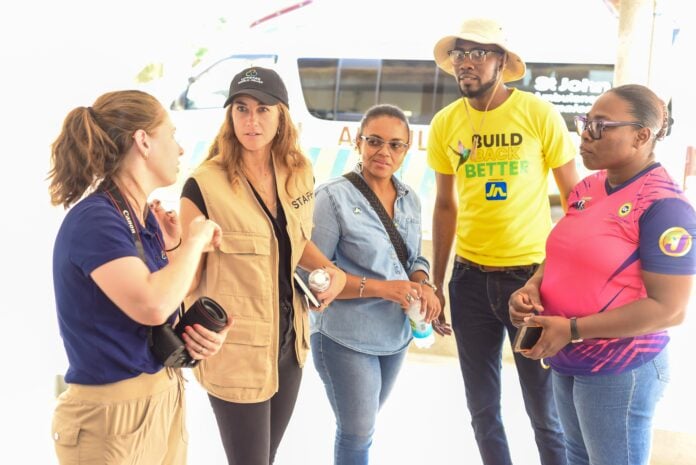
When representatives from the faith-inspired global organization Corus International arrived in Jamaica in April, their goal was clear: to support recovery efforts in action and document how their partnership with the JN Foundation has been aiding progress in communities rebuilding after Hurricane Melissa.

However, being on the ground and engaging directly with community stakeholders not only provided valuable perspective but also deepened their appreciation of both the challenges and the impact of ongoing efforts.

Working alongside the JN Foundation and St. John Ambulance Jamaica, the Corus team—which has provided partial funding for several initiatives—joined a medical mission to Wakefield, Trelawny, on Saturday, April 18. The outreach brought critical healthcare services directly to residents still feeling the effects of the Category 5 hurricane that severely damaged western Jamaica last October.

Sixty-five people received medical attention during the mission, and residents were also given relief packages made possible through the combined support of Corus International and the JN Foundation.

Emily Grose, associate director for humanitarian programming at Corus International, said supporting Jamaica is not just about providing immediate relief, but also about investing in recovery efforts that help communities build back better.

“Part of our mandate is that we are agile—we respond immediately and provide lifesaving services—but we’re also dedicated to supporting communities in their recovery,” she said, noting that “being on the ground and seeing the reality of the situation presents a very different picture. Speaking with community members, local representatives, and the JN Foundation team gives you a real sense of how devastating the hurricane was. I can see how critical these services are, and how important it is for our project and team to show up in these moments.”

She emphasized that the partnership with the JN Foundation was a natural fit, as their values closely align—making the collaboration not only strategic but meaningful. Following the launch of its own appeal fund to support hurricane-affected communities, Corus International engaged the JN Foundation to identify the most effective ways to deliver meaningful assistance.

“In discussions with the JN Foundation, we found that this was the approach they were already taking, having conducted needs assessments in the most affected parishes,” she said. “For Corus International, it’s always important not to come with a predetermined set of ideas, but to respond directly to the needs on the ground.”

Corus International, headquartered in Washington, D.C., conducts humanitarian and development work in 30 countries across the Americas, Africa, Europe, and Asia. Claudine Allen, general manager of the JN Foundation, said the donor team’s firsthand engagement in Jamaica validated what the organization has been reporting through its field operations. She confirmed that support from Corus International has enabled 12 of the more than 20 medical missions coordinated by the JN Foundation, with support from several partners, across hurricane-affected parishes to date.

“Through Lutheran World Relief, a Corus International entity, their core business is emergency and crisis response. They were able to provide both guidance and financial support to expand the number of missions we executed, and they’ve now come to Jamaica to take part in the final phases of implementation,” she shared.

Underscoring the importance of continuing these efforts, Allen said that while conditions have improved and “physical progress is visible” since the first mission, demand for health services remains high.

“Being able to see a doctor is something we often take for granted,” she said. “There are many Jamaicans who don’t have the resources or the opportunity to sit with a doctor and receive a check-up.”

This is the reality for 73-year-old Wakefield resident Mertelda Hemmings, who was first in line for the mission despite her home still being damaged from the hurricane. The storm took her roof, which is currently covered with cardboard, and destroyed appliances and furniture—including a new television she had received just before the disaster.

Ms. Hemmings, who lives alone and faces ongoing health challenges, said the initiative delivered more than healthcare—it also brought financial relief, as she is unable to afford regular doctor visits.

“I’m happy for this—that’s why I was number one in line,” she said. “Somebody told me about it while I was coming from church Sunday, and when I woke up today, I made up my bed and came here. I appreciate it.”

Bounty Killer to receive Key to Kingston; road to be renamed in his honor

bounty-killer

Dancehall legend Bounty Killer is set to receive one of Kingston’s highest civic honors, as the Kingston and St. Andrew Municipal Corporation (KSAMC) moves to formally recognize his towering contribution to Jamaican music and community development.

The resolution, recently passed by the municipal body, will see the veteran deejay awarded the Key to the City of Kingston, while a road in his community of Seaview Gardens will also be renamed in his honor—a fitting tribute that recognizes his legacy both in the cultural landscape and in the community that helped shape him.

Supporting the resolution, Councillor Patrick Roberts praised the artist’s remarkable longevity, noting that sustaining relevance at Bounty Killer’s level for more than three decades is a rare feat. Since bursting onto the scene in the early 1990s with his gritty delivery and socially conscious lyrics, the deejay, born Rodney Price, has become one of dancehall’s most influential figures—helping to define the genre’s modern sound while mentoring a generation of stars.

Often referred to as “The Warlord,” Bounty Killer has built a catalog of anthems that includes classics such as “Look,” “Fed Up,” “Down in the Ghetto,” and “Poor People Fed Up”—songs that balance hardcore dancehall energy with pointed social commentary. His impact extends beyond hit records; he is widely credited with helping launch the careers of major acts, including Vybz Kartel and Mavado, and even championing the early rise of international superstar Rihanna.

His accolades over the years reflect that influence. Bounty Killer has earned multiple international award nominations, including recognition at the Grammy Awards through collaborations and projects tied to reggae’s global footprint, while also collecting honors from Caribbean and diaspora institutions. His Verzuz clash with Beenie Man in 2020 reminded global audiences of his relevance, drawing millions of viewers and reaffirming his place among dancehall royalty.

Beyond music, the honor also recognizes his longstanding philanthropic work. Through the Bounty Killer Foundation, the deejay has supported back-to-school initiatives, provided aid to vulnerable communities, contributed to health and social welfare efforts, and consistently used his platform to advocate for Jamaica’s underserved. His charitable outreach, often focused on inner-city youth and community upliftment, has become a defining part of his legacy.

For many, the civic recognition is long overdue.

The renaming of a road in Seaview Gardens carries particular symbolism, paying homage to the community that nurtured one of Jamaica’s most formidable cultural ambassadors. Coupled with the Key to the City, the honors reflect not only Bounty Killer’s achievements as an entertainer, but his broader role as a voice of the people and an architect of dancehall’s global reach.

Thinking dinner or a play for Mother’s Day? How about both?

Jambiz Annual Mother’s Day Play offers both Jamaican Cuisine and Laughs for the Entire Family.

Most Mother’s Days, families seem to have to make a choice – try to get a table at a restaurant for dinner, or something a little bit more relaxing and fun, like a theatrical play.

This year, Whirlwind Live

Performances made that choice a bit easier, as not only are they taking in a play about the life of a Jamaican single mother to Miramar and Coral Springs this Mother’s Day Weekend, but they are ensuring the cuisine at the concessions is diversified, so that the family will not be missing out on dinner while having fun at a play.

Indecent Proposal: the challenges of a Jamaican mom is simply a perfect gift for Mother’s Day for a Caribbean mother as it tells a story that many of them are familiar with. Navigating finances as a single mother, try to manage a love life, and focus on their children while trying to succeed career wise.

Given that it’s a Patrick Brown play, the audience can expect to laugh through all the drama of a mother figuring out what to do with two competing suitors as Jamaicans experience one of their favorite subject
lines – mix up.

With a star studded cast of Glen “Titus” Campbell, Sakina Deer and Courtney Wilson; it’s a guaranteed evening of enjoyment for the entire family as they can laugh together.

When asked why they keep flying in Jambiz for Mother’s Day, the CEO of the US producers Whirlwind Live Performances explained “Mother’s Day is a family day to enjoy and treat mom. Jambiz plays are a comedic treat, perfect for the  family and most importantly today, very affordable.”

There are two plays for Mother’s Day Weekend, Saturday May 9th in Miramar at Everglades High School starting at 8pm, and 6 pm at the Coral Centre for the Arts on Mother’s Day, May 10th.

It is recommended to purchase pre-sold tickets as Mother’s Day theater usually sells out in the Jamaican diaspora.

Cardi B & Vybz Kartel’s viral moment fuels buzz ahead of Reggae Sumfest

The countdown to A Piece of Reggae Sumfest, set for Saturday, July 18, 2026, at Plantation Cove in St. Ann, has been supercharged by an electrifying, unscripted moment: newly crowned dancehall king Vybz Kartel joining Cardi B on stage in Florida.

Clips of Kartel’s dramatic entrance—emerging from beneath the stage before segueing into “Clarks” and “Fever”—sent the sold-out arena into a frenzy and ignited a digital wildfire across social media. It was a milestone moment that dancehall fans will reminisce about for years to come.

Cardi B shared a clip of the performance with her 164 million Instagram followers. It quickly went viral, amassing a staggering 1.2 million views in less than 24 hours.

“When I first visited Jamaica in the 1990s, I was struck by how powerful dancehall was… you would hear these songs echoing everywhere… it was mesmerizing,” said Reggae Sumfest head honcho Joe Bogdanovich.

Fans also weighed in online. @toyampossible posted, “She loves her some Vybz,” while @thevainlife added, “I love how she fanned out at her own show. That girl loves her some World Boss. She was so excited. Cardi ain’t done a split all tour.”

@bridgez_aka_baretta declared, “My two artist dem,” while @frankrob107 wrote, “She should’ve brought him out in New York.”

Given Cardi B’s well-known admiration for Kartel and Jamaican culture, insiders are now wondering whether she might return the favor when Kartel takes the stage at Plantation Cove on July 18.

Veteran music consultant Copeland Forbes told Caribbean National Weekly that it’s a real possibility.

“Kartel is known for great surprises since his release from incarceration, so don’t be too surprised if you see the same courtesy returned at his upcoming Reggae Sumfest appearance alongside Mavado. This could be a record-breaking event for reggae/dancehall music and Brand Jamaica,” he said.

Music and marketing consultant Sean “Contractor” Edwards agreed, noting that the Kartel–Cardi B moment could significantly boost Sumfest’s momentum.

“Cardi B has been very strategic. In every city she performs, she seeks out popular rappers from that area,” Edwards said.

“In Philadelphia, she brought out Meek Mill; in New York, Lil’ Kim; and in Houston, Megan Thee Stallion. For her to bring out Vybz Kartel in Florida is big for dancehall, as Florida has a large Jamaican and Caribbean audience that loves the genre. This appearance will help draw more fans from the U.S. and the diaspora to Reggae Sumfest to see a full performance from Kartel—especially since he’s booked alongside Mavado, who also has a strong fan base in America and the Caribbean.”

Kartel’s explosive reception in Florida reinforces what Bogdanovich has long emphasized—the global power of dancehall.

“Dancehall has a spirit and energy that is unmatched anywhere in the world—from the beat to the lyrical brilliance—and that energy is what continues to inspire everything we do,” Bogdanovich said.

For longtime fans who lived through the Gully vs. Gaza era, the emotional weight of a reunion at Sumfest cannot be overstated.

“We want to be very clear that we are not positioning this event as a rivalry or a clash. What fans will witness is something much more meaningful—a reunion. This is about music, legacy, and unity,” Bogdanovich stated.

“Bringing Vybz Kartel and Mavado together on one stage is about capturing that magic again.”

That vision has already translated into strong demand, with thousands of tickets sold, Bogdanovich said. A large portion of those sales has come from international buyers, positioning the event as a global pilgrimage for dancehall lovers.

“The response has been incredible… from Kingston to Kenya, Toronto to Tokyo,” he added.

He also acknowledged the pivotal role of the diaspora in the festival’s success.

“The Jamaican diaspora has always been a major part of Reggae Sumfest’s success. Many people plan their summer vacations around the festival… it gives them a reason to come home and reconnect with the culture.”

As preparations continue, the Sumfest boss emphasized the scale of execution required.

“Events like this require a tremendous amount of planning, coordination, and trust. The biggest factor is ensuring that everyone involved understands the vision and believes in the moment we are trying to create.”

And while fans are already buzzing from the viral Florida appearance, Bogdanovich hinted that the best is yet to come.

“One thing people know about Reggae Sumfest is that we always aim to deliver memorable moments. There will definitely be a few surprises on the night—but some things are better experienced live. This is about music, legacy, and unity.”

Bogdanovich’s decade-long stewardship of Reggae Sumfest has been defined by bold moves, but bringing Kartel and Mavado together stands among the most significant.

“At the end of the day, it comes down to relationships, trust, and consistency,” he noted. “There is mutual respect—and trust in our ability to execute.”

This year’s staging at Plantation Cove also carries added significance following hurricane-related challenges in western Jamaica.

“We explored options—even outside Jamaica. But we felt strongly that Jamaica needs us here.”

That decision underscores a broader mission.

“It’s about using entertainment as a bridge to create opportunity, hope, and pride in Jamaica.”

With global attention now locked in—thanks in part to Kartel’s crossover moment with Cardi B—July 18 is shaping up to be more than just a concert; it’s poised to be a defining cultural event. Fans can expect a few surprises, something Bogdanovich says is part of Reggae Sumfest’s DNA.

What is the best business to start in the Caribbean gateways?

businesses

Florida and the Caribbean have always shared more than sunshine and sea lanes. A steady flow of talent have turned their corridor into one of the most dynamic business zones in the Americas. Plus, cross-border entrepreneurship is no longer niche. It’s a practical way to scale faster, protect assets, and tap into new customers.

What business opportunities exist?

Tourism, of course, still anchors many economies, but it’s no longer limited to hotels and tour operators. Niche travel experiences, property management services, wellness brands, and digital booking platforms continue to grow as visitors demand more tailored experiences. Alongside that, tech-enabled businesses are gaining ground as well. Fintech, edtech, and software services thrive thanks to a strong diaspora network and a workforce that’s increasingly remote-ready. Import and export remains a steady option, as does renewable energy.

That said, the region isn’t friction-free. Logistics can also be expensive if you rely on a single market. Successful founders tend to design businesses that can operate regionally rather than locally, building flexibility into pricing, staffing, and supply chains from day one.

What makes Florida a good gateway?

Florida works as a natural extension of the Caribbean business landscape. Geography helps, but policy and culture matter more. Places like Miami, Fort Lauderdale, and Orlando act as commercial hubs where entrepreneurs can access the US customer base without cutting ties back home.

Having a presence here can also smooth out operational challenges. US-based entities may find it easier to work with international partners and suppliers who are hesitant to contract directly with smaller offshore companies. For Caribbean founders, this can mean more predictable compliance frameworks. It also adds credibility when pitching to investors or enterprise clients.

How do you create a business outside the isles?

If you don’t know how to set up an LLC in Florida – don’t worry, it’s more approachable than it sounds. The process is designed to be businessfriendly, with clear steps and predictable costs. At a high level, you choose a business name, appoint a registered agent with a physical address in Florida, and file Articles of Organization with the Florida Department of State. Once approved, you can draft an operating agreement, apply for an Employer Identification Number (EIN), and open a US business bank account. And that’s it!

Think ahead, though. Deciding whether the Florida entity will operate independently, act as a parent company, or serve as a sales and contracting arm makes a big difference later. It’s also wise to factor in tax obligations early, especially if revenue flows between the US and Caribbean jurisdictions. Professional advice can help a lot here.

How do you make your business sustainable?

Running a business across the Caribbean and Florida requires systems that can handle distance, different regulations, and cultural nuances without slowing you down. Clear internal processes are a good place to start. Accounting and reporting should follow consistent standards, even if teams are spread across countries. Cloudbased tools help keep everyone aligned, but discipline matters more than software. On top of that each jurisdiction has its own compliance laws and deadlines. Calendar these obligations well in advance and work with advisors who understand both regions. This reduces risk and frees up time to focus on growth rather than firefighting. 

Networking remains one of the strongest advantages of a crossborder setup. Florida’s Caribbean chambers of commerce, trade missions, and diasporaled business groups offer access to mentors, partners, and clients who already understand the regional context. At the same time, staying visible in local business communities keeps the home market strong. Sustainability comes from balance: treating Florida as an extension of your business, not a replacement for where it all started.

A guide to damages in rear-end accident cases

car accident case

Rear-end accidents comprise one of the most frequent kinds of motor vehicle accidents, but their aftermaths can be much more severe than many might think. Although there are cases where minor damages are done to a vehicle, there are cases where major physical injuries, emotional distress and financial hardship are caused. There are also piled up hospital bills, lost earnings and perpetual healing problems that victims face and that may disrupt normal lives. The information of damages that can be retrieved in case of rear-end crash is crucial to the people who want to have sufficient compensation and long-term stability.

Madison rear-end accident attorney may by far be called in more often than not in order to help injured people in determining the level of losses incurred and take appropriate action. These experts help in the consideration of both short-term and long-term effects of an accident so that no type of damage can be neglected. Economic losses or more personal non-economic impacts, a comprehensive claim would take into account how the accident has transformed all the facets of the life of a victim.

Economic Damages: Physical Financial Losses

The most common damages to determine are often economic as they entail measurable financial losses. Such damages are backed by records like receipts, invoices, and employment records. In the case of a rear-end collision, the victims can claim a number of economic damages. The biggest part of a claim is usually made up of medical expenses. These include emergency care, inpatient care and surgery, medication, physical therapy and any other medical care related to the injury. Even such seemingly minor injuries as whiplash might require life-long treatment that can be expensive over time.

Lost wages is another vital factor. The loss of income in the period of recovery may cause financial strain whereby an individual is not in a position to work due to injuries. In severe instances, injuries can cause an individual to be unable to resume the job s/he used to do, or restricted capacity to earn in future. The present and estimated income losses can then be covered by the compensation.

Non-Economic Damages: Personal and emotional impact

Not everything is quantifiable in terms of money. Non-economic damages are the ones that have to do with the personal and emotional effects that a rear-end crash might have on the life of a victim. They are more subjective damages but are equally important in bringing into being the entire scope of harm.

Pain and suffering is one of the most common forms of non-economic damage that has been generally accepted. It is the physical unpleasant experience, and the presence of constant pains due to injuries. In others, the victims can develop chronic pain which interferes with their daily activities. Another important consideration is emotional distress. There is risk of anxiety, depression or post-traumatic stress as a result of accidents, especially when the experience was a serious one. These psychological effects are treatable either as a form of therapy or counseling and may have an overall effect on the well-being of a person.

The denial of pleasure in life also can be considered. This may greatly impact the quality of life of the affected individuals when they cannot do their hobbies, social activities or routines they once enjoyed as a result of injuries. Compensation is aimed at rewarding such changes, which are not easily quantifiable.

Damages in the Future and Long Run

The injuries that may be caused in rear-end crashes may be long-lasting concerns despite the initial healing process. In this situation damages have to take into consideration long term and future needs. This is by looking closely at the effects that the injury is likely to have on the life of the injured in the future. The future of medical care is a very crucial consideration. And there are injuries that require continual attention, treatment, or support. In order to estimate these costs, the victims should not be left with costs to take care of long after a case has been closed.

The future could also increase the earning capacity loss. Should a career be limited due to an injury or a change in career be required, this could be counterbalanced by the amount of difference between the former and the estimated income levels. This particularly applies to individuals who are engaged in jobs that require physical activities.

The Evidence in the Process of Determining Damages

There should be good supporting evidence to the correct calculation of damages. Medical records, accident reports, photographs, witness statements are all useful in drawing a vivid picture of what occurred, and how it has affected the victim. Of special importance is the recording of the medical treatment. Comprehensive documentations would help in finding out the correlation that prevailed between the accident and the injuries sustained. Likewise, lost earnings and decreased earning capacity can be proved by employment records and financial statements.

They may also be in the form of journals or statements of family members to assist in the depiction of non-economic damages. These narratives provide a notion of how the injury has impacted the everyday life, relationships and emotional health. By taking time to determine the economic and non-economic damages, the victims can take compensation that reflects on what they are undergoing. This procedure not only assists in recovering money, but also enables people to embark on life with more assurance and stability. At LawtonCates, a person struggling with the effects of a rear-end crash can seek some help and support in understanding more about their rights to compensation and damages in terms of the severity of the damage.


Keeping your family safe online: A practical guide for parents

social media

If you’re concerned about your family’s online safety (as all parents should be), then there are a number of precautions and principles worth bearing in mind. So, what are they, and why does online safety matter?

Understand the Digital Risks Children Face

Children face a number of special difficulties online, which largely stem from ignorance of the way that the online world works. They might find themselves exploited on social media, by malicious strangers, and even people whom they know, like classmates.

They might unwittingly log on to an unsafe wi-fi network, and have their data intercepted and exposed. In some cases, certain information might even be used to manipulate and blackmail.

Fortunately, these threats can be mitigated, and often avoided entirely. But how?

Create AgeAppropriate Rules for Devices and Screen Time

No child needs constant access to the internet. Setting clear and unbending rules on screen time is highly advisable. You might set these rules in collaboration with your child. Younger children might be denied access to games and services that older children can freely enjoy. But in both cases, you’ll want to monitor usage and intervene where necessary.

Teach Kids About Safe Browsing & Online Behaviour

When children understand what they’re up against, and how to distinguish between malicious links and benign ones, they’ll stand a much better chance of staying safe. Have age-appropriate conversations about why personal information should stay private, and make sure that your children feel comfortable approaching you with any concerns. When your children trust you, they’ll be much less likely to keep problems to themselves.

Secure Your Home WiFi and Connected Devices

If your home’s wi-fi network is compromised, your children will be vulnerable. Make sure that your router’s firmware is regularly and automatically updated, and that the user and administrator passwords are regularly changed.

Use Privacy Tools to Protect Your Family’s Online Identity

There are a number of special tools that will help to preserve your privacy. For example, a good VPN or proxy might allow you to conceal your IP address from your service provider, and other people. Parents can learn how to change IP address, and thereby keep children safe when using shared networks.

Know What to Do If Your Child’s Privacy Is Compromised

It’s worth understanding exactly how you’re going to react in the event that your child’s privacy really if compromised, despite your best efforts. To begin with, you can get the account back, and report harmful behaviour to the relevant online service. When the incident has impacted your child’s behaviour, you might judge it worth advising your child’s school, even if you don’t think other children at the school were to blame. In serious cases, it might be worth advising the police.

Conclusion

You don’t need to be an expert in technology to keep your children safe. Often, doing so is a simple matter of adopting a number of commonsense habits. Make sure that your devices are secure, that your children understand how to behave online, and that you understand how to escalate any issues that arise.