
'100% illegal': Jamaican hotelier slams fence blocking Seven Mile Beach access for residents
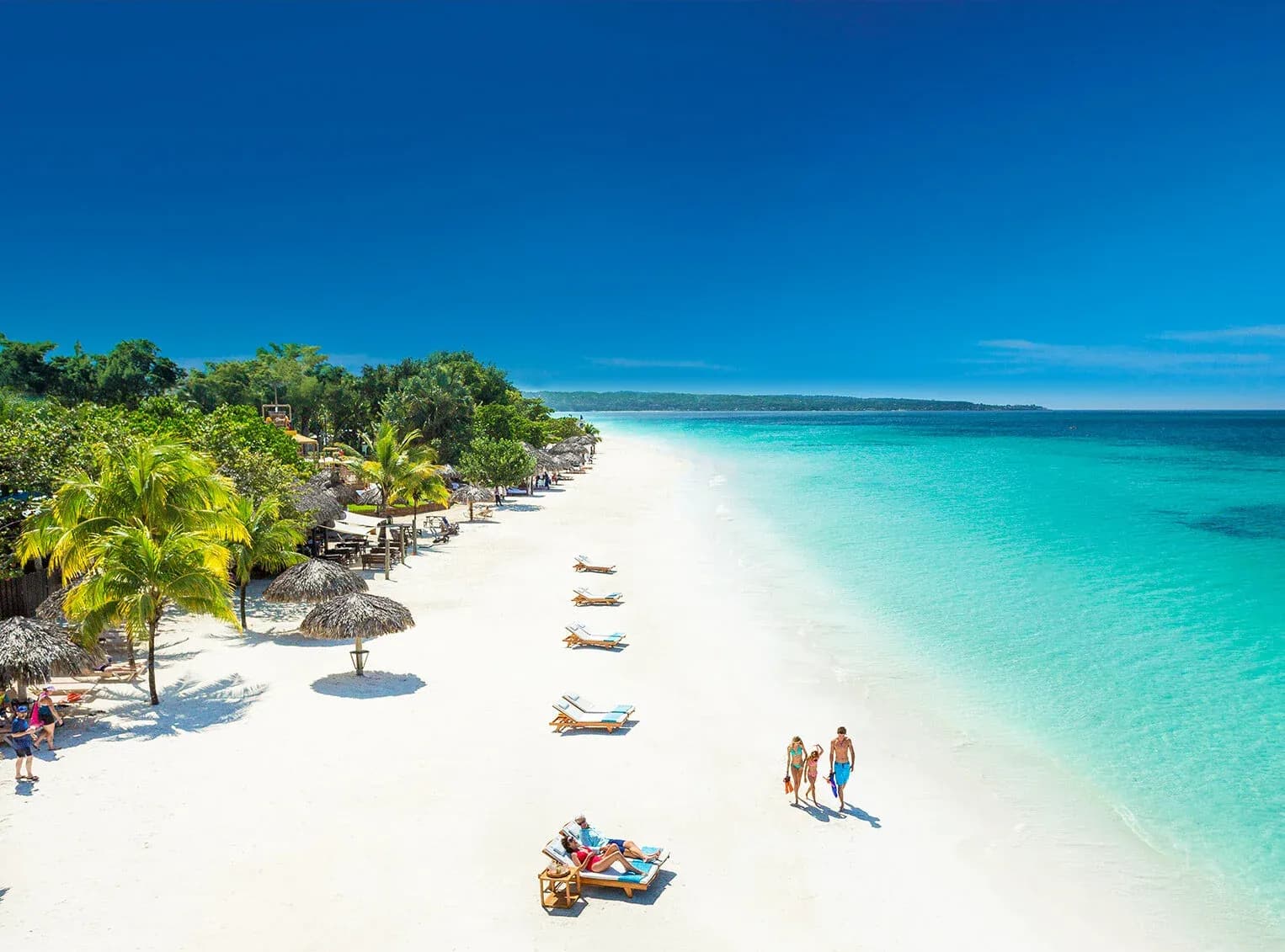
A routine early morning run along Negril’s famed Seven Mile Beach has sparked renewed debate over public access to Jamaica’s coastline, after hotel operator Winthrope “Thrope” Wellington encountered a barbed-wire fence blocking passage along the shore.
Speaking in a widely circulated social media video, Wellington described the discovery as “disturbing” and emblematic of a growing concern among residents and stakeholders in Negril.
“Normally when I’m running on the beach… you can traverse Long Bay anywhere without any impediment,” Wellington said. “Nobody can tell you that you can’t move freely along this beach.”
But on this particular morning, his run was abruptly halted.
“As I came to this point, I realized that there is a barbed-wire fence that is stopping me from continuing my run… I found it completely ridiculous because this is 100% illegal,” he stated.
According to Wellington, the obstruction appeared to stretch “from the side of the road all the way down to the beach,” leaving “not enough space” for pedestrians to pass. He attributed the installation to “the proprietor of this new scuba business,” questioning both the authority and intent behind the action.
“I’m not sure who gave them the authority or where the audacity to do something like that came from… This is a public beach. Nobody owns it. Nobody can stop anybody from going to and from,” he emphasized.
The Urban Development Corporation (UDC) has since acted swiftly, removing the unauthorized barbed-wire fence that was blocking public access to Long Bay Beach in Negril.
In a statement, the UDC confirmed that the illegal fence—running from the road to the sea—was dismantled to preserve the beach as a public asset for both citizens and visitors.
Wellington’s frustration was particularly notable given his own position as a beachfront hotel operator.
“This is also coming from somebody who owns a hotel on this beach. I have no right to do so, nor would I ever want to,” he said. “This beach has always been, and will always be, a public beach.”
Legal Reality vs. Public Perception
While Wellington asserts the blockage is “100% illegal,” Jamaica’s legal framework presents a more complex picture.
Under the Beach Control Act, the shoreline—specifically the foreshore between the high- and low-water marks—is considered public. However, the Act does not guarantee unrestricted access across private land to reach or move along beaches.
The legislation, first enacted during the colonial era and later amended, requires permits for the use of coastal areas and has often been criticized for prioritizing private development over traditional community access. As a result, situations like the one described by Wellington often fall into a legal grey area—where physical obstruction of movement may be challenged socially or politically, even if access rights are not clearly defined in law.
Still, Wellington argues the issue goes beyond legality.
“When I see something like this, my mind clicks and says, this is how it starts,” he warned.
He also pointed to the economic implications of restricted movement.
“Because it’s a public beach, it also cuts off commerce and business. Hotels down here, guests who are staying there can’t visit businesses down there… and vice versa,” he explained.
A Regional Comparison
In Caribbean destinations such as The Bahamas and the Cayman Islands, beaches are generally public up to the high-water mark, with access more explicitly protected.
Critics argue that Jamaica’s legal structure is outdated and has contributed to a gradual “locking out” of locals from sections of the coastline, particularly in tourism-heavy areas like Negril.
Wellington’s comments have reignited public debate over who truly has the right to access Jamaica’s beaches—and how those rights should be protected.





.jpg&w=3840&q=75)