Home Blog Page 141

South Florida braces for record Thanksgiving travel; Caribbean-Americans heading home

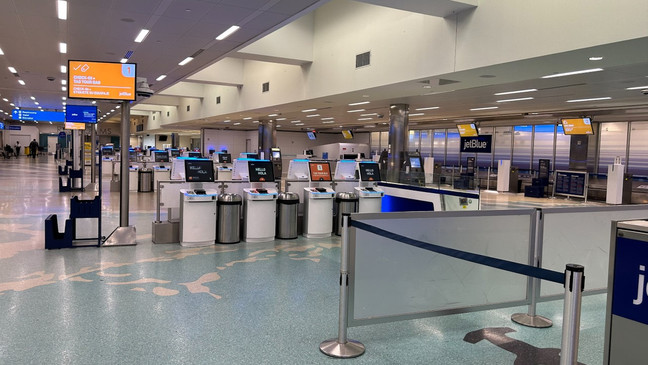
Fort Lauderdale-Hollywood International Airport

South Florida is bracing for one of its busiest Thanksgiving travel periods ever, with new projections showing that more than 4.65 million Floridians are expected to hit the roads, skies, or seas next week.

AAA says holiday travel statewide is up 2.6% over last year, setting a new record and reflecting what many locals already suspected: people are on the move again.

Nationwide, 81.8 million Americans are expected to travel for the holiday—1.6 million more than in 2024. Thanksgiving remains the year’s busiest travel period, outpacing both Memorial Day and the Fourth of July.

For many South Florida families, the tradition of visiting loved ones is unchanged. But this year, travel takes on a deeper meaning for thousands of Caribbean-Americans, especially Jamaicans, who are flying or sailing back home to support recovery efforts after Hurricane Melissa devastated Jamaica’s western parishes last month. Local nonprofits and diaspora organizations say volunteers and supplies are moving steadily between Florida and the island as communities try to rebuild.

Most Floridians are hitting the road

AAA says the vast majority of Floridians—more than 4.25 million—will drive to their Thanksgiving destinations. Concerns over ongoing flight reductions and the potential for last-minute cancellations could push that number even higher. Orlando and Miami remain among the top five cities in the country for rental car demand, and rental rates are down 15% from last year.

Drivers can expect gas prices to be lower than last Thanksgiving, when the Florida average was $3.11 per gallon. AAA is urging motorists to check their batteries and tire pressure before setting out; the agency handled nearly 600,000 roadside emergencies nationwide during the holiday period last year.

Air travel is also ticking up, with nearly 299,000 Floridians expected to fly. Domestic airfares are averaging around $700 for a round-trip ticket, about the same as last year. Flying on Thanksgiving Day remains one of the better ways to save money, but return flights on Sunday and Monday will be the busiest and priciest.

“With recent flight reductions and the potential for cancellations, travelers really need flexibility this year,” said Debbie Haas, Vice President of Travel for AAA – The Auto Club Group. She recommends choosing early morning departures and building in backup plans—whether that’s changing return dates or being ready to drive.

Travel by bus, train, and cruise is expected to jump 8.5% nationwide. More than 87,000 Floridians will choose these modes, and Caribbean cruises are once again a top pick for holiday travelers. AAA projects 20.7 million U.S. cruise passengers this year, with routes to Jamaica, the Dominican Republic, and Aruba ranking especially high.

Thanksgiving week’s top domestic destinations include Orlando, Fort Lauderdale, Miami, Tampa, and Los Angeles. Internationally, Americans are heading for Europe, Mexico, Australia—and the Caribbean. Punta Cana, Cancun, Aruba, and Oranjestad are all high on the list, and some South Florida residents are extending those trips into volunteer missions to deliver supplies to Jamaica.

Florida could make cursive mandatory again for elementary students

cursive writing

Florida elementary school students may soon be required to learn—and prove they’ve mastered—cursive writing under a pair of bills filed for the 2026 Legislative Session.

House Bill 127 and Senate Bill 444 would mandate cursive instruction for all public school students in grades 2 through 5. Students would also be required to read and comprehend cursive, a skill that has not been mandated under state law since 2010, when Florida adopted Common Core Standards and dropped the statewide requirement.

According to the bills, students would learn “letter formation,” “proper spacing and alignment,” and “writing complete words and sentences,” skills that could also be evaluated using modern tools such as an AI grader. By fifth grade, they would have to demonstrate proficiency in both reading and writing the script.

The legislation, sponsored in the House by Reps. Toby Overdorf, R-Palm City, and Dana Trabulsy, R-Fort Pierce, and in the Senate by Sen. Erin Grall, R-Fort Pierce, calls for a return to the fundamentals of traditional handwriting. According to the bills, students would learn “letter formation,” “proper spacing and alignment,” and “writing complete words and sentences.” By fifth grade, they would have to demonstrate proficiency in both reading and writing the script.

While some schools still teach cursive, Florida law does not currently require students to read or understand it. Instruction was reintroduced in 2014 through State Board of Education rules, but those are agency-level requirements—not state law. Today, third graders are taught how to write upper- and lowercase cursive letters, fourth graders focus on producing legible cursive, and fifth graders learn to write it at the same pace as print.

The new proposal goes further, requiring students to develop the “ability to read and apply cursive writing in a manner that supports literacy development,” including writing essays and assignments in cursive according to state academic standards. However, the bills do not specify how proficiency will be measured.

A statewide assessment is expected. HB 127 directs the Florida Department of Education to determine how students will be evaluated and what demonstrating mastery will look like. If approved, the new law would take effect July 1, 2026, giving school districts about a year to update their curriculum and prepare new testing measures.

Opinion: Providing shelter is a critical challenge

A resident in Black River, St. Elizabeth, repairs his roof in the aftermath of Hurricane Melissa.

The crushing repercussions of Hurricane Melissa—which devastated several communities in western Jamaica last month—are becoming more evident with each passing day. While many people in Jamaica and the global community have responded with tremendous kindness and compassion, supplying food, water, clothing, and other vital necessities to victims, one urgent need remains and poses a major challenge: shelter for thousands of displaced residents.

According to the Office of Disaster Preparedness and Emergency Management (ODPEM), about 146,000 residential structures sustained major damage, including the loss of roofs and walls. The disaster directly affected 90,000 families—more than 500,000 people—and the cost of this damage is estimated at up to US$7 billion.

Repairing and replacing these homes will be a monumental task.

Debris removal alone is massive. Millions of tons of materials from damaged buildings must be cleared before reconstruction can even begin. Rebuilding at scale will require significant financial resources. Although Jamaica has some fiscal buffers and the international community has stepped up with substantial assistance, the total damage remains enormous—equivalent to an estimated 28–32% of Jamaica’s insurance systems. Many homeowners lack property insurance, and even where coverage exists, insurers may struggle to process claims or may not cover the full cost of constructing more resilient, hurricane-proof homes.

Replacing Jamaica’s housing stock is not simply a matter of erecting new structures. It’s a once-in-a-generation opportunity to rethink how the country builds, lives, and prepares for climate-related disasters. With strong public policy, inclusive funding mechanisms, resilient design, and community-driven reconstruction, Jamaica can rebuild in ways that make homes safer, more sustainable, and more equitable.

If executed well, this effort could significantly reduce vulnerability to future storms while also stimulating economic benefits. But it will require political will, major investment, and close coordination among government, civil society, and international partners.

In the meantime, there is a deeply concerning question: What happens to people who lack property insurance or cannot provide credible identification to prove the destroyed home was theirs?

When people lose homes in a disaster and lack formal documentation, the challenge becomes both humanitarian and administrative.

Much will depend on local and central government support for those who have no insurance or cannot verify ownership. Some steps that can be taken include:

  • Local leaders—parish councillors, MPs, and churches—certifying that someone lived at a location prior to the storm. This approach was used effectively in Dominica after Hurricane Maria and in The Bahamas after Hurricane Dorian.

  • Using pre-storm and aerial images to confirm that a structure existed on a specific plot, assess the level of destruction, and match residents to damaged homes.

  • Ensuring that people have valid identification to receive any substantial assistance, especially financial aid. The government could expedite the issuance of free, temporary IDs and deploy mobile ID units to affected parishes.

  • Verifying occupancy or ownership by accessing TAJ property tax rolls, National Land Agency parcel maps, and electoral address records.

  • Issuing “Disaster Occupancy Certificates,” a method successfully used in other countries, to confirm someone lived in a structure that was damaged or destroyed. These certificates can allow access to rebuilding grants, loans, and NGO assistance even without formal titles.

In rural Jamaica—as in many Caribbean nations—many residents live on family land, informal settlements, or plots without clear titles. Many of these homes were not built to withstand hurricanes and suffered severe damage. Some are now uninhabitable, leaving former occupants desperate for housing.

Authorities will need to support these residents with financial grants based on occupancy rather than ownership. Assistance should go to people verified by credible community and government teams. The government should also collaborate with NGOs like Food for the Poor, the Red Cross, and Habitat for Humanity, which have extensive experience rebuilding homes without requiring formal land titles.

Rebuilding damaged homes will be extraordinarily expensive. Fortunately, Jamaica has a catastrophe bond that can help fund recovery. The government must also continue leveraging international aid, development financing, and concessional loans—especially for low-income housing—and encourage public-private partnerships to support resilient housing development.

How Shopify developers can use AI tools to work faster and smarter

Shopify Developers

Imagine constructing a fully functional Shopify section with animation, dynamic product feeds, and mobile-compatible layouts in half the time it normally takes. This is no longer a stretch of a dream. As the realm of AI tools is infiltrated, the world of Shopify developers is realizing more intelligent, quicker, and more productive methods of doing business without losing creativity and accuracy.

Artificial intelligence is no longer a topic of conversation among marketing teams, but it is quickly becoming an insider secret to developers. According to a recent study, developers assisted by AI can run the code 55% faster than single users do. It is self-explanatory: developers who adopt AI are not being phased out; they are being multiplied.

The Importance of AI to Shopify Developers

Shopify has grown far beyond being just an e-commerce platform. Now, merchants require smooth experiences, which are customised recommendations, dynamism, and automation of order fulfilment and marketing. 

For Shopify expert developers, it results in a balancing act between customisation of the themes, API integration, performance, and client communication, with strict deadlines. The assistance of the AI tools can be applied to all stages of that process. They do not substitute your knowledge with Liquid, JavaScript, or GraphQL, but eliminate the pain of automating manual labor, writing simpler code and letting you concentrate on what needs the human touch. 

Automation of Editing Repeating Codes

All Shopify developers are aware of how much time boilerplate code consumes:

  • Automation of Editing Repeating Codes
  • Developing schema settings, section files, working with repetitive snippets, or rewriting similar logic with another client.
  • Such tools as GitHub Copilot and Tabnine leapfrog can simplify those tasks. They can use your existing codebase to create entire Liquid snippets or theme portions based on a brief prompt.

Example of entering such a query:

Design a Shopify 2.0 section with featured items of a selected collection of products, customizable headings and color scheme, and provide a working section.

You no longer have a blank file to begin with; rather, you can make changes to an 80% complete file. It is less time on typing and more time on refining the user experience and store performance.

Smart Development of Themes with AI

Themes of Shopify Online Store 2.0 are very modular. The theme editor may require you to write some custom blocks, conditional logic, or schema. AI tools can help here by:

  • Recommending Liquid logic patterns such as loops, filters, and conditional tags.
  • Autogenerative CSS and Tailwind snippets that are responsive. 
  • Helping you understand codes that you didn’t write, such as inheriting legacy themes. 

Programs such as ChatGPT or CodeGPT give you an idea of what each field in JSON schema is useful for. Moreover, it can also be used in cleaning up spaghetti Liquid into modular code that is clean. 

And the best part is you don’t have to hunt for syntax. 

3. Debugging and Review

Debugging Liquid or Shopify code can be a hectic and tiresome job. Just a single misplaced tag can diminish sections. But AI is taking over this difficult job by identifying such problems. You just need to enter an error code or snippets into a missing bracket or data incompatibility. 

For this task, there are some exceptional AI plugins for an IDE. It can review code, do real-time linting, and identify logic that won’t work. Moreover, it can also suggest performance fixes and security issues if your Shopify app has them.

From convenience to quality, AI is leading the way into codes that are faster and error-free. 

4. Documentation Handoffs

Documentation is one of the most boring and time-consuming things but is also one of the most important things. A simple-to-understand README file and instructions about the app or client note can make the app easier to use. But do you know AI can do hours of tasks in a few minutes? Surprising, right? 


AI can help in documentation in the following ways: 

  • Write codes that can enable auto-generating documentation and summary files 
  • Create easy-to-read descriptions for layman understanding and home page content. 
  • Create fast artifacts or frequently asked questions in reference to the theme.

This is gold for freelancers or agencies that have numerous clients. The properly documented code enhances client satisfaction, decreases the number of support tickets later, and contributes to the scalability of the project.

5. The Future of Smart Shopify Stores using AI

AI does not merely make the development faster, but it also allows shopify expert developers to provide smarter features to merchants. AI and Shopify together can do wonders. 

Here are some examples:

  • The description of the product created by AI can fetch product data on Shopify and have AI create unique, search engine optimised text.
  • Recommendations and offers are personalized by using an AI model to analyse the user behavior and propose the product associated with it, which leads to more conversions.
  • Automated inventory control can connect Shopify to AI forecasting models and forecast when popular products are going to run out.
  • Chatbots and virtual assistants in customer support or administration can seamlessly resolve customer queries and problems.

These are not far-off ideas; applications that can do precisely this are already being developed and sold by developers. With AI, you can have it incorporated into your projects on Shopify to improve the level of your service provision and generate quantifiable value to merchants.

6. Artificial Intelligence Research and Prototyping

Shopify keeps on refreshing its system, such as Hydrogen, Oxygen, and Storefront API; addition and subtraction are commonplace. AI may assist you in staying on top without being overwhelmed by the paperwork.

Ask an AI Assistant:

“Compare and contrast the REST and GraphQL APIs used by Shopify to search for products.”

or

Formulate a bare-bones React application, which needs to utilise the Shopify Storefront API to get featured collections.

You receive brief, precise instructions with a code example. It implies quicker learning and prototyping and reduces the time between idea and implementation.

In the process of pitching projects to customers, AI can even assist you in creating mockups, proposals, and feature outlines within minutes.

7. Store Management Tasks (Store Automation)

Other than development, AI and automation could simplify the daily activities of Shopify on behalf of your customers:

  • Shopify Flow and Zapier allow automation of workflows, notifying customers and controlling inventory or labelling them depending on how they buy. These flows can be made smarter by AI, e.g., the analysis of customers likely to make a repeat purchase in the near future or products that underperform.
  • With the application of AI-powered automation, you would not only be a developer but also a business efficiency partner, someone who would help merchants make better decisions with minimal manual labour.

The Best Practices in the Use of AI in Developing Shopify

Artificial intelligence is strong, and it would be as good as it is used. To get the most of it:

  1. Always read the generated code: Mistakes or Liquid loops that are inefficient can be generated by AI. The output is only a draft, not a final product.
  2. Feed it context: Include in queries a reference to the Shopify 2.0 theme or Liquid schema.
  3. Protect sensitive data: Never enter API keys or client store URLs into OpenAI tools.
  4. Optimise automation and artisanship: Design, performance, and user experience are creative decisions, but leave the monotonous aspect to AI.

Summary

In the case of Shopify expert developers, AI is the next productivity and innovation breakthrough. It enables you to offload the repetitive, speed up the complicated, and provide features that actually make the store more efficient.

Regardless of being a single freelancer or a bigger agency, implementing AI into your everyday routine may save time, improve quality, and make you shine among the crowd of potential competitors.

The future of development in Shopify is not working hard but working smarter with AI.

This is why the next time you crack open your code editor, you should think about AI not in the context of competition but as your new best friend. 


How a pedestrian accident lawyer can help you win your case

lawyer personal injury claim

Pedestrian accidents in Kingston, especially in busy areas like Princess Street and downtown, often lead to serious injuries, medical expenses, and lost wages. A local pedestrian accident lawyer can protect your rights and help you pursue fair compensation.

Attorneys build stronger cases when they understand the leading causes of pedestrian accidents, distracted driving, speeding, poor visibility, and failure to yield. Identifying these factors helps them hold the right parties accountable for your compensation.

Assessing the Case

A pedestrian accident lawyer begins by carefully reviewing the details of your accident. They identify who was at fault, review traffic laws, and estimate the claim’s value. This early consultation helps you understand your options and the strength of your case. It also helps the lawyer spot potential challenges early and plan how to overcome them.

Evidence Collection

Winning a case requires strong, reliable evidence. Lawyers gather police reports, witness statements, and any available surveillance footage. They also include medical records and expert accident reconstruction reports when needed. Thorough evidence collection gives your case credibility and a higher chance of success.

Insurance Company Control

Insurance companies often try to reduce what they pay. A pedestrian accident lawyer negotiates firmly to make sure your claim reflects the full extent of your losses. With your lawyer handling all communication, insurers are less able to delay, deny, or undervalue your claim. They can also spot misleading questions or tactics that insurers sometimes use to weaken claims, keeping you protected throughout the process.

Calculating Damages

Lawyers calculate all your damages carefully: medical bills, lost income, pain and suffering, emotional distress, and future care costs. They also account for rehabilitation, therapy, and lifestyle adjustments. This ensures you receive full compensation and are not left struggling financially after recovery.

Representing You in Court

If your case goes to trial, a pedestrian accident lawyer provides strong courtroom representation. They present evidence, question witnesses, and argue persuasively to improve your chances of winning. An experienced lawyer can also anticipate and counter opposing arguments to protect your case. Having skilled representation in court can make a significant difference in the outcome and the amount of compensation awarded.

Advising on Liability and Negligence

Lawyers review the driver’s behavior, road conditions, and traffic signals to determine who is at fault. This helps them build a solid case against negligent parties and ensure everyone responsible is held accountable. In some cases, they may identify multiple liable parties, which can increase your total compensation.

Managing Medical and Legal Coordination

Pedestrian accidents often involve multiple healthcare providers, from doctors to therapists. Lawyers coordinate with these professionals to ensure your injuries and treatments are properly documented. This keeps your claim consistent, complete, and free of gaps that could weaken your case. Thorough coordination also helps your lawyer prove the severity and long-term impact of your injuries more convincingly.

Providing Ongoing Support and Advice

A good lawyer doesn’t just handle paperwork; they guide you through the entire legal process. They explain complex terms, track deadlines, and help you make informed decisions. This ongoing support reduces stress, allowing you to focus on healing while they manage the legal details. They can also provide guidance on communicating with insurers and other parties, so you avoid unintentional mistakes that could harm your claim.

Negotiating Settlements

Lawyers negotiate with insurance companies and opposing parties to secure fair compensation. They use strong evidence and legal precedents to justify your claim. Skilled negotiation can often result in a favorable settlement without the time and cost of going to trial. A lawyer can also evaluate whether a settlement offer is truly fair or if taking the case to trial may yield better results.

Conclusion

  • A pedestrian accident can disrupt your life, but having an experienced lawyer makes all the difference.
  • From gathering evidence and negotiating settlements to representing you in court, a pedestrian accident lawyer protects your rights and maximizes your compensation.
  • With their help, you can focus on recovery while knowing your case is in capable hands.


How plate laws are enforced in Missouri and what you need to know

license plates

Most drivers never think much about their license plates until a police officer pulls them over. In Missouri, one of the popular states in the US, strict rules are followed. Here license plate rules may look simple, but missing or misplaced plates can quickly lead to a ticket. These laws help keep vehicles identifiable and the roads safe. Knowing how they are enforced can save you time, money, and trouble later.

So does Missouri require a front license plate, or is only a rear plate enough? It is a common question, especially for new residents or those who just bought a car. Understanding the state’s specific requirements helps you stay compliant and avoid unnecessary fines.

Missouri’s License Plate Rules

In Missouri, most vehicles need two plates. One goes on the front, and the other on the back. Both must be attached securely and kept visible at all times. If your plate is covered by dirt, snow, or even a tinted cover, it can still be considered a violation.

Motorcycles, trailers, and certain special vehicles only need one plate on the rear. The rule depends on the type of vehicle and the registration category. Checking your paperwork or asking your local licensing office can help you confirm what applies to you.

How Enforcement Works

Law enforcement officers in Missouri regularly check for plate violations during routine patrols. They may stop a vehicle if the front plate is missing, unreadable, or appears altered. Cameras on highways and in some neighborhoods also record plate numbers to identify expired tags or stolen cars.

If you are caught without a required plate, you might receive a citation. Sometimes, the officer will issue a warning or a “fix-it” ticket. This means you can correct the problem within a set time and show proof that it has been fixed. Ignoring the notice can lead to higher fines or a failed vehicle inspection later.

What Happens If You Drive Without Proper Plates?

Driving without the correct plates can result in a fine or citation. The amount is usually small, but repeated offenses can make the penalty worse. If your vehicle is missing a plate, the police might also question whether the car is properly registered.

A missing or damaged plate can also cause problems when renewing your registration or passing inspection. The state wants to ensure that all vehicles are identifiable for safety and security reasons. Keeping both plates clean and visible helps avoid confusion or suspicion.

Common Mistakes Drivers Make

Small mistakes can still cause trouble. Here are a few common ones:

  • Forgetting to attach the front plate after a car wash or repair
  • Using a frame that covers part of the plate number
  • Leaving temporary tags on too long
  • Letting mud or ice block the plate

These might seem harmless, but they can still lead to warnings or tickets. A quick check before driving can prevent those problems.

Why the Rules Exist

License plate laws help police identify vehicles involved in accidents, thefts, or traffic violations. When both plates are visible, officers can recognize a car from either direction. This makes it easier to track vehicles during emergencies or investigations.

The system also helps protect drivers. If a hit-and-run occurs, a visible plate makes it easier for witnesses or cameras to identify the vehicle. In short, plate laws are not just about fines or paperwork. They are about keeping everyone safer on the road.

How to Stay Compliant

Here are a few simple habits that help you stay on the right side of the law:

  • Keep both plates clean and securely fastened.
  • Avoid covers or frames that block any part of the numbers.
  • Check your plates regularly, especially after maintenance.
  • Renew your tags before they expire.
  • Replace missing or damaged plates quickly.

Following these steps keeps your vehicle legal and avoids unnecessary stops.

Key Takeaways

  • Most vehicles in Missouri must have two plates, one on the front and one on the back.
  • Motorcycles and trailers usually need only one rear plate.
  • Dirty, missing, or covered plates can lead to fines.
  • Regular checks and timely renewals keep your vehicle compliant.
  • Visible plates help law enforcement maintain safety on the roads.

License plate rules may not seem like a big deal, but they play an important part in road safety and accountability. Staying aware of Missouri’s plate laws means fewer hassles, smoother inspections, and more peace of mind every time you drive.


World Central Kitchen serves 1 million meals in Jamaica after Hurricane Melissa

World Central Kitchen

World Central Kitchen (WCK) has marked a major milestone in Jamaica, providing more than 1 million meals to families affected by Hurricane Melissa, according to founder and chef José Andrés.

“People of Jamaica! Today we crossed the 1 million meals mark… thanks to all of you and the hundreds of Jamaican volunteers, restaurants, and chefs!” Andrés tweeted on November 15. “By car, by food, by helicopter, by boat… we’ve been always trying to reach every community! Every day! Nonstop!”

The relief effort focuses on western Jamaica, the region hardest hit by the Category 5 storm. Melissa brought destructive winds, torrential rain, and widespread flooding, leaving towns isolated and cutting power to large areas.

To respond, WCK established two large field kitchens in Montego Bay and Negril. With support from the Sandals Foundation, the Montego Bay Convention Center was converted into a fully operational kitchen capable of producing tens of thousands of meals daily. The organization now delivers nearly 20,000 hot meals each day across Hanover, St. James, Westmoreland, St. Elizabeth, Manchester, Clarendon, and Trelawny parishes, with help from more than 30 local restaurants.

In remote hillside communities, volunteers deliver meals by land and air. In Bluefields, Belmont, and Mearnsville, families sheltering in damaged schools are receiving daily meals. In Savanna-la-Mar, deliveries by helicopter provided hot food, water, and essentials to communities cut off by storm damage.

WCK also makes door-to-door deliveries for residents unable to reach distribution points. For example, Maurice, an 80-year-old resident of Brighton, Westmoreland Parish, lost the roof of his home during the storm and relies on daily deliveries from WCK volunteers.

Local chefs and volunteers are also helping prepare traditional dishes such as patties, stewed chicken, and fresh-caught fish, ensuring that meals are not only plentiful but familiar to the communities being served.

“Every day, we’re working to support families in need,” Andrés said. “Water, solar lights, even evacuation — we are here with you and for you! Respect!”

Sandals Resorts pledges no layoffs, millions in aid for staff after Hurricane Melissa

Sandals Resorts

Following the devastation caused by Hurricane Melissa, Sandals Resorts has pledged unwavering support for its employees, ensuring that no staff members will be laid off even as some properties remain closed for months.

Executive Chairman Adam Stewart made the commitment during two global virtual town halls attended by more than 3,000 travel advisors and guests. “A hundred per cent of our team remain on payroll – whether they’re at an open or closed resort,” Stewart said. “All benefits will remain in place, pension, medical, dental, everything.”

The luxury resort chain has earmarked more than US$3 million (approximately J$480 million) toward staff recovery. In addition, each team member received a monetary grant, providing a timely financial cushion at a moment when many were unsure how they would cover essentials such as food, school items, or urgent family needs.

Stewart described being deeply moved by the resilience of staff at Sandals South Coast in the days following the storm. “They were personally affected, yet they were asking how they could help rebuild,” he said. “It humbled me. That is the Jamaican spirit – resilient, compassionate, proud.”

Five Sandals and Beaches properties in Negril, Westmoreland, and Ocho Rios, St. Ann, are scheduled to reopen on December 6. Meanwhile, Sandals Montego Bay, Sandals Royal Caribbean, and Sandals South Coast will remain closed until May 30, 2026, while renovations continue.

Jamaica’s Ministry of Tourism aims for the island’s tourism sector to be fully operational by December 15, 2025, signaling a slow but steady recovery from the Category 5 storm, which preliminary estimates suggest caused US$6–7 billion in damage and could reduce GDP by 8–13 per cent, according to Prime Minister Dr. Andrew Holness.

Puerto Rican Miami-Dade mayoral hopeful arrested on battery charges

Victor Rosario

A man who has announced plans to run for Miami-Dade County mayor in 2028 was arrested Saturday and is now facing multiple felony charges, according to Miami-Dade Jail records.

Victor Rosario, 50, was taken into custody over the weekend and charged with aggravated battery on a police officer and resisting an officer with violence, among other offenses. During his court appearance, a judge denied bond, keeping Rosario in custody as the case moves forward.

Rosario has been positioning himself as a future contender for countywide office. According to his campaign website, he was born in San Juan, Puerto Rico, and plans to run as a Republican. He is the founder of two companies: The Bass Agency LLC, which he describes as specializing in EDM events and corporate productions, and The Equation Agency LLC, a marketing agency focused on delivering “innovative strategies for business growth, branding, and high-impact campaigns.”

His public biography paints a picture of a candidate with a sprawling résumé. Rosario lists experience as an entrepreneur, designer, developer, architect, engineer, AI expert, system administrator, and marketing strategist. The bio also notes past roles as a licensed banker, insurance unit manager, district manager, nightclub general manager, director of operations, and operator of gaming server hosting companies.

Rosario additionally highlights a long artistic career, performing as Skylight in Drum & Bass and Victor Yeyo in Techno, and says he has been an artist since 1996. He also notes that he is a U.S. Coast Guard veteran.

This is not Rosario’s first political bid. He previously ran for Miami Beach mayor, touting his business background and involvement in the startup community.

The 2028 Miami-Dade County mayoral race is expected to draw multiple contenders, as current Mayor Daniella Levine Cava is term-limited. The election is set for Nov. 7, 2028.

Rosario remains in custody as officials continue to gather details about the case.

Opinion: Oxtail — from poor man’s food to gourmet dish

Oxtail and Beans Caribbean Cuisine - Caribbean National Weekly News

Thanksgiving Day dinners are a cherished tradition. Like other American families, Caribbean Americans often feature roast turkey on the table, but in recent years, another dish—oxtail and beans—has increasingly become a favorite.

Not many people know that today’s popular oxtail dish was once primarily consumed by the poor. Originally, oxtail was cheap, tough, and bony. Wealthy households often discarded them, so they were sold for very little. Working-class people, particularly in the Caribbean, the American South, and parts of Europe, purchased oxtails because they were affordable. They learned to slow-cook them into rich, flavorful stews, transforming this tough cut into something tender and delicious.

Over time, dishes like Jamaican oxtail stew and beans became internationally renowned. As travel and food media spread the recipe, demand grew far beyond the communities that traditionally ate it. What was once “poor people’s food” is now celebrated as authentic, soulful, and heritage cuisine.

Restaurants market oxtail as a “slow-cooked delicacy,” charging premium prices for dishes that used to be homemade staples. Moreover, oxtail has become one of the most expensive meats sold in grocery stores everywhere. A common complaint in South Florida, both within and outside the Caribbean community, is the rising cost of oxtail dishes. At an average price of $26 per plate, many people can no longer afford their favorite dish. With a 2-pound package of oxtail averaging $45, most home cooks are priced out.

Many foods once considered humble—like short ribs, pork belly, and oxtail—have been rebranded by high-end chefs as luxury dishes, changing perceptions and driving prices up.

Historically, oxtail dishes trace back to the UK in the 17th and 18th centuries, where oxtail with rice, potatoes, or in soups became comfort food for the working class. From there, the dish spread throughout the British Commonwealth, including the Caribbean, where enslaved Africans and their descendants transformed it. Caribbean cooks combined the humble ingredient with African and Creole seasonings, creating rich, spicy, slow-cooked stews—a completely new, flavorful version.

Ironically, it’s the very poor who once mostly consumed oxtails who are responsible for making such a tasty dish beloved across all classes. While oxtail itself provides a rich, gelatinous texture and deep beef flavor when slow-cooked, it’s the seasoning, spices, and complementary ingredients like broad beans that make the dish unforgettable. The meat alone is flavorful, but when Caribbean-style seasonings—such as garlic, thyme, onions, scallions, pimento, Scotch bonnet pepper, browning, and slow braising—are added, the dish becomes irresistible. The gravy and beans absorb these seasonings deliciously, making the flavor base as important as the meat itself.

Today’s Caribbean oxtail is a fusion of European roots and African-Caribbean culinary genius—a dish once born of necessity, now elevated to luxury.

The current high prices for oxtail dinners and oxtail cuts at grocery stores are driven by demand and scarcity. Each cow has only one tail, so even if beef production increases, oxtail remains limited. Scarcity, demand, and prestige have turned a once-cheap survival food into a gourmet item.

With oxtail dishes so popular and oxtails relatively scarce, some speculate—half-jokingly—that restaurants may substitute other cuts to stretch the meat. Beef shank, short ribs, and neck bones, which carry collagen and gelatin, can mimic oxtail’s texture. In rare reports, some German restaurants allegedly used crocodile tail. More realistically, restaurants might mix partial oxtail with other cuts and add bones or marrow to maintain flavor while reducing costs.

Still, true oxtail has unique amounts of fat, connective tissue, and bone marrow, lending a richness that is difficult to replicate. Restaurants that compromise on authenticity risk customer dissatisfaction, particularly when charging premium prices.

Despite rising costs, demand remains strong. Oxtail continues to be a highlight on restaurant menus and at dinner tables worldwide. Thanks to the ingenuity of Caribbean cooks, this former poor-man’s food has become one of the world’s most beloved and iconic dishes.

Qatar pledges $44 million to support Haiti’s security efforts

The President of the Transitional Presidential Council, Laurent Saint-Cyr, and Qatar’s Prime Minister, Sheikh Mohammed bin Abdulrahman bin Jassim Al-Thani, met on Nov. 4 on the sidelines of the Second World Summit for Social Development in Doha, Qatar. Photo via Haiti’s office of the President.

Qatar has pledged $44 million to aid Haiti’s security and socioeconomic recovery, including housing for police officers, support for displaced families, and youth programs, officials announced this week. The funding comprises $10 million in bilateral aid directly from the Qatari government and $34 million channeled through United Nations agencies.

The announcement followed discussions at the Second World Summit for Social Development in Doha, where Haiti’s Transitional Presidential Council President Laurent Saint-Cyr confirmed the pledge.

“I met with the director general of the Qatar Fund for Development, who confirmed a $44 million donation in support of Haiti, including $10 million directly from Qatar,” Saint-Cyr said during a press briefing on November 10. “We discussed areas such as health, as well as infrastructure projects, including housing for police officers and internally displaced people.”

The donation comes as Haiti continues to grapple with a worsening humanitarian crisis following Hurricane Melissa, which killed more than 40 people and displaced over 1.3 million nationwide. Many affected families remain in gang-controlled areas, complicating relief efforts.

The bilateral portion of the pledge will fund projects directly between Haiti and Qatar, while the remaining $34 million will be administered through UN agencies rather than transferred to the Haitian government. Saint-Cyr said discussions with QFFD Director General Fahad bin Hamad Al Sulaiti also focused on healthcare improvements and programs to support young entrepreneurs.

In meetings with Qatar’s Prime Minister Sheikh Mohammed bin Abdulrahman bin Jassim Al-Thani, Saint-Cyr said both countries discussed security cooperation, including support for Haiti’s Gang Suppression Force (GSF), which succeeds the Multinational Security Support Mission (MSS).

Saint-Cyr emphasized that Qatar’s commitment represents more than a pledge. “They are simply waiting for the finalization of the official documents for the Anti-Gang Force before confirming the amount and specific areas of involvement,” he said.

The Haitian leader added that Qatar intends to coordinate closely with the United States to explore additional contributions. He also called on the international community to mobilize resources for Haiti, stressing that peace, stability, and security are essential to sustainable social development.

During his address at the summit, Saint-Cyr reaffirmed the CPT’s commitment to holding free and transparent elections before the end of its mandate on February 7, 2026, while urging partners to help make the Gang Suppression Force operational as quickly as possible.

Barbados Power crew heads to Jamaica to restore electricity after Hurricane Melissa

(From left) Mustafa Haqq, lineman II; Patrice Vache, lineman A; Edward Cummings, distribution supervisor; Kurt Vidal, lineman A; and Omar Bowen, lineman II. (GP)

In a strong demonstration of Caribbean solidarity, the Barbados Light & Power Company Ltd (Light & Power) has deployed a skilled crew to assist the Jamaica Power Service Company Ltd (JPS) in restoring electricity to communities affected by Hurricane Melissa.

Through the CARILEC Disaster Assistance Program (CDAP), a five-member team, led by Distribution Supervisor Eddie Cummings and linemen Omar Bowen, Mustafa Haqq, Patrice Vache, and Kurt Vidal, departed Barbados on November 12. Over the next three weeks, the crew will support local teams in St. James, one of the parishes hardest hit by widespread power outages.

At a send-off event, Light & Power Managing Director Roger Blackman and Vice President of Operations Johann Greaves praised the volunteers for their commitment and underscored the importance of safety in challenging working conditions.

“On behalf of Light & Power and CARILEC – because I am also a director on that board – I want to extend appreciation to all of you for volunteering to assist our brothers and sisters in a neighbouring Caribbean island,” Blackman said. “Please be safe, and I am confident that you will do what is required from a safety perspective because it can get challenging in environments of this nature.”

Greaves added: “I am confident that you will go to Jamaica and make the company and the country proud. Remember your training, and all the safety procedures that you go through normally – not only for yourselves, but for all the other people that you will be working around.”

The deployment highlights the importance of regional cooperation during natural disasters. CARILEC, the Caribbean Electric Utility Services Corporation, coordinates such efforts by pooling resources and expertise to restore power quickly and safely, rebuild stronger infrastructure, and provide critical support when communities need it most.

World Bank approves $80 million project to improve roads in Haiti

World Bank says global economy not growing fast enough to alleviate poverty

The World Bank has approved a new $80 million Haiti Resilient Corridors Project aimed at strengthening rural accessibility and road connectivity in the South and North departments of the country. The project will focus on critical road segments, including National Road 2 (Les Cayes to Port de Saint-Louis du Sud) and Departmental Road 41 (Ouanaminthe toward the Dominican Republic border).

“The Haiti Resilient Corridors Project aims to support the decentralization of the country’s logistics and supply chain through the development of key road corridors for the national economy,” said Raphael Hosty, Haiti’s Minister of Public Works, Transportation, and Communications. “The initiative seeks to establish suitable, integrated, and well-maintained transport infrastructure to foster territorial development and facilitate connections between populations and essential services such as health, education, and livelihoods.”

Hosty also expressed gratitude to the World Bank for its support in constructing and rehabilitating primary and secondary infrastructure to help revitalize the local economy.

Anne-Lucie Lefebvre, World Bank Country Manager for Haiti, highlighted the vulnerability of the country’s infrastructure to natural hazards and environmental degradation, noting that these factors exacerbate poverty. “Investment in road infrastructure is fundamental to build resilience, generate sustainable jobs and maximize access to basic services,” she said.

Haiti frequently experiences intense rainfall, hurricanes, flooding, landslides, and storm surges, which isolate entire regions, particularly during the rainy season. The World Bank also emphasized that women face heightened risks of harassment, assault, and robbery when public transport and roads are compromised, limiting their access to economic opportunities and essential services.

The project will restore and upgrade key bridges — including La Digue, Côte-de-Fer, and Mahot — and culverts, while improving connecting rural roads to create a more resilient and robust network. It will also strengthen the capacity of the Ministry of Public Works, Transport, and Communications to respond to geological and climate hazards, including replenishing emergency bridge stock.

In highly vulnerable areas such as Nippes, Grand’Anse, and Sud-est, the initiative will rehabilitate and upgrade 100 kilometers of tertiary and rural roads, prioritizing critical spots to enhance transport reliability during the rainy season. Nearly 2.9 million people are expected to benefit from improved access to sustainable transport infrastructure and services.

The World Bank projects that the implementation of the initiative will generate 300,000 days of direct work for the local labor force and promote women’s inclusion in the construction sector by providing training and certification in operating heavy machinery, road construction, and maintenance techniques. The project will also fund capacity building for ministry and construction company staff to ensure long-term sustainability.

Caribbean-American reps. urge US government to boost Hurricane Melissa relief for Jamaica

Yvette Clarke
Yvette Clarke

Caribbean-American Democratic Congresswoman Yvette D. Clarke of Brooklyn, New York, together with fellow New York Democratic Congressman Gregory Meeks of Queens, has led 56 colleagues in a letter to U.S. Secretary of State Marco Rubio urging the U.S. government to continue immediate humanitarian and recovery assistance for Jamaica in the wake of Hurricane Melissa.

Clarke, the daughter of Jamaican immigrants and chair of the Congressional Black Caucus, and Meeks, representing New York’s 5th Congressional District, stressed in the letter that the Category 5 storm, which struck Jamaica on October 28 with sustained winds of nearly 185 mph (295 km/h), was “one of the strongest hurricanes ever to hit Jamaica in its history.”

The legislators detailed the storm’s destructive impact, noting that some areas received up to 40 inches (100 cm) of rainfall, with storm surges of 9 to 13 feet (2.7–4 m) along portions of the southern coast. Communities in St. Elizabeth, Westmoreland, Manchester, and Clarendon were submerged, with widespread flooding, landslides, and wind damage. Early assessments suggest billions of dollars in infrastructure and economic losses, particularly affecting tourism and agriculture, two of Jamaica’s economic pillars.

The letter calls on the U.S. government to ensure that humanitarian assistance includes emergency food, clean water, temporary shelter, medical supplies, and power-generation equipment to sustain relief operations. Lawmakers also urged close coordination with the Government of Jamaica and regional partners, including the Caribbean Disaster Emergency Management Agency (CDEMA), Pan American Health Organization (PAHO), and other international organizations, to ensure efficient delivery of aid and equitable distribution to the hardest-hit communities.

Additionally, Congressmembers recommended supporting the rapid restoration of essential services — electricity, clean water, healthcare, and transportation infrastructure — and launching a U.S.–Jamaica recovery and resilience initiative focused on rebuilding climate-resilient infrastructure, restoring livelihoods, and strengthening disaster-preparedness capacity.

The letter urged the U.S. government to utilize flexible humanitarian and reconstruction funding mechanisms within the State Department to expedite aid delivery and sustain long-term recovery, while also collaborating with regional and international financial institutions such as the Inter-American Development Bank (IADB) and IMF to leverage capital for both short- and long-term rebuilding efforts.

“Hurricane Melissa represents one of the gravest natural disasters in Jamaica’s modern history,” the letter states. “Beyond the immediate humanitarian crisis, this storm threatens to destabilize key sectors of Jamaica’s economy and exacerbate existing vulnerabilities across the Caribbean. The United States, as Jamaica’s close neighbor and ally, is uniquely positioned to lead in providing both emergency relief and strategic support for rebuilding a stronger, more resilient Jamaica.”

The Congressmembers concluded that assisting Jamaica “aligns with America’s humanitarian values and our shared interest in a stable, prosperous, and climate-resilient Caribbean region.”

32 candidates set for St. Vincent and the Grenadines general elections

St. Vincent elections

The Supervisor of Elections, Dora James, has confirmed that 32 candidates will contest the St. Vincent and the Grenadines general elections on November 27, including one independent, in what is largely seen as a straight contest between the ruling Unity Labour Party (ULP) and the main opposition New Democratic Party (NDP).

The ULP, led by Prime Minister Dr. Ralph Gonsalves, is seeking an unprecedented sixth consecutive term, while the NDP, headed by Opposition Leader Dr. Godwin Friday, hopes to reclaim government.

The sole independent candidate, Kenna Questelles, will run in the West St. George constituency. A former executive member of the NDP Women’s Arm, Questelles has pledged to establish a digital youth service agency if elected, aiming to train and employ 150 youth in digital marketing, website design, and IT support services for local businesses. Her candidacy also brings the total number of women contesting this election to nine.

Meanwhile, the ULP has challenged the eligibility of two NDP candidates — Dr. Friday in the Northern Grenadines and Fitz Bramble in East Kingstown — on the grounds that both acquired Canadian citizenship as adults, which the ULP argues places them under allegiance to a foreign power in violation of the Constitution. While the returning officers allowed their nominations, Prime Minister Gonsalves has promised legal action to contest them.

In addition to the main parties and the independent, the elections will feature candidates from smaller groups such as the National Liberation Movement (NLM), which was established in 2022. Former diplomat Charles highlighted the importance of her party’s participation, noting its ongoing program of political advocacy through initiatives like Belldnation, broadcast via Bayhill News Network.

With high stakes for both the incumbent ULP and the opposition, voters in St. Vincent and the Grenadines will head to the polls on November 27 to determine the next government.

Trinidad and Tobago announces new US military exercises

Trinidad and Tobago Defence Force

Trinidad and Tobago announced Friday a new round of joint military exercises with the United States, part of what officials describe as a long-standing security partnership aimed at strengthening domestic crime response. According to the foreign ministry, the drills with the U.S. Marine Corps’ 22nd Marine Expeditionary Unit will run from Sunday, November 16, through November 21.

“These intensified exercises form part of our coordinated strategy to ensure that our personnel are optimally trained and equipped to address these issues in our domestic environment, which have taken a tremendous toll on our society,” the ministry said, referring to the scourge of gun-related crimes and gang violence affecting the country.

The announcement follows last month’s visit by the USS Gravely, a U.S. guided-missile destroyer that docked in Trinidad for four days of training exercises. The stop, within firing range of Venezuela, prompted Caracas to suspend an energy agreement with Trinidad and Tobago and declare Prime Minister Kamla Persad-Bissessar “persona non grata.”

The ministry stressed that the upcoming drills “form part of our longstanding history of collaboration” with the U.S. military, highlighting that the exercises are intended to enhance training and preparedness for local forces confronting domestic security challenges.

Tensions between the two neighbors have escalated further after Washington cleared Trinidad and Tobago to exploit the Dragon gas field in waters claimed by Venezuela, despite U.S. sanctions on Caracas’ energy sector. Meanwhile, U.S. forces in the region have intensified operations against drug trafficking, including strikes on 21 suspected smuggling vessels since September, resulting in at least 80 deaths.

Trinidad and Tobago maintains that its partnership with the U.S. is focused on improving national security, even as Venezuela continues to accuse Washington of attempting to destabilize the Maduro government.

HerRelief Jamaica launches urgent medical missions for communities devastated by Hurricane Melissa

HerRelief Jamaica

HerRelief Jamaica—a newly formed medical relief organization led by pharmaceutical executive and philanthropist Theresa White and Dr. Kerone Thomas, MD—is mobilizing a team of Jamaican-born female health professionals to deliver critical medical care to parishes hardest hit by Hurricane Melissa.

The organization’s board brings together a diverse group of specialists: Dr. Nekeisha L. Walker, DHA, MBA, MHA; Dr. Georgia Forrest, MD, MBA, CPE; Dr. Sharon Robinson Rowe, DDS; Dr. Yeneisha Greene, MD; Sherie Nelson-Allen, educator and doctoral candidate in psychology; and Dr. Joan Thaxter Randall, D.Litt, Global Leadership Fellow and founder of Victorious You Press.

White said the initiative emerged from the “unprecedented devastation” caused by the Category 5 storm and the clear need for coordinated, sustained medical support in communities that remain without essential services. “This initiative reflects our commitment to using our skills, resources, and network to help our country recover and rebuild,” she noted.

The U.S.-based team will arrive in Jamaica on November 21, with plans for recurring visits to ensure continuity of care. Their first deployment will be in Westmoreland, where they will assess conditions on the ground and tailor interventions based on residents’ most urgent needs.

Beyond direct healthcare delivery, HerRelief Jamaica has already begun supplying critical essentials—including water tanks, Starlink internet systems, and generators—to communities in Trelawny, St. James and other affected parishes. The group is also collaborating with established humanitarian partners to coordinate the collection and shipment of medical and relief supplies.

White emphasized that HerRelief aims to close the widening gap between the needs of storm-ravaged communities and their limited access to quality healthcare. “Our goal is to provide immediate crisis-level medical care while also establishing a long-term support framework for underserved and displaced individuals,” she said. “Through ongoing missions, we seek to restore access to essential healthcare services, strengthen community health, and collaborate with partners to rebuild medical capacity.”

HerRelief Jamaica plans to offer a comprehensive suite of services, including primary and acute medical care, mental health support, dental treatment, medication distribution, basic emergency interventions and ongoing management for chronic illnesses. The group says these missions will continue over the coming months as communities work toward recovery and long-term resilience.

Curaçao posts 15% growth in stayover arrivals, welcomes 61,013 visitors in October

Curaçao
Photo via Hotels.com.

Curaçao’s tourism sector continued its steady upward climb in October, with the island recording 61,013 stayover arrivals, a 15% increase compared to the same month last year, according to new data from the Curaçao Tourist Board.

Growth was driven largely by strong performances from North America, South America, and Europe. North America posted a 23% jump in arrivals, South America rose by 16%, and Europe climbed 12% year-over-year. The Caribbean region, however, recorded a 5% decline.

In total numbers, Europe remained Curaçao’s largest source region, sending 26,576 visitors, followed by North America (17,554) and South America (12,918). Immigration Card data shows travelers spent an average of 8.0 nights on the island during the month.

Top Source Markets – October 2025

The Netherlands
Curaçao welcomed 22,128 Dutch visitors, representing a 10% increase from October 2024. Dutch travelers stayed the longest, with an average visit of 10.9 nights.

United States
Arrivals from the U.S. totaled 15,315, up 22% compared to last year. Visitors from this market stayed an average of 5.6 nights.

Colombia
Colombian arrivals reached 4,497, marking 15% growth over October 2024. The average stay was 5.1 nights.

Year-to-Date Performance

From January through October 2025, Curaçao recorded 1,324,557 total visitors, including:

  • 642,157 stayover arrivals

  • 37,027 day-trippers

  • 645,373 cruise passengers

This represents a 9% year-on-year increase, with stayover arrivals alone rising by 13% during the ten-month period.

Tourism officials say the consistent growth underscores Curaçao’s strengthening position as one of the Caribbean’s most appealing destinations, buoyed by strong airlift, diversified source markets, and rising interest from North American travelers in particular.

OAS adopts Jamaica-led declaration on Hurricane Melissa

Ambassador Jamaica
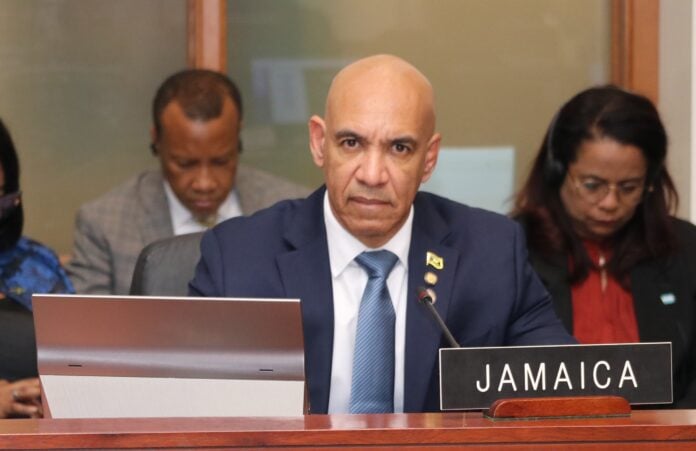
Jamaica’s Ambassador to the United States and Permanent Representative to the Organization of American States (OAS) His Excellency Major General (Ret’d Antony Anderson, update members of the OAS Permanent Council on post- hurricane recovery situation in Jamaica during a regular sitting of the Permanent Council at its headquarters in Washington D.C. Wednesday 5th 2025, Photo Derrick Scott.

The Permanent Council of the Organization of American States (OAS) has unanimously adopted a Jamaica-led declaration acknowledging the sweeping devastation caused by Hurricane Melissa and affirming collective support for the countries impacted by the historic storm.

The declaration, titled “Addressing the Impact of Hurricane Melissa and Affirming Solidarity with Affected Countries,” was adopted by acclamation on Wednesday, November 5. It reasserts the principles of solidarity and cooperation embedded in the OAS Charter, the Inter-American Democratic Charter and the Inter-American Program for Sustainable Development—especially as they relate to disaster response across the hemisphere.

Hurricane Melissa made landfall in Jamaica on October 28 as a Category 5 system and is already being described as the most powerful hurricane on record in the Caribbean. It carved a path of destruction through Jamaica, Haiti, the Dominican Republic, Cuba and The Bahamas. The storm triggered widespread flooding, landslides and prolonged power outages, severely damaging key infrastructure and causing loss of life as well as massive disruptions to tourism, agriculture and fisheries. Early estimates place the economic toll in the billions of dollars.

Ambassadors representing the OAS member states expressed deep solidarity with the affected nations and stressed the urgency of a coordinated hemispheric and international response. The declaration lays out four key commitments:

  1. Support for impacted countries based on national needs and each state’s capacity, particularly in ongoing relief and recovery operations.

  2. A mandate to the OAS Secretary General and General Secretariat to continue working with the wider inter-American system, the United Nations, regional bodies and financial institutions to mobilize resources and report progress within 60 days.

  3. Strengthening the Inter-American Committee on Natural Disaster Reduction (IACNDR), including developing a Strategic Plan for hemispheric cooperation and bolstering the Inter-American Emergency Aid Fund (FONDEM).

  4. A call for enhanced global cooperation to expand access to climate and development financing, especially for vulnerable developing countries and Small Island Developing States (SIDS), while urging greater international ambition in confronting the climate crisis.

The Council also acknowledged the ongoing work of the Executive Secretariat for Integral Development (SEDI), PAHO, IICA, the Inter-American Development Bank, the Inter-American Defense Board and other regional institutions advancing resilience, sustainable development and disaster recovery.

The declaration’s adoption signals the OAS’s renewed commitment to collective action as the region faces intensifying climate threats and increasingly severe weather events.

CARICOM, IDB team up to measure poverty and vulnerability across the region

CARICOM
CARICOM Deputy Secretary-General Dr Armstrong Alexis (6th,right) and IDB Country Representative Lorena Solorzano-Salazar with session participants.

CARICOM has announced a major partnership with the Inter-American Development Bank (IDB) to create a new statistical framework designed to measure poverty and vulnerability across the Caribbean, a move regional officials say is urgently needed as climate-driven disasters intensify.

The 36-month Technical Cooperation Project will be piloted in The Bahamas, Belize, Guyana, and Trinidad and Tobago, with the goal of strengthening data systems that can guide development strategies and improve long-term resilience. The initiative will produce regional knowledge products, standardized methodological guidelines, and training modules for administering multipurpose surveys to better assess economic, social, and environmental vulnerabilities.

A commencement workshop for the project was held on 12 November at CARICOM Headquarters in Georgetown, Guyana, with participants joining both in person and online.

CARICOM Deputy Secretary-General Dr. Armstrong Alexis welcomed the initiative, calling it timely in the wake of the widespread devastation caused by Hurricane Melissa, which struck Jamaica and Haiti as a powerful Category 5 system. He noted that the hurricane underscored how deeply vulnerability shapes everyday life in the Caribbean.

“The challenge before us is clear: how do we measure what matters the most?” Dr. Alexis said. “How do we quantify the effects on the lives and livelihoods of our citizens so that we can respond effectively and build resilience?” Without accurate, comprehensive data, he warned, the Region risks being reactive rather than proactive.

Dr. Alexis added that a consistent, thorough understanding of vulnerability is essential not only for responding to the climate crisis, but also for advancing the Caribbean’s broader push for climate justice.

IDB Country Representative in Guyana, Ms. Lorena Solorzano-Salazar, said the Bank is pleased to deepen its longstanding partnership with CARICOM, noting past successes such as the Common Census Framework. She said this new project will bolster regional capacity to generate the type of high-quality data governments need to confront the multidimensional realities of poverty and vulnerability.

“Our collective experience has taught us that to address these issues effectively, we need reliable, comprehensive, and up-to-date data,” she said, adding that the initiative supports the IDB’s institutional priorities of reducing poverty and inequality, strengthening resilience and improving governance.

The project also reinforces commitments made at the recent 15th Meeting of the Standing Committee of Caribbean Statisticians, where regional leaders emphasized the need for stronger collaboration among national statistical offices.

The Bahamas, designated as the project lead, signaled its full support. Managing Director of the National Statistical Institute, Mr. Jamiko Deleveaux, said the initiative aligns with his country’s long-standing commitment to strengthening regional statistical systems. He noted that Small Island Developing States face intertwined social, economic and environmental pressures that require evidence-based, adaptive policies.

He stressed that building “efficient CARICOM statistical systems” is central to enabling resilient communities and sustaining economic growth across the Region.

With the project now underway, officials say the new framework will help Caribbean countries capture a more accurate picture of vulnerability—an essential step in shaping smarter policies in an era of escalating climate and development challenges.

Broward Health North and Broward Health Coral Springs earn ‘A’ for hospital safety

broward health

Broward Health North and Broward Health Coral Springs have once again secured an “A” Hospital Safety Grade from The Leapfrog Group, marking another strong showing for the two facilities in the national nonprofit’s biannual assessment of patient safety.

For Broward Health North, the recognition represents a fourth consecutive “A.” CEO Matt Garner said the continued top rating highlights the hospital’s commitment to maintaining rigorous safety standards across its 409-bed facility. “We take great pride in knowing that our community can trust us to provide care in an environment where patient safety always comes first,” he said.

Broward Health Coral Springs also celebrated its latest top grade. CEO Kristen Bowman said the rating reinforces the work of caregivers who prioritize safe, high-quality care every day. “This recognition reflects the dedication of our caregivers, who consistently deliver safe and high-quality care to every patient,” she noted.

Leapfrog’s Hospital Safety Grade is the only national ratings program focused solely on preventable medical errors, injuries and infections—factors that contribute to more than 500 patient deaths daily in the United States. The rating is based on more than 30 performance measures, undergoes peer review and is updated twice a year, in spring and fall.

Papa San to headline benefit concert for One Love Jamaica Rebuild Initiative in Lauderhill

papa san

Jamaica’s Consul General to Miami, the Hon. Oliver Mair, is partnering with Bishop Henry Fernandez and the Dare to Care Organization to launch the One Love Jamaica Rebuild Initiative, a broad faith-based humanitarian effort designed to support communities devastated by the recent hurricane in Jamaica. The collaboration brings together diplomatic leadership, the South Florida faith community, and local advocates in a unified push to mobilize resources for families struggling to rebuild.

The initiative will officially debut at a press conference on Monday, November 17, at 10:00 a.m., hosted at The Faith Center, 5555 NW 95th Avenue in Sunrise.

A major highlight of the campaign is a large benefit concert scheduled for Saturday, December 6, 2025, at 7:00 p.m., also at The Faith Center. Grammy-nominated reggae gospel artist Papa San is set to headline the event, alongside a lineup of local and international performers that organizers say will be announced in the coming weeks. The concert aims to galvanize the South Florida diaspora and wider community around rebuilding efforts, with proceeds going directly toward on-the-ground relief in Jamaica.

According to organizers, the One Love Jamaica Rebuild Initiative will operate an expansive humanitarian response throughout November and December. Funds raised will be used to rebuild destroyed homes, supply food assistance to families experiencing hunger, deliver medical care to vulnerable residents, restore access to clean water and sanitation and support repairs to damaged infrastructure. They emphasized that the goal is not only to meet immediate needs but also to help communities regain long-term stability.

Supporters are encouraged to participate in several ways—by attending the December 6 concert, donating directly to the initiative, volunteering in relief operations or spreading awareness online using #OneLoveJamaicaRebuild. Organizers say every contribution, no matter the size, helps accelerate Jamaica’s recovery and sends a clear message of solidarity to families still navigating the aftermath of the storm.

Mitchell’s courageous century seals tight New Zealand win over surging Windies

West Indies

Daryl Mitchell, battling through visible discomfort, crafted a tenacious century that proved the difference as New Zealand edged the West Indies by seven runs in a tense first ODI at Christchurch on Sunday.

His measured yet forceful 119 anchored the hosts’ total of 269-7 on a difficult surface, setting the platform for a dramatic finale.

A late West Indies charge falls just short

The West Indies mustered a spirited surge in the closing overs, surging to 262-6 as Sherfane Rutherford (55) and a blazing, unbeaten 38 off 24 balls from Justin Greaves kept the chase alive. Their clean striking shifted the pressure squarely onto the home side, and when Romario Shepherd launched a six in the final over to leave nine needed from the last two deliveries, the contest hung in the balance.

Seamer Jacob Duffy, entrusted with the match, held his nerve. His composure under fire sealed New Zealand’s narrow escape and delivered a 1-0 lead heading into Wednesday’s second ODI in Napier.

Mitchell masters a treacherous surface

On a pitch offering inconsistent bounce and little fluency, Mitchell’s seventh ODI century stood out as an innings of grit and calculation. New Zealand were reeling at 24-2 after Rachin Ravindra and Will Young fell to consecutive deliveries from Matthew Forde, bringing the world’s No. 3-ranked ODI batsman to the crease far earlier than planned.

Devon Conway added a steady 49, but no other batter found rhythm on the testing track. Mitchell, favoring the leg side, carved out 12 fours and two sixes, one of them a muscular pull off Jayden Seales that brought up his hundred in the 46th over. Seales eventually dismissed him, caught in the deep during the final over, en route to an excellent 3-41.

Mitchell was unable to field due to a groin issue.

Hope calls for greater responsibility

The West Indies chase never quite found sustained momentum at the top, despite a 60-run stand between Alick Athanaze (29) and Keacy Carty (32) that consumed 18 overs. Captain Shai Hope contributed a brisk 37, but his dismissal came at a critical juncture.

Reflecting afterward, he urged more substantial contributions from his frontline batters.

“If I was to be very critical, the batters need to step up a bit more, especially at the top, myself included. I got out at a very crucial time there,”
he said. “A few of us need to go a bit bigger.”

Jamieson leads the hosts’ response

Kyle Jamieson delivered New Zealand’s most incisive bowling performance, taking 3-52 and providing key breakthroughs that kept the West Indies behind the rate until their late surge. Yet even his efforts were nearly undone by the visitors’ final assault, which only fell short due to Duffy’s calm final over.

With the series delicately poised and both sides aware of their vulnerabilities, Wednesday’s second ODI promises equal intensity and perhaps fewer margins for error.

Explosive all-rounder Sherfane Rutherford returns to MI in US$293K deal

Sherfane Rutherford’s stunning year puts him in ICC’s ODI Cricketer of the Year race

MUMBAI, India — The Mumbai Indians have wasted no time sharpening their roster for the 2026 Indian Premier League, securing the powerful West Indies all-rounder Sherfane Rutherford in a decisive trading-window move.

The acquisition, completed via a straight-cash deal worth US$293,000, matches exactly what the Gujarat Titans invested to sign him at the previous auction.

A familiar blue and gold

For Rutherford, the transfer marks a return to a franchise he once celebrated with, albeit from the sidelines. The 27-year-old was part of Mumbai’s championship-winning squad in 2020, though he did not feature in the playing XI during their title march. Now, he arrives with significantly more experience and a much stronger résumé, prepared to contribute on the field rather than simply observe from the dugout.

The dynamic left-hander is poised to represent his fourth active IPL side, having previously worn the colors of Delhi Capitals (2019), Royal Challengers Bengaluru (2022), and most recently, the Gujarat Titans. Each stop has shaped Rutherford’s evolution, but it was his most recent campaign that finally offered a platform worthy of his potential.

Breakout season with Gujarat

During the 2024-25 season, Rutherford enjoyed a sustained run in the Titans’ starting line-up, 13 matches in which he compiled 291 runs at an average of 32.22 and a blistering strike rate of 157.29. His clean, authoritative ball-striking and late-innings explosiveness turned heads and reaffirmed his status as a match-turning weapon.

Rutherford’s steady rise has extended well beyond the IPL. Strong performances across the world’s premier T20 competitions, including the Caribbean Premier League, Pakistan Super League, and Bangladesh Premier League, bolstered his reputation and helped pave the way for his most lucrative IPL contract to date with Gujarat.

Even in seasons when he didn’t take the field, Rutherford found himself part of success stories, including another title-winning campaign as a squad member with the Kolkata Knight Riders in 2024. Now, armed with experience, confidence, and proven finishing power, he returns to Mumbai with both opportunity and expectation swirling around him.


West Indies U19s set for England battle as World Cup countdown begins

West Indies U19s

ST JOHN’S, Antigua — The West Indies Under-19 side embarks on another critical phase of its World Cup build-up on Sunday when it confronts England in a seven-match Youth ODI series in Grenada.

The contest offers fresh opportunity for evaluation and refinement as the Caribbean squad sharpens its readiness for the ICC Under-19 World Cup early next year.

Momentum from a hard-fought triumph

The young West Indies unit enters the series buoyed by its gritty 4-3 victory over Sri Lanka in Antigua just over two months ago, a performance head coach Rohan Nurse believes has already produced meaningful lessons in resilience and self-belief.

“We were really impressed with the resilience shown by the players in the last series, especially since it was the first time they had been together as a team,”
Nurse said.
“Those are elements that can’t necessarily be coached – they have to be developed within the group, and we’re quite happy with that. We want to build on it going forward.”

Fresh faces and a deepening player pool

Three changes have been made from the squad that faced Sri Lanka, with DeShawn James returning from injury and Kunal Tilokani and Tanez Francis earning call-ups after standout showings in the regional Under-17 tournament. Afraz Ali Buhdoo, Micah Greenidge, and Pajay Nelson miss the England series but remain part of the extended pool, alongside Jewel Andrew and Micah McKenzie, from which the final World Cup team will be selected in the coming months.

Sharpening standards across all departments

While encouraged by the squad’s fighting spirit, Nurse made clear that the next step involves enhancing consistency, discipline, and clarity of roles throughout the line-up.

“One of the main things we’ve emphasized is maintaining intensity in all departments – batting, bowling and especially fielding. We want to create some kind of advantage in that area,” he explained.

He added that establishing firm foundations at the top of the batting order is central to their progress.

“We’ve seen that we can put together very good performances and be competitive at the international Under-19 level. It all starts at the top from a batting viewpoint and being able to convert when we get starts. That’s been a key focus in preparation. From a bowling standpoint, we’ve also worked on clearly defining roles and identifying who best suits which role.”

A timely opportunity

With the Under-19 World Cup fast approaching, the England series serves as an ideal proving ground—one that demands performance while continuing to build professionalism, unity, and clarity within the squad.

“This series comes at a really good time for us,” Nurse said.
“Now, it’s more about moving toward a performance-driven environment – while still helping the guys understand professionalism, expectations and roles on and off the field.”

Squad and support staff

West Indies Under-19 Squad vs England: Joshua Dorne, Shaquan Belle, Brendan Boodoo, Tyriek Bryan, Zachary Carter, Earsinho Fontaine, Tanez Francis, R’Jai Gittens, DeShawn James, Vitel Lawes, Matthew Miller, Isra-el Morton, Jakeem Pollard, Aadian Racha, Kunal Tilokani, Johnathan Van Lange.

Team Management: Head Coach – Rohan Nurse; Assistant Coach – Jerome Taylor; Assistant Coach – Nikita Miller; Physiotherapist – Kwayne Dalrymple; Strength & Conditioning Coach – Shayne Cooper; Team Analyst – Keshava Ramphal; Manager – Clint St Hill.

Match Schedule

1st Y-ODI – 16 November
2nd Y-ODI – 19 November
3rd Y-ODI – 21 November
4th Y-ODI – 24 November
5th Y-ODI – 26 November
6th Y-ODI – 29 November
7th Y-ODI – 1 December