CARICOM has announced a major partnership with the Inter-American Development Bank (IDB) to create a new statistical framework designed to measure poverty and vulnerability across the Caribbean, a move regional officials say is urgently needed as climate-driven disasters intensify.

The 36-month Technical Cooperation Project will be piloted in The Bahamas, Belize, Guyana, and Trinidad and Tobago, with the goal of strengthening data systems that can guide development strategies and improve long-term resilience. The initiative will produce regional knowledge products, standardized methodological guidelines, and training modules for administering multipurpose surveys to better assess economic, social, and environmental vulnerabilities.
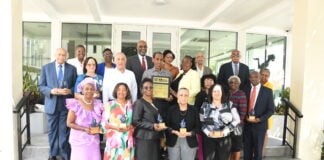
A commencement workshop for the project was held on 12 November at CARICOM Headquarters in Georgetown, Guyana, with participants joining both in person and online.

CARICOM Deputy Secretary-General Dr. Armstrong Alexis welcomed the initiative, calling it timely in the wake of the widespread devastation caused by Hurricane Melissa, which struck Jamaica and Haiti as a powerful Category 5 system. He noted that the hurricane underscored how deeply vulnerability shapes everyday life in the Caribbean.
“The challenge before us is clear: how do we measure what matters the most?” Dr. Alexis said. “How do we quantify the effects on the lives and livelihoods of our citizens so that we can respond effectively and build resilience?” Without accurate, comprehensive data, he warned, the Region risks being reactive rather than proactive.
Dr. Alexis added that a consistent, thorough understanding of vulnerability is essential not only for responding to the climate crisis, but also for advancing the Caribbean’s broader push for climate justice.
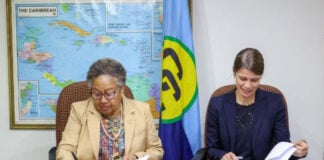
IDB Country Representative in Guyana, Ms. Lorena Solorzano-Salazar, said the Bank is pleased to deepen its longstanding partnership with CARICOM, noting past successes such as the Common Census Framework. She said this new project will bolster regional capacity to generate the type of high-quality data governments need to confront the multidimensional realities of poverty and vulnerability.
“Our collective experience has taught us that to address these issues effectively, we need reliable, comprehensive, and up-to-date data,” she said, adding that the initiative supports the IDB’s institutional priorities of reducing poverty and inequality, strengthening resilience and improving governance.
The project also reinforces commitments made at the recent 15th Meeting of the Standing Committee of Caribbean Statisticians, where regional leaders emphasized the need for stronger collaboration among national statistical offices.

The Bahamas, designated as the project lead, signaled its full support. Managing Director of the National Statistical Institute, Mr. Jamiko Deleveaux, said the initiative aligns with his country’s long-standing commitment to strengthening regional statistical systems. He noted that Small Island Developing States face intertwined social, economic and environmental pressures that require evidence-based, adaptive policies.
He stressed that building “efficient CARICOM statistical systems” is central to enabling resilient communities and sustaining economic growth across the Region.
With the project now underway, officials say the new framework will help Caribbean countries capture a more accurate picture of vulnerability—an essential step in shaping smarter policies in an era of escalating climate and development challenges.