Florida elementary school students may soon be required to learn—and prove they’ve mastered—cursive writing under a pair of bills filed for the 2026 Legislative Session.
House Bill 127 and Senate Bill 444 would mandate cursive instruction for all public school students in grades 2 through 5. Students would also be required to read and comprehend cursive, a skill that has not been mandated under state law since 2010, when Florida adopted Common Core Standards and dropped the statewide requirement.
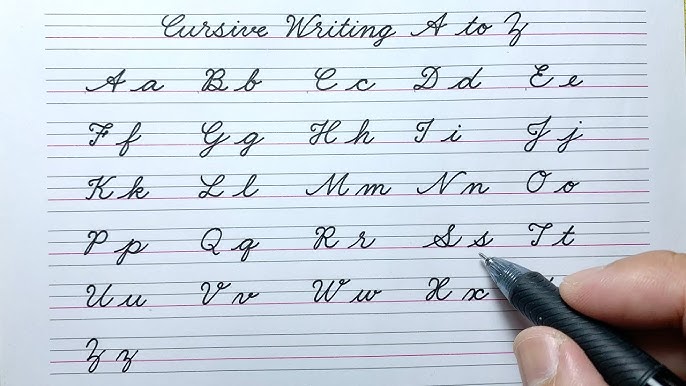
According to the bills, students would learn “letter formation,” “proper spacing and alignment,” and “writing complete words and sentences,” skills that could also be evaluated using modern tools such as an AI grader. By fifth grade, they would have to demonstrate proficiency in both reading and writing the script.

The legislation, sponsored in the House by Reps. Toby Overdorf, R-Palm City, and Dana Trabulsy, R-Fort Pierce, and in the Senate by Sen. Erin Grall, R-Fort Pierce, calls for a return to the fundamentals of traditional handwriting. According to the bills, students would learn “letter formation,” “proper spacing and alignment,” and “writing complete words and sentences.” By fifth grade, they would have to demonstrate proficiency in both reading and writing the script.
While some schools still teach cursive, Florida law does not currently require students to read or understand it. Instruction was reintroduced in 2014 through State Board of Education rules, but those are agency-level requirements—not state law. Today, third graders are taught how to write upper- and lowercase cursive letters, fourth graders focus on producing legible cursive, and fifth graders learn to write it at the same pace as print.
The new proposal goes further, requiring students to develop the “ability to read and apply cursive writing in a manner that supports literacy development,” including writing essays and assignments in cursive according to state academic standards. However, the bills do not specify how proficiency will be measured.
A statewide assessment is expected. HB 127 directs the Florida Department of Education to determine how students will be evaluated and what demonstrating mastery will look like. If approved, the new law would take effect July 1, 2026, giving school districts about a year to update their curriculum and prepare new testing measures.