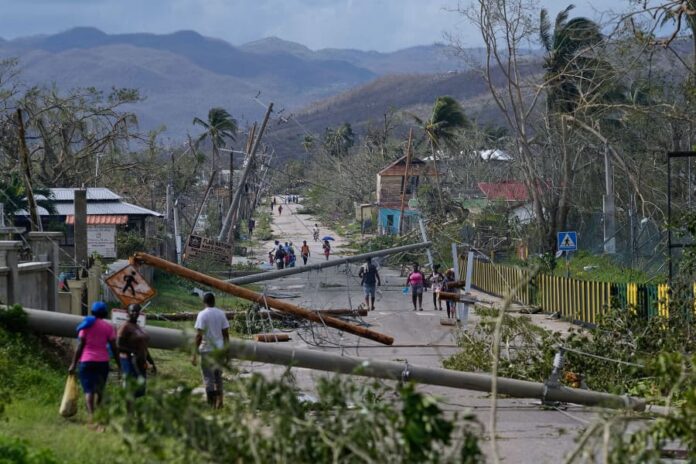
After meandering off the southeast of Jamaica for days Hurricane Melissa finally came ashore near Black River, St. Elizabeth on Tuesday, October 28, and crawled from the south coast to the north coast creating a disastrous swath of damage across St. Elizabeth, Westmoreland and St. James, including the core of Jamaica’s tourism industry, Montego Bay.
Reports and images of the devastation in the western section of Jamaica, is heart wrenching. Buildings, homes and businesses, have been demolished, roads and bridges damaged, crops and livestock wiped out, and many public buildings including five public hospitals, several schools, police stations, and churches, parish council offices, are destroyed.

At the time of writing, the authorities in Jamaica have not even begun to make a comprehensive assessment of the cost of the damage, but it is clear that this cost will amount to billions of Jamaican dollars.
Managing the Logistics
It’s customary when natural disasters impact a country outside of the US, caring people arrange to gather supplies of various kinds, including food, clothing, and water, to send to that country as relief for the victims. However, often because of logistics associated with distributing relief supplies to those who need it, especially over a large region, the supplies are not distributed in a timely manner or any at all. But another complicated matter is that with some ports and warehouses damaged supplies may remained trapped in ports for months. After Hurricane Gilbert impacted Jamaica in 1988, many Jamaican organizations in South Florida and other regions of the US organized collection of supplies and shipped them to Jamaica, only to have these supplies sit in the ports for a long time. This is not helping the people who are in need.

Although the victims of Hurricane Melissa are badly in need of water, food, medical supplies, sanitary conveniences, and so on, it’s best advisable to make cash donations, rather than sending supplies that could take weeks or months to be distributed to the hurricane victims.
Hurricane Relief Scams on the Rise
But some people are reluctant to send cash to Jamaica for hurricane relief as they are concerned about corrupt individuals stealing the funds meant to purchase supplies and equipment to help the victims. This concern is understandable, but one has to be able trust that corruption isn’t that palpable that people would steal funds meant to help thousands of people who may be homeless and needed to rebuild critical infrastructure.
The government of Jamaica has established a central point through the Office of Disaster Preparedness and Emergency Management (ODPEM) through which all cash donations can be made via the link https://supportjamaica.gov.jm/donate. This central donation point will include donations being made through NGO’s like the American Red Cross.
With financial scamming now akin to an entire industry, people will need to be careful where they send their cash donations, as it’s not impossible for scammers to set up websites, and links purporting to be credible donation sites when they are really involved in scamming donors.
To ensure that donations made through the central point created by the Jamaican government gets to those they are intended to help, it is recommended that ODPEM seek about establishing a system through which data can be provided for the amounts of cash donations made from overseas, including, of course, the Jamaican Diaspora, and if possible, also an account of how the funds provided are spent. Absolute transparency is essential in this situation so trust can be established and maintained.
How to Send Wisely
For those who are insistent in sending supplies and cash they are also advised to try and arrange to send items that are crucially needed, and not what others are sending in abundance. For example, there is a great need for tarpaulins, since many buildings have last there roofs, and electrical generators, since some areas will be without electrical power for some time. Items like these can be ordered through wholesalers like Amazon and Home Depot, and possible shipped by these wholesalers directly to beneficiaries in Jamaica. It may also be sensible to ship supplies like tarpaulin’s and electrical generators directly to the ODPEM in Jamaica.

There is absolutely no doubt that a significant number of people in Jamaica who have been negatively impacted by Hurricane Melissa is in desperate need of assistance. All those who are living in the US, who are able and want to, should not hesitate in offering their assistance to make donations. But, they should try to make sensible donations, and donate sensibly in order that the donations made reach the victims of the hurricane and do not go to waste, or get into the wrong hands.