I live in Jamaica, where we just experienced the worst hurricane in our history. Hurricane Melissa — a Category 5 monster — tore through the island, leaving at least 32 people dead so far, and dozens more in Haiti.
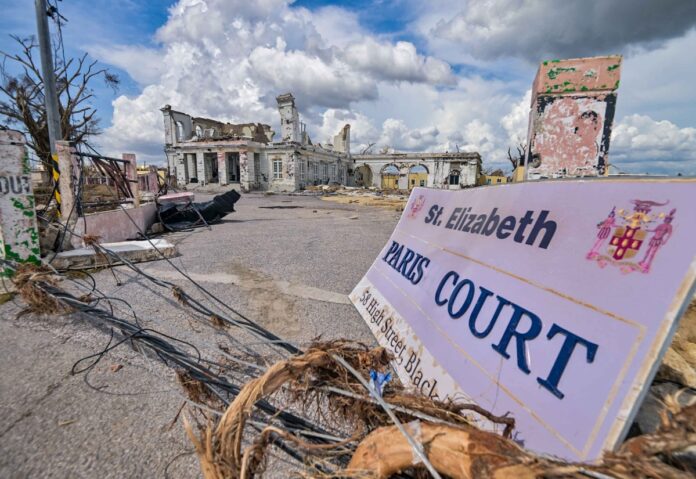
I’m from rural Jamaica — Mandeville — but I spent much of my childhood in Black River, St. Elizabeth. Today, Black River is “ground zero.” It’s barely recognizable. The roads are gone. The streets have no houses left standing. The seaside community where my brothers and I used to walk as children has vanished under debris. My brother’s house is completely destroyed.
People are sleeping on tarpaulins or on scraps of clothing salvaged from the ruins. Entire communities are cut off — from food, water, and even the police. I’ve heard stories of bodies trapped under rubble, and no one can reach them.

A day after the storm passed, I finally heard from one of my brothers. He had moved further inland before the hurricane made landfall. He told me he was safe. He managed to save his important documents and a week’s worth of clothes. But that was it. He had plans to move around for work before this, but those plans are gone now. He has nothing.
When I hung up the phone, I broke down. I cried — bawled, really — and I haven’t stopped. But after the tears came anger.
Because this is not our fault.

Not Jamaica’s. Not the Caribbean’s. Not the Global South’s.
And yet, every year, we bear the consequences.
Small island states like ours contribute almost nothing to global emissions, yet we face the brunt of the climate crisis — rising seas, stronger hurricanes, longer droughts, and endless rebuilding.

Last year, when Jamaica was hit by Hurricane Beryl, the United States Agency for International Development (USAID) donated $4.5 million in humanitarian assistance for affected countries. USAID coordinated disaster response across the region. But one year later, that agency — which once symbolized global partnership — no longer exists.
This time, I didn’t know what kind of relief effort to expect. But to my surprise, the world has rallied around us. The UN, the World Food Programme, and CARICOM countries have stepped up. So have others — the UK, Spain, Panama, El Salvador, Colombia — and organizations like World Central Kitchen, Samaritan’s Purse, and Project HOPE.
Even the U.S. announced $11 million in assistance. And while I am deeply grateful, I can’t ignore the bitter irony.
The same U.S. president who has spent months calling climate change a “hoax” — who told the United Nations that it’s “the greatest con job in history,” and dismissed scientists who make climate predictions as “stupid people” — is now sending aid to help clean up a disaster made worse by the very crisis he denies exists.
And that’s the problem.
Why does the Global North prefer to spend billions repairing the damage of climate change rather than admit its role in causing it — and work to fix it at the source?
Every time another hurricane flattens our homes, destroys our towns, and shatters our sense of safety, we hear promises of “aid,” “assistance,” and “rebuilding.” But what we truly need is justice — climate justice.
This is why, when I see Barbados’ Prime Minister Mia Mottley standing on the world stage, demanding accountability from the world’s biggest polluters, I feel like a proud daughter. She is speaking for all of us in the Caribbean who are tired of watching our futures wash away in the rain.
Still, amid the heartbreak, I have hope. The solidarity shown after Hurricane Melissa — from neighbors, volunteers, and international partners — has been heartwarming. It reminds me that the world is paying attention.
And Jamaica, as always, is resilient. We will rebuild, we will recover, and we will rise again.
But resilience is not a substitute for justice. We cannot keep rebuilding what the world keeps breaking.
The time for denial is over. The time for climate action — real, systemic, global action — is now.