Jamaica urged to take a clear stand, not sit on the fence
Key Points(5)
- </p> <!-- /wp:paragraph --> <!-- wp:paragraph --> <p>After tallying the votes, 120 countries—including 14 members of CARICOM—voted in favor of the resolution, 14 others—including the US—voted against it, and 45 countries chose to abstain.
- Amazingly, Jamaica did not vote on the resolution, hence it was absent from the list of those who voted in favor of, against, or abstained from the motion.
- Hours after the vote was cast, the country’s foreign affairs minister issued an even more incredible statement on social media.
- In this case, however, the attack on Israel by Hamas occurred on October 7.
- Since then, Israel has been bombing Gaza nonstop in retaliation.
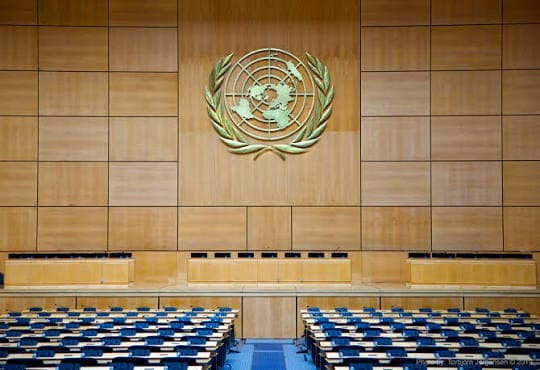
On October 27, the United Nations General Assembly (UNGA) scheduled a vote on a resolution concerning the defense of Palestinian residents living in Gaza, where it was suggested that Israel uphold its obligations under international humanitarian law.
After tallying the votes, 120 countries—including 14 members of CARICOM—voted in favor of the resolution, 14 others—including the US—voted against it, and 45 countries chose to abstain. Amazingly, Jamaica did not vote on the resolution, hence it was absent from the list of those who voted in favor of, against, or abstained from the motion. Hours after the vote was cast, the country’s foreign affairs minister issued an even more incredible statement on social media. She clarified that Jamaica's Permanent Representative to the UN had missed the vote since the country was hosting consultations on the issue at the time.
A statement on the UNGA floor by CARICOM prior to the resolution's vote expressed support for the release of hostages, humanitarian relief for war victims, and a peaceful conclusion to the Israel-Palestine conflict.
In a follow-up statement, Jamaica’s minister of foreign affairs restated the absurd justification for the country's non-vote on the resolution, claiming that despite her ministry being caught in deliberations about the resolution, Jamaica, as chair of the Caucus of CARICOM Ambassadors at the UN, was:
“actively engaged in discussions, including the UN resolution and not only collaborated on the CARICOM statement, but led its drafting.”
Now, if Jamaica was involved in the discussing and drafting of this statement, and 14 CARICOM members voted for the UN resolution soon after,
- Why was it not included in the CARICOM vote? and
- Why were there discussions on the vote still happening in Jamaica when the votes were cast?
The fact that some international issues are extremely delicate and call for decisions on how the nation's representative at the UN should vote are made by authorities as high as the Prime Minister is understandable. In this case, however, the attack on Israel by Hamas occurred on October 7. Since then, Israel has been bombing Gaza nonstop in retaliation. It's inconceivable that over a period of 20 days, neither Jamaica's Prime Minister nor the minister of foreign affairs were prepared to address the humanitarian crisis unfolding in Gaza.
The Jamaican government needs to decide on such significant motions in a timely manner, to ensure its Permanent Representative receives proper instructions on how to vote.
It would have been much more preferable, though still unacceptable, for Jamaica’s vote to be an abstention. A ‘no vote’ is just wrong, and the minister’s explanation is very weak. It gives the distinct impression that Jamaica is waffling on its policy regarding the fate of Palestinians in Gaza. And appears to be the result of extreme global cowardice—not wanting to anger the US, which has publicly stated it will always support Israel—while also not wanting to admit Jamaica doesn't agree with the call to protect Palestinians in Gaza.
The opinions of the majority of Jamaicans residing in Jamaica and the Diaspora are not reflected in this blatant disrespect. While most definitely don’t condone the deplorable attacks by Hamas on Israel on October 7th, they are certainly unsupportive of the fact that since those attacks, hundreds of innocent Palestinians are being wantonly slaughtered in Gaza daily. They also do not support Palestinians in Gaza being cut off from food, water, petrol, hygienic and medical supplies.
Jamaica has a formidable, respected history of supporting humanitarian causes globally. It was among the first countries supporting an economic blockade of South Africa’s government during the brutal apartheid era, supporting the cause of freedom fighters in Angola, and, in the 1970’s, it was an outstanding leader in the global non-alignment movement. It has never been a nation to back off of its global responsibilities and has never before appeared to cower or sit on the fence in making foreign policy decisions on the global stage… until now.
According to reports, Prime Minister Andrew Holness called for peace in the Middle East during his speech to the Jamaica Labor Party (JLP) on Monday. He said,
“Jamaica wants to see peace and wants to see the rights of all people respected. Those who have power have a great responsibility to ensure the people’s human rights are protected.”
It would have been preferable if Holness made this speech to the Jamaican people, instead of at a party political forum, particularly after the criticism his government is receiving given the nation’s UNGA ‘no vote.’ More notably, though, the PM said nothing about Jamaica's attitude toward the Palestinians in Gaza or about Israel's coexistence with its neighbors in the Palestinian territories. Although Gaza is currently the world's worst humanitarian crisis, Jamaica hasn't displayed the courage to support a resolution that would have suspended hostilities for humanitarian reasons.
Once again, Jamaica’s Prime Minister finds himself perched precariously on the fence, leaving us to ponder the consequences of indecision at the helm of leadership — especially in times of crisis.