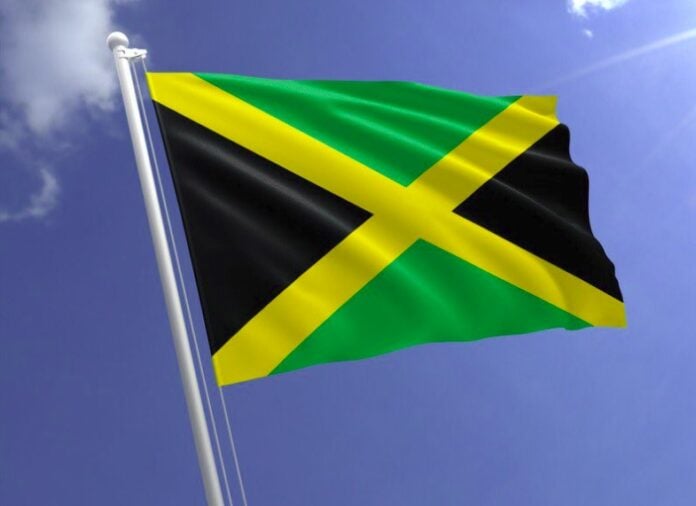
Sixty-one years is considered old age for humans, but for nations it’s a youthful age. At 61 years of independence, several nations are still experiencing growing pains.
As Jamaica celebrates 61 years of political independence, it certainly is experiencing growing pains, and still seems to be experimenting with independence. It would be most inaccurate to say that the nation hasn’t made significant strides in its 61 years, but in the socio-economic arena, there’s still much to be achieved.
Nine prime ministers – Sir Alexander Bustamante, Sir Donald Sangster, Hugh Shearer, Michael Manley, Edward Seaga, Percival Patterson, Portia Simpson Miller, Bruce Golding and Andrew Holness – have been at the helm of the Jamaican government since 1962. Each, during their tenure as prime minister, made significant achievements, but none were, or have been, successful in meeting their ultimate goals.

The blatant nemesis of independent Jamaica was, and still is, poverty. When Britain agreed to give Jamaica its independence over 60 percent of Jamaicans were either living in or at the periphery of poverty. And over 30 percent of the population were either fully illiterate, couldn’t read or write, or semi-illiterate.
In the early years after independence the political leaders focused on growing the nation’s economy based on the mining and export of bauxite, and the development and export of agricultural products. Accordingly, the period 1962 to 1970 could be considered one of the more economically prosperous of the young nation. But, unfortunately, little of this prosperity trickled down to the majority of poor and illiterate members of the population, mostly living in rural Jamaica.
Between 1972 and 1980, stringent attempts were made to make real transformation in the social imbalances in the nation. But, history may record that attempts to create a new Jamaican egalitarian society was too hasty, blended with emotional and often irresponsible rhetoric that unfortunately chased the monied class from the country, and ruined the political ambitions of the then government. Although during this period, there was meaningful reduction in illiteracy, and more young people had access to primary, secondary and tertiary education, the political divide that characterized Jamaica before 1962 widened, and became tainted with an unfortunate type of political violence.

Historians may also argue Jamaica went off its social and economic tracks in the 1970s, and despite yeoman efforts by both the political and private sectors since, attempts to right the national train have been evasive. This argument is debatable, but what is certain is that since the late 1970s the world became less of a place of several independent nations co-existing with each other to a global marketplace, which made it more difficult for small nations like Jamaica to survive.
Gradually it became apparent the life blood of economic growth was oil, affordable oil. Not being an oil producer, it became harder to sustain the Jamaican economy since the 1980s with increasing oil prices. To keep the nation oil sufficient, Jamaican governments have had to borrow heavily on the international money market, overburdening its foreign exchange reserves, and have been unable to pursue much needed social programs that could have significantly alleviated poverty.
As the years passed the persistence of poverty has bred social indiscipline and frustrations leading to the escalation of crime, which has become increasingly violent.

Since 2000, governments have gained power on the platform of having plans to eradicate poverty and improve the standard of living of the majority of Jamaicans. But, poverty still prevails.
Unfortunately, the older the nation becomes, the less it seems Jamaicans have faith in the role and function of politics and government. More Jamaicans are displaying apathy in the electoral process, and less people are turning out to elect the government.
But on the other hand, the quality of politicians who in the aftermath of independence sought to represent the people with unselfish service has dissipated. A new breed of politicians has appeared bent on serving themselves from the spoils of politics, rather than seeking to determinedly represent the people and pull them out of the social pit so many find themselves in. This has bred rampant public corruption, which threatens to engulf the entire nation, with no obvious sign of ending.
But, this cannot continue if Jamaica is to still realize the bright promise which existed in 1962. There is a critical need for leaders committed to eradicating poverty, crime, violence, and corruption. There is a critical need for leaders willing to shift the focus from their own personal financial gains, to representing the interest of those they serve. Jamaica had such leaders when it gained independence and for several years after. Now, the older the nation grows, the more difficult it is to find such leaders.
As it celebrates its 61st year of independence, it is critical Jamaica identifies and elects the leadership to place this promising nation back on the tracks of sustained social and economic growth.