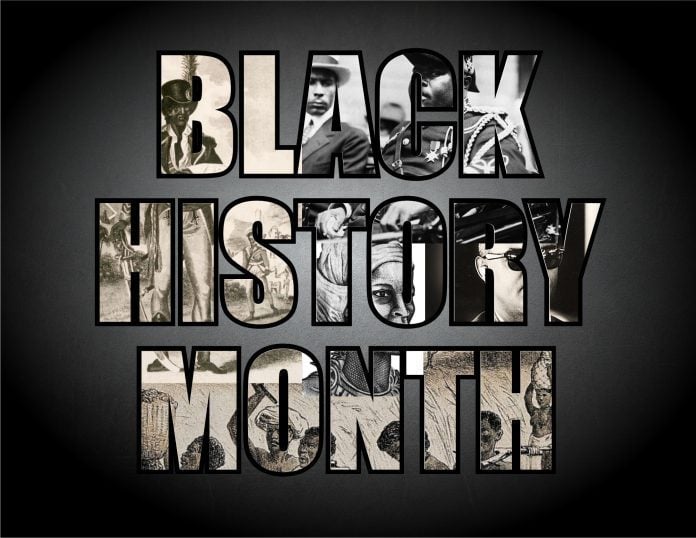
Even as Black America celebrates Black History Month the persistent controversies that have plagued the annual commemoration of Black achievement resurfaces. There are people who criticize Black History Month as the perpetuation of racism by the Black community, even an act of racial segregation. Others argue the achievements of Black Americans are too broad, covering several areas to be capsuled in one month. But the most cutting criticism may be that American history has little to do with its Black population and educating students on American Black history is the perpetuation of a political agenda.
How dare they!?
The latter criticism is total rubbish! Those who postulate this argument are either intellectually bankrupt or challenged. No student of American history can honestly deny the role, experience, and impact of Black Americans are intricately woven in this history.

Black immigrants from Africa arrived, albeit forcibly, in America in 1619, months before the Mayflower arrived with white British pilgrims in 1920.
The despicable system of enslaving Black immigrants, beginning in the 17th century, continued with wanton atrocities to the emancipation of slavery (albeit not nationally) in 1862. The Union was threatened, when a bastard Confederate Union intent on keeping Black people in slavery emerged in 1861. When states remaining in the legitimate Union retaliated this sparked the 1861 – 1865 Civil War, which killed thousands of American men.
The nation experienced the assassination of Presidents Abraham Lincoln in 1865 and John Fitzgerald Kennedy in 1963; men who supported, and/or were in the process of legislating for the benefit of Black Americans

America also experienced the cruel, humiliating period of racial segregation targeted at Black Americans, and the cruelty of white supremacists including the Ku Klux Klan. But America also experienced the phenomenal spirit of Rosa Parks, the indomitable courage of Martin Luther King, Jr., and the 1965 legislation giving Blacks civil and voting rights leading to the eradication of segregation.
Black Americans have shared in the tragedies from the ravages of nature, and countless were used and victimized in too many American wars. But with every set back, every tragedy, every period of despair, hope prevailed and Black Americans rallied and rebounded.
Very little deterred the quest to build the American nation. Immigrants from almost every land, including Black Caribbean nationals, heeded the call to come to America, joining people born in America in the nation-building process. Over the years, Black Americans mingled with other races to excel in almost every area, including: business, sports, entertainment, religion, politics, medicine, agriculture, and manufacturing. Black Americans, including Black Caribbean immigrants, have played significant roles in America being branded as “The Richest and Greatest Nation on Earth.”

The new millennium brought new problems that tested the mettle of Americans, threatening their hope, and fulfillment of the American Dream. Since 2000, America experienced an unprecedented terrorist attack on September 11, 2001, wars in Iraq and Afghanistan, several economic challenges, including a Great Recession rivaling the Great Depression of the 1930s, and a near insurgency on its Capitol in Washington DC.
Hope flared again, especially among American Blacks and the youth, when voters elected America’s first Black president in 2008. But despite the promises of hope and change, the realities of the new and unusual challenges delayed the anticipated fulfillment of this election. The damage created during the first eight years of the new millennium proved too severe to realize the changes confidently promised by the young, articulate Black president from materializing in the timing most Americans had set.
Although Black pride surged in 2008, the irony of a Black family living in the White House built by Black slaves was not lost on the segment of society intent on keeping Black Americans “in their place”. Sadly, immediately after the Black occupants departed the White House in 2017, the fight to marginalize Black Americans intensified, and has persisted. This fight is reflected in the criticism of the commemoration of Black achievements in Black History Month, and more seriously threatens to censor the teaching of aspects of Black history in Florida schools.
Still, in one of the more ironic twists in American history, the often-marginalized Black population has become one of the most influential voting blocs in American politics. Denied the civil right to vote before 1965, the Black vote is now invaluable to candidates seeking the presidency and other influential offices of the United States.
It’s because deliberate attempts were made to suppress the achievements of Black Americans from American history that the commemoration of Black History Week was initiated in 1926 leading to Black History Month, to focus on these achievements.
As Americans again focuses on the colorful history of Black Americans, hopefully this serves to motivate more Black youth to be outstanding achievers, cementing themselves in the annals of American history.
May the youth never be dissuaded by those who seek to keep Black history in the dark.