Yendi Phillipps opens up about recent life-changing heart surgery
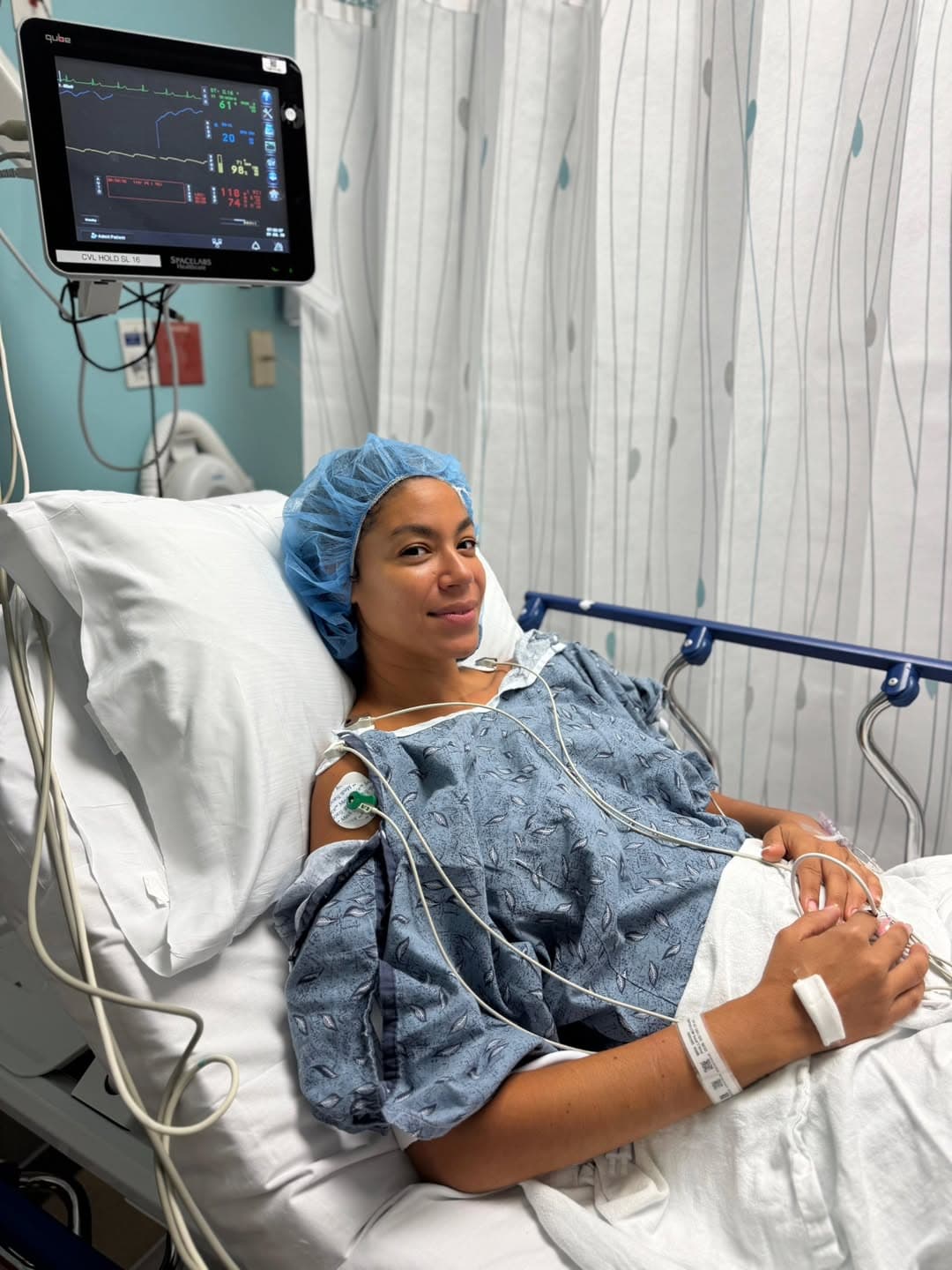
Key Points(5)
- Former Miss Jamaica Universe Yendi Phillipps shared an intimate account of her recent heart surgery, revealing she underwent an electrophysiological ablation to correct a rare electrical issue known as WPW syndrome.
- Phillipps explained that five years ago, she began experiencing arrhythmia, initially managing it through lifestyle adjustments.
- However, the irregularities worsened over time, eventually escalating to tachycardia.
- Her most alarming episode, she said, saw her heart racing at 223 beats per minute while simply picking up her son’s toys — a frightening experience that left her unable to breathe and with the world around her darkening.
- With guidance from cardiologist Dr.
Former Miss Jamaica Universe Yendi Phillipps shared an intimate account of her recent heart surgery, revealing she underwent an electrophysiological ablation to correct a rare electrical issue known as WPW syndrome.
Phillipps explained that five years ago, she began experiencing arrhythmia, initially managing it through lifestyle adjustments. However, the irregularities worsened over time, eventually escalating to tachycardia. Her most alarming episode, she said, saw her heart racing at 223 beats per minute while simply picking up her son’s toys — a frightening experience that left her unable to breathe and with the world around her darkening.
With guidance from cardiologist Dr. Tahira Redwood and the diagnosis confirmed by Dr. Kevin Coy, Phillipps underwent the delicate procedure performed by Dr. Jose Sleiman. The surgery involved stimulating her heart to locate the “short circuits,” two areas of faulty electrical activity that were successfully ablated.
Sharing photos from her journey, Phillipps gave fans a glimpse of the challenging recovery, noting she was restricted from lifting anything over 10 pounds for 10 days — meaning she could not hold her 20-month-old son during that period.
“All is now well. I have NO issues in my heart!! I can gallivant with my kids,” Phillipps wrote. She expressed deep gratitude for her family, doctors, and faith, highlighting the joy of having more time and an improved quality of life.
Phillipps concluded her post with a heartfelt message: “I am ALWAYS so grateful for life. I am always so grateful to make memories with those I love… With a heart of love.”
What is WPW?
Wolff–Parkinson–White (WPW) syndrome is a heart condition where an extra electrical pathway causes signals to travel through the heart in the wrong way. Instead of following the normal route, the signals can move too quickly or loop around, sometimes leading to episodes of a very fast heartbeat.-
Cause: The condition is present at birth (a congenital abnormality).
-
Symptoms: Some people never notice symptoms, but when present, they may include:
-
Rapid or irregular heartbeat (palpitations)
-
Dizziness or lightheadedness
-
Shortness of breath
-
Fainting (syncope)
-
Rarely, sudden cardiac arrest (in severe cases)
-