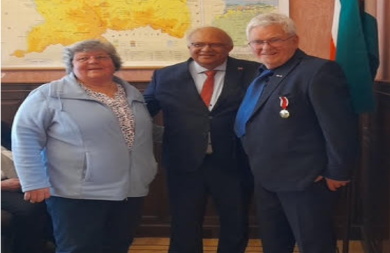
Suriname has awarded one of its highest civilian honors—the Knight in the Order of Honor of the Yellow Star—to Dutch educator and activist Cees Verschoor, in recognition of his decades-long commitment to improving education and social development for Surinamese children both in the Netherlands and in the Dutch-speaking Caribbean.
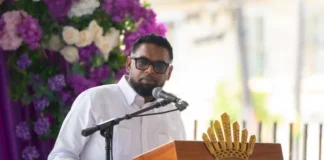
President Chandrikapersad “Chan” Santokhi presented the award, stating it “recognizes Verschoor’s years of dedication to education and the social development of Surinamese children in the Netherlands and the Dutch-speaking Caribbean Community (CARICOM) Suriname.”
Verschoor, affectionately known as “Cees” in Rotterdam, began his mission in 1990 with the launch of the School Reading Aid project. The initiative paired civil servants and business professionals with schoolchildren struggling with reading, quickly gaining momentum due to his grassroots approach and ability to rally volunteers. “At a time when ‘social involvement’ often gets stuck in policy documents and pilot projects, Verschoor managed to recruit dozens of volunteers,” said officials.

What began in a handful of Rotterdam primary schools expanded into an international effort. A 2005 visit to Suriname by Verschoor and 14 Dutch teachers highlighted the stark lack of basic resources in Surinamese classrooms—“no books, no methods, and hardly any notebooks and pens – let alone decent school furniture.”
The experience sparked the creation of the Schoolhulpproject Suriname (SHPS), a private initiative that would go on to deliver an extraordinary level of aid. Between 2006 and 2018, SHPS shipped 82 sea containers filled with school supplies to Suriname. More than 22,000 student sets reached 261 schools across the country, with the effort supported by over a hundred volunteers and numerous Dutch sponsors.
Social historian Roy Sankatsin praised Verschoor’s leadership and enduring commitment. “Year in, year out, he inspired volunteers, teachers, parents, politicians – even mayors and aldermen – for the cause. His work is not without obligation; he is not a passer-by, not a temporary helper in transit.”
Sankatsin added, “Every year until the pandemic, he traveled to Suriname for four weeks at his own expense to be active in schools there. And after the two-year break, he picked up the thread again. His last trip was in March of this year.”
While the award celebrates Verschoor’s immense contributions, Sankatsin reflected on the broader implications: “The Honorary Order of the Yellow Star is awarded in Suriname to citizens who have made an exceptional contribution to the country. In that sense, Cees Verschoor’s award is fitting. But it also poses an uncomfortable question: should citizens become heroes to fill the gaps that governments fail?”
“Cees Verschoor has shown what is possible with idealism, perseverance, and networking skills,” Sankatsin concluded. “The award is a recognition of his merits. But it is also a mirror: for the Netherlands, which has difficulty creating structural policy for equal educational opportunities.”