PM Holness responds to criticisms of continued use of SOEs in Jamaica
Key Points(5)
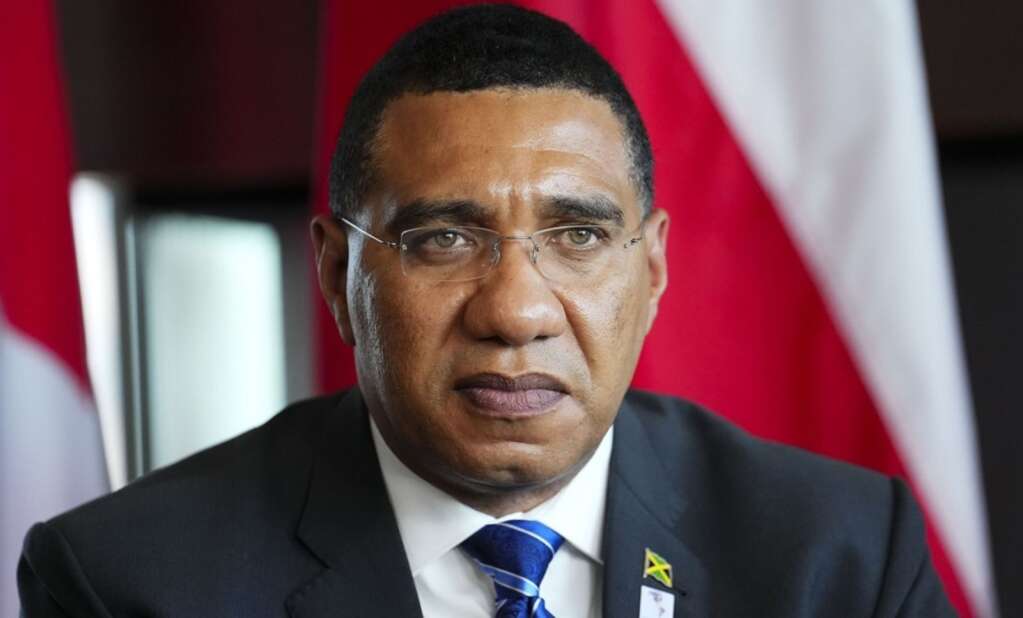
- Jamaica's Prime Minister Andrew Holness did not mince words when responding to criticisms of his government's ongoing use of States of Emergencies (SOEs) in Jamaica as a method of tackling crime.
- "The IACHR urges that these measures should not be made part of the country's permanent security policy," it advised.
- But in firing back at such statements on the government's crime-fighting methods, Holness said what is missing in the conversation is "the respect for the rights of the victims." "No one speaks about the rights of the victims, (and) those families who have lost loved ones.
- No international agency is coming to say, ‘Protect the innocent!’" Holness stated.
- Holness also said that Jamaica does not need to be told to respect the human rights of its citizens, as this is paramount to members of the Jamaica Constabulary Force (JCF).
Jamaica's Prime Minister Andrew Holness did not mince words when responding to criticisms of his government's ongoing use of States of Emergencies (SOEs) in Jamaica as a method of tackling crime.
Last week, the Inter-American Commission on Human Rights (IACHR) expressed "concern over Jamaica's continued use of states of public emergency (SOEs)."
In a statement, IACHR called on the Jamaican government "to ensure that measures used to prevent and combat crime are implemented in accordance with international human rights standards."
The commission said it took note that the Jamaican government imposed an SOE for the parish of Clarendon on August 14 after a mass shooting in Cherry Tree Lane in the parish, which resulted in the deaths of eight persons.
IACHR said under the Jamaican Constitution, during an SOE, "the Government temporarily grants security forces additional powers, including warrantless searches, arrest and detention."
The commission added that under the organs of the Inter-American System of Human Rights, "the suspension of guarantees is a provision that can be implemented in the extraordinary circumstances indicated in Article 27 of the American Convention, such as war, public danger, or another emergency that threatens a state's independence or security."
On that score, the IACHR said: "The state of Jamaica must abide by the international obligations it has assumed, which establish requirements and limits for adopting such exceptional mechanisms for suspending the rights and guarantees protected by the convention.
"The IACHR urges that these measures should not be made part of the country's permanent security policy," it advised.
But in firing back at such statements on the government's crime-fighting methods, Holness said what is missing in the conversation is "the respect for the rights of the victims."
"No one speaks about the rights of the victims, (and) those families who have lost loved ones. ... No international agency is coming to say, ‘Protect the innocent!’" Holness stated.
Holness also said that Jamaica does not need to be told to respect the human rights of its citizens, as this is paramount to members of the Jamaica Constabulary Force (JCF).
"In the transformation of the JCF, every officer here will tell you that in their training, in all their development courses, respect for citizens' rights, respect for human rights, is paramount, including in our operations, including in our equipping of the force, in the use of force, in every aspect of it, and I urge the JCF to continue on this path to show the world that we don't need to be told to respect human rights; that is something that is ingrained in us," said Holness.
The prime minister said when crime rates or any other issues surpass manageable levels in developed nations, their governments often invoke extraordinary measures to address the issues, without facing criticism from the international community.
Holness also pointed out that major crimes are now down by 20% so far this year because of SOEs and other measures.
"We don't rely on SOEs anymore, because we are building capacity, and you would have seen that in the last three years, the number of gang cases that we would have brought to courts, and the number of gangs that we have disrupted and dismantled, were more than in the last 30 years," Holness asserted.
"So, I want Jamaicans to understand that your Government is acting in your best interest, and that those who don't understand what is happening in Jamaica should get the right information before they speak, and support the Government of Jamaica in ensuring that our citizens are safe, and we will not relent against the criminals," Holness stated.
Read: Human Rights Commission concerned about Jamaica’s continued use of SOEs