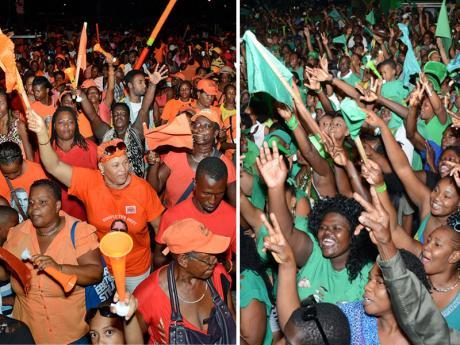
A recent island-wide survey suggests that nearly half of Jamaicans believe the country is on the wrong track, revealing a nation divided on its future just months ahead of the next general elections, due by September this year.

The RJRGLEANER Don Anderson poll, conducted between January and February, found that 47% of respondents think Jamaica is heading in the wrong direction, while 29% feel the opposite. Notably, 24% remain unsure, reflecting a significant portion of the electorate that is still undecided.
This poll, which surveyed 1,201 registered voters aged 18 and older across all parishes, has a margin of error of ±3 percentage points at a 95% confidence level. Interestingly, this represents an improvement compared to a similar poll conducted in September, where 58% of respondents expressed dissatisfaction with the country’s direction. The 11-point drop in dissatisfaction might suggest a slight rebound in public confidence, possibly influenced by recent government measures aimed at economic recovery and youth employment.

Implications for general elections
With general elections approaching, these poll results carry significant implications for both the People’s National Party (PNP) and the Jamaica Labour Party (JLP). The fact that 76% of those who think the country is on the wrong track plan to vote for the PNP suggests a strong anti-incumbent sentiment that the opposition could leverage.
On the other hand, the JLP can find optimism in the poll’s indication that 65% of those who believe Jamaica is on the right path intend to vote for them. The 11-point drop in dissatisfaction since September could be seen as a positive signal for the JLP’s re-election prospects, especially if the party can expand its appeal to the 24% of undecided voters.
The survey also revealed that 41% of Jamaicans reported an improvement in their personal circumstances since the last general election in 2020, with younger voters particularly optimistic. This demographic could be crucial for the JLP, as perceptions of personal progress often translate into electoral support for incumbents. Interestingly, even among PNP supporters, 23% admitted their situation has improved, hinting at a nuanced voter base that could be swayed with the right approach.
With 24% of Jamaicans still uncertain about the country’s direction, both parties face a battle to capture this segment. For the PNP, presenting a cohesive vision for change will be vital, while the JLP’s strategy may hinge on reinforcing the notion of steady progress and stability. As the election date draws near, debates, campaign promises, and the handling of pressing issues like crime and inflation are likely to influence this undecided bloc.