Minister Johnson Smith rejects claims of Jamaica’s silence on Gaza
Key Points(5)
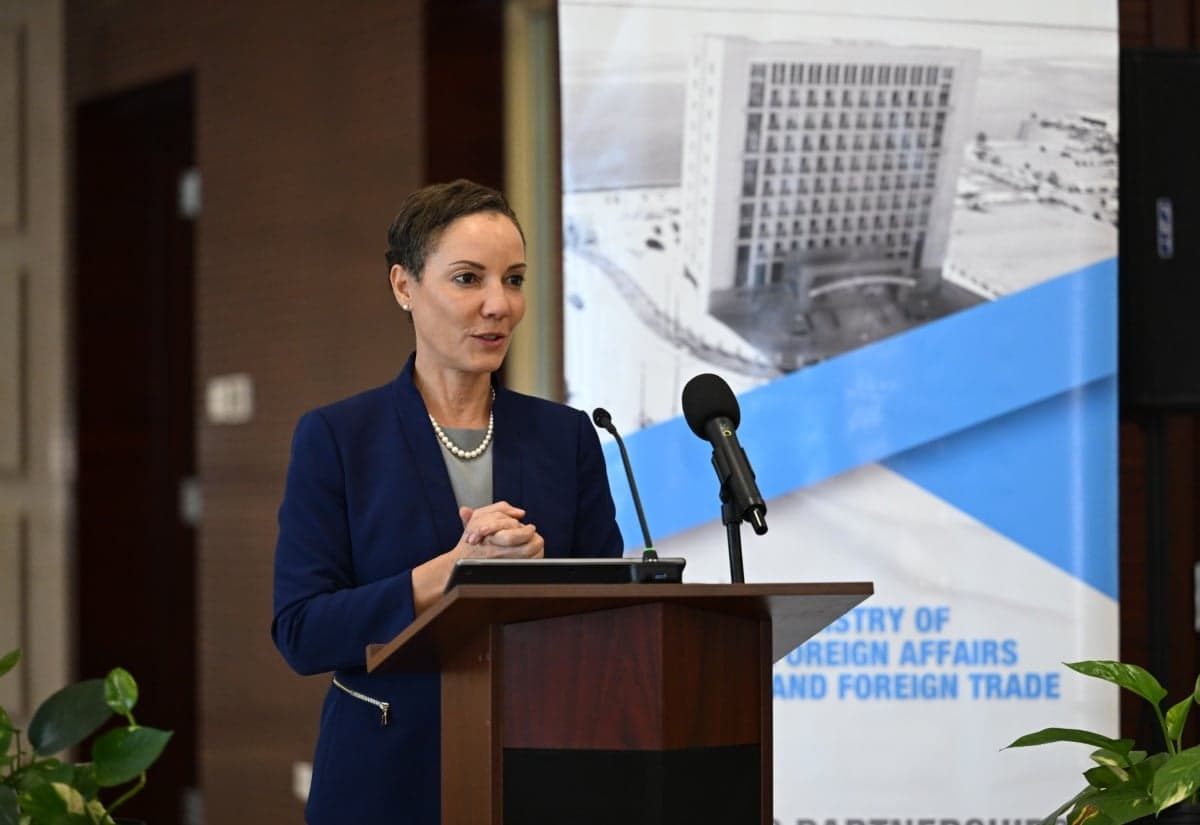
- Foreign Affairs Minister Senator Kamina Johnson Smith has pushed back against criticism that Jamaica has remained silent on the war in Gaza, insisting the country has been consistent in its support for peace and recognition of Palestine.
- Speaking at a post-Cabinet media briefing on Wednesday, Johnson Smith reminded that in 2024 Jamaica formally recognised the State of Palestine in line with United Nations Resolution 242, which calls for a two-state solution.
- “Jamaica has never been in hiding on this issue.
- We have condemned actions on both sides, called for a ceasefire, and remain firm in our belief that dialogue and engagement, rather than performance, are the most constructive tools of diplomacy,” she said.
- But Johnson Smith countered that such actions are symbolic rather than solutions-oriented.
Foreign Affairs Minister Senator Kamina Johnson Smith has pushed back against criticism that Jamaica has remained silent on the war in Gaza, insisting the country has been consistent in its support for peace and recognition of Palestine.
Speaking at a post-Cabinet media briefing on Wednesday, Johnson Smith reminded that in 2024 Jamaica formally recognised the State of Palestine in line with United Nations Resolution 242, which calls for a two-state solution.
“Jamaica has never been in hiding on this issue. We have condemned actions on both sides, called for a ceasefire, and remain firm in our belief that dialogue and engagement, rather than performance, are the most constructive tools of diplomacy,” she said.
Her remarks came after People’s National Party (PNP) spokesperson on foreign, regional and diaspora affairs, Senator Donna Scott Mottley, charged that Jamaica’s position lacked forcefulness and “sends the wrong signal to the international community and to the Palestinian people who continue to suffer.”
Scott Mottley pointed to countries that made visible protests at the United Nations, including walking out during Israeli Prime Minister Benjamin Netanyahu’s address, arguing Jamaica should have done more.
But Johnson Smith countered that such actions are symbolic rather than solutions-oriented. “Jamaica is not a chest-beating Administration. We are not ego-driven or image-based. Our focus is on solutions,” she told reporters.
The minister highlighted Caricom’s collective stance, noting that the regional bloc has issued repeated calls for peace and the security of both Israelis and Palestinians. She stressed that Jamaica’s position is grounded in international law and multilateralism.
“We have always backed Resolution 242, which outlines the framework for a two-state solution,” she said, adding that this remained the “safest path” to long-term peace.
Johnson Smith also warned against misinformation shaping public debate, echoing recent comments by Barbados Prime Minister Mia Mottley about a “global crisis of truth.”
“We prefer to listen, to be at the table, to engage, whether we agree or disagree. That is how we maintain credibility as a nation and ensure that our voice carries weight in international affairs,” Johnson Smith said.