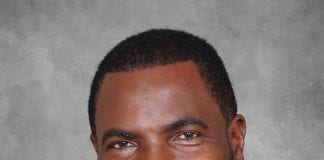
Coral Springs Vice Mayor Nancy Metayer Bowen has issued a strong rebuke of the U.S. Supreme Court’s 6–3 decision limiting the ability of federal judges to issue nationwide injunctions — a ruling that paves the way for President Donald Trump’s executive order to restrict birthright citizenship in the United States.
The decision allows for the implementation of Executive Order 14160, which declares that children born in the U.S. to parents who are either undocumented or present on temporary visas are not automatically entitled to citizenship. While the Court did not rule on the constitutionality of the order, it granted the Trump administration’s request to scale back injunctions that had previously blocked the policy nationwide.
Vice Mayor Metayer Bowen, who is Haitian-American, sharply criticized the ruling, calling it a direct attack on democratic principles and immigrant communities.

“This decision is not just a legal setback; it is a moral affront to the very soul of our democracy,” she said. “To strip away the birthright of American children is to deny them their rightful place in the tapestry of this nation. It is an injustice that echoes through the halls of history, reminding us of the battles fought and the lives lost to secure the rights we hold dear.”
She warned that allowing the executive branch to move forward with such a measure poses a broader threat to constitutional checks and balances.
“By empowering the executive branch to redefine citizenship unilaterally, we risk eroding the checks and balances that safeguard our freedoms,” she said. “This is not just a policy change; it is a fundamental shift in the fabric of our constitutional democracy.”
Metayer Bowen also addressed the emotional toll the ruling could have on immigrant families, particularly in Florida, where many have settled in search of better lives.
“This decision sends a chilling message to millions of immigrants who have come to this country seeking hope and opportunity,” she said. “It tells them that their children, born on this soil, may not be recognized as full citizens. This is not the America we aspire to be.”
She called on Americans to defend the constitutional guarantee of birthright citizenship.

“We must stand together to protect the rights of every citizen, born and unborn. We must ensure that the promise of America remains a beacon of hope for all who seek refuge and a better life.”
The Supreme Court’s ruling came down along ideological lines, with the conservative majority arguing that lower courts had exceeded their authority by issuing broad, universal injunctions. Justice Amy Coney Barrett, writing for the majority, said such sweeping judicial actions likely go beyond what Congress has authorized.
“Universal injunctions likely exceed the equitable authority that Congress has given to federal courts,” the opinion read.
The ruling does not yet activate the citizenship restrictions. The executive order will not take effect for 30 days, allowing time for further legal challenges in states that have not yet sued. Florida, which did not file suit, could be among the states where the policy is implemented first if no legal action is taken.
President Trump praised the Court’s decision, calling it a “monumental victory for the Constitution, the separation of powers, and the rule of law.” He added that the ruling clears a path for his administration to move forward with immigration policies that had previously been stalled in court.