The Jamaica Senate on Friday approved amendments to three key pieces of legislation that introduce significantly harsher penalties for murder, including longer prison terms for those convicted of killing children.

The Child Care and Protection (Amendment) Act, Criminal Justice (Administration) (Amendment) Act, and Offences Against the Person (Amendment) Act were debated and passed following extensive review by a joint select committee dating back to 2023.
Amendments were made to the Offences Against The Person and the Child Care Protection bills. No amendment was made to the Criminal Justice (Administration) (Amendment) Bill.

Under the revised laws, individuals who are convicted of capital murder will now face a mandatory minimum sentence of 50 years before becoming eligible for parole. For non-capital murder, the minimum has increased from 15 to 30 years. In cases involving life imprisonment, parole eligibility has moved from 15 to 40 years; for fixed-term sentences, it increased from 10 to 20 years.
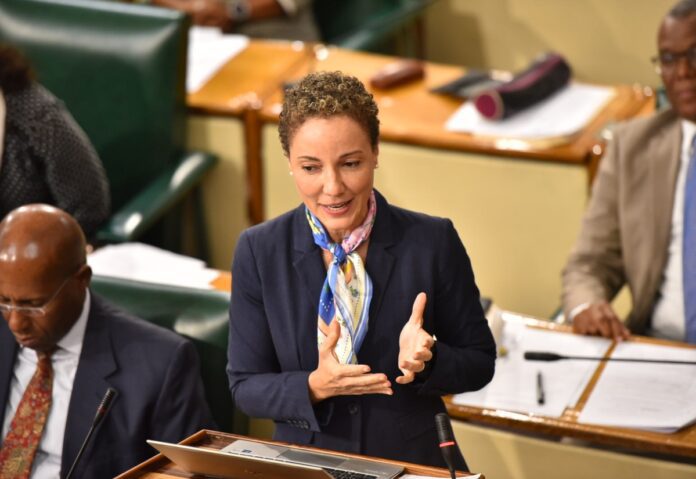
In piloting the legislation, Leader of Government Business in the Senate, Kamina Johnson Smith, defended the move, stating:
“The legislation are in keeping with the government’s commitment to protecting Jamaicans against violent criminals… This should not be viewed as the government diminishing the discretion of judges to impose a sentence.”

She further explained:
“Where the victim of a non capital murder is a child, the court shall add a period of up to five years to the sentence imposed… Additionally, if a life sentence or term of years is given, another five years must be added to the parole eligibility period.”
The amendments have sparked concern from legal experts and human rights advocates, who question their constitutionality and the potential impact on judicial discretion.

In April, child rights groups criticized a separate proposal under the Child Care and Protection Act that would have allowed a court to set a 20-year minimum before a minor convicted of murder could be considered for parole. However, Justice Minister Delroy Chuck later clarified that courts will retain discretion in sentencing minors found guilty of non-capital murder.