The House of Representatives on Tuesday passed three critical pieces of legislation aimed at increasing the penalties for murder, including redefining the length of a life sentence under Jamaican law.

The newly passed bills — the Offences Against the Person (Amendment) Bill, the Criminal Justice (Administration) (Amendment) Bill, and the Child Care and Protection (Amendment) Bill — mark a significant shift in how the justice system will treat murder offences, including those involving minors.
Under the Criminal Justice (Administration) (Amendment) Bill, the legal definition of life imprisonment will be extended from 30 years to 50 years for persons convicted of murder. This means a person sentenced to life will now serve at least 50 years before the sentence is deemed equivalent to a fixed term.

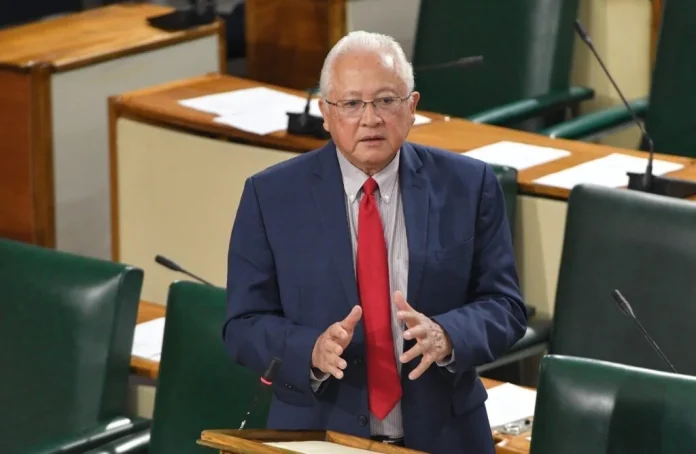
Justice Minister Delroy Chuck, closing the debate on the bills, described them as a deliberate legislative response to the country’s persistent levels of violent crime. “Jamaica continues to grapple with unacceptably high levels of homicide,” Chuck said. “These are not just statistics. They represent real lives lost – sons, daughters, mothers, fathers – taken in acts of cold violence.”
Changes were also made to the Offences Against the Person (Amendment) Bill, which sets a new mandatory minimum sentence of 30 years for non-capital murder, down from a previously proposed 45 years. Persons sentenced under this provision will be eligible for parole after serving 20 years, instead of the previously recommended 35.
In the case of child offenders, the Child Care and Protection (Amendment) Bill establishes that a minor convicted of capital murder must serve a minimum of 30 years or life imprisonment, with parole eligibility after 15 years. For non-capital murder, judges will have discretion to determine both sentence length and parole eligibility.

“These provisions are carefully designed to be proportionate, constitutional, and respectful of the rights of all persons — including the possibility of rehabilitation,” Chuck said.
The legislation follows an extensive public consultation process through a Joint Select Committee, which received input from civil society groups, legal bodies, and child advocacy organizations including UNICEF, the Jamaican Bar Association, and the Office of the Public Defender.
While acknowledging that legislative reform alone will not solve Jamaica’s crime problem, Chuck maintained that the new penalties send a strong message. “We must ensure that our laws are firm, fair and responsive to the challenges we face,” he said. “These bills are a necessary part of the solution — a signal that the State takes seriously its duty to protect life and uphold justice.”