


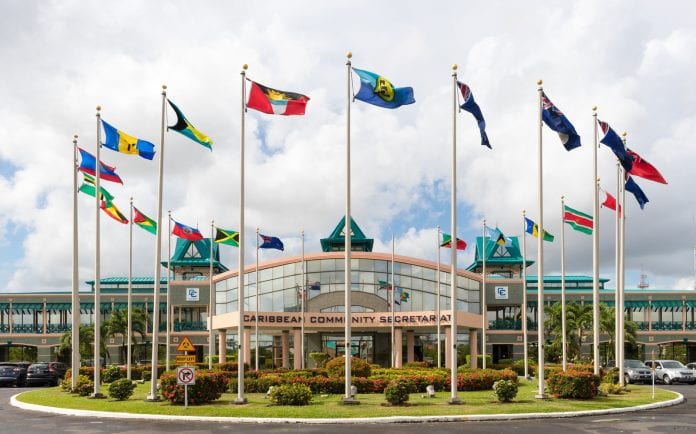
The first-ever Africa-Caribbean Community (CARICOM) summit ended on Tuesday, September 7th, and there is no doubt that the leaders who spoke, share a common desire to unite Africa and the CARICOM nations with more than the history they share.

Born out of discussions, deliberations, and diplomatic visits by leaders from both regions since 2018, the summit should have taken place last year but had to be shelved because of covid. The anticipation and expected outcome then were to officialize the union between the regions, create economic trade and investment opportunities, and collaborate on important global issues such as climate change, debt relief and issues that pose existential threats to its people.
There is no doubt that opportunities exist within such a union. Even before the virtual meeting kicked off, there was evidence of benefits to the Caribbean people. The African Union invited CARICOM to be part of the African Medical Supplies Platform (AMSP) for the procurement of well-needed covid vaccines. A total of 1.7 million doses of the vaccines was committed from Africa. The first batch of 800,000 was delivered in July with another 400,000 in August and the rest is due in September.

Co-chair of the summit, President Uhuru Kenyatta of Kenya did a fabulous job in outlining the framework of how nations of the two regions could benefit. He stated that the aim of the deliberation was to “confront the challenges that face us, strengthen cultural and historic ties, [as well as] build social, economic and political linkages that promote shared prosperity and progress for all of us.”
Kenyatta listed the blue economy, climate change, health, debt sustainability, and technology as areas of opportunities to achieve the goals of the two regions.
Chairman of CARICOM, Prime Minister Gaston Brown of Antigua and Barbuda minced no words in holding the European and North American countries responsible for the “trap of underdevelopment” in Africa and the Caribbean. This he said was achieved through the control of the global financial, and economic trading systems. 70 percent of Europe and 60 percent of North America were fully vaccinated, yet only three percent of Africa got the vaccine, he contended. This he pointed out was a pattern of inequity which was “obvious in its ugliness and prevalence.”
Mr. Brown told the meeting that “we have it within our power, to demand change in the international system and to fight for it, and to make it happen. But only if we act harmoniously. We are a population of approximately 1.4 billion people, with great natural and wealth-creating resources including oil, gas, agriculture, minerals, forestry, tourism, fisheries and much more.
We are the suppliers of vital commodities to the global community, and a strong market for the goods and services of Europe and North America. Additionally, together we have the voting power of 69 nations in the United Nations and all its subsidiary organizations, including the World Trade Organization. We have global bargaining power. But only if use it effectively.”
There was also talk about unrestricted travel, free trade, reparation, support for lifting of sanctions against, Cuba, enhanced debt relief, climate change, science, research, and sustainable development.

While there is no doubt that great success can come from the collaboration of CARICOM and our brothers and sisters in the east, we are left to wonder if our leaders in the Caribbean are biting off more than they can chew or just trying to be “Jack of all trades but success at none.”
For 63 years now, the leaders of the Caribbean have been trying to integrate its people, economically, politically, and socially. We have 45 million people in the Caribbean and twenty states in CARICOM. We have gone through the West Indies Federation, CARIFTA and now CARICOM is the change agent. The integration envisioned by our past leaders to provide economic strength for our people and relief from existential threats is still a work in progress. It is not impossible to achieve the agenda of the African/CARICOM leaders, but do you think it would be more valuable to the Caribbean people, if we fix our house first and see the success, before trying to build another community?





 summit ended on Tuesday, September 7th, with a desire to unite Africa and CARICOM nations)