Haitian journalists are facing growing threats as gang violence intensifies
Key Points(5)
- Haitian journalists are facing growing threats as gang control tightens across Port-au-Prince.
- According to the Associated Press, gangs have launched direct attacks on newsrooms and media personnel, sending a chilling message: the press operates only at their discretion—or not at all.
- Several radio and TV stations have been looted, including buildings that had already been abandoned due to earlier violence.
- And in a deadly escalation, gunmen opened fire on journalists covering the attempted reopening of Haiti’s largest public hospital last December, killing two and injuring at least seven others in what’s being described as one of the worst attacks on the Haitian press in recent history.
- At a major protest in March, at least 10 journalists were attacked.
Haitian journalists are facing growing threats as gang control tightens across Port-au-Prince. According to the Associated Press, gangs have launched direct attacks on newsrooms and media personnel, sending a chilling message: the press operates only at their discretion—or not at all.
Several radio and TV stations have been looted, including buildings that had already been abandoned due to earlier violence. And in a deadly escalation, gunmen opened fire on journalists covering the attempted reopening of Haiti’s largest public hospital last December, killing two and injuring at least seven others in what’s being described as one of the worst attacks on the Haitian press in recent history.
At a major protest in March, at least 10 journalists were attacked. In the same month, armed gangs launched coordinated attacks on three major media outlets in Haiti’s capital.
Mistrust of the media is growing among ordinary Haitians, who sometimes accuse local journalists of being aligned with gangs. At the same time, gang members have taken to social media to threaten reporters. One leader vowed to kidnap radio hosts and silence them permanently, while another warned a diaspora-based talk show host not to return to Haiti under any circumstance.
As a result, Haiti’s Online Media Collective has advised journalists to avoid covering gang-related activity altogether. But many reporters ignore that guidance.
Media access to certain neighborhoods is completely cut off. Reporters say they’re unable to speak with residents in gang-held areas, making accurate, ground-level reporting increasingly difficult. Meanwhile, media companies continue to downsize or shut down entirely. Le Nouvelliste, Haiti’s oldest newspaper, stopped printing after gunmen stormed its offices last year. It now operates only online.
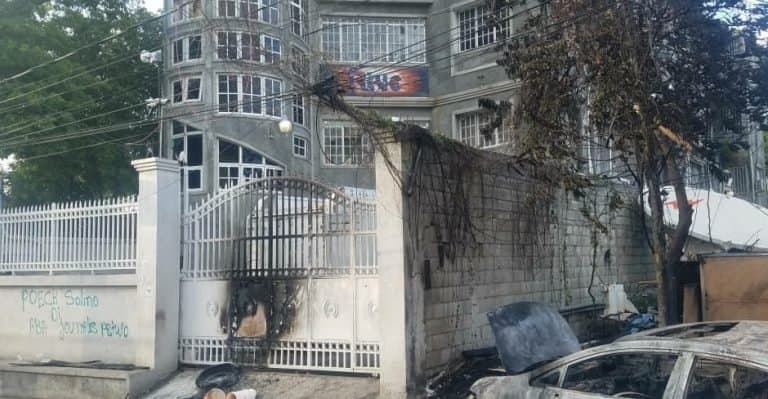
In March, a major symbol of Haitian journalism—the headquarters of Radio et Télévision Caraïbes—was set ablaze. Founded in 1949, the station had chronicled decades of Haiti’s history, from dictatorships to democratic elections. “Every employee has a story with the space,” said journalist Dénel Sainton, who called the now-destroyed building the “soul” of the station. The outlet has been forced to relocate twice due to gang violence. Mélodie FM and Télé Pluriel were also attacked that same week.
“What we’re seeing now, kind of the wholesale targeting of the media, is different,” press freedom expert David C. Adams told the Associated Press. “In the old days, individual journalists were targeted.”
UNESCO reports that at least 21 Haitian journalists were killed between 2000 and 2022, with nine of those deaths occurring in 2022 alone—the deadliest year yet. The Committee to Protect Journalists recorded one journalist killed in 2023 and two more in 2024.
Most of the attacks and killings go unsolved. Haiti now ranks as the most dangerous country in the world for journalists in terms of impunity, according to a 2024 CPJ report.