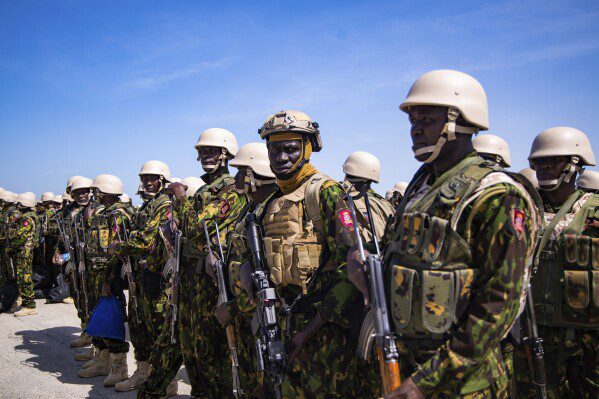
One year after the arrival of the first contingent of Kenyan police officers in Haiti, senior Haitian and United Nations officials gathered in Port-au-Prince on Thursday to mark the anniversary and reaffirm their shared commitment to restoring peace in the gang-controlled capital and beyond.

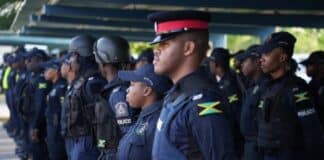
The 800-strong Kenyan unit leads the Multinational Security Support Mission (MSS), a U.N.-backed initiative aimed at bolstering Haiti’s overstretched national police in their fight against heavily armed criminal gangs. The mission also includes security personnel from Jamaica, Guatemala, and El Salvador.
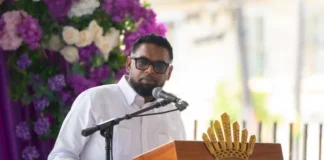
Speaking at the ceremony, María Isabel Salvador, Special Representative of the U.N. Secretary-General in Haiti and head of the United Nations Integrated Office in Haiti (BINUH), emphasized the crucial role of the MSS.

“The critical role the MSS resolution plays [is] in providing operational support to the Haitian National Police by building its capacity through the planning and conduct of joint security operations,” she said. “[It] works to counter gangs and improve security conditions in Haiti.”
Godfrey Otunge, the MSS Force Commander, opened his address with a moment of silence for Haitian and Kenyan officers who lost their lives in the line of duty. He acknowledged the complexity of the mission but stressed the importance of perseverance.
“We are aware of the importance of the journey to a lasting peace—it is not always easy. It is complex and challenging,” Otunge said. “However, with continued support, commitments, and collaboration, I firmly believe that we can build a Haiti where conflict is replaced by tranquillity and the Haitian people can thrive.”
Despite the international backing, the mission has faced major obstacles. Armed gangs now control roughly 85% of Port-au-Prince, according to estimates, and continue to expand their territorial influence. Limited funding has also hampered the MSS’s ability to make swift progress.
To help address these constraints, the U.S. State Department earlier this year approved $40.7 million in foreign assistance waivers to fund key support services for both MSS forces and the Haitian police. The package includes resources for forward operating bases, medical services, and vehicle maintenance.
This deployment marks the fourth major foreign intervention in Haiti since the 1990s. For many Haitians, the MSS represents a fragile but essential opportunity to reclaim control of their communities and reestablish security and dignity in daily life.