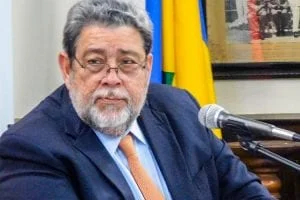
Former St Vincent and the Grenadines Prime Minister Dr. Ralph Gonsalves has strongly advised the New Democratic Party (NDP) administration to refuse any request from the United States to accept deportees or refugees, arguing that such an arrangement would pose a serious national security threat and is not in the country’s best interest.
Speaking on Monday, Gonsalves criticized the government for appearing open to the proposal and for establishing technical teams to discuss possible “modalities” rather than rejecting the request outright. He warned that even if the US presents the numbers as small—perhaps a dozen people per island annually—the cumulative effect over time could create significant security challenges.
According to Gonsalves, deportees would likely integrate with “local and regional criminal elements,” increasing the risk of crime and instability. He also questioned the quality of individuals likely to be sent, arguing that the US would retain productive residents while exporting “the dregs,” including individuals who could destabilize small societies.

A key concern, he said, is the lack of transparency surrounding deportees’ backgrounds. Gonsalves noted that US authorities typically disclose only the specific offence for which someone served time, without providing a full criminal or psychological history. “You don’t know whether the person is a psychopath or a repeat offender,” he said, adding that many of the so-called refugees may in fact be failed asylum applicants rather than individuals processed under international refugee conventions.
Gonsalves also highlighted the legal impracticalities, pointing out that under international treaties and local law, St Vincent and the Grenadines cannot indefinitely detain individuals who have committed no crimes locally. Once accepted, the country would have no legal mechanism to remove them, potentially creating a prolonged standoff.
He described the US request as a strategic move designed to “tick a box,” allowing Washington to pressure larger Latin American states by citing the compliance of small Caribbean nations. While such arrangements would have minimal impact on US immigration figures, he argued, they place a disproportionate burden on small island states.
Calling for what he termed “creative resistance,” Gonsalves urged the government not to act as a “vassal” to external demands. He suggested that St Vincent and the Grenadines, along with the wider region, should instead propose alternative forms of cooperation, such as visa-free travel arrangements or energy partnerships, rather than opening what he called “doors of insecurity.”
Deputy Prime Minister St Clair Leacock has indicated that the government expects to adopt a regional position on the issue of US deportees.
In the last few weeks, the United States has reached similar agreements with several CARICOM countries. Dominica and Antigua and Barbuda have agreed to accept third-country nationals being deported from the US, while St Kitts and Nevis announced a comparable deal but excluded Haitians and individuals convicted of serious crimes. Saint Lucia has since become the fourth CARICOM member to enter an arrangement facilitating the resettlement of refugees in third countries.