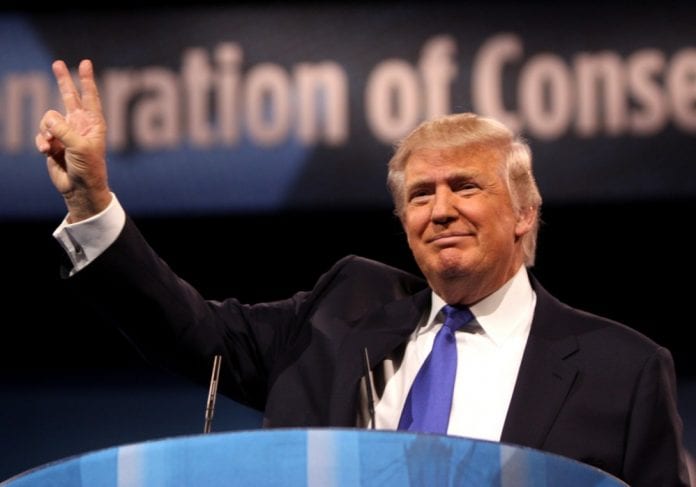
On Saturday morning, during one of his frequent weekend visit to his Palm Beach County estate, Mar-a-Lago, President Donald Trump confounded the country again with a flurry of tweets.
Within five minutes Trump sent out five tweets accusing his predecessor, President Barack Obama of orchestrating the wire-tapping of the phones at Trump Tower during last year’s presidential campaign. Trump Tower in Manhattan, New York, is the location of Trump’s personal residence, the site of his main campaign office during the elections, and his transitional office following his presidential victory last November.
Trump’s accusations were found extremely consternating because no president has the right to order wiretapping of the phone, or any other electronic surveillance, of any private American resident, including presidential candidates.

A law, passed by Congress in 1978, created the Foreign Intelligence Surveillance Act (FISA). Under this Act, the Foreign Intelligence Surveillance Court (FISC), entertains applications made by agencies with the United States Government for approval of electronic surveillance, physical search, and certain other forms of investigative actions of private residents and entities for foreign intelligence purposes.
Subsequent to Trump’s surprising tweets, several people, including JamesTapper, former Director of National Intelligence; James Comey, Director of the FBI, and Kevin Lewis, a spokesman for President Obama denied any application was made to the FISC for the surveillance or tapping of phones in Trump Tower.
Some reports are suggesting that the FBI could on its own accord have had a warrant approved by FISC to conduct electronic surveillance into alleged relations between of members of the Trump campaign and the Russian government. However, since Saturday, FBI director Comey has denied the FBI conducted any such surveillance. Comey has requested the US Department of Justice to issue a statement refuting Trumps’s allegations of President Obama authorizing any wire-tapping of Trump’s campaign offices.
Hours after Trump made his allegations, President Obama’s spokesman, Lewis, said via a statement, “A cardinal rule of the Obama Administration was that no White House official ever interfered with any independent investigation led by the Department of Justice.”
South Florida’s Marco Rubio, US Republican senator, appearing on a Sunday morning talk show said he had no knowledge what Trump was referring to in making the wire-tapping allegations, and urged the White House to explain this.
Several Trump administration representatives also appeared on Sunday talk shows, but were unable to explain Trump’s allegations. In fact, White House press secretary Sean Spicer issued a statement that Trump is requesting Congress to investigate if the Obama administration had ordered surveillance of Trump’s campaign office.

This is not the first time, Trump has accused Obama of interfering in this administration. In a recent interview, Trump accused Obama of being responsible for leaks to the media from within the White House. He also accused Obama of responsibility for orchestrating protest rallies against the administration, and particularly protests at town-hall meetings held by Republican congressional representatives and senators.
Some commentators regard Trump’s turn against the former president as contrary to his praise of Obama for his advice and cooperation during the transition period after Trump was elected.