Cholera resurges in Haiti amid collapsing water and health systems
Key Points(5)
- More than one-third of suspected cases are in children under nine, according to government data.
- “Haitians need serious government and international efforts to address the outbreak and avoid more preventable deaths.”</p> <p data-start="1248" data-end="1741">After more than three years without a single case, cholera reappeared in Haiti in late 2022.
- The return of the disease revives painful memories of the 2010 outbreak that killed nearly 9,800 people and infected over 820,000 after sewage from a United Nations peacekeeping base contaminated a local river.
- Heavy rainfall from Hurricane Melissa has further increased the risk of bacteria spreading to non-chlorinated water sources.</p> <p data-start="2390" data-end="2795">The outbreak is being compounded by escalating violence and insecurity.
- Armed groups now control much of the country, blocking key roads, cutting off humanitarian aid, and isolating entire communities.
A resurgence of cholera in Haiti’s West department is underscoring the urgent need for coordinated, long-term action to restore basic water and sanitation systems, Human Rights Watch (HRW) said Wednesday.
The outbreak, part of a seasonal surge during the rainy period, is spreading through Port-au-Prince and its surrounding areas amid the near collapse of the capital’s health infrastructure and worsening insecurity.
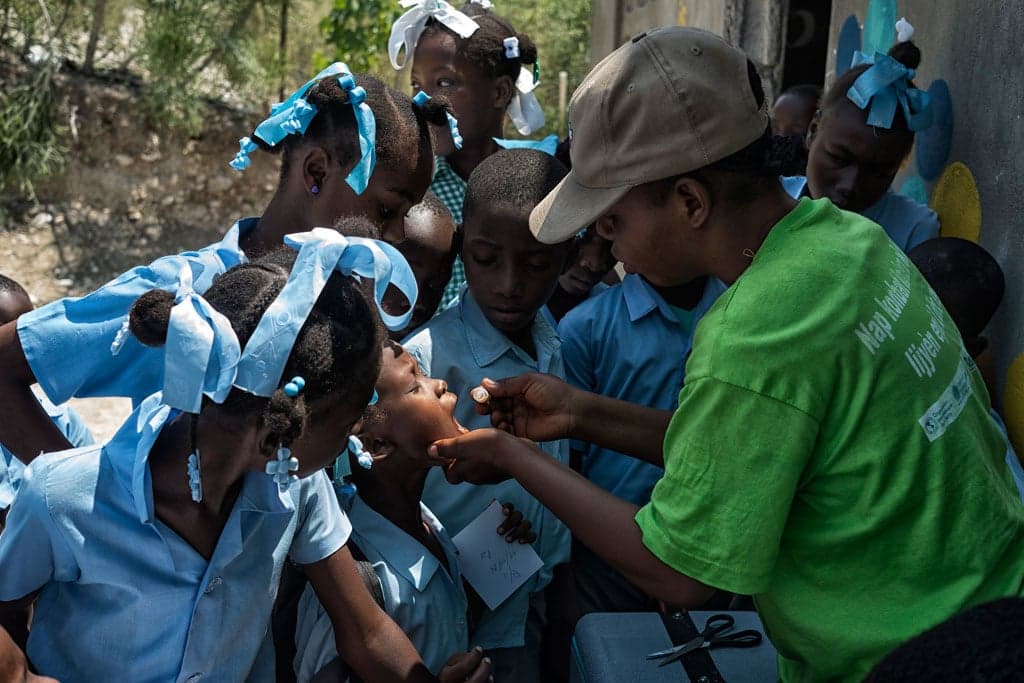
Between January 1 and October 30, 2025, Haitian health authorities recorded 2,852 suspected cholera cases, 186 confirmed cases, and 48 deaths. More than one-third of suspected cases are in children under nine, according to government data. After 11 weeks without new infections, health officials have confirmed that cholera is once again spreading.
“Cholera is once again threatening thousands of lives in Haiti because people lack access to the most basic services: clean water, sanitation, and medical care,” said Nathalye Cotrino, senior Americas researcher at Human Rights Watch. “Haitians need serious government and international efforts to address the outbreak and avoid more preventable deaths.”
After more than three years without a single case, cholera reappeared in Haiti in late 2022. The return of the disease revives painful memories of the 2010 outbreak that killed nearly 9,800 people and infected over 820,000 after sewage from a United Nations peacekeeping base contaminated a local river. Although the UN acknowledged moral responsibility in 2016, the country’s fragile infrastructure and lack of investment in clean water and sanitation continue to leave Haitians vulnerable.
“Stagnant water, broken sewage lines, and the accumulation of trash across the city create ideal conditions for outbreaks to spread whenever the rains come,” said Diana Manilla Arroyo, Head of Mission for Médecins Sans Frontières (MSF) Holland in Haiti. “On top of that, a lot of the country’s infrastructure was destroyed in the 2010 earthquake.”
Only a quarter of Haitian households have access to handwashing facilities with soap, and 70 percent lack improved sanitation systems, according to the United Nations. Heavy rainfall from Hurricane Melissa has further increased the risk of bacteria spreading to non-chlorinated water sources.
The outbreak is being compounded by escalating violence and insecurity. Armed groups now control much of the country, blocking key roads, cutting off humanitarian aid, and isolating entire communities. The UN estimates that over 1.4 million people have been displaced this year, many living in overcrowded settlements without access to clean water or toilets — ideal conditions for cholera transmission.
Access to healthcare remains limited. Only 11 percent of health facilities in Port-au-Prince with inpatient capacity are fully operational, the UN reports. While residents in wealthier areas can seek treatment in private hospitals, those living in gang-controlled neighborhoods such as Cité Soleil and lower Delmas often cannot travel safely or afford care.
The latest outbreak has reached Pétion-Ville, one of the capital’s more affluent neighborhoods and home to many diplomatic offices, which had largely avoided previous waves of cholera.
HRW urged Haiti’s transitional government and its international partners to repair the national water and sewage network, ensure humanitarian access to high-risk areas, and restore public health institutions.
Despite worsening conditions, countries such as the Dominican Republic, the United States, the Bahamas, and the Turks and Caicos Islands have continued deporting Haitians. The International Organization for Migration reported that more than 225,000 people were returned to Haiti between January and October 2025.
“People should not be deported or otherwise returned to Haiti, where overlapping humanitarian, security, and public health crises endanger lives,” HRW said. “They face a high risk of violence with no effective access to protection or justice.”
“This cholera outbreak is being fueled by years of institutional neglect and the near collapse of essential services,” Cotrino added. “Foreign governments should be doing all they can to help Haiti put an end to cholera.”