A year since the first personnel of the United Nations-authorized Multinational Security Support (MSS) mission arrived in Haiti, violence and human rights abuses continue to escalate, Human Rights Watch said today.
Severe shortages in personnel, funding, and equipment have hindered the MSS’s ability to curb the growing insecurity, particularly in Port-au-Prince and surrounding regions.
According to United Nations data, at least 2,680 people have been killed and 957 injured, while grave violations against children have skyrocketed—from 383 cases in 2023 to 2,269 in 2024. These include sharp increases in child recruitment by armed groups and incidents of sexual violence. Displacement has surged to historic levels, with nearly 1.3 million Haitians—about 11 percent of the population—now internally displaced, the highest figure ever recorded in the country.

“Each day, violence forces hundreds of Haitians to flee with nothing but the clothes on their backs to makeshift sites or other cities, where they remain at risk and have little to no access to food and water,” said Nathalye Cotrino, senior Americas researcher at Human Rights Watch. “UN member countries should immediately reinforce the MSS. The UN Security Council should end its inaction and transform the MSS into a full-fledged UN mission that has the personnel, resources, and mandate to effectively protect the Haitian people.”
Between April and May 2025, Human Rights Watch conducted a field mission in Cap-Haïtien with support from Haiti’s Ombudsperson Office and the National Human Rights Defense Network (RNDDH). Researchers interviewed 33 displaced individuals, many of whom were previously professionals or students, forced to flee after violent gang attacks destroyed their homes or killed family members.
“I was living well in my neighborhood, it was peaceful. Then suddenly, security problems started,” recounted a 23-year-old civil engineering student who fled to Cap-Haïtien after his brother was killed during an armed incursion. “Men came, a lot of bandits… My family and I ran out of the house. While crossing the street, [my 19-year-old brother] was hit by a bullet… In my neighborhood, no one is left, only the bandits.”
Several witnesses said criminal groups circulated audio warnings via messaging apps, giving residents mere hours to flee. A 38-year-old plumber from Port-au-Prince described how armed groups stormed his neighborhood, killing residents, burning homes, and forcing the police to retreat. “They killed people, burned homes. I lost my house… We had to leave to save ourselves.”
UN officials say criminal groups are using these tactics to forcibly depopulate entire areas, helping them consolidate territorial control. Attacks have spread to once-safe areas like Mirebalais, Saut-d’Eau, and Petite Rivière, displacing more than 245,000 people this year alone.
Many displaced individuals have moved multiple times before reaching relative safety in northern cities like Cap-Haïtien. A 37-year-old woman from Cabaret said she fled to protect her 14-year-old daughter from sexual violence, only to be displaced again after new attacks. “My husband had gone out to work… I haven’t heard from him since. I just hope he isn’t dead,” she said.

Displaced families—55 percent of whom are women and girls—now reside in overcrowded informal shelters, schools, and public buildings. Over 246 makeshift sites have been reported, hosting around 2,000 people each under what Haiti’s Ombudsperson has called “inhuman” conditions. Food insecurity is dire, with 8,400 people in these sites facing famine-level hunger, according to the UN’s food classification system.
The response has been undermined by both international and domestic inaction. The UN’s humanitarian plan remains only 8 percent funded, while Haiti’s transitional government has not implemented a national strategy for supporting the displaced.
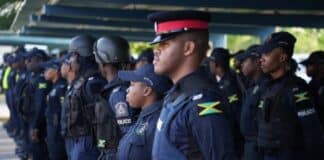
The MSS, meanwhile, remains under-resourced. Despite eight countries pledging to contribute to the mission, only Kenya, Guatemala, El Salvador, Jamaica, and The Bahamas have deployed forces—just 991 officers, far short of the 2,500 initially projected. Key infrastructure, including 9 of 12 operational bases, remains incomplete.
“Violence in Haiti is getting worse by the day,” Cotrino warned. “The Security Council should end its waiting game and make the MSS a UN mission. How many more killings, rapes, kidnappings, and child recruitments will it take for governments to wake up and realize what needs to happen?”
What are the main barriers to MSS expansion?
How can international aid effectively reach displaced Haitians?
What role do local authorities play in controlling violence?