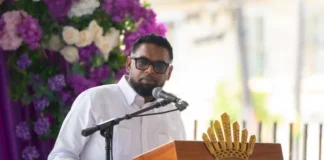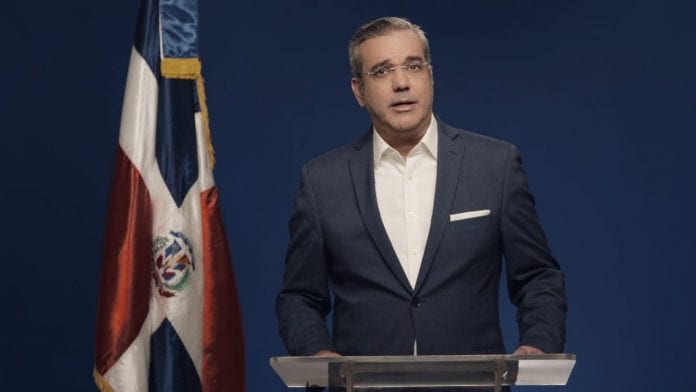
The president of the Dominican Republic, Luis Abinader, cautioned on Wednesday that his administration would take “drastic measures” to safeguard the country if a UN-backed mission aimed at addressing gang violence in neighboring Haiti does not succeed. Speaking at the UN General Assembly in New York, he did not specify what actions he might pursue.

“More than three years of instability in our neighboring country has significantly strained our own security,” Abinader said, noting that the Dominican Republic has taken on an excessive burden in dealing with the Haitian crisis. He pointed out that last year, 10% of medical appointments involved Haitian patients, and among the 200,000 foreign minors in the Dominican education system, 147,000 are of Haitian origin.
“The crisis in Haiti deserves urgent attention,” he stressed. “We can’t do it alone.”

Under Abinader’s administration, more than 170,000 individuals believed to be Haitians were deported last year, according to government statistics. However, the UN’s International Organization for Migration estimates the figure to be over 224,000.
Activists have long condemned President Abinader and his administration for what they claim are ongoing human rights violations against Haitians and individuals born in the Dominican Republic to Haitian parents. Abinader has rejected these accusations, reiterating on Wednesday that “the Dominican government is profoundly committed to protecting human rights.”
In his address, he pointed out that the Dominican Republic’s poverty rate is at a historic low of 19%, and the murder rate has decreased to 10 per 100,000 inhabitants, down from 13 in 2022.
Meanwhile, in Haiti, gangs control 80% of the capital, Port-au-Prince, and their influence has increased since the assassination of President Jovenel Moïse in July 2021. Reports indicate that over 3,600 people were killed in the first half of this year, a more than 70% rise compared to the same period last year. The surge in violence has left nearly 700,000 Haitians homeless in recent years, driving thousands to flee Haiti, which shares the island of Hispaniola with the Dominican Republic.
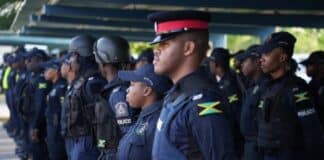
Abinader expressed gratitude to Kenya, which is leading the mission in Haiti with nearly 400 police officers from the East African nation, recently joined by almost two dozen police and soldiers from Jamaica, as well as two senior military officers from Belize. An additional 300 Kenyan police are expected to deploy within a month.
However, the total personnel involved falls significantly short of the 2,500 pledged by various countries for the mission. The U.S. government has raised concerns about a lack of resources as it considers a possible UN peacekeeping operation.

Abinader emphasized the urgent need for the current mission to be fully established to enable free and transparent elections in Haiti. The country has not held elections since 2016, and a transitional presidential council has been mandated to conduct them by February 2026.
“With just about a year remaining until elections, the necessary conditions are still not in place,” Abinader remarked, voicing concern over the future of the mission. “We cannot allow the progress made so far to fail. If that happens, Haiti’s collapse would be imminent.”
Edgard Leblanc Fils, president of Haiti’s transitional presidential council, is scheduled to address the UN General Assembly on Thursday.