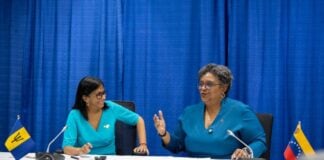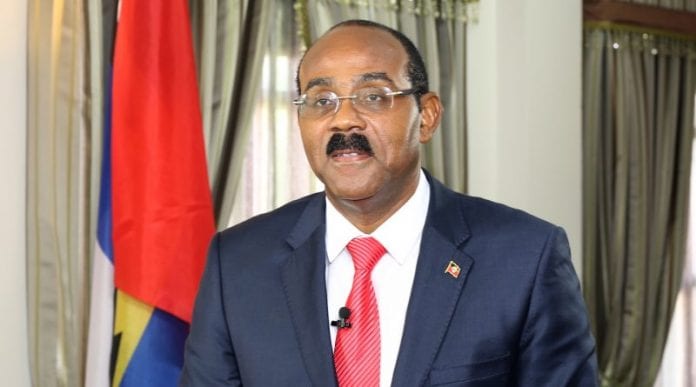
Antigua and Barbuda’s Prime Minister, Gaston Browne, issued a powerful appeal for regional and global action on mental health during a forum hosted alongside PAHO/WHO. The event, titled “Uniting the Americas for Mental Health: From Commitment to Action,” served as a key side event at the 55th OAS General Assembly.

Highlighting alarming statistics, Browne noted that over 10 adolescents die by suicide daily in Latin America and the Caribbean, and 16 million youths live with mental disorders. “These figures represent lives overshadowed by despair, potential left unrealized, families hollowed by grief,” he said.
He emphasized the broader societal costs, citing estimates that untreated youth mental illness costs the region’s economy more than US$30 billion annually. Browne also referenced recent studies showing a sharp rise in economic losses due to mental illness in the United States—from US$193 billion in 2008 to US$282 billion in 2024. “When we neglect mental health, we do not save money; we invest in failure,” he warned.

Underscoring the crisis, Browne pointed out that “seven out of 10 individuals in need of mental healthcare receive no counselling, no medication, no community support,” noting that many people in Antigua and Barbuda and across the Caribbean suffer in silence or travel abroad for basic care. He called this disparity “unacceptable,” insisting that quality mental healthcare is a universal right.
Browne revealed that the OAS General Assembly would adopt the resolution “Addressing the Critical Mental Health Crisis in the Americas,” aimed at mobilizing funding, training mental health professionals, and integrating mental health into primary care. He urged leaders to embed mental screening into routine care, train healthcare workers, and establish pathways to psychiatric services without delay.
The Prime Minister stressed the need for greater resource allocation, stating that 2–3% of health budgets is insufficient, as “it is a decision to allow suffering and loss to continue and to grow.” He also urged regional cooperation to build a research program and data observatory using AI, and foster public–private partnerships for mental wellness initiatives and educational scholarships.
Reflecting on lived experience, Browne shared the personal story of his late mother’s battle with mental health, saying, “Society whispered judgments, but in our home, love prevailed… From her struggles, we learned resilience, empathy, and the transformative power of compassion.” He implored stakeholders to “dismantle every wall of shame and build bridges of understanding.”
During the forum, other leaders echoed similar sentiments, emphasizing mental health’s essential role in socioeconomic well-being. Over 160 million people in the Americas are estimated to live with mental disorders, and over 100,000 die by suicide each year.
As global attention turns toward the Fourth UN High-Level Meeting on Noncommunicable Diseases and Mental Health in September, Prime Minister Browne urged the region to build on the momentum of Antigua’s OAS forum, ensuring commitments carry forward to inform the new UN Political Declaration.

“The Americas possess the creativity, resilience, and compassion to make a difference,” Browne said. “Let us seize this moment. Let’s develop a culture of love for our shared humanity—empathy and support for those with mental health challenges—to end the stigma, condemnation, isolation, and rejection.”