Mangoes are one of the earth’s many precious gifts. The ripened sweet fruit is a summer delight in many countries, although some cultures make delicacies out of a green (unripened) mango. For some of us, it is currently mango season. In Florida, from May to October trees of all varieties drop their bounty, ready to be picked less the delicate delicacy falls and smashes on the floor. It is morally correct to eat a mango before it explodes in an orangey pulpy mess.

The History of Mangoes
Like a lot of Florida’s best things, mangoes come from elsewhere. Different varieties can be found across Asia. Scientists believe that mangoes originated in India over 5000 years ago and the seed traveled along with humans across history, making its way from Asia to the Middle East, to East Africa, South America, and ultimately North America.
Almost every culture has a special relationship with the fruit. In the Caribbean, mango season is even longer thanks to the tropical climate. For half the year, from April to September, trees around the Caribbean bear their bounty.

Types of Mangoes Found in Florida
Everyone has a favorite mango. If you’re not a mango fan, you just haven’t found the right one. There are many types of mangoes and while it’s hard for the untrained eye to tell them apart, there are subtle differences. Almost like wine!
Tommy Atkins
Picture perfect and resilient, what the Tommy Atkins mango lacks in flavor it makes up for in durability. This is the mango you’re most likely to see on display in a hotel or a photoshoot and the most likely to be exported as Atkins does not bruise easily.
Peak Availability: May to July
Primary Source Country: Mexico, Brazil, Ecuador, Guatemala, Venezuela

Haden Mango
The polar opposite to an Atkins, the Haden is as close as it gets to mango nirvana in Florida. Melt in your mouth soft, syrupy sweet, not at all cloying. Almost too good to be true. The catch? It’s a dainty one. Before you eat a Haden you have to be very careful to check for spots indicating diseases or parasites.
Peak Availability: June to August

Primary Source Country: Mexico, Ecuador, Peru
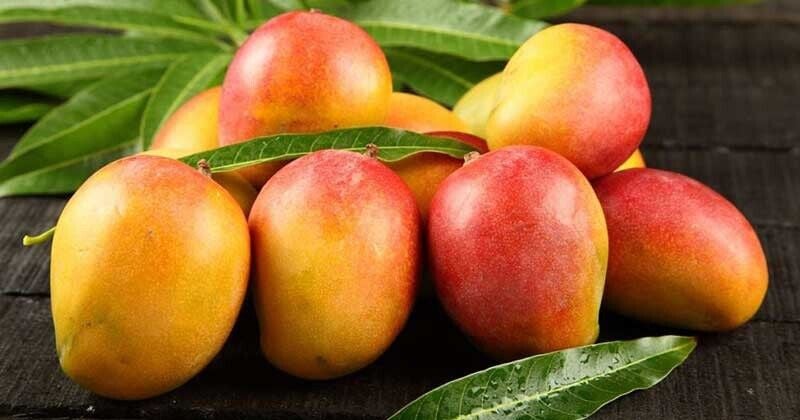
Keitt Mango
Florida born and bred, the Keitt mango was engineered to be disease resilient and to bloom in the autumn and early winter months ensuring a mango product throughout the year. A seedling (think descendant) of another hardy late blooming Florida staple, the Brooks mango, the Keitt mago can grow to relatively large weights, sometimes reaching over 3 pounds.
Keitt mangoes are a bit stringy with a tangy sweet flavour with a hint of lemony tang when ripe.
Peak Availability: August to October
Primary Source Country: USA (Florida)

Bombay Mango
Brought to Jamaica from India during the British Indian Indentured Laborer System in the 19th century, Bombay mangoes were introduced to the United States through South Florida, and are purchasable at botanicals and garden centers.
Bombay mangoes are beloved in Jamaica and South Florida for their unique flavor profile — sweet with a hint of spice — how easy they are to de-seed, and their smooth, fibreless flesh. Bombay is a relatively light mango, often weighing under a pound, and is the parent strain of several Florida native mangoes — Bailey’s Marvel, Jacquelin, and Zill.
Peak Availability: April to July
Primary Source Country: Jamaica

Frequently Asked Questions About Mangoes
How to pick out a ripe mango?
There are a few telltale signs of when a mango is ready to eat off the tree. Selecting a perfectly ripe mango can make a world of difference in its taste and texture. Here are some tips to help you pick the best ripe mango:
Firmness: Squeeze the mango gently. A ripe mango will give slightly when squeezed gently. If the fruit is firm, it may be underripe. If it gives too much or feels soggy, it may be overripe.
Smell the stem end of the mango: A ripe mango will have a sweet, fruity aroma at the stem end. The scent of a ripe mango can be a strong indicator of its readiness. Avoid mangoes with little to no aroma, as they might not be fully ripe.
Look at the color: The color of mango can vary depending on the variety, so it’s not always a reliable indicator of ripeness. However, some varieties will change color as they ripen. For example, the Ataulfo mango turns a deep golden color when ripe, while the Keitt mango will remain green even when ripe. Go for those with a mostly even color and a slight blush.
Check for speckles: Some varieties of mango will develop white or brown speckles on the skin when they are ripe.
Shape and Texture: Choose mangoes that have a plump, rounded shape. Mangoes with a more slender appearance might not be as ripe. Additionally, the skin should feel taut and smooth, without any soft spots or bruises.
Variety Knowledge: Different mango varieties have varying colors, shapes, and ripening characteristics. Familiarize yourself with the specific type of mango you’re buying to know its ripeness cues. For example, Haden mangoes turn from green to yellow when ripe, while Ataulfo mangoes remain mostly golden-yellow even when ripe.
Remember that mangoes continue to ripen after being picked, so if you purchase slightly underripe ones, you can leave them at room temperature to mature. Once they reach your desired level of ripeness, you can store them in the refrigerator to slow down the ripening process.
How to store mangoes?
Most ripe mangoes can be stored in a refrigerator for up to 5 days before going bad. Some, like the Haden mango, might go bad a bit sooner. If you freeze a mango it can last up to 6 months. Hello mango ice cream!
Are mangoes healthy?
Yes! Mangoes are an excellent source of vitamins A and C, as well as fiber. They also contain antioxidants which are crucial in protecting the body from sickness. They do contain sugar and are high in fructose, so everything sweet is good in moderation.
Can you eat an unripe mango?
Yes, but there’s a catch. It’s safe to eat an unripe (green) mango raw but it will probably be unpleasant. As a mango ripens it gets softer and sweeter, so unripe mangoes are hard and sour.
However, if you’re willing to experiment in the kitchen you can make something delicious with green mango. Many Asian cultures utilize the fruit in chutneys.
Alternatively unripe mangoes can be pickled in vinegar and salt and some cultures cook them in curries.
Mango Chutney Recipe
An easy mango chutney can be made by combining a few simple ingredients. But most important, selecting the right mango is 90% of perfecting the recipe.
Mango Chutney Recipe

Mango chutney is a tangy and flavorful condiment that originates from Indian cuisine but has become popular worldwide. It's made by combining ripe mangoes with a blend of spices, sugar, vinegar, and often onions or other ingredients. The mixture is cooked down to create a thick and chunky preserve-like texture.
- 1 cup of mango
- half a cup of vinegar
- a quarter cup of sugar (white)
- 1 teaspoon of salt
- your preferred spice to taste (cumin, coriander, turmeric, etc.)
- In a saucepan. Bring to a boil and stir constantly.
- Let the finished sauce cool completely. Chutneys pair well with meat dishes and curries.