As Women’s Month draws to a close, there remains a silent struggle that often goes unnoticed: endometriosis. March not only commemorates the remarkable achievements of women but also serves as Endometriosis Awareness Month, shedding light on a condition that plagues millions of women worldwide.

The World Health Organization (WHO) states that endometriosis, characterized by the growth of tissue similar to the uterine lining outside the uterus, affects around 10 per cent of women of reproductive age worldwide.
However, its impact transcends mere statistics, delving into the realms of chronic pain and emotional anguish. According to WHO, this ailment is marked by excruciating pain during menstruation, sexual intercourse, bowel movements, or urination, chronic pelvic pain, abdominal bloating, nausea, fatigue, and at times depression, anxiety, and infertility.

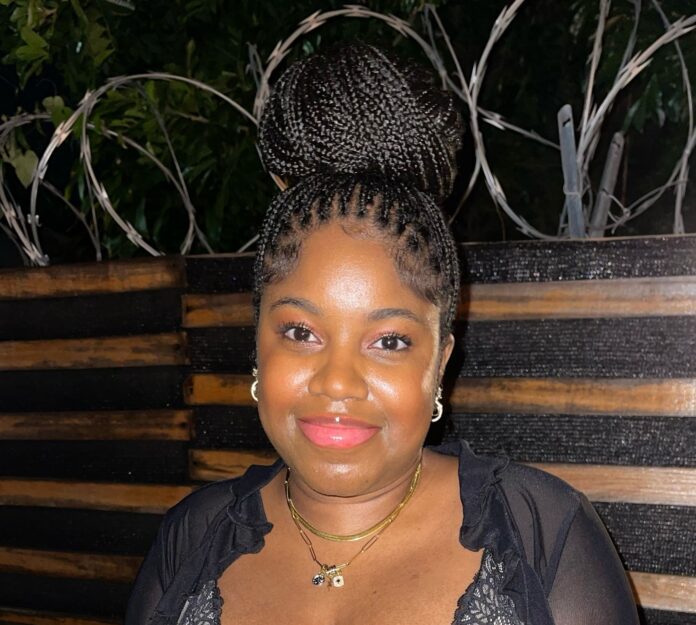
Rasheeda Moncrieffe, a 32-year-old Jamaican-born residing in the bustling city of New York, is among the millions of women silently grappling with this condition.
In an interview with the Caribbean National Weekly (CNW), Moncrieffe shared that every day is a battle against the relentless tide of pain and uncertainty.
From the tender age of 11, when she first experienced her menstrual cycle, Moncrieffe has been dealing with the profound impact this condition has had on every aspect of her life.

“Every day is a struggle to stay grounded,” she said.
“It’s hard not to wake up wondering how my pain is going to affect my day and what I plan to do,” she added.
The suspicion that something was wrong
She realized during her teenage years that something was amiss when her menstrual cycles appeared far from ordinary in comparison to those of her friends.

“They weren’t having the same experiences I was having. I was always in pain, especially when I was in the middle of a cycle, nausea or throwing up, missing days at school, and [had] chest and neck pain in my late teens. I would bleed through pads every two hours or so and had to wear overnight pads when my friends all seemed to be wearing tampons,” she recalled.
“It was a revelation for me when my friend handed me a tampon one day in the middle of class after I bled through my pad and soiled my pants,” she added.
Each day for Moncrieffe became a daunting ordeal, rendering even the most mundane tasks seemingly insurmountable.
The impact on her relationships
Endometriosis has not just affected her physically; it has reshaped her relationships and altered the way she interacts with people around her.
Intimate relationships were particularly challenging, as she struggled with feeling disconnected from her own body and struggling to find understanding and support from partners.
“Endo has affected how I interact with people on a whole. With friends, I became solitary in my mid-twenties because my friends weren’t having the same experiences I was. When I couldn’t make it to events, had to cancel, or just wasn’t up for it they took it personally and some never took my complaints seriously,” she said.
“Intimate relationships were the worst because it was difficult for me in that regard. After all, I didn’t feel like my body belonged to me and my partner couldn’t or wouldn’t understand,” she added in a quavering voice.
Surgeries and treatments
While countless women can relate to the physical and emotional distress associated with chronic conditions, Moncrieffe’s path was further marred by numerous surgeries and treatments. She revealed undergoing 10 major surgeries, encompassing procedures such as laparoscopies, laparotomies, lung surgeries, and various medical interventions.
“My lungs collapsed eight times that have been confirmed and or filled with blood, so they were attached to my chest wall to prevent full collapse. I have been on so many birth controls like Orilissa, Duavee, Lupron Depot, Seasonale, pain management, physical therapies, and breathing treatments. I’ve done all that I was told would rid me of this disease but here we are,” she further shared, underscoring the severity of her condition.

In 2021, amidst her eighth and ninth surgeries, Moncrieffe faced a harrowing ordeal. Hospitalized and in excruciating pain, she found herself not only battling her own body but also the dismissive attitudes of the medical staff.
She recalled the ignored cries for help, belittling remarks about her pain, and a dangerous oversight of a post-operative complication that left her teetering on the brink of tragedy.
It was a stark reminder of the uphill battle she faces daily, not just against her condition, but against a healthcare system that she believes was blind to her suffering.
The pillars of support

Reflecting on the physical and emotional turmoil she endured, Moncrieffe is grateful for the people who have supported her throughout her journey.
Despite the trials she faced in previous relationships, she now revels in the bliss of her marriage. She has found solace and joy in the support of her husband, who has become her steadfast companion through every trial.

Alongside her devoted mother, they serve as her anchors in the storm, offering shoulders to cry on and unwavering love.
Moncrieffe believes that while many doctors turned a blind eye to her struggles, her loved ones remained steadfast, providing the comfort and validation she so desperately needed.
A voice for the voiceless
Through her battles, she emerged as a fierce advocate for those living with endometriosis. Her advice to other women and young girls echoes with the strength of her convictions: trust your instincts, speak up, and never accept silence as an answer.
“Pain isn’t normal, especially when it’s consistent, and if you feel something is wrong don’t take no for an answer because no one knows your body the way you do and you have to trust that feeling,” she urged.
With one in 10 women affected by endometriosis, Moncrieffe’s call to action resonates not only as a plea for awareness but as a beacon of hope for those still struggling in silence.
Strength and resilience
Moncrieffe remains hopeful by reflecting on the journey she has endured with endometriosis, acknowledging the hardships, and celebrating her resilience.
“There’s no point in giving up when I’ve made it this far,” she said.
With optimism fueled by the ongoing advancements in medical research, she refuses to give in to despair. Instead, she clings to the belief that one day, more effective treatments for endometriosis will be found, offering relief to the millions who suffer in silence.