Fidel Castro dead at age-90
Key Points(5)
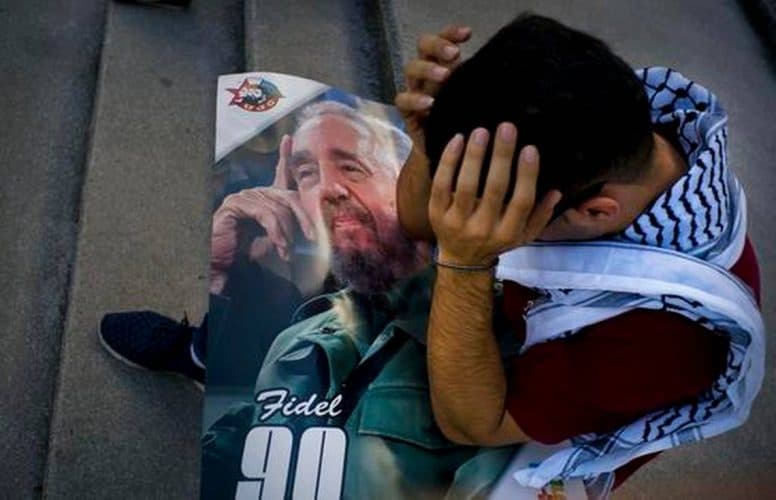
- <h2><strong>Fidel Castro dead at age-90</strong></h2> <strong>Garth A Rose</strong> Former Cuban president and revolutionary leader Fidel Castro has died at age-90.
- Castro died on November 25, but his death was announced shortly after mid-night on Saturday November 26 by his brother and current Cuban President Raul Castro.
- Castro embarked on the world’s stage with a big-bang when he led revolutionary forces and overthrew then dictator Fulgencio Batista’s regime on January 1 1959.
- The revolution was then heralded by the Cuban people, and he arrived in Havana later that day, Fidel was greeted as a hero.
- However, as time passed and he began imposing communist policies like ending American domination, forging closer ties with Russia and the Soviet Union, nationalizing businesses and land holdings, and becoming less tolerant to opposition, the money-class of the country grew weary of him.
Fidel Castro dead at age-90
Garth A RoseFormer Cuban president and revolutionary leader Fidel Castro has died at age-90. Castro died on November 25, but his death was announced shortly after mid-night on Saturday November 26 by his brother and current Cuban President Raul Castro.
Castro embarked on the world’s stage with a big-bang when he led revolutionary forces and overthrew then dictator Fulgencio Batista’s regime on January 1 1959. The revolution was then heralded by the Cuban people, and he arrived in Havana later that day, Fidel was greeted as a hero.
However, as time passed and he began imposing communist policies like ending American domination, forging closer ties with Russia and the Soviet Union, nationalizing businesses and land holdings, and becoming less tolerant to opposition, the money-class of the country grew weary of him. Many began fleeing the country to settle in Miami. Migration to Miami increased steadily after Castro banned free elections on the island, and increased persecution of dissidents.
His close warm relationship with the Soviet Union angered the US administration, and in April 1961 then US President John F. Kennedy supported by the CIA and Cuban exiles in Miami tried to overthrow the Castro regime in the “The Bay of Pigs Invasion” but the attempted coup was a major failure.
For thirteen days in October 1962 the world came close to nuclear war between the USA and the Soviet Union when President Kennedy stood up to Soviet Union leader Nikita Khrushchev who attempted to build Soviet missiles in Cuba. The crisis was averted at the very last moment when Khrushchev finally agreed with Kennedy to relinquish his plans to install the missiles in Cuba.
Castro would survive Presidents Eisenhower, Kennedy, Johnson, Nixon, Ford, Carter, Reagan, Herbert W. Bush, Clinton, and George W. Bush. During these presidencies, the chilled atmosphere with Castro continued, and the US maintained a strict trade embargo against Cuba, resulting in severe hardship among the Cuban people. These hardships worsened since the early 1990s with the fall of the Soviet Union.
In the early 1980’s, a period characterized by housing and job shortages, without Castro making attempts to ease his policies more Cubans left the island, many in make shift boats. In what was known as “The Mariel Boat Lift” in April, 1980, Castro announced that all Cubans wishing to emigrate to the U.S. were free to board boats at the port of Mariel west of Havana. He also freed hundreds of prisoners, allowing them to leave the country. Some 125,000 Cuban refugees from Mariel reached Miami over the next several weeks, creating a crisis for the governments in Florida and the US. However, gradually the refugees assimilated into the Miami population, giving South Florida, especially Miami-Dade County a distinct Cuban characteristic.
Despite the relentless hardships the Cuban government led by Castro built one of the best healthcare, educational and agricultural infrastructure in the Western Hemisphere, and a nation characterized by discipline and an extremely low crime rate.
In February 2008, after two years of illness, Castro formally announced his retirement as Cuba’s president. He was succeeded by his brother Raul as president and leader of the Cuban Communist Party.
In December 2014 US President Barack Obama announced plans to restore diplomatic relations with Cuba, and restore some normalcy in travel and other arrangements between the two countries. Earlier this year the two countries reopened embassies in each country and President Obama made an official visit to Cuba.