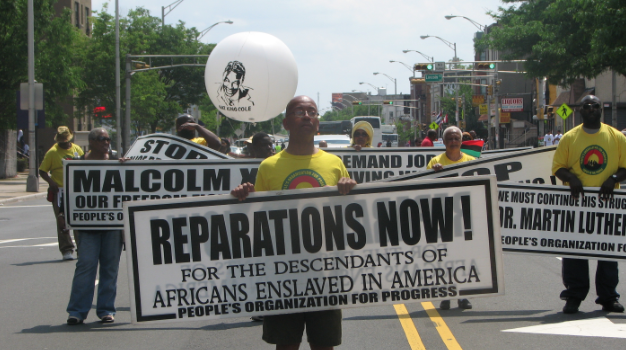
The Caribbean Diaspora is being called to support CARICOM’s calls for the UK to pay reparations as compensation for its involvement in slavery and the slave trade. To broaden awareness of the issues in the South Florida community, The University of Miami School of Law hosted a major summit to discuss current reparation campaign in the region, with UM Professor Irwin Stotzky (who addressed the issue of slavery and its impact in Haiti), Maurice McCurdy, representative of Jamaica’s National Committee for Reparations, and Don James, president of the Jamaican-American Bar Association .

The event, said University of Miami law professor David Rowe, hoped to clarify that all members of the Diaspora have a right to reparatory justice based on the impact of slavery in the Caribbean.
“The fact that someone lives in Florida, but their father or mother came from St. Elizabeth, Jamaica, and their great-grandfather was taken from Ghana, Africa and was brought over to the West Indies in the slave trade, shouldn’t prevent the individual living in Florida from making a claim even if he or she no longer lives in the Caribbean region,” said Rowe in an interview with National Weekly.

Rowe also argued that the Caribbean Diaspora deserved the right to be included in the process to obtain reparation from the British government, for imposing slavery on the former colonies in the 18th and 19th centuries. The Diaspora’s involvement may be crucially important, as the region still remains uncertain about how reparations should be distributed. The quest for justice through reparation “could be futile,” said Rowe, depending on the stance taken by regional governments.
“Despite the obvious passionate feelings about reparation, an important issue is that of calculation of the sum to be paid. How do you calculate this? Furthermore, why should reparation be paid to any government or governmental entity? Should it not be paid to the persons who are descendants of slaves?”
According to Rowe, these questions and the related responses could be controversial, “So even before we decide what we are going to do with the reparation, there are issues issue that needs serious discussion.”
So far, there has been no definitive outcome of the reparation issue to date, as regional leaders are still awaiting answers from Britain authorities concerning reparation for slavery. The region recently pushed their campaign further, when, on behalf of the 15-member countries of CARICOM, Barbados’ Prime Minister Freundel Stuart, who is also the chairman of CARICOM Reparation Commission formed in 2013, wrote and sent a formal letter of complaint to the British Foreign Office seeking reparation. Stuart called on London to formally acknowledge the region’s demands for payment for the transatlantic slave trade. CARICOM said will not release the contents of the letter, until it receives a reply from British Prime Minister David Cameron. CARICOM has also warned it’s prepared, as its next option, to take the matter to the International Court of Justice (ICJ) in The Netherlands for a ruling. But the regional group has said it prefers a negotiated settlement of the issue.
Concerning the most recent developments, Rowe said the road ahead will be a difficult one, but one that should not be ignored by residents of the Caribbean Diaspora.