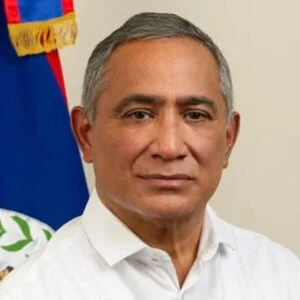
The Belize government says it will from April 1 this year, wage provisions will include the resumption of increments for public officers.

But Prime Minister John Briceno told Parliament that “this will be merit-based and comes a full 12 months prior to the original date for restoration”.
Last month, Briceño had described as “unfortunate” the ultimatum by public sector trade unions that the government lifts by April this year, the current freeze on increments to public servants.

President of the Public Service Union (PSU), Dean Flowers, said that the unions are demanding that their increments be reinstated by April 1, this year.
In August last year, the Ministry of Finance issued a circular making it clear that the government will not be engaged in new hiring, creating posts or filling vacant ones, and approving salary advances and new allowances.
Increments are usually between three to five per cent of salaries and paid at different times of the year for different workers.
Prime Minister Briceño told legislators that in the financial year, 2022-23, the government will have spent BDZ$95 million (One Belize dollar=US$0.49 cents) on the pension plan for public officials.
He said that in the next budget, 2023/24 the spending rises to BDZ$100 million.
Briceno said that the International Monetary Fund (IMF) estimates that the present value of this pension liability is 77 per cent of the gross domestic product (GDP), more than the entire public debt of the country.

“I have said publicly, and I say again: this budget line spending is neither sustainable nor fair.”
“To illustrate, this year the SSB (Social Security Board) is projected to collect some 140 million dollars in contributions and pay out some 110 million dollars in benefits. This is the nature of a contributory pension scheme.”
Prime Minister Briceno said Belize is an outlier in every material respect so far as retirement age, replacement rate, and contribution rate are concerned.
“Everywhere else in the Caribbean and Latin America, public officers’ pension schemes are contributory. The average replacement rate, that is, the average pension divided by average earnings in the entire Latin America and Caribbean region is 61.9 per cent.”
“In Belize, the average replacement rate for public officers, when combining social security pension at 27.9 per cent and public officers’ non-contributory pension at 67.5 per cent, both of which public officers would be entitled to, is 95.4 per cent, a whopping 33.5 per cent above the regional average.”
The prime minister said that in most of the region, the voluntary age of retirement is 60 years, and the mandatory retirement age of 65 years.
He said in the Caribbean, countries with special pension plans for public officials tend to have higher retirement ages, 60 years in the case of Trinidad and Tobago and Suriname, for example, and 65 years plus in the case of Jamaica, Barbados, Antigua, and Barbuda.
CMC/