All the countries of ‘the Americas.’ i.e., those in North, Central and South America and the Caribbean are experiencing political, social, and economic trials to some extent.

In large part, these trials, in most countries, are the result of several factors, including persistent historical societal inequalities, the lingering economic impact of the COVID-19 pandemic and the global consequences of the Russian invasion of Ukraine on the prices of food, oil and gas, and the worldwide chain of supply of goods and services.
However, in some countries of ‘the Americas’, the tribulations are caused by undemocratic practices by governments or other power holders.

The Economist Intelligence Unit (EIU), usually reliable for the thoroughness of its investigation and analysis, recently published its Democracy Index for 2022. The index is based on five categories: electoral process and pluralism, functioning of government, political participation, political culture, and civil liberties.
The EIU ranks only four countries of ‘the Americas’ among the top 22 fully democratic nations of the world. These are: Uruguay (11), Canada (12) Costa Rica (17) and Chile (19). The United States of America is ranked at number 30 of the 167 countries that were examined.
Latin America and the Caribbean (LAC) experiences its seventh consecutive year of decline in 2022 in the EIU table. The area’s average score fell to 5.79, down from 5.83 in 2021. However, I pointed out The Bahamas, Barbados and the six independent countries in the Eastern Caribbean, Antigua and Barbuda, Dominica, Grenada, St Kitts-Nevis, St Lucia, and St Vincent and the Grenadines, were not examined. This omission is probably due to the smallness of the populations of these countries, although it is an omission in the EIU analysis which should be corrected.
According to the EIU, the countries driving the 2022 decline in the LAC are Haiti (-0.68), El Salvador (-0.66) and Mexico (-0.32). Countries recording more modest declines include Peru (-0.17) and Brazil (-0.08). Peru’s declining score ranks it lower than a “flawed democracy”.
“Weak state capacity” is cited by the EIU as a major cause of the region’s low scores related to the functioning of government and political culture.
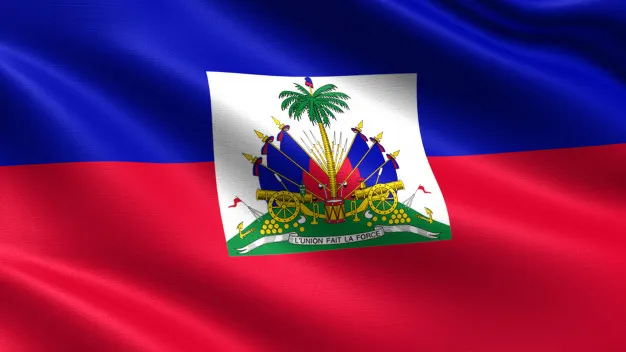
The analysis concludes that “the most extreme case of weakening state capacity in the region is Haiti, which experiences the area’s steepest fall in score in 2022”. Stating that the interim prime minister, Ariel Henry, has “failed to re-establish the state’s control over parts of the country, ceding ground to heavily armed gangs, many linked to drug-trafficking networks”, the EUI blames Mr. Henry for “failing to call elections, which led to significant score downgrades”. The EUI also regards Henry’s call for foreign intervention to help re-establish order, as “an abdication of leadership and a damaging admission that the country is no longer capable of self-rule”.

Regarding Peru, this country has declined rapidly into political chaos. As I pointed out in a recent commentary, the cause of the current crisis, while it is a struggle for power between rival political parties, is rooted in economic discrimination and marginalization of indigenous people. Even in the midst of social and political upheaval, which should have demanded inclusionary dialogue to find a solution, the response has been a disproportional use of force by the military against protestors, resulting in the deaths of 58 persons so far.
These events in Peru led to the introduction of a Declaration at the Permanent Council of the Organization of American States (OAS) by Antigua and Barbuda and Colombia. The declaration, which was adopted by the OAS on January 30, called for “respect the right to assembly and for protest to be exercised in a peaceful manner” and for the resumption of dialogue to “build consensus to overcome the current situation”, and also for “the prompt holding of free, fair and transparent general elections, with international electoral observation.” The latter is unlikely to happen anytime soon. The Peruvian Congress has refused to bring forward the date of elections, even though the current President of Peru, Dina Boluarte, has called for it in the wake of angry demonstrations.
Both Peru and Haiti will occupy the attention of the member states of the OAS in the coming weeks. Haiti will be a greater priority for the Caribbean Community (CARICOM). Haiti is now run, for all practical internal purposes, by more than 200 armed gangs, according to United Nations and Haitian National Police figures. The situation has worsened since October 9, 2022, when Prime Minister Henry wrote to the OAS Secretary-General, Luis Almagro, asking countries “that are friends of Haiti” to deploy “without delay a specialized international armed force” to address “the breakdown in security.” There was no formal response from the OAS, although diplomatic representatives have informally expressed concerns about the provision of an “international armed force”, who would contribute to it, how would it be financed, under what terms, including immunity, would it operate, and for how long.
Pierre Espeìrance, the executive director of the National Human Rights Defense Network (RNDDH) in Haiti, claimed in a publication on February 2, that “the root of the problem lies in the corruption of successive governments and their increasing use of gangs to suppress public protests, provide personal protection, and ultimately to retain their hold on power.”
Espeìrance rejects an international armed force entering Haiti, saying: “… such a force cannot possibly be effective in the current political chaos. Henry effectively rules on his own, with no Parliament, as just last month, the mandate of the ten remaining members of the Haitian Senate expired for lack of elections in recent years. And yet, elections make no sense in the current tumult.”
The internal situation in Haiti, as in Peru, poses enormous difficulties for the world’s governments to help. In both countries, there has first to be internal political agreement that external governments can support. Everyone wants to help, but all the parties within Haiti and Peru must first agree on the nature of the help they want and the terms on which it could be provided.
The issues to be settled internally are precisely the categories in the EUI index of Democracy: electoral process and pluralism, functioning of government, political participation, political culture, and civil liberties.
CMC/