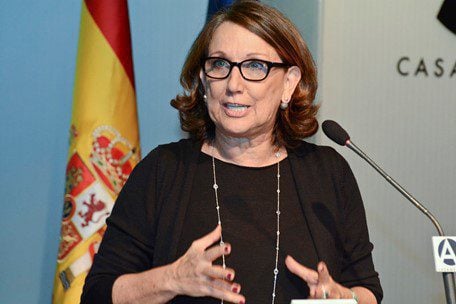
The head of United Nations trade facilitation agency, UNCTAD, has warned that Caribbean and other developing countries face “impossible trade-off” on debt, stating that spiraling debt has compromised their chances of sustainable development.
Speaking at the 13th UNCTAD Debt Management Conference, Rebeca Grynspan said between 70 and 85 percent of the debt that emerging and low-income countries, such as those in the Caribbean, are responsible for, is in a foreign currency.
“This has left them highly vulnerable to the kind of large currency shocks that hit public spending – precisely at a time when populations need financial support from their governments,” she said.

Grynspan said, so far this year, at least 88 countries have seen their currencies depreciate against the powerful US dollar, which is still the reserve currency of choice for many in times of global economic stress.
She said, in 31 of these countries, their currencies have dropped by more than ten percent.
The three-day UNCTAD conference, which concluded on Wednesday, took place as a wave of global crises has led many developing countries to take on more debt to help citizens cope with the fallout.
Government debt levels as a share of GDP increased in over 100 developing countries between 2019 and 2021, said UNCTAD. Excluding China, this increase is estimated at about US$2 trillion.
“This has not happened because of the bad behavior of one country. This has happened because of systemic shocks that have hit many countries at the same time,” Grynspan said.
With interest rates rising sharply, she said the debt crisis is putting “enormous strain” on public finances, especially in developing countries that need to invest in education, health care, their economies and adapting to climate change.

“Debt cannot and must not become an obstacle for achieving the 2030 Agenda and the climate transition the world desperately needs,” Grynspan said.
UNCTAD advocates for the creation of a multilateral legal framework for debt restructuring and relief.
It said such a framework is needed to facilitate timely and orderly debt crisis resolution with the involvement of all creditors, building on the debt reduction program established by the Group of 20 major economies (G20) known as the Common Framework.
As debt burdens rise, UNCTAD said “developing country governments end up in a vicious circle, unable to invest in achieving the Sustainable Development Goals (SDGs) and grow their economies, making it even harder to pay their debts.
The UN agency said it is supporting countries through its Debt Management and Financial Analysis Program (DMFAS), one of its most successful technical assistance initiatives.
The initiative offers countries proven solutions for managing debt and producing reliable data for policymaking, said UNCTAD.
Since its establishment over four decades ago, DMFAS has supported 116 institutions – mainly finance ministries and central banks – in 75 countries.
On debt transparency, UNCTAD said it supports the establishment of a publicly accessible registry of debt data for developing countries.
CMC/