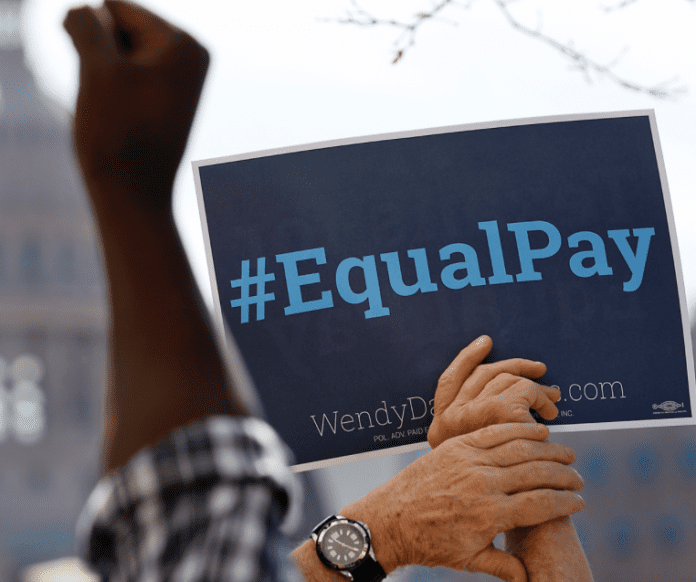
New proposed measures seeks to ensure companies’ compliance with the Fair Pay Act
Local labor advocates are praising the new proposed measures to strengthen the Lilly Ledbetter Fair Pay Act, announced by President Obama last week.
The new regulations would require private companies with 100 or more employees to include salary information by gender, race, and ethnicity to the Equal Employment Opportunity Commission (EEOC). The measure seeks to ensure companies’ compliance with the Fair Pay Act.
A report by the American Association of University Women (AAU) reports the annual median salary for Florida women in 2013 was $33,823, compared to $40,951 for men, at a ratio of 83 percent.

This trend, says Miami employment consultant Margaret Jacques, also remains the same in South Florida. She said in 2012, women in Florida made an average of 77 percent of the salaries men earned, but that average has only increased to the current ratio of approximately 82 percent.
“Although Florida complied with the 2009 Fair Pay Act, and has a law that makes it illegal for employers to discriminate in salaries and wages between men and women on jobs which requires equal skill, effort, responsibility, and working conditions, all employers do not follow this law,” says Jacques.
Jacques attributes this to the low enrollment of workers in the state, which currently stands at 8 percent.
“Without the protection, some employers are getting away with discrimination in salaries paid between men and women,” says Jacques. “The proposal will force employers to document the salaries paid and serve to counter this discrimination.”
National Weekly’s investigation with several South Florida businesses, small and large, bore out that salaries were paid based “on performance, not gender.” However, a female floor supervisor in a Miami-Dade factory claim she was being paid $6 per hour less, compared to her male counterparts, although she has held the position 15 months longer.
“There’s no way you can prove there is discrimination in this factory,” Jacques said, “unless you were allowed to examine the company’s payroll records. Most companies are very protective of these records even among employees. Obama’s measure would make the payroll information available.”

EEOC Chair Jenny Yang said the new rule proposed by Obama should be completed by 2016, with the first reports from employers due by September 2017.
“Unfortunately not many workers realize if there’s discrimination in the wages they receive,” said Miami attorney Leslie Fields, whose has defended many workplace discrimination cases. “[They] only realize this discrimination several months after employment, losing precious time in filing a wage dispute claim, as the window to file is only two years from the salary was first paid.”