Earlier this year when the Jamaican government wanted to extend states of emergency (SOEs) in St. James and other parishes, the main opposition People’s National Party (PNP) did not support the move—and was roundly criticized for their decision.

Jamaicans, at home and abroad, were not convinced the respective SOEs had done enough to contain the violent crime wave and wanted them to continue. Indeed, there are those who would have preferred an island-wide SOE.
After some four months, the government last week re-imposed the SOE in St. James, and declared new SOEs in the neighboring western parishes of Hanover and Westmoreland—this time, with the support of the PNP.

However, as the PNP had previously said, an SOE is only a temporary measure. There has to be a more sustainable, long-term solution to the problem of crime and violence in the island.
The spate of criminal activities is ubiquitous in the news media, and Facebook and other social media platforms are inundated with photos and information of missing people, mainly women and young girls. In recent weeks, two girls ages 8 and 11 were sexually assaulted and brutally murdered in their rural districts as they walked—one to school, the other to church. This violence against children is staggering. And, while violent crime is not a new thing in Jamaica, the complete disregard for human life, at this scale, is not normal.
Jamaica’s leaders, law enforcement agencies, and citizens have to ask themselves what is causing criminals to target young girls, gun down entire families in their homes, and perpetrate violence against their spouses and even their own children.
Is it a new kind of drug? Is it the influx of deportees, many with no means to support themselves? Are people so frustrated by social and economic desperation that their only recourse is becoming involved in the surging illegal drug and gun trade? Our guess is that it is a combination of factors. The real question, however, is what exactly is the government going to do to find meaningful solutions.
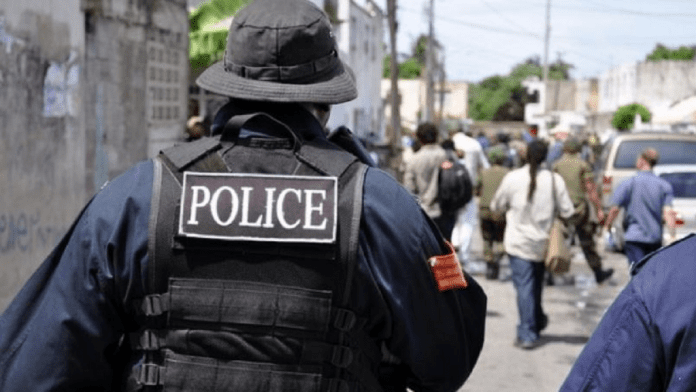
Jamaica’s crime problem cannot be solved by temporary SOEs, or by deploying more police across the island. We believe it’s a multi-faceted problem that requires a practical, multi-pronged, long-term approach. But first we have to stem the bloodshed. Then, the next step is for the government and law enforcement to meticulously work with the citizenry to develop their trust. A lack of public trust is a major reason that crimes go unsolved, witnesses refuse to come forward, and the cycle of violence continues.
Essentially, the residents of communities need to trust and protect each other more; communities need to trust law enforcement; and law enforcement needs to have more trust and confidence in the public officials who administer them. This crippling crime problem will not be solved if there’s an absence of trust prevailing throughout various sectors of the society.

Additionally, the Jamaican diaspora must be included in building this public trust. Jamaicans at home must remove any perceived barrier that creates mistrust or suspicion of their compatriots who live overseas.
While the diaspora may not be able to provide direct solutions to the crime problem by, for example, providing law enforcement officials, there’s much the diaspora can do indirectly.
There’s an abundance of talent and experience among the Jamaican diaspora that can be beneficial in helping Jamaica address the crime problem. However, there’s a serious problem with access to Jamaican authorities.
Currently, there are experienced former law enforcement individuals within South Florida attempting to provide specialist training to the Jamaican security forces in the social aspect of crime, but are frustrated by the complete lack of access to the appropriate decision makers in the Jamaican government.
Next month, another biennial diaspora conference convenes in Jamaica. It’s emphatically urged that the conference take a serious, pragmatic look at improving accessibility by the diaspora to Jamaica. Much is being lost by this blockade.
To reiterate, crime in Jamaica affects Jamaicans everywhere, and the country cannot thrive economically or socially against the backdrop of this scourge. As the nation strives to develop public trust in combating this problem, the input of the diaspora should be sought, and if viable, implemented. If all Jamaicans pool their minds, and their respective resources collaboratively, a solution to this cancerous problem should soon be realized.