The Center for Disease Control (CDC) in Atlanta has designated Miami-Dade County a “cautionary area” resulting from the agency’s confirmation of a new Zika virus case in Miami.

On Monday, the Florida Department of Health (FDH) reported that the new infection related to an individual residing in Miami-Dade County. The Department also reported that there were four new travel related Zika cases in South Florida.
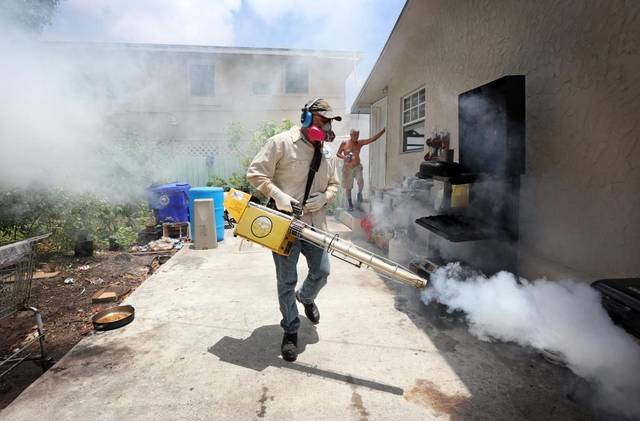
Following a health crisis in 2016 when multiple locally infected Zika cases were found in the Wynwood community of Mimi, and on Miami Beach, in December Florida health officials and Governor Rick Scoot declared the region was Zika free. This declaration was based on no report of new cases for several preceding weeks. However, the health officials and the Centers for Disease Control (CDC) in Atlanta cautioned that the virus could flare up again this year when the rainy season returned, providing conducive conditions for the breeding of the Zika bearing aedes aegypti mosquitos.

According to the FDH, the newly infected individual could have been infected with the virus sometime in 2016 but the symptoms of the disease were not evident. The individual was not aware of having the disease until a test conducted in February confirmed the infection. The FDH said it’s difficult to determine when the individual was infected since there were no symptoms. The confirmation of the disease was made by the CDC.
Lawrence Mignall, a Miami health official said he has been concerned that “since the lifting of the Zika zones in Wynwood and Miami Beach last year complacency would set in regarding mosquito control by residents, thus exposing them to the Zika virus.” Mignall said that although not widely reported there were 29 new cases of Zika infection in Florida since January this year.
The FDH confirmed these cases, and also indicated the new cases included 13 pregnant women. The Zika virus is particularly dangerous for pregnant women as it has the potential to result in these women giving birth to babies with a birth defect known as microcephaly.
The FDH, in an attempt to alleviate concerns, said it’s not unusual to find isolated cases of individuals who are locally infected by the virus. It said the one confirmed case does not mean there are clusters of the disease as seen last year. “There are currently no cases of ongoing, active transmission of Zika by mosquitos in Florida,” the FDH stated. The department also stipulated the situation will be monitored closely and the appropriate steps will be taken to keep residents, particularly pregnant women safe.
In designating Miami-Dade as a cautionary area, the CDC has issued new warnings for pregnant women travelling to the county.