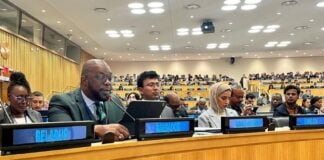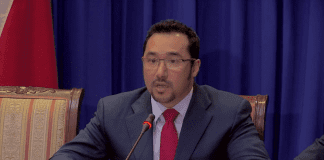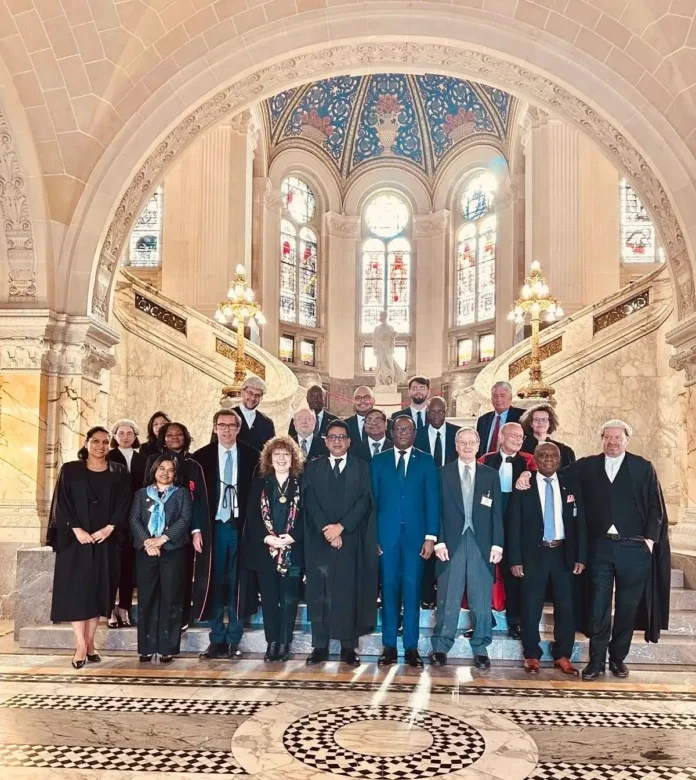
Guyana Attorney General Anil Nandlall on Friday urged the International Court of Justice to issue a clear, explicit and unambiguous judgment in the long-running Guyana-Venezuela border controversy, warning that any ambiguity could allow Venezuela to continue challenging Guyana’s sovereignty over the Essequibo region.

Speaking during Guyana’s final oral submissions before the court, Nandlall rejected Venezuela’s arguments, saying they were legally unfounded, historically inaccurate, and inconsistent with international law and past conduct.
Nandlall told the court the controversy carries an “existential quality” for Guyana, stressing that Venezuela’s longstanding claim to more than 70 per cent of Guyana’s territory has placed generations of Guyanese under what he described as a “long and threatening shadow.”

He said the impact of the controversy on Guyana’s development, security, and prosperity could not be overstated, adding that the country would effectively cease to exist in its current form if the claim were upheld.
Emphasising Guyana’s reliance on international law, the Attorney General said the country’s approach to the case is rooted in a deep institutional and national commitment to the rule of law.
“International law is the bedrock of the international order,” he stated, describing it as the foundation for peaceful relations between states and a core national principle for Guyana.
He added that Guyana entered the proceedings in 2018 with full confidence in the validity of the 1899 Arbitral Award, the authority of the United Nations Secretary-General’s referral to the ICJ, and the impartiality of the court.
A significant portion of Nandlall’s address focused on rejecting Venezuela’s legal and historical claims.
He said Venezuela’s challenge to the 1899 Arbitral Award lacked merit and was unsupported by both the text and history of the 1966 Geneva Agreement.

“The award was and remains valid and binding on the parties,” he told the court, describing it as the “full, perfect and final settlement” of the border between the two states under the 1897 treaty framework.
Nandlall also dismissed arguments questioning the award’s validity, noting that issues such as the absence of written reasons or the timing of the decision do not affect its legal standing.
He further accused Venezuela of attempting to distort historical facts, including what he described as a false claim made during the hearing that the Essequibo River was named after a Spanish explorer.
According to Nandlall, the name is derived from an Indigenous word meaning “fire side,” later adopted by Dutch and British settlers.
He said such assertions formed part of a broader pattern of efforts to “rewrite the history” of the region and undermine Guyana’s sovereignty.
The Attorney General also pointed to Venezuela’s post-independence conduct, alleging continued attempts to assert control over the territory through legislation and administrative actions aimed at incorporating the Essequibo region.
He referenced Venezuela’s creation of administrative structures and renaming efforts as part of what Guyana views as ongoing attempts to assert jurisdiction over the disputed area.
Nandlall stressed that the ICJ’s final decision must be comprehensive and legally conclusive.
“The clarity and specificity of your judgment are vital to the effective resolution of this long-standing dispute,” he said.
He concluded by urging the court to affirm the validity of the 1899 Arbitral Award and confirm the established boundary without qualification, calling it essential to ending the decades-long controversy.