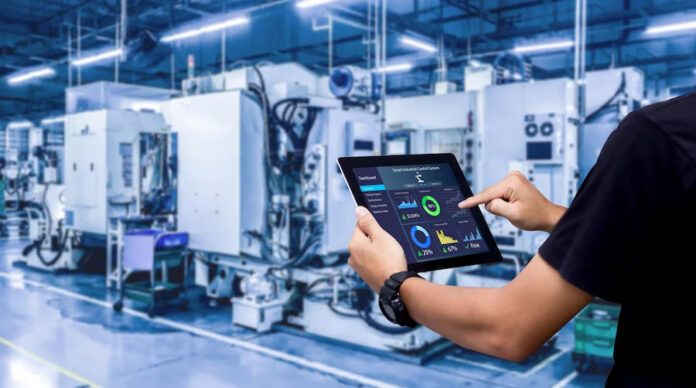
Automation in manufacturing has also rapidly become a critical element in contemporary manufacturing. Companies are looking for solutions that really respond to the practical challenges faced on factory floors. Adaptable automation supports factories responding to changes in customer demand, the availability of the labor force, and new product introduction. In this post, we examine some manufacturing automation solutions that truly suit real operations, thus making workflows smoother and improving efficiency.
Understanding Real Manufacturing Needs
Every factory has its own character, defined by its products, workers, and market. Automation needs to solve for these specific needs. What makes a system flexible? Systems that offer flexibility can adapt to changes in product lines and production volumes.
The same solution does not work for everyone, and this is problematic because a solution deemed simple often overlooks the unique nuances of each facility. Manufacturers exploring manufacturing automation solutions often discover how adaptable workflows improve efficiency across real-world operations.

The Importance of Flexible Integration
Careful handling of new technology can minimize disruption to other production that may be ongoing. Automation tools that integrate seamlessly into current equipment result in minimal interruptions. Easy communication between legacy machines creates a bridge between past investments and future upgrades. This compatibility results in faster transition times, lower transition costs, and reduced stress involved in making changes for the teams.
Scalability for Future Growth
Manufacturing rarely stands still. You need to scale the automation as you grow the business. Scalability means that the solutions adapt to an ever-growing workload without requiring a lot of rework in the system. Modular systems allow factories to gradually add new skills, matching their growth with the actual investment in equipment. Scalability guarantees the automation adapts to the organization as it matures.
User-Friendly Controls and Interfaces
Since operators use automation daily, it must be easy to use. With intuitive graphical controls, staff can monitor performance, establish parameters, and troubleshoot issues with confidence. With all that said, a lot of effort goes into production in developing teams, so simple interfaces This combination provides the necessary tools to reduce training time, allowing teams to spend minimal time learning and to start operating immediately.
Adapting to Variable Production Demands
I will say that peak yearly demand, custom orders/weaving, and rapid changes can tax any factory. Automation solutions that cater to rising and falling demand help balance output without excess. Tools for adaptive scheduling automatically adjust the speed of production, eliminating downtime and stalling. Flexible machinery can handle different types of products quickly, allowing for fast changes and quick responses to needs.
Ensuring Reliable Maintenance
To sustain production schedules, automation equipment has to operate reliably. Predictive Maintenance – Predictive maintenance features track the health of components, alerting teams before a failure occurs. Predictive servicing based on actual data minimizes unforeseen stoppages and ensures systems operate seamlessly. Designs that are easy to maintain also reduce the time lost during downtimes that occur whenever repairs are needed.
Data-Driven Decision Making
Today, automation systems capture a tonnage of data from sensors and devices. This data highlights trends around manufacturing, quality, and asset performance. By pinpointing inefficiencies and areas for improvement, managers can better target their actions. With data-based decisions, a factory can respond to changing situations based on facts rather than speculation, thus supporting perpetual optimization.

Supporting Workforce Collaboration
Automation does not replace people. It is not a replacement for humans but a complement to teamwork between employees and machines. For instance, collaborative robots can perform repetitive or even dangerous tasks, freeing up humans to concentrate on activities that generate greater value. Automation systems with clear alerts and feedback keep everyone in the loop, fostering collaboration and ownership. Together, they create a safer and more effective environment.
Responding to Market Changes
Organizations face the challenge of swiftly adapting to evolving consumer preferences, regulations, and supply chain dynamics. This adaptability enables factories to reconfigure production lines for a new role or requirement after completing the previous one. Rapid Changes in Operation: Software updates and reprogrammable controls mean transition changes without lengthy downtimes. It helps firms remain competitive in the face of external changes.
Conclusion
Modern production is transforming our understanding of manufacturing automation solutions, emphasizing the importance of a solution that can adapt to real operational needs. Flexibility, scalability, and user-centric design enable the system to support both daily tasks and long-term goals. Plus, data-driven observations and trustworthy upkeep will take performance and endurance to a greater level. When manufacturers select versatile automation, it sets them up for ongoing improvement and growth down the line.