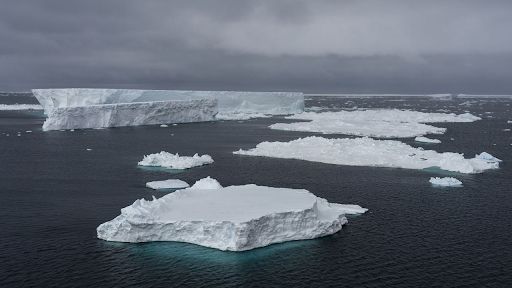
Imagine trading your warm sea breeze and the turquoise shimmer of the Caribbean for a landscape so vast and so silent that it makes you question everything you thought you knew about the planet. No palm trees. No steel pan music drifting from the beach. Just an ocean of ancient ice stretching to the horizon, a sky blazing green at midnight, and the distant thunder of a glacier calving into the void.
That is Kangerlussuaq, Greenland — and it is, without exaggeration, one of the most life-altering places on Earth.
For those of us raised under tropical skies, the Arctic feels like another planet. But that’s exactly the point. When you stand on ice that is 100,000 years old, something inside you shifts permanently. The scale of the natural world reasserts itself. The noise of everyday life falls away. You come back different — and you come back grateful.

Here is what awaits you at the edge of the world.
1. Standing on the Edge of the Greenland Ice Sheet
A Journey to Point 660
To stand atop the Greenland Ice Sheet is to witness the pulse of the planet. For many travelers, especially those accustomed to the tropical climates of the south, the vast, silent expanse of the eternal ice is almost spiritual in its magnitude. Navigating such a remote destination requires expert logistics, and many international explorers find that visiting https://nordicsaga.com provides the necessary clarity and support to turn this ambitious dream into a reality. Walking on ice that is thousands of years old isn’t just a sightseeing trip — it’s a profound encounter with Earth’s history.
Point 660 — named for its elevation — is accessible by snowcat or ski from Kangerlussuaq. The moment you step out onto the sheet and see nothing but white in every direction, you understand why explorers have been drawn here for centuries.
2. The Majestic Russell Glacier: Nature’s Ice Wall
Witnessing the Power of Glacial Calving
The Russell Glacier rises 60 meters above the tundra like a fortress wall built by the planet itself. The ice glows in shades of deep cobalt and crystalline white that no photograph fully captures. Then comes the sound — a low, rolling crack that builds into something like thunder — as a section of ice breaks free and crashes forward.
For someone accustomed to the soft drama of ocean waves, this is a different category of spectacle entirely. Raw, ancient, and humbling in the most beautiful way possible.
3. Wildlife Safaris: Meeting the Prehistoric Musk Oxen
A Glimpse into the Ice Age
Kangerlussuaq is the single best place in all of Greenland to encounter musk oxen — woolly, prehistoric-looking giants that have roamed the Arctic tundra since the last Ice Age. Their thick coats hang to the ground. Their curved horns sweep wide. And they regard you with a calm, ancient dignity that feels like a message from deep time.
Alongside the musk oxen, the tundra reveals reindeer picking across the scrub and Arctic foxes darting between the rocks. It’s a wildlife experience that rivals any safari — just colder, quieter, and somehow more profound.
4. The Northern Lights: A Celestial Dance
Why Kangerlussuaq is the “Aurora Capital”
With approximately 300 clear-sky nights per year, Kangerlussuaq is one of the most reliable aurora viewing destinations on the planet. And for those who have grown up watching the Caribbean sky — vivid sunsets, stars so thick they seem overcrowded — the Northern Lights deliver something altogether different.
The green ribbons unfurl slowly, then surge. They fold and ripple across the darkness like something alive. Sometimes violet edges appear. Occasionally, red. The silence underneath them is absolute. If a Caribbean sunset is a celebration, the aurora is a cathedral.
5. Arctic Hiking: The Silence of the Tundra
Finding Peace in the Pathless Wilderness
There are more glaciers in the Kangerlussuaq region than there are roads. Hiking here is a meditative act — each step deliberate, each ridge revealing a view that belongs entirely to you. The tundra flora is low and ancient: Arctic willow, moss campion, saxifrage clinging to the rocks in defiant blooms of color.
For anyone who has never truly unplugged — no signal, no noise, no crowd — the psychological reset that comes from a day on the tundra is worth the journey alone.
6. Dog Sledding: The Ancient Rhythm of Travel
Beyond Modernity on a Sledge
Long before snowmobiles, the Inuit moved across this frozen world by dog sled — and that tradition lives on in Kangerlussuaq with a vitality that is anything but nostalgic. The relationship between musher and dogs is one of trust built through daily life, not performance.
When the team surges forward across a frozen fjord and the runners find their rhythm, you understand something about human endurance and ingenuity that no history book quite conveys. It’s thrilling. It’s peaceful. It’s both at once.
7. The Taste of the North: Arctic Gastronomy
From Greenlandic Halibut to Reindeer Carpaccio
The food of Kangerlussuaq tells the story of a people who learned to thrive where survival itself is an art. Greenlandic halibut, pulled from icy waters and served simply, carries a depth of flavor that puts most fish dishes to shame. Reindeer carpaccio arrives thin and earthy. Musk ox stew warms you from the inside out.
For a palate shaped by jerk seasoning and fresh mango, this is a culinary adventure as exotic as the landscape itself — and just as unforgettable.
Returning Home Changed
You will come back from Kangerlussuaq with more than photographs. You will come back with a recalibrated sense of what the world is capable of — how immense, how ancient, how staggeringly beautiful it remains beneath the noise of modern life.
The cold of Greenland, paradoxically, warms something deep inside. It strips away the inessential and leaves you with clarity.
Step out of your comfort zone. Go somewhere that genuinely surprises you. The Arctic is not the opposite of home — it is the completion of it.
Kangerlussuaq is waiting. And it will change you.