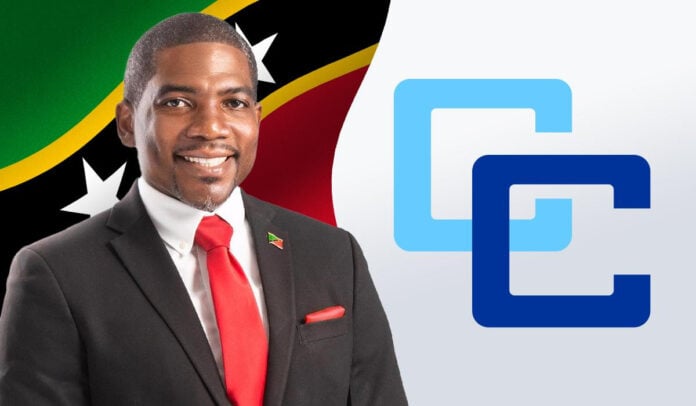
Prime Minister Terrence Drew of St. Kitts and Nevis, who is also the current chairman of CARICOM, has sparked new controversy and confusion in the Caribbean region.
Drew recently signed a Memorandum of Understanding (MOU) with the U.S. for St. Kitts and Nevis to accept third-country nationals from U.S. immigration detention who cannot be returned to their home countries. In the agreement, Drew announced his country will not accept Haitian nationals under this particular program, citing security concerns and excluding “anybody outside CARICOM,” although Haitians are CARICOM members.
Because Drew is the current chairman of CARICOM, some people assume the MOU reflects CARICOM policy. But this isn’t formal CARICOM policy unanimously adopted by all member states. It is the position of one government negotiating an agreement with the U.S.

CARICOM as a bloc has repeatedly affirmed support for Haiti as a member state and expressed concern for its people, particularly in diplomatic and security contexts. Statements and communiqués from CARICOM meetings reference the region’s interest in Haiti’s stability and well-being. Granted, there are many critics who argue these statements and communiqués are just “window dressing,” and they want CARICOM to be more involved in assisting Haiti in eradicating gang violence that has plagued the country for several months.
Notwithstanding the criticism, there are ongoing regional efforts related to political talks, transitional government, and security support, including backing for international missions to stabilize Haiti.
Haiti isn’t part of CARICOM’s free movement regime, and Haitians often need visas to enter other CARICOM countries — an issue that has been longstanding and controversial.

There’s no collective CARICOM resolution directing member states to refuse Haitians asylum or migration in every circumstance. What has happened is that several individual member states have negotiated arrangements that leave Haiti out, including the one between St. Kitts and Nevis and the U.S. Notably, CARICOM has not issued a unified condemnation of those exclusions.
CARICOM’s founding principles emphasize regional cooperation, shared solidarity, mutual support, and respect for member states, including Haiti’s social and economic well-being. Explicit refusal of Haitian nationals under Drew’s MOU with the U.S. appears to contradict the spirit of regional unity and mutual support, especially since Haiti faces one of the most severe humanitarian crises in the hemisphere.
This disconnect is why critics, including civil society and diaspora voices, have called this exclusion a betrayal of CARICOM’s objectives, particularly given Haiti’s history and status as a full member. Others emphasize that small islands face limited resources, infrastructure, and public services, making them cautious about large influxes of refugees.

Objectively, every Caribbean nation has the right to protect its borders and ensure internal security. Small states like those in CARICOM face real limits on capacity, including healthcare, jobs, and housing. Policymakers must consider those limits when negotiating migration agreements.
But excluding Haitians from a humanitarian transfer program — especially when Haiti is a CARICOM member and in crisis — undermines the values of regional solidarity and collective identity CARICOM claims to uphold. If CARICOM truly means “community,” then it needs to grapple with policies that treat member states differently, rather than allowing bilateral deals that result in implicit exclusion.
Ultimately, this situation highlights a deeper gap between CARICOM’s aspirational mission of solidarity and its practical policy on migration and security. That gap needs a regional conversation and coordination, not just individual statements from one chairperson or one country.
CARICOM’s mission is still to promote regional cooperation and integration; show solidarity among member states; coordinate foreign policy positions; and support the economic and social development of all members, including Haiti. This mission is based on binding CARICOM treaty commitments, not just moral statements.
Confusion about CARICOM’s role often arises because the organization doesn’t legally require open borders for all citizens, automatic refugee or asylum acceptance, mandatory resettlement of displaced people, or free movement for all nationals. Free movement is limited to specific categories, including university students, skilled workers, media workers, artists, athletes, nurses, and certified teachers.
Haitians are largely excluded in practice because Haiti isn’t fully integrated into the Caribbean Single Market and Economy’s free-movement systems and requires visas in many countries.
CARICOM states rightly retain control over immigration and asylum decisions. While members can legally refuse refugees, problems arise when CARICOM’s chairman speaks as if the MOU in question reflects regional policy. He is supposed to represent collective positions, and publicly excluding Haitians without a CARICOM mandate blurs national versus regional authority. Haiti is not an observer state; it is a full CARICOM member, and systematic exclusion undermines the idea of “Community.”
CARICOM leads diplomatic efforts on Haiti, helps shape international responses, and advocates for stability. Yet it simultaneously avoids coordinated humanitarian responsibility, allowing selective exclusion without regional debate. This creates a credibility gap. Although not technically illegal in the context of the CARICOM Treaty of Chaguaramas, this approach is not faithful to CARICOM’s stated purpose.
This situation underscores the perception that CARICOM is strong on diplomacy but weak on shared responsibility. It often seems fragmented in crises, and Haiti exposes this contradiction very clearly. If CARICOM wants credibility, it must speak with one voice and clarify when leaders are speaking nationally versus regionally.