New to World of Warcraft? Or coming back after a long break?

This guide walks you through the core basics of WoW and explains how the game actually works, so you can find your own pace and enjoy the adventure without turning it into a part-time job.
Creating Your Character
Before you dive into the world itself, you’ll need to create a character. In WoW, the main choices you’ll make are your class, race, and faction.

At this stage, there’s really just one question you should ask yourself: Do I like how this character looks and feels? Don’t stress about abilities, builds, or “optimal” choices. If you like the look of a race and the in-game description of a class sounds cool to you, go for it. Every class in WoW is fun in its own way, all of them are viable, and besides, you can try them all at any time by simply creating more characters.
Starting Zones
So, you’ve got your character. What’s next?
The game will ask you to choose a starting zone, the place where your journey begins. You’ll have two options: Exile’s Reach or your race’s original zone.
Exile’s Reach is built for brand-new players. It teaches you all the basics of the game and pretty much walks you step by step through everything you need to know to get started. A race-specific starting zone offers a more classic WoW experience. It’s less hand-holdy, but much more lore-rich, giving you background for your character’s race and place in the world.
If this is your first time playing WoW, or even your first MMO ever, Exile’s Reach is the best place to start, as it gives you all the essential tutorials you need. If you’re a returning player or already familiar with the genre, feel free to jump straight into your race’s starting zone. And of course, nothing stops you from trying both by making more characters.
Leveling and Questing
Leveling in WoW boils down to earning XP from completing quests, killing enemies, and taking part in various world activities. As you gain levels, your character becomes stronger, unlocks new abilities, and gets access to more content.

If you started in Exile’s Reach, once you finish it, the game will automatically send you to the Dragon Isles. From there, you’ll continue leveling through the Dragonflight expansion in a condensed, streamlined way. This path is designed to take you all the way to max level by following one continuous storyline. Blizzard consolidated the Dragonflight narrative, and they’re planning to do the same with The War Within storyline once Midnight releases.
If you picked your race’s original zone, you’ll have all the same options, but you won’t be teleported there automatically. You’ll need to open your Adventure Guide, go to the Suggested Content tab, and select Timewalking Campaign. You’ll get a quest that sends you to Chromie, a special NPC who lets you choose any in-game expansion to level through. Once you pick a timeline, all content in that expansion scales to your level, meaning all enemies, quests, and rewards adjust to match you. You can switch timelines at any moment by talking to Chromie again. This system is available to players who started in Exile’s Reach as well.
As a third option, you can just level through zones in any way you want. The open world still scales to your level even without Timewalking enabled.
Skills, Talents, and Specializations
Unlike Classic WoW, where you have to visit a class trainer to learn new skills, in Retail WoW, all new abilities and spells are unlocked for you automatically as you level up.
At level 10, you’ll be asked to choose a specialization (or spec), which will define your role and playstyle. For example, if you’re playing a Paladin and want to be a tank, go with Protection; if you want to be a damage dealer, pick Retribution; and if healing is more your thing, opt for Holy. You can change your spec at any time, for free.
Once you pick a spec, you unlock Talent Trees for Class, Spec, and Hero talents. While leveling up, you earn Talent Points to spend in these trees and unlock new abilities and passive bonuses. Your talent choice isn’t permanent, and you can change everything easily at any time. In case you want to optimize, there are plenty of online resources with recommended builds for every class and spec.
Professions
Professions are extra trade skills that let you craft items or gather valuable resources. Each character can learn two primary professions (Alchemy, Herbalism, Skinning, etc.) and an unlimited number of secondary professions, like Cooking and Fishing.
Professions level up naturally as you use them, unlocking higher-quality crafts, better materials, and new recipes. However, to move into a new level bracket, you’ll need to visit a profession trainer.
In modern WoW, professions also have their own specialization trees, similar to talents. By spending Knowledge Points in these trees, you can focus on specific crafting paths, unlock powerful bonuses, and specialize in certain items or materials.
Gold
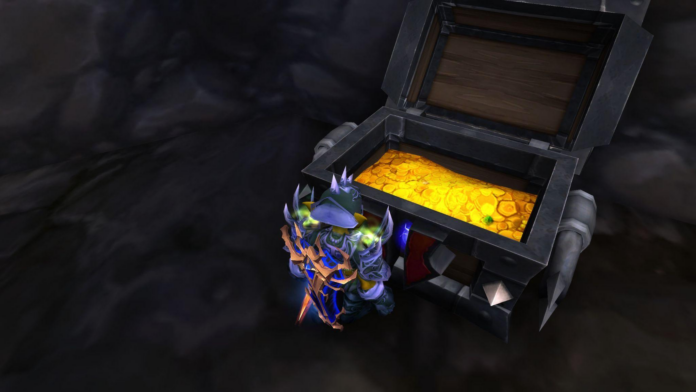
Gold is the main WoW currency, needed for all kinds of things: repairing your gear, learning riding skills, upgrading professions, as well as buying consumables, crafting materials, and other goods on the Auction House.
As a new player, you’ll earn most of your gold naturally just by playing the game. Completing quests, killing mobs, and selling unwanted loot to vendors will already keep your wallet full enough to cover some of the basic expenses.
Professions will give you a more consistent source of gold. Gathering professions like Mining, Herbalism, and Skinning are especially beginner-friendly: you simply collect resources while leveling and sell them on the Auction House. Crafting professions can also be profitable, but they usually take more time to master and pay off. Later on, you can run dungeons and raids to get raw gold and useful loot for sale. One more option is to buy WoW gold in any amount you need through special currency platforms and boosting services.
Endgame
Once you hit max level, you unlock the biggest and most content-rich part of WoW called the endgame. This is where the game really opens up and gives you a wide range of activities to take part in:
- Dungeonsare short, instanced five-player activities, where you’ll fight through packs of enemies and take down bosses for gear and other rewards. There’s also the Mythic+ system, where dungeons infinitely scale in difficulty, have a timer (and sometimes additional mechanics), and offer very good gear rewards.
- Raidsare large-scale instances for 10-30 players. They feature long, complex boss fights with unique mechanics and reward the best non-crafted gear in the game.
- The PvPside of WoW gives you a bunch of activities like Arenas and Battlegrounds, where you can fight with other players. There’s also a special War Mode that enables PvP combat in the open world.
- Delves are small, bite-sized PvE adventures designed to be played solo or in small groups.
- World Quests offer quick, repeatable objectives that you can complete for gold, gear, reputation, and other rewards.
Think of WoW like a theme park. You don’t have to ride every ride, and you don’t need to follow a strict order. Try different activities, see what clicks for you, and, most importantly, have fun!