The Trinidad and Tobago government has announced it will bring an end to the long-running civil matters tied to the collapse of the CL Financial Group, citing billions of dollars spent on legal fees with little accountability to show for it.
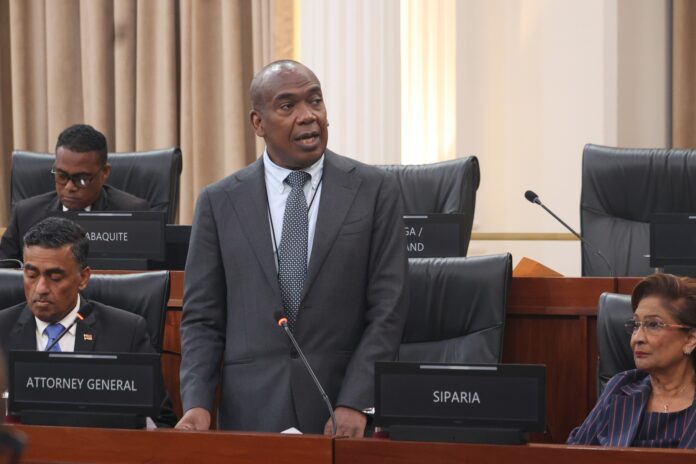
Attorney General John Jeremie, speaking in Parliament on Friday, said the Kamla Persad-Bissessar administration had decided to halt the decades-old civil proceedings after determining that public resources were being drained by what he described as a prolonged and ineffective legal process. Jeremie laid the Sir Anthony Colman report into the failure of CL Financial in Parliament during his presentation.
Jeremie told legislators he had been tasked with deciding whether to continue the investigation and concluded that it had devolved into a “legal feeding frenzy,” consuming billions of dollars in attorney fees without meaningful progress.

“As guardian of the public interest, and having consulted with the Honourable Prime Minister, I have to say that we are not able to continue to spend hard resources, government resources,” Jeremie said.
He stressed that while criminal proceedings fall under the remit of the Director of Public Prosecutions, and regulatory matters involving the Central Bank are the responsibility of the finance minister, he has the authority to end civil proceedings. Jeremie said the government intends to exit those cases in a cost-effective manner, even if that requires paying reasonable costs to do so.
The attorney general described the collapse of Colonial Life Insurance Company (CLICO), a subsidiary of CL Financial, as stemming from “unconscionable action” by past administrations. CLICO collapsed in 2009, prompting a government bailout of CL Financial on January 30 of that year after a severe liquidity crisis linked to excessive related-party transactions, high-risk investments and falling asset prices.
The Central Bank of Trinidad and Tobago took control of CLICO following the collapse and relinquished control in December 2022 after a lengthy restructuring process, during which CLICO repaid a TT$17.3 billion debt.
Jeremie said the former government spent TT$28 billion rescuing the CL Financial Group, with an additional TT$3 billion to TT$4 billion spent on matters related to the collapse. He told Parliament that close to half a billion dollars had been paid in some instances to attorneys and accountants, with payments reportedly stopping in certain cases after 2022.
He noted that nearly TT$400 million had been paid to Deloitte and Touche alone, despite no criminal charges being brought against any individual in connection with the collapse. Jeremie also said the legal costs did not include liquidators’ fees and that the public had seen little benefit from the massive expenditure.

The attorney general raised concerns about the lack of investigative resources assigned to what he described as the largest financial fraud in the country’s history, saying that at times as few as one or three police officers were assigned to the matter. He added that the Colman report itself cost approximately TT$150 million to produce and had effectively disappeared from official offices.
Jeremie said the report is accompanied by extensive evidence, including millions of emails, forensic financial records, thousands of pieces of electronic evidence and more than 1,600 hard-copy boxes. He noted that Colman recommended the matter be referred to the police and referenced findings consistent with a Ponzi-style scheme.
The government has not indicated whether any new criminal investigations will follow the decision to end the civil proceedings.