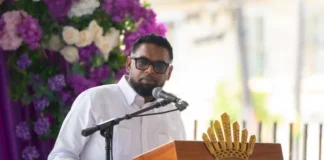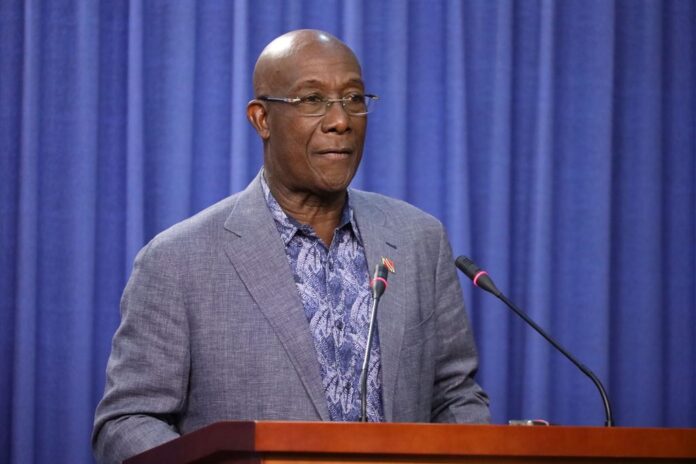
Former Prime Minister Dr. Keith Rowley on Monday denied that he or his administration ever signed an agreement permitting the United States to use Trinidad and Tobago as a staging ground for military action against neighboring countries, including Venezuela. He reiterated that the Caribbean should remain a zone of peace.
“As the former prime minister of Trinidad and Tobago and chairman of the National Security Council and the person who sat and talked with Americans throughout my term, there is absolutely nothing in the Status of Forces Agreement (SOFA) to permit any commitment from Trinidad and Tobago to breach the UN Charter, to intervene militarily in any of our neighbors or anywhere in the world,” Rowley said at a news conference.
“Absolutely not so at all. Anybody from the government saying that it is a lie. There is nothing in any document that I am aware of, which prevents the sovereign government of Trinidad and Tobago from saying yes or no to any request coming from any country if we believe that it jeopardizes our sovereignty or puts our vulnerability to the test. So let’s get that very clear,” he added.

SOFA, first signed in 2007 and updated most recently in December 2024, governs the temporary presence and activities of US military personnel in Trinidad and Tobago. The latest version removed a specific expiration date, making it indefinite unless renegotiated. The agreement facilitates military cooperation, including joint training exercises and security operations.
Rowley said that if Trinidad and Tobago were involved in a future confrontation between the US and Venezuela, it would be the result of decisions made by the current government under Prime Minister Kamla Persad-Bissessar.
Venezuelan President Nicolás Maduro warned that Port of Spain’s joint military drills with the US could “threaten peace” in the Caribbean, adding, “The people of Trinidad and Tobago will see if they continue to tolerate the use of their waters and land.”
Rowley criticized what he called an “aggressive posture” by the United States toward Venezuela and the Persad-Bissessar administration. He stressed that previous People’s National Movement (PNM) administrations had followed a longstanding policy of non-interference, advocating that the Caribbean remain “friends of all, satellites of none.”
“If the United States military is engaged with Venezuela, big or small, it is entirely as a result of decisions taken and actions by the government of Trinidad and Tobago… under the leadership of Kamla Persad-Bissessar,” Rowley said.
Rowley warned that the current stance of Port of Spain could make Trinidad and Tobago a target in the event of a military conflict with Venezuela, including potential attacks on oil platforms near the border. He also raised concerns over the potential socio-economic consequences if Venezuela were to limit cooperation on oil and gas development.

“My question today to the government of Trinidad and Tobago: what preparations have you made to protect us in the event your offer is taken up or Venezuela is attacked?” Rowley asked, emphasizing the risks to national security.