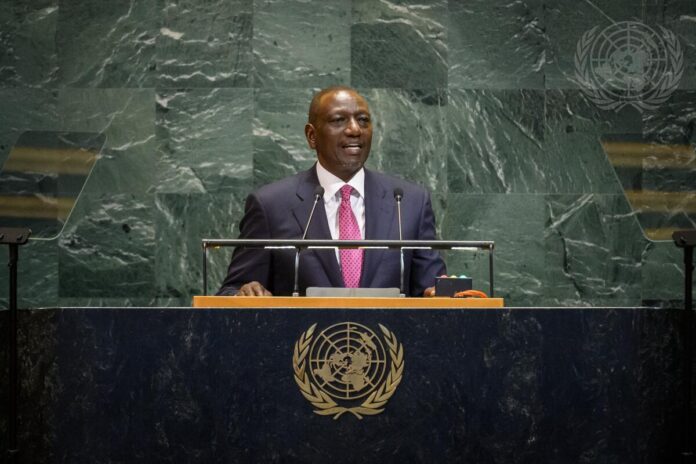
Kenyan President William Ruto used his United Nations address on Sept. 24 to spotlight Haiti as proof that bold action—backed by global cooperation—can bring real change, even amid limited resources.
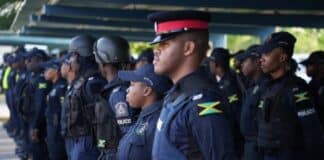
Ruto praised the achievements of the Kenya-led Multinational Security Support Mission in Haiti, noting that Kenyan officers, despite being “underfunded and under-equipped,” helped restore critical state institutions, reopen schools, and secure key infrastructure in the violence-torn Caribbean nation. “If so much could be achieved with limited resources,” he asked, “what more could have been accomplished if the UN fraternity had truly acted together?”
The president framed Haiti’s turnaround efforts as a test of the UN’s relevance. Drawing a parallel with the League of Nations’ collapse, he warned that institutions fail “not for lack of noble ideals, but when they drift into irrelevance.” With the Security Council still locked in its 1945 structure and hamstrung by great-power rivalries, Ruto said the UN now stands at a crossroads: renewal or decay.

He urged urgent reforms, including democratizing global financial systems and granting Africa two permanent and two non-permanent seats on the Security Council. The IMF and World Bank, he added, must stop “punishing poor countries while rewarding the rich.”
Ruto also reaffirmed Kenya’s commitment to human rights, calling for an end to suffering in conflicts from Gaza to Sudan, and highlighted Africa’s leadership on climate action through the Nairobi and Addis Ababa summits.
But it was Haiti—a small nation far from Kenya’s shores—that he held up as a powerful example of what the UN can achieve when member states act with urgency and unity. “Haiti shows what is possible,” Ruto said, “if we choose relevance over paralysis.”