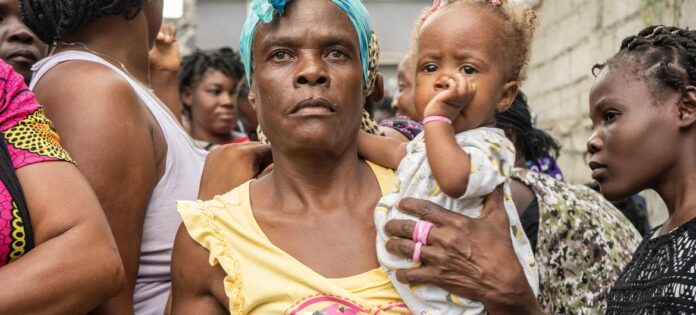
The United Nations Office for the Coordination of Humanitarian Affairs (OCHA) has raised alarm over the escalating humanitarian crisis in Haiti, where ongoing violence and mass displacement are severely impacting children’s access to food, health services, and education.

In a statement released this week, OCHA highlighted that the country is grappling with a surge in acute malnutrition among children and widespread school closures—both intensified by rampant insecurity and a severe lack of humanitarian funding.
Since the start of 2025, UNICEF and its partners have screened more than 217,000 children for acute malnutrition. Of that number, over 21,500 have been admitted for treatment for severe acute malnutrition—representing just 17% of the nearly 129,000 children expected to need lifesaving care this year.

The situation is compounded by widespread food insecurity. According to the latest Integrated Food Security Phase Classification (IPC) analysis, 5.7 million Haitians—more than half the country’s population—faced high levels of acute food insecurity between March and June.
Beyond nutrition, Haiti’s children are also facing an education crisis. As of mid-July, over 1,600 schools remained closed, a figure that has more than doubled since the beginning of the year. The closures leave thousands of children out of the classroom and increasingly vulnerable to exploitation and recruitment by armed groups.
UNICEF has managed to provide alternative learning opportunities for more than 16,000 children, including those displaced by violence, and has extended psychosocial and mental health support to more than 100,000 school-aged children. However, officials stress that these efforts cover only a small portion of the total need.
Funding shortfalls are further crippling the humanitarian response. Haiti remains the least funded crisis in global UN-coordinated appeals: with over half the year gone, less than 9% of the $908 million required has been received.
OCHA warns that insecurity is also hindering humanitarian operations, disrupting supply chains, forcing the closure of health facilities, and putting malnourished children at even greater risk.
“The ongoing insecurity continues to severely hamper access and delivery of critical services,” the agency said, underscoring the urgent need for increased support to prevent a deepening catastrophe for Haiti’s most vulnerable.