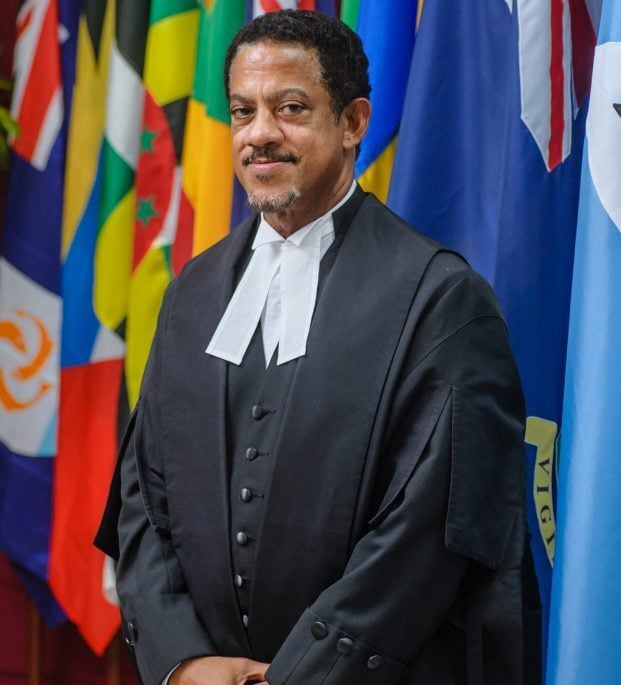
Acting Chief Justice of the Eastern Caribbean Supreme Court (ECSC), Mario Michel, announced on Friday that he will retire from his position on May 5, 2025, and expressed hope that his departure will pave the way for the unanimous appointment of a permanent head of the court.
Michel, a St. Lucian national, took up the acting role in May 2024, succeeding Dame Janice M. Pereira, who served as chief justice for over a decade.
During a special sitting of the ECSC, Justice Michel explained that while his appointment was initially set to expire in 2026, he had decided to retire early to clear the path for the appointment of a new chief justice. “I am hoping that my retirement will help to clear the path to a unanimous decision of the OECS heads of government on a permanent appointment to the office of chief justice,” he said.

Michel’s career in the ECSC spans over 16 years, including time as an acting High Court judge, a resident High Court judge, and most recently, as acting chief justice. He also reflected on his long legal career, which included nearly 15 years as a lawyer in private practice and over nine years in government, serving as a parliamentarian and deputy prime minister of St. Lucia.
In his farewell address, Justice Michel thanked the Judicial and Legal Services Commission (JLSC) for their trust and support, and emphasized his pride in his service across all three branches of government. He also expressed his gratitude to the ECSC judges and court staff, as well as his family, for their support throughout his career.
Justice Michel took a moment to highlight his work on the ECSC’s public education programme, which he hopes will continue under the next chief justice. “We’ve done a few very useful things in these last seven months, including visits to community colleges and public lectures, but there is still much to be done,” he noted. “I hope the next chief justice will continue these efforts.”
Despite the optimism for the future, Michel’s retirement marks the end of a tenure that some, like his lifelong friend, King’s Counsel Dexter Theodore, believe was cut short. Theodore lamented the lack of unanimous consent from regional leaders for Michel’s elevation to chief justice, calling the system that allows politicians to influence such appointments “flawed.” He praised Michel’s independence and the impact of his judgments, which he said have significantly shaped the legal landscape of the region.
Justice Michel, who pledged his ongoing support to his successor, closed his remarks by acknowledging that while his departure marks the end of an era, his work with the ECSC has been a rewarding part of his 41-year career.